📊 Full opportunity report: A Practice App For SMB Communication Skills And Camera Confidence on IdeaNavigator AI — validation score, market gap, and execution plan.

Get smart everyday buys delivered free with Prime
- Fast, free delivery on millions of items
- Prime Video, Amazon Music and more included
- Member-only deals all year
TL;DR
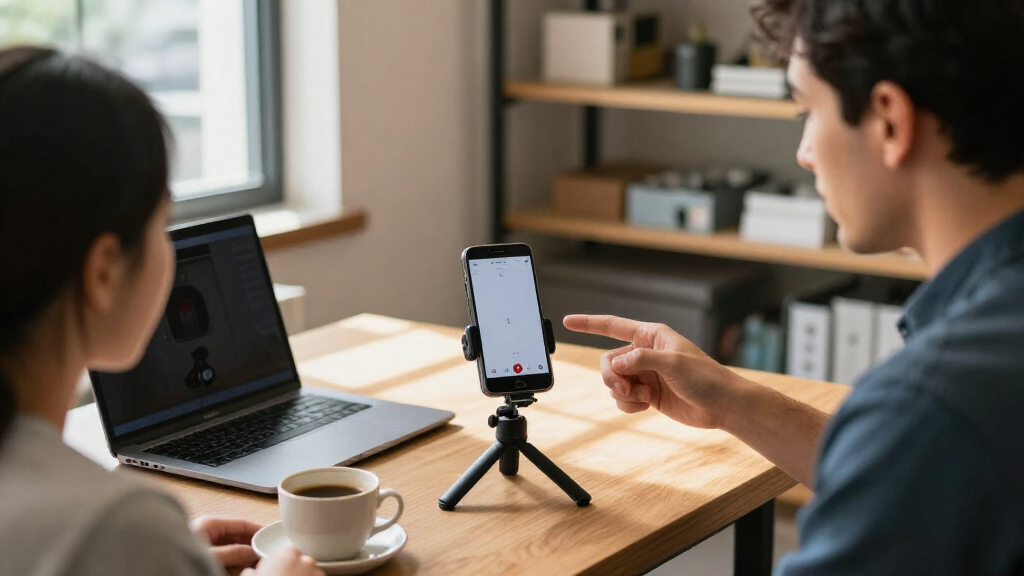
IdeaNavigator AI has outlined a proposed practice app for business owners who know video matters but feel uncomfortable recording themselves. The concept includes short daily exercises and private feedback; a 30-day cohort of 100 owners is proposed to test whether users go on to publish a video.
IdeaNavigator AI has outlined a proposed practice app for business owners who struggle to record themselves, pitching short exercises and private delivery feedback as a way to help them build confidence on camera. The concept is an early product proposal, not an announced launch: its suggested test is a 30-day cohort of 100 owners, with video publication by day 45 measured against a waitlist control group, according to the IdeaNavigator AI concept page.
The proposed app targets a specific user: a business owner who believes video can help their business but freezes when it is time to record. The problem described includes stumbling, self-criticism and repeated takes, which can keep owners from publishing at all. IdeaNavigator AI argues that conventional public-speaking courses may not address the particular experience of recording alone.
The proposed minimum viable product would use daily, two-minute prompted exercises, progressing from reading prepared material to speaking more freely. The app would assess pace, filler words, eye line and energy, then show users how those measures change over time. A confidence streak would track practice, and the intended endpoint would be recording real business content.
The concept proposes a consumer subscription and a team tier for agencies coaching clients. No pricing, technical implementation, launch date, existing users or results are supplied. The proposed cohort is a validation plan, not evidence that the app has been built or that its approach works. These product and test details are described on IdeaNavigator AI’s concept page.
PRODUCT CONCEPT · SMB COMMUNICATION
A Practice App for SMB Communication Skills and Camera Confidence
IdeaNavigator AI proposes short daily exercises and private delivery feedback for business owners who feel uncomfortable recording themselves. The idea is at concept stage; a suggested pilot would test whether practice leads to publishing.
THE CORE HYPOTHESIS
Make practice small enough to start—and useful enough to publish.
The goal is real business video, not a streak or score alone.
01 / THE PRACTICE GAP
From “I should make a video” to pressing record
The proposal focuses on owners who see a role for video in their business but freeze when recording alone. Repeated takes, stumbling, and self-criticism can keep an idea from becoming a published video.
Recording feels exposed
Knowing what to say is only part of the challenge. Camera discomfort can make starting and finishing a take difficult.
Private, repeatable practice
Brief daily prompts are intended to build comfort without requiring a public post or individualized coach at every step.
Publish real business content
App engagement alone would not establish success. The concept proposes measuring whether participants publish a video.
02 / PROPOSED MVP
A small routine, with delivery feedback
Users would begin with prepared reading and gradually move toward speaking more freely. The app would give private feedback on selected delivery behaviors and show progress over time.
A confidence streak could encourage consistency, while the intended endpoint is practice with content the owner might actually use for their business.
Important distinction: The proposal describes a product hypothesis. It supplies no demonstration, accuracy data, launch date, pricing, existing users, or trial results.
03 / THE PROPOSED JOURNEY
Build toward a publishable take
The sequence is designed to bridge the gap between learning general speaking principles and recording a solo video for a business.
Read
Start with a short, prepared prompt.
Practice
Repeat brief exercises and build a routine.
Speak freely
Move toward more natural, unscripted delivery.
Publish
Apply practice to real business content.
04 / VALIDATION PLAN
Test publication, not just participation
IdeaNavigator AI proposes a 30-day cohort of 100 business owners, compared with a waitlist control group. The suggested primary measure is the share of participants who publish a first real video by day 45.
| Question | What the concept proposes | What remains unknown |
|---|---|---|
| Who participates? | 100 business owners in a cohort | Recruitment method and enrollment status |
| What is compared? | A waitlist control group | Group assignment and study procedures |
| What is measured? | Publishing a real video by day 45 | Definition of publication and success criteria |
| What might it show? | Whether practice is associated with publishing | Not marketing impact, sales, or revenue |
05 / OPEN QUESTIONS
What a pilot would still need to answer
Are scores consistent?
The proposal does not explain how delivery is evaluated or whether feedback varies across speakers, settings, and recording styles.
How are recordings handled?
Video can contain a person’s face, voice, and business information. Retention and privacy safeguards are not described.
Will owners or agencies pay?
Consumer subscriptions and an agency team tier are proposed revenue paths. No pricing or demand evidence is supplied.
The proposal also does not report customer interviews, competitor analysis, a developer, product launch, or a confirmed pilot date.
TRACEABILITY / IDEA TO EVIDENCE
Follow the claim to the test
The concept’s logic runs from camera discomfort to structured practice, then to a measurable publishing outcome. Each link still needs validation.
Barrier
Owners avoid recording themselves.
Intervention
Two-minute prompts plus private feedback.
Behavior
Practice progresses toward business content.
Evidence
Check publication by day 45 against a waitlist.
Source: IdeaNavigator AI concept page. No launch or completed trial is reported.
KEY QUESTIONS
What is known—and what is not
Has the app launched?
No launch is reported. IdeaNavigator AI describes a product concept and proposed test, with no release date or confirmation that the app has been built.
Who is it for?
Business owners who want to use video but feel uncomfortable recording themselves, including those who make repeated takes or criticize their performance.
What would users practice?
Two-minute daily prompts, progressing from reading prepared material to speaking more freely, with feedback on pace, filler words, eye line, and energy.
Would the test prove business impact?
No. The proposed measure is whether participants publish a video. The concept provides no plan or results showing effects on marketing, sales, or revenue.
Source: IdeaNavigator AI
A Practice Gap in Business Video
The proposal focuses on a practical barrier to business video: not knowing what to say, but feeling uncomfortable enough in front of a camera to avoid recording. If that is a common obstacle, a private practice tool could offer a more targeted alternative to broad communication training. The concept is aimed at owners who may lack the time or budget for individualized coaching.
Its value will depend on whether feedback leads to published work, not just app engagement. A user could improve a score or maintain a streak without ever posting a video. The planned day-45 measure recognizes that distinction by focusing on whether participants publish a real video, though the proposal does not define what counts as publication or how quality and business outcomes would be assessed. The day-45 measure is part of the proposed test described by IdeaNavigator AI.
For agencies, a team tier could make the idea useful as a client-coaching aid, but that remains a proposed revenue path. The concept provides no evidence of demand from agencies or business owners, and it does not establish that AI feedback can reliably judge delivery across different speakers, settings and recording styles.
Products Worth Considering

HP OfficeJet 250 Wireless Mobile All-in-One Inkjet Printer

Logitech MX Mechanical Wireless Illuminated Keyboard, Tactile Quiet, Graphite

Canon PIXMA TR160 Wireless Portable Color Inkjet Printer
As an affiliate, we earn on qualifying purchases.
From Video Pressure to Practice
IdeaNavigator AI frames the opportunity around growing pressure on businesses of all sizes to use video in marketing. The concept says multimodal AI could analyze aspects of delivery and provide private feedback, but it supplies no product demonstration, accuracy data or comparison with existing training services.
The proposed sequence is deliberately narrow: brief exercises, feedback on selected speaking behaviors, visible progress and eventual practice with real content. That design is intended to address the gap between learning public-speaking principles and making a solo recording. It is a product hypothesis rather than a documented response to a completed market study; no survey, customer interviews or competitor analysis is included in the proposal. These claims and qualifications are set out in IdeaNavigator AI’s published concept.
The App and Its Results
No app launch or completed trial is reported. The proposal does not identify a developer, company behind the product, launch schedule, subscription price or details about how recordings and feedback would be handled. It also provides no evidence that the app currently exists or that a cohort has been recruited. These limitations are apparent from the IdeaNavigator AI proposal.
The proposed assessment measures—pace, filler words, eye line and energy—are not defined in technical terms. It is unclear how the system would evaluate them, how consistent its scores would be, or whether users could review and correct feedback. The plan also does not explain how it would handle privacy and retention of video recordings, which can include a user’s face, voice and business information.
The suggested comparison with a waitlist control group could offer an early indication of whether the program is associated with more participants publishing video. However, the proposal does not provide the planned analysis, recruitment method or criteria for a successful result. Even a positive test would not, by itself, show that the app improves marketing performance or business revenue.
Testing Publication by Day 45
The next step described is a 30-day pilot with 100 business owners, compared with a waitlist control group. The proposed primary measure is the share of participants who publish their first real video by day 45. No start date, recruitment link or confirmed trial announcement is provided. This plan is described on the IdeaNavigator AI concept page.
If the test proceeds, the result would help answer whether short, structured practice can move participants from rehearsal to publication. Readers would still need details on enrollment, the control-group design, privacy safeguards and the results before judging whether the concept is effective or commercially viable. For now, the app remains a proposed product with a suggested validation plan.
Source: IdeaNavigator AI
Key Questions
Has the on-camera practice app launched?
No launch is reported. IdeaNavigator AI describes a product concept and a proposed test, without a release date or confirmation that the app has been built.
Who is the proposed app for?
It is aimed at business owners who want to use video but feel uncomfortable recording themselves, including those who stumble, criticize their own performance or make repeated takes.
What would users practice?
The proposed routine uses two-minute daily prompts, starting with reading and moving toward speaking more freely. The app would offer feedback on pace, filler words, eye line and energy.
How would the concept be tested?
The suggested test is a 30-day cohort of 100 owners, compared with a waitlist control group. The planned measure is whether participants publish a real video by day 45; no trial results are available.
Would the app prove that video improves business results?
No. The proposed test focuses on whether users publish a video. The concept provides no plan or results showing effects on marketing performance, sales or revenue.
Source: IdeaNavigator AI