🔍 Read the full analysis: A Simple Breakdown Of The Held-Light Technique In “OORT — Comet Vigil For P/2043 K1 Vesper” on ThorstenMeyerAI.com

Get smart everyday buys delivered free with Prime
- Fast, free delivery on millions of items
- Prime Video, Amazon Music and more included
- Member-only deals all year
TL;DR
OORT — Comet Vigil for P/2043 K1 Vesper is an AI-built, fictional observatory artwork whose star trails lengthen as visitors remain on the page. Its held-light effect and related interactions make waiting part of the experience, while the comet and its observatory are explicitly fictional.
OORT — Comet Vigil for P/2043 K1 Vesper uses a persistent, animated star field to make a visitor’s time on the page visible: stars form curved trails that lengthen as seconds pass. The AI-built exhibition presents a fictional comet and observatory, and its held-light technique turns the act of waiting into the main interaction rather than suggesting that visitors are seeing a real astronomical event.
The central effect is a canvas of seeded stars arranged around a point below the visible frame. As a visitor stays, the stars’ arcs grow. The source describes the growth as following a logarithmic curve, making early changes noticeable while leaving room for the trails to keep developing over a longer visit. A repeatable seed gives the sky consistency on the same device, while local storage preserves elapsed time so the scene can resume when a visitor returns.
The page also responds to other kinds of attention. Scrolling moves the comet through an inline SVG illustration: its ion tail points away from the sun, while its dust tail curves along the imagined orbit. Both shapes use the same progress value, keeping the comet’s changing position and related display information in step. A separate range control adjusts a defocus view and its associated brightness estimate. The source says the animation loop pauses when the page is hidden, and that visitors with reduced-motion settings see a still version.
A brief press-and-hold opens a simulated shutter and records a timestamp. That record marks a visitor’s attention, not a sighting: the comet remains unseen and in transit within the fiction. The design description says the choice avoids presenting a fabricated discovery as a reward. The page’s dark observatory palette reinforces that distinction: cyan indicates the imagined ion tail and readings, amber-red highlights actions, and dust-toned text carries longer passages.
Digital Art · Interaction Explained
A Simple Breakdown of the Held-Light Technique
OORT — Comet Vigil for P/2043 K1 Vesper makes waiting visible. As visitors remain on the page, star trails lengthen—turning time and attention into part of an AI-built fictional observatory artwork.
“The page makes duration part of the artwork instead of treating it as time spent before the content.”
The comet, observatory, sighting history and watching community belong to the fiction. The artwork does not report a real astronomical discovery.
01 / How the held-light effect works
Waiting becomes the interaction
A canvas of seeded stars sits around a point below the visible frame. As seconds pass, the stars trace longer arcs. The described growth follows a logarithmic curve: changes show early, while the trails can continue developing during a longer visit.
A stable sky
A repeatable seed gives the star field consistency on the same device, making the scene feel like one continuing watch.
Trails lengthen
The visitor’s time on the page maps to expanding star arcs, so continued presence becomes visible in the artwork.
The watch resumes
Local storage is described as preserving elapsed time, allowing the scene to continue when a visitor returns on that device.
Conceptual illustration · describes the intended progression, not measured data
02 / More ways to pay attention
One idea, several controls
Scrolling, adjusting a range control and briefly holding the shutter each give visitors a distinct way to engage with the imagined watch.
Scroll
Moves the comet through an inline illustration.
Shared progress valueFollow the tails
The ion tail points away from the sun; the dust tail curves along the imagined orbit.
Fictional astronomyAdjust focus
A separate range control changes the defocus view and its brightness estimate.
Visitor controlHold the shutter
A brief press opens a simulated shutter and records a timestamp as a marker of attention.
Not a sighting03 / Fiction by design
Record attention, not discovery
The shutter interaction offers a small, legible action without suggesting visitors have observed a real comet. The fictional comet remains unseen and in transit within the story.
A community on watch
The premise follows a fictional observatory and a fictional comet, P/2043 K1 Vesper, across an imagined decades-long vigil.
Room 170 in a 175-room series
The design brief names Claude Fable 5 as original art direction and a FABLE/175 production pipeline. These are project-stated details, not independent verification of every review step.
“The comet remains unseen and in transit.”OORT room description
04 / Behavior described by the project
What the source says—and what it leaves open
Considerate motion
The animation loop is said to pause when the page is hidden. Visitors with reduced-motion settings are described as seeing a still version.
Unverified implementation details
The supplied material includes no external measurements for performance, accessibility, browser support or cross-device persistence.
Timestamp storage
The description does not explain how the shutter timestamp is stored, whether it stays on the device, or whether information is transmitted.
Traceability / The visitor’s path
From presence to a persistent scene
Visitors can explore the live room, watch trails accumulate, return to the page, scroll through the comet illustration and use the shutter control. The source also points to a design guide and the wider 175-room collection; it announces no scientific milestone or real-world observation.
How the Page Turns Time Into Light
The technique matters because it makes duration an input rather than an empty interval. On a conventional page, time spent waiting is usually invisible; in OORT, the visitor’s continued presence corresponds to visibly lengthening trails. Returning to the same local scene adds a sense of continuity, so the work’s subject is not only an imagined comet but also the patience of keeping watch.
The distinction between recording attention and claiming discovery is also central. The shutter interaction provides a small, legible action without implying that a visitor has observed a real comet. That restraint gives the fictional premise room to work while limiting confusion about what the site documents. For readers interested in digital art and interface design, OORT offers a specific example of animation, stored state and user controls serving one concept rather than functioning as unrelated effects.
As an affiliate, we earn on qualifying purchases.
A Fictional Observatory by Design
The source identifies OORT as an AI-built exhibition piece about a fictional observatory following the fictional comet P/2043 K1 Vesper. Its premise imagines a community sustaining a watch over decades. References in the accompanying art direction to a long wait, an earlier sighting and amateur observers belong to that invented setting; they are not evidence of an actual comet’s history or astronomical observations.
The published design brief describes the work as part of a 175-room exhibition series and names the room as number 170. It attributes the original art direction to Claude Fable 5 and says the room was produced through a FABLE/175 pipeline. The brief calls for a three-pass process: build and self-critique, external critique and revision, then art-direction review. Those are details of the project’s stated creative process, not independent proof that every requested test or review was completed.
“The page makes duration part of the artwork instead of treating it as time spent before the content.”
— The OORT room description
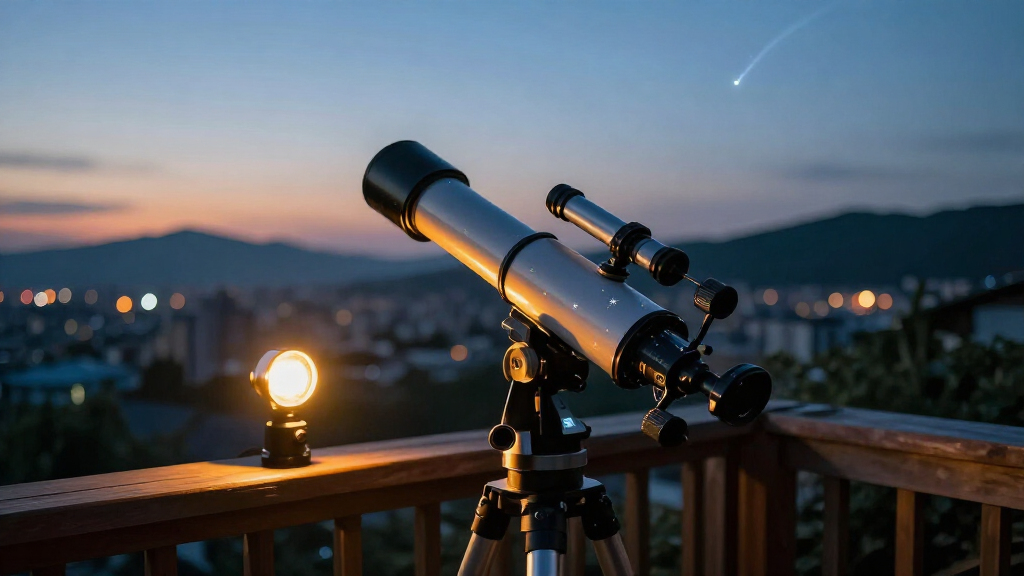
astronomical observation telescope
As an affiliate, we earn on qualifying purchases.
As an affiliate, we earn on qualifying purchases.
What the Description Does Not Verify
The source explains the intended behavior and identifies a live room, but it does not provide independent testing or measurements for performance, accessibility, browser compatibility or the persistence of data across different devices. Its statements about pausing animation, reduced-motion behavior, local storage and responsive design should be understood as project descriptions, not results from an external audit.
It is also unclear from the supplied material how the timestamp is stored, whether it remains on the device, or whether any information is transmitted. The described observatory, comet, sighting history and community are fictional; no real astronomical discovery or observational record is reported.
As an affiliate, we earn on qualifying purchases.
Visitors Can Explore the Live Room
The room description directs visitors to the live OORT site and to a design guide containing build notes. Visitors can test the stated interactions by watching the trails accumulate, returning to the page, scrolling through the comet illustration and using the shutter control. The source also points readers to the wider collection of 175 rooms.
No further release, update or real-world comet observation is announced in the material provided. The next development described is therefore visitor exploration of the existing artwork, rather than a scheduled scientific milestone.
As an affiliate, we earn on qualifying purchases.
Key Questions
What is the held-light technique in OORT?
It is the persistent star-trail effect: arcs on a canvas lengthen as time passes, making a visitor’s stay part of the artwork.
Is P/2043 K1 Vesper a real comet?
No. The source describes P/2043 K1 Vesper as fictional, as well as the observatory and its imagined history.
What does the shutter control record?
It opens a simulated shutter and records a timestamp as a marker of attention. The described interaction does not record a real comet sighting.
Does the sky continue animating when the page is hidden?
The project description says the animation loop stops when the page is hidden and that reduced-motion settings receive a still version. Independent testing details are not included in the supplied material.
Source: ThorstenMeyerAI.com
Halloween Picks
halloween
As an affiliate, we earn on qualifying purchases.