

🔍 Read the full analysis: The 11 Best AI Productivity Programs To Watch In 2026 on ThorstenMeyerAI.com

Get smart everyday buys delivered free — and shop member deals
- Fast, free delivery on millions of items
- Access to Prime Big Deal Days deals on October 6–7
- Prime Video, Amazon Music and more included
TL;DR
In 2026, eleven AI productivity programs stand out for their innovation, integration, and usability. This guide highlights the top tools to improve work efficiency, automation, and collaboration.
Eleven AI productivity programs have emerged as leading options for 2026, offering advanced automation, seamless integration, and user-friendly interfaces. These tools are shaping the future of work by enabling users to automate tasks, optimize workflows, and collaborate more effectively. The selection is based on recent evaluations of their features, usability, and market impact, making them essential for professionals seeking to boost efficiency in the coming year.
The list includes a mix of comprehensive platforms like Microsoft Copilot, which offers broad integration with Microsoft 365, and specialized tools such as Claude AI, known for powerful prompt engineering capabilities. These programs vary in complexity, cost, and target user base, from individual professionals to large enterprises. Many of these tools emphasize automation, AI-driven insights, and ease of use, though some prioritize customization for advanced users. The evaluation considered factors such as feature breadth, integration, support, and niche applicability, ensuring the list covers diverse needs.
Recent developments show a trend toward AI tools that seamlessly blend into existing workflows, especially within Microsoft ecosystems, while others push the boundaries with niche applications like ADHD management or advanced prompt engineering. The market is rapidly evolving, with new features and integrations regularly announced. However, it remains to be seen how these tools will adapt to user feedback and emerging work patterns, and whether they will maintain their competitive edge amid rapid innovation.
The 11 picks
- 1
 Claude AI for Microsoft 365 for Beginners: Practical Guide to Mastering Produ…View on Amazon →
 - 2
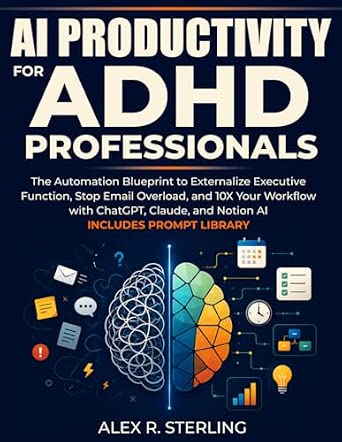 AI Productivity for ADHD Professionals: Automation Blueprint to Externalize E…View on Amazon →
 - 3
 Mastering Claude AI: The Complete Practical Guide to Prompt Engineering, Proj…View on Amazon →
 - 4
 AI Prompts for Productivity and Time Management: 500 Powerful Prompts to Work…View on Amazon →
 - 5
 Master AI for Beginners: Develop Artificial Intelligence Basics, Understand M…View on Amazon →
 - 6
 AI Tools for Everyone: Your Guide to Artificial IntelligenceView on Amazon →
 - 7
 AI-Powered Productivity & Prompt Engineering: A Practical System to Work Smar…View on Amazon →
 - 8
 Microsoft Copilot: A Practical Guide to Using AI in Word, Excel, PowerPoint,…View on Amazon →
 - 9
 AI Productivity Made Simple: How to Use ChatGPT, Automation Tools, Prompts, a…View on Amazon →
 - 10
 AI Tools for Productivity: Microsoft Copilot at Work for BeginnersView on Amazon →
 - 11
 How To Master Generative AI: Master AI Tools, Write Better Prompts, Boost Pro…View on Amazon →
Why These AI Tools Will Shape 2026 Productivity
The prominence of these 11 AI programs signals a shift toward smarter, more automated work environments. They can significantly reduce manual effort, streamline complex workflows, and foster better collaboration, which is vital as work becomes more digital and remote. For users, adopting these tools can translate into time savings, improved focus, and enhanced output quality. For organizations, they represent a chance to stay competitive in a rapidly changing landscape where AI-driven efficiency is increasingly critical.
Moreover, the variety among these tools—from broad platforms to niche solutions—ensures that users across different industries and skill levels can find suitable options. As AI capabilities continue to advance, these programs are likely to evolve further, offering even more sophisticated automation and customization. This makes them not just relevant for 2026 but potentially transformative for the future of work.
Market Trends and Development of AI Productivity Tools
Over recent years, AI productivity software has transitioned from experimental features to core components of modern workflows. Major tech companies like Microsoft have integrated AI deeply into their flagship products, with Microsoft Copilot leading the way in enterprise adoption. Meanwhile, startups and niche developers have introduced specialized tools targeting specific needs such as prompt engineering, ADHD management, and automation customization.
This evolution is driven by advances in large language models, increased computational power, and user demand for more intuitive, effective productivity solutions. The market is characterized by a wide spectrum of offerings, from free or low-cost options for casual users to premium enterprise solutions. As competition intensifies, developers are focusing on ease of use, seamless integration, and tailored features, fueling ongoing innovation.
While many tools have demonstrated impressive capabilities, the landscape remains dynamic, with new features and integrations constantly announced. It is still uncertain how these tools will be adopted across different sectors, how user feedback will shape future updates, and which solutions will maintain their leadership into 2027 and beyond.
Outstanding Questions About AI Productivity Trends in 2026
It remains unclear how quickly organizations will adopt these new tools at scale, especially in sectors with high compliance or security requirements. The long-term impact of these AI solutions on job roles and workflows is also still developing, with some experts questioning whether automation will complement or replace certain tasks. Additionally, the market’s rapid evolution raises questions about which tools will sustain their relevance and how user feedback will influence future features.
Further, the cost-effectiveness of these solutions for small businesses versus large enterprises is still being evaluated, and the potential for vendor lock-in with major platforms like Microsoft could influence user choices. As new updates and integrations are announced regularly, the full scope of their impact remains uncertain.
Next Steps for Users and Developers in AI Productivity
Users should evaluate their specific needs and test multiple options, focusing on integration, ease of use, and niche features relevant to their workflows. As AI tools continue to evolve, staying informed about updates and new releases will be crucial. Organizations may consider pilot programs to assess the impact of these tools before full deployment.
Developers are likely to focus on expanding automation capabilities, improving user interfaces, and enhancing customization options. Future innovations may include deeper AI integration with other enterprise systems, more personalized workflows, and advanced prompt engineering features. Monitoring industry trends and user feedback will be key to understanding which tools will dominate in 2027 and beyond.
Key Questions
How do I choose the best AI productivity tool for my needs?
Assess your work requirements, technical comfort, and budget. Prioritize tools with strong integration into your existing workflows, especially if you use Microsoft 365. Consider whether you need broad platforms or niche solutions, and test multiple options if possible.
Are free AI productivity tools sufficient for professional use?
Many free tools are suitable for basic automation and prompt generation, but they often lack advanced features, support, or reliability required for professional environments. Paid plans typically offer deeper integrations and higher limits, which can be valuable for demanding workflows.
What features should I look for in an AI productivity program?
Focus on integration with your existing tools, automation capabilities, ease of use, customization options, and support resources. Niche features tailored to your specific needs, such as prompt engineering or niche workflow support, can also be important.
Will AI tools replace jobs or tasks in the near future?
While AI tools are automating many tasks, most experts see them as augmenting human work rather than replacing jobs entirely. The impact varies by industry and task complexity, but the trend is toward collaboration between humans and AI.
Source: ThorstenMeyerAI.com
Fall Picks
fall essentials
As an affiliate, we earn on qualifying purchases.