

When choosing between segregated and commingled storage for your gold IRA, it’s crucial to understand their key differences. Segregated storage keeps your gold separate, providing added security and transparency, while commingled storage pools assets, offering a more cost-effective option. Each method has its own risks and benefits, especially concerning access and compliance with IRS regulations. For a clearer picture of which option suits your needs, there’s more to explore about the implications of each choice.
Key Takeaways
- Segregated storage keeps individual gold assets in dedicated vaults, ensuring physical separation from other investors’ metals.
- Commingled storage pools metals from multiple investors, offering cost savings but with potential risks if the depository faces financial issues.
- Segregated storage allows immediate access to specific items, enhancing trust and transparency for investors.
- Commingled storage provides equivalent value but may lack individual identification, impacting accountability and asset protection.
- Costs for segregated storage are higher due to dedicated handling, while commingled storage is more economical, affecting your choice based on budget.
Amazon Product B0FV34BT68
As an affiliate, we earn on qualifying purchases.
Definition and Basic Differences

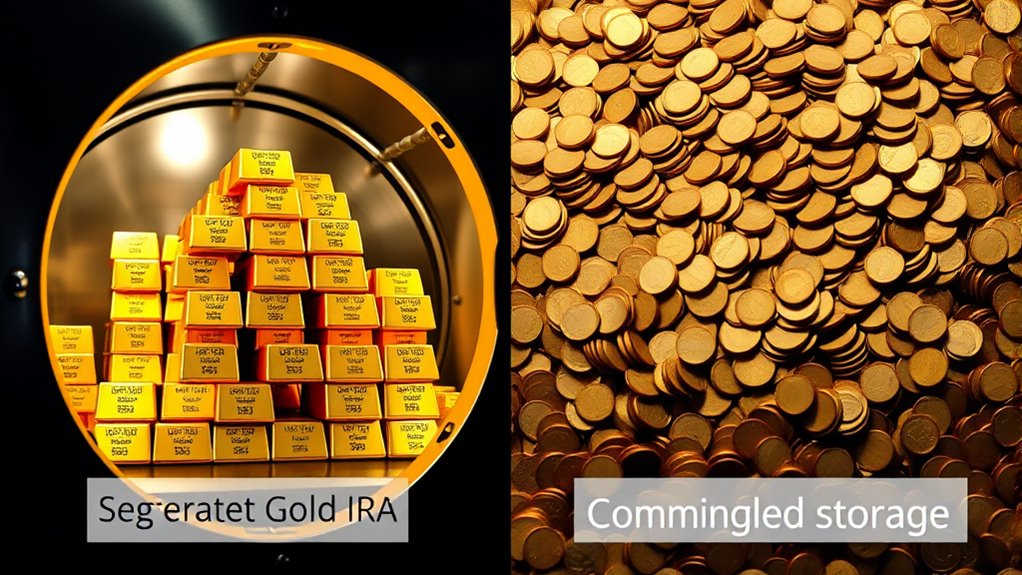
When deciding between segregated and commingled storage for your Gold IRA, it’s essential to understand their basic differences. Segregated storage keeps your gold in a dedicated vault space, ensuring your assets are physically separated from others. This method guarantees you’ll get back the exact bars or coins you purchased. On the other hand, commingled storage pools metals from multiple investors, using sub-accounting to track individual holdings. While this method is cost-effective, it only guarantees equivalent value rather than the specific metals. Both storage types comply with IRS regulations, but your choice hinges on whether you prioritize physical asset specificity or reduced costs. Knowing these differences helps you make an informed decision for your investment strategy. Additionally, it’s important to consider safety measures for storage to protect your investment from potential risks.
OLIXIS 3,500 Sq. Ft Dehumidifier, 50 Pints Dehumidifier for Basement with Drain Hose, 4.5L/1.19 Gallon Water Tank Quiet with Airflow Swing, Ideal Whole House Dehumidifiers for Home, Bedroom & Bathroom
[3,500 Sq. Ft Dehumidification Area & 50 Pints/Day with Under 41dB Operation] OLIXIS dehumidifier efficiently removes up to...
As an affiliate, we earn on qualifying purchases.
Security and Risk Considerations

Understanding the differences between segregated and commingled storage sets the stage for evaluating their security and risk implications. With segregated storage, your gold is securely stored separately, minimizing the risk of claims from others. This method provides peace of mind, knowing your assets are protected. On the other hand, commingled storage pools your investment with others, which can introduce theoretical risks if the depository encounters financial issues. Although reputable custodians implement tracking and insurance, the lack of individual identification can be concerning. Ultimately, if you prioritize asset protection and accountability, you may lean towards segregated storage. Alternatively, if you’re more cost-conscious and comfortable with shared assets, commingled storage might suit you better. Additionally, understanding the importance of insurance coverage can further enhance your decision-making process regarding storage options.

Dehumidifiers for Home, 50 Pint Dehumidifier for Basement, Bedroom, Bathroom with Drain Hose - Smart Quiet Dehumidifier with 24HR Timer - 3 Working Modes
【Smart 50 Pints Dehumidifier for Basement & Home】: Say goodbye to excess moisture with our Wellsle powerful dehumidifier,...
As an affiliate, we earn on qualifying purchases.
Cost Implications

While evaluating your options for Gold IRA storage, it’s essential to take into account the cost implications associated with segregated and commingled storage. Segregated storage typically incurs higher fees due to dedicated vault space and specialized handling. In contrast, commingled storage is more cost-effective, as it pools metals from multiple investors, reducing individual handling and vaulting expenses. Annual storage fees can range from $100 to $500 or more, depending on your chosen storage type and the size of your investment. This cost difference can substantially influence your decision based on your budget and security priorities. Some custodians may also have specific requirements regarding your storage choice due to these pricing differences, so be sure to clarify any terms before proceeding. Additionally, understanding the cost difference between the types of storage can help you make a more informed decision regarding your investment.

Britsou 50 Pints Dehumidifier for Basement with Drain Hose - Quiet Smart Operation with 3 Modes, 24HR Timer - Ideal for Home Bedroom, Bathroom, Small to Large Rooms
【50 Pints Dehumidifier Covers Up to 3500 Sq. Ft of Space】Birtsou 50 pint Dehumidifier is the perfect choice...
As an affiliate, we earn on qualifying purchases.
IRS and Custodian Compliance Requirements
Choosing the right storage method for your Gold IRA involves not just cost considerations but also compliance with IRS regulations. The IRS requires that your physical gold be stored in an approved third-party depository; home storage isn’t allowed. Your custodian plays a vital role in ensuring compliance, coordinating with depositories to secure your assets and facilitate transactions. It’s important to specify whether you’re opting for segregated or commingled storage in your custody agreement to avoid potential penalties. Approved facilities like Delaware Depository or Brinks Global Services are commonly used. Staying compliant protects your tax advantages and prevents any de-facto possession issues that could trigger unwanted taxes or penalties before you reach retirement age. Additionally, understanding the role of attention in managing your investments can enhance your overall financial strategy.
Liquidity and Access Considerations

When it comes to liquidity and access, the choice between segregated and commingled storage can considerably impact how you manage your Gold IRA. With segregated storage, you’ll receive the exact physical items you purchased, which enhances transparency and trust. This method is ideal if you value direct ownership and want immediate access to your specific precious metals. On the other hand, commingled storage means you might receive equivalent metals instead of your original bars or coins, though the value remains consistent. If cost savings are a priority and you view metals as fungible assets, commingled storage could be suitable. Regardless, accessing your assets requires going through custodians, with physical possession usually limited until retirement distributions. Additionally, the importance of the father-daughter relationship can also serve as a reminder that emotional investments, like those in precious metals, often require careful consideration and nurturing.
Frequently Asked Questions
Can I Switch From Commingled to Segregated Storage Later?
Yes, you can switch from commingled to segregated storage later. You’ll need to contact your custodian to initiate the process. They’ll guide you through any necessary paperwork and fees associated with the changeover. Keep in mind that segregated storage may have higher costs, so make sure it aligns with your investment goals. Once everything’s set up, you’ll enjoy the benefits of having your metals stored separately.
Are There Tax Implications for Choosing Either Storage Method?
Choosing between segregated and commingled storage doesn’t directly impact your tax situation, as both comply with IRS regulations for Gold IRAs. However, if you withdraw metals or transfer between storage types, you could trigger taxes or penalties. It’s essential to maintain compliance during these processes to protect your tax advantages. Always consult with your custodian to fully understand any potential tax implications related to your storage decisions and account activities.
How Do I Find an Approved Custodian for My Gold IRA?
To uncover an approved custodian for your Gold IRA, start by exploring reputable financial institutions that specialize in precious metals. You can also check the IRS website for a list of approved depositories. Don’t hesitate to ask potential custodians about their fees, services, and compliance measures. It’s wise to consult with a financial advisor, ensuring you make an informed choice that aligns with your investment goals and peace of mind.
What Happens if My Custodian Goes Out of Business?
If your custodian goes out of business, your gold IRA remains protected. The IRS requires custodians to store assets in approved depositories, so your metals are safe. You’ll need to contact the depository directly to understand your options and possibly transfer your assets to a new custodian. It’s essential you act promptly to guarantee compliance and access to your investments, so stay informed and reach out to the depository for guidance.
Can I Physically Inspect My Metals in Storage?
Yes, you can physically inspect your metals in storage, but it usually requires coordination with your custodian and the depository. You’ll need to schedule an appointment and follow their specific protocols for access. Keep in mind that some facilities may have restrictions on inspections, so it’s best to verify beforehand. Overall, being proactive about your investment helps ensure you stay informed and comfortable with your holdings.
Conclusion
When choosing between segregated and commingled storage for your gold IRA, it’s vital to weigh the benefits of security versus cost. While some might worry that segregated storage is too expensive, consider the peace of mind it brings, knowing your assets are uniquely yours. Ultimately, it’s about aligning your investment strategy with your personal risk tolerance and financial goals. By making an informed choice, you can safeguard your wealth effectively for the long term.