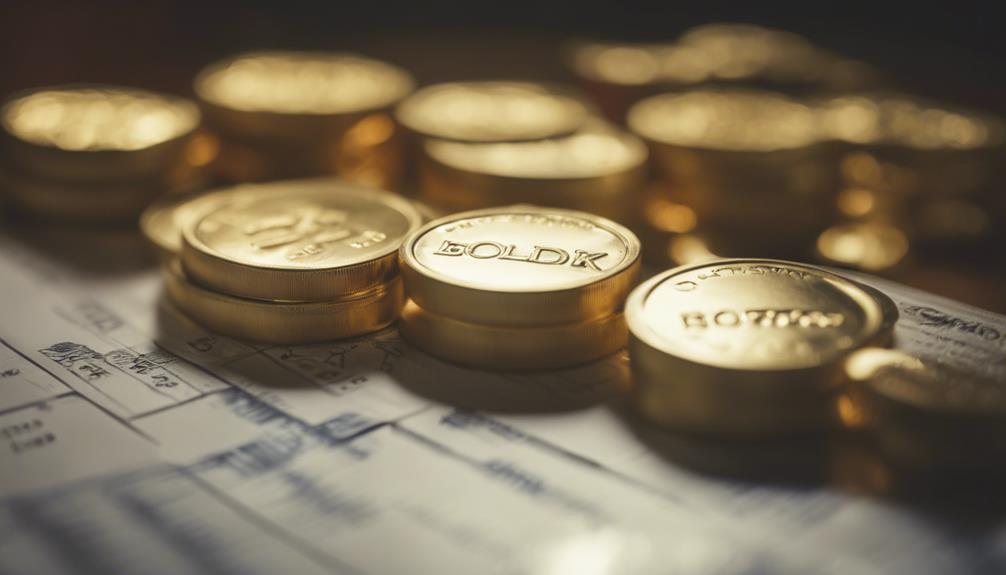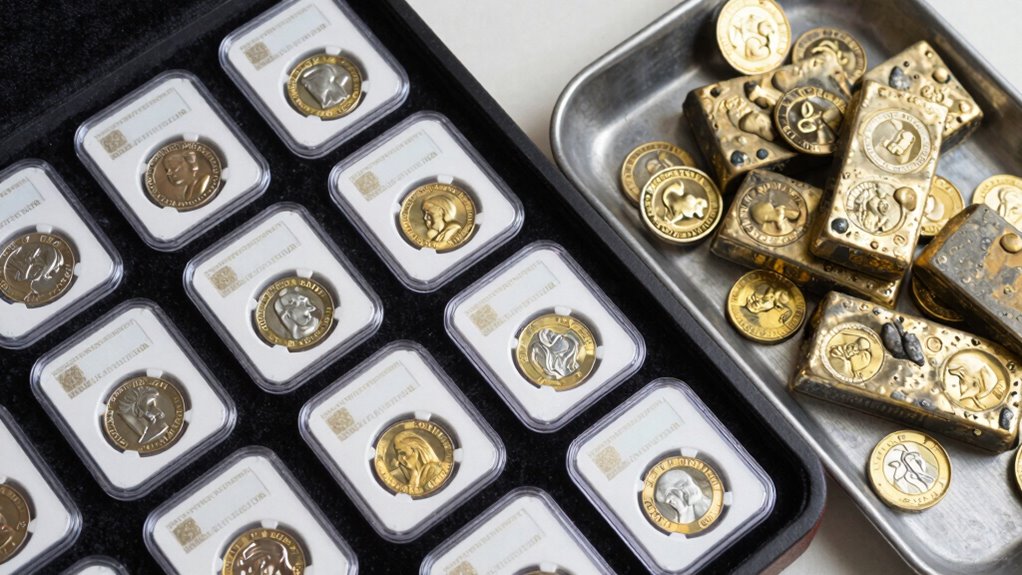

You need to store graded coins differently than bullion because their value relies heavily on maintaining their condition. Graded coins are fragile and can easily be damaged or tarnished if not handled properly, so they require protective environments, like secure slabs and climate control. In contrast, bullion is stored in bulk, focusing on practicality and cost-effectiveness. Understanding these differences helps you better preserve your collection’s worth—continuing will reveal more about how to do it right.

Get smart everyday buys delivered free with Prime
- Fast, free delivery on millions of items
- Prime Video, Amazon Music and more included
- Member-only deals all year
Key Takeaways
- Graded coins require careful handling and protective environments to preserve their condition and market value.
- They are more vulnerable to damage from environmental factors like humidity and sunlight.
- Secure, climate-controlled storage prevents theft and physical damage specific to their collectible nature.
- Bullion storage focuses on bulk, cost-effective solutions, while graded coins demand delicate preservation methods.
- Maintaining the coin’s condition through proper storage directly influences its long-term value.
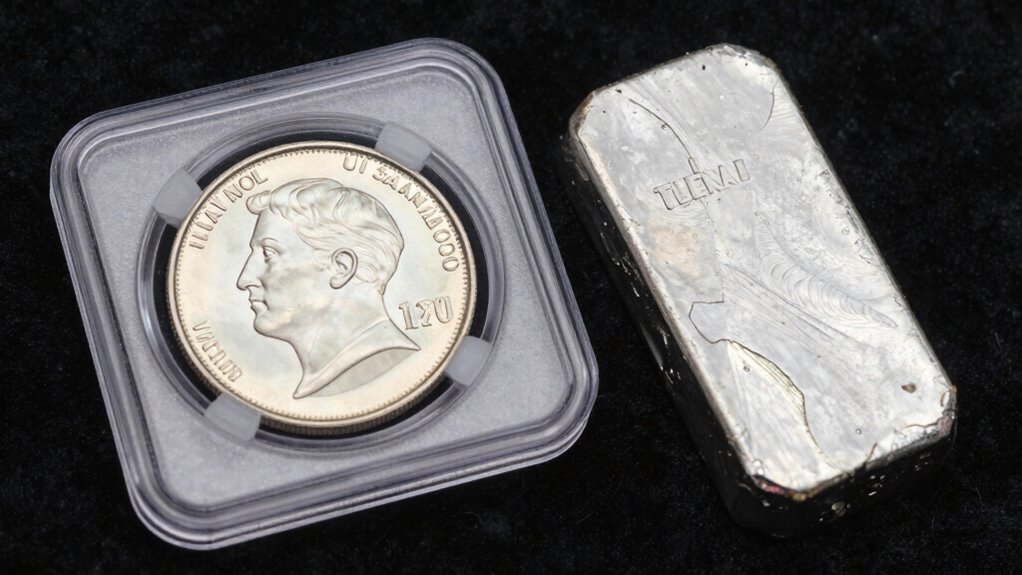
When it comes to storing your coins, understanding the differences between graded coins and bullion is fundamental. Graded coins have been professionally evaluated for condition and assigned a specific grade, which can greatly influence their value. Because of this, their preservation requires a more delicate approach. Unlike bullion, which is often stored in bulk or in simple bars, graded coins need careful handling to maintain their condition and prevent any damage that could lower their grade. Proper storage helps guarantee your investment stays in pristine condition, preserving its value over time.
Proper storage preserves graded coins’ value and condition, requiring careful handling and secure, protective environments.
In addition to maintaining their condition, theft prevention becomes particularly important for graded coins. Since these coins often carry a higher monetary value and are recognized collectibles, they’re more attractive targets for theft. You want to keep them secure in a way that discourages theft attempts. Using a high-quality safe or a secure, climate-controlled vault is a wise move. These solutions not only make theft less likely but also protect your coins from environmental hazards like humidity, which can cause corrosion or tarnishing. Proper storage techniques are essential to safeguarding your valuable collectibles against environmental and physical threats. With bullion, the focus is often on bulk storage and minimizing costs, but for graded coins, the emphasis shifts toward safeguarding their integrity and security.
Coin preservation is another essential reason why graded coins require different storage. The protective holders they come in—such as slabs—are designed to shield them from scratches, fingerprints, and other damage. Handling these coins with care and storing them in appropriate, padded containers helps prevent accidental damage. Additionally, avoiding exposure to direct sunlight and extreme temperatures is critical since fluctuations can cause the coin’s surfaces to deteriorate or the holder to warp. Proper climate control is vital for maintaining the coin’s condition, especially in fluctuating environments. For bullion, which is less sensitive to surface damage, storage can be more straightforward, but for graded coins, the goal is to maintain their graded condition, which directly impacts their market value. Furthermore, implementing proper environmental controls can significantly extend the lifespan of your collection by reducing the risk of deterioration over time.
Furthermore, proper storage can help prevent environmental damage, such as tarnishing due to humidity or temperature fluctuations. Ultimately, the way you store your graded coins should reflect their worth and fragility. You need to invest in secure, protective environments that prevent theft and guarantee their condition remains untouched. In contrast, bullion is more about cost-effective, bulk storage solutions that focus less on preservation and more on practicality. Recognizing these differences allows you to make smarter choices, ensuring your collection stays in top condition and retains its value, whether you’re a collector or an investor. Proper storage isn’t just a matter of convenience; it’s a pivotal step in protecting the long-term worth of your coins.
As an affiliate, we earn on qualifying purchases.
Frequently Asked Questions
How Does Grading Affect Coin Storage Requirements?
Grading standards greatly impact how you store coins because graded coins require careful preservation to maintain their condition. You need to use protective holders or cases that prevent scratches, tarnishing, or damage, as these could lower their grade. Unlike bullion, which can tolerate rougher storage, graded coins demand a controlled environment to preserve their numismatic value. Proper storage ensures your coin’s grade remains intact, protecting your investment and maintaining its collectible appeal.
Are Specialized Storage Options Necessary for Graded Coins?
Yes, specialized storage options are necessary for graded coins. You should avoid coin cleaning, as it can damage their value and integrity. Instead, use protective casings designed for graded coins, like acrylic holders or capsules, to prevent scratches and environmental damage. These casings keep the coins secure and preserve their condition, ensuring they stay in peak condition for appraisal or display. Proper storage helps maintain the coin’s graded value over time.
What Risks Do Graded Coins Face if Stored Improperly?
Storing your graded coins improperly is like leaving a delicate butterfly exposed to stormy weather. Environmental hazards like humidity, temperature swings, and pollutants can tarnish or damage their surfaces. Additionally, poor storage makes them vulnerable to theft, risking loss or theft of your valuable collection. To protect your investment, you need secure, climate-controlled environments that prevent environmental hazards and theft, ensuring your coins stay pristine and safe over time.
Can Graded Coins Be Stored With Bullion Safely?
You shouldn’t store graded coins with bullion because coin tampering risks increase, and storage environmental factors can harm their condition. Bullion is often less protected, making it vulnerable to scratches, dents, or corrosion that could compromise the coin’s value. Keep graded coins in a secure, controlled environment, separate from bullion, to prevent tampering, exposure to humidity, or temperature fluctuations that might damage their graded surfaces.
How Does Storage Impact the Value of Graded Coins?
Imagine your prized graded coin resting safely in a controlled environment, its shine reflecting history and significance. Proper storage safeguards its condition, directly impacting its value. Because collectors value historical significance and preferences for pristine condition, improper storage can cause damage, reducing worth. You need to protect your coin from humidity, scratches, and environmental factors. Well-maintained storage ensures your coin’s story and value remain intact for future generations to admire.
As an affiliate, we earn on qualifying purchases.
Conclusion
Remember, a stitch in time saves nine. Properly storing your graded coins separately from bullion helps preserve their value and integrity. Graded coins are more delicate and susceptible to damage, so giving them special treatment guarantees they stay in top condition. Don’t wait until it’s too late—invest in the right storage today, and you’ll thank yourself tomorrow. Treat your collection with the care it deserves, because in the end, a well-preserved coin is worth more.
professional graded coin slab holder
As an affiliate, we earn on qualifying purchases.
As an affiliate, we earn on qualifying purchases.
As an affiliate, we earn on qualifying purchases.
Halloween Picks
halloween
As an affiliate, we earn on qualifying purchases.