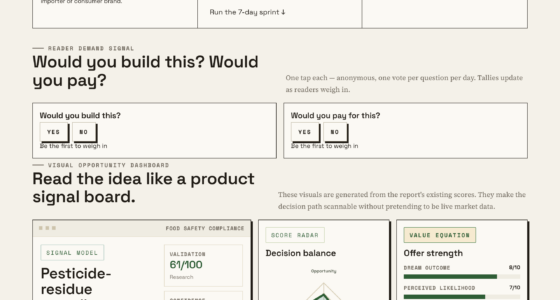
📊 Full opportunity report: Food Trends And The Growing Concern Over Uninspected Meat Recalls on IdeaNavigator AI — validation score, market gap, and execution plan.

Get smart everyday buys delivered free with Prime
- Fast, free delivery on millions of items
- Prime Video, Amazon Music and more included
- Member-only deals all year
TL;DR

Recent food trend monitoring reveals a surge in uninspected meat recalls, raising safety concerns. Experts emphasize the need for early detection systems to prevent potential health risks.
Recent data from food trend monitoring indicates a significant rise in the recall of uninspected beef, pork, and goat products, raising safety concerns among industry officials and regulators. This development underscores ongoing challenges in early detection of food safety issues, which could have implications for consumer health and regulatory oversight.
According to recent analysis, there has been an observable increase in recalls involving uninspected meat products, particularly beef, pork, and goat. These recalls are primarily prompted by safety violations, such as improper inspection procedures or undisclosed contamination. Food safety authorities have acknowledged that the rise in such recalls reflects gaps in current oversight processes, which often rely on reactive measures rather than proactive detection. Industry insiders note that these developments are occurring amid a broader trend of rapid food industry changes, including new sourcing practices and supply chain complexities.
Monitoring tools, such as Google Trends, flagged an 88/100 signal related to uninspected meat recalls, indicating heightened awareness and concern among consumers and industry players. While some recalls are confirmed by official notices, the full scope and scale of the issue remain uncertain, with investigations ongoing into the causes and potential systemic vulnerabilities. Experts warn that uninspected meat poses health risks, including the potential spread of foodborne illnesses, which makes early detection and intervention critical.
Implications for Food Safety and Industry Oversight
The rise in uninspected meat recalls highlights significant safety risks for consumers and exposes gaps in current regulatory frameworks. Without early detection systems, contaminated or unsafe products may reach consumers, leading to health incidents and erosion of public trust. For food brands, this trend underscores the importance of implementing robust monitoring and inspection protocols to prevent recalls and safeguard reputation. Regulators face increased pressure to enhance oversight mechanisms, especially as supply chains become more complex and globalized.
As an affiliate, we earn on qualifying purchases.
Recent Trends in Meat Inspection and Recall Patterns
Over the past year, food safety authorities have documented a growing number of recalls involving uninspected meat products, driven by lapses in inspection procedures or undisclosed contamination. The increase correlates with broader industry shifts toward decentralized sourcing and faster supply chains, which complicate traditional oversight methods. Historically, meat recalls have been reactive, often triggered after consumer complaints or lab testing, but recent signals suggest a need for more proactive, real-time monitoring solutions. The use of digital trend analysis tools, like Google Trends, has become an emerging method to identify potential risks early, but their efficacy is still being evaluated.
As an affiliate, we earn on qualifying purchases.
Extent and Impact of Uninspected Meat Recalls Still Unclear
While monitoring tools have flagged an increase in uninspected meat recalls, the full scope and impact remain uncertain. It is not yet clear how many products have been affected overall, nor the potential health consequences for consumers. Investigations are ongoing, and official data on the total volume and distribution of uninspected meat recalls have yet to be published. Experts caution that without comprehensive data, assessing the true risk level is challenging.
As an affiliate, we earn on qualifying purchases.
Enhanced Monitoring and Regulatory Response Expected
Moving forward, authorities and industry stakeholders are expected to implement more advanced monitoring systems, possibly integrating digital trend analysis with traditional inspection methods. Regulatory agencies may also tighten inspection protocols and increase transparency around recall data. Industry leaders are likely to review sourcing and inspection procedures to mitigate future risks. Ongoing investigations will clarify the scale of the issue, and new policies could emerge to address systemic vulnerabilities in meat safety oversight.
digital meat thermometer for safety
As an affiliate, we earn on qualifying purchases.
As an affiliate, we earn on qualifying purchases.
Key Questions
What causes uninspected meat to be recalled?
Recalls typically result from safety violations, such as improper inspection procedures, undisclosed contamination, or failure to meet regulatory standards.
Are consumers at risk from uninspected meat?
Potential health risks include foodborne illnesses from contamination or unsafe processing, but the exact risk level depends on the extent of contamination and the effectiveness of recalls.
What measures are being taken to improve meat safety oversight?
Authorities are exploring advanced monitoring tools, stricter inspection protocols, and increased transparency to prevent future uninspected meat recalls.
How can consumers protect themselves?
Consumers should stay informed about recalls, buy from reputable sources, and follow safe handling and cooking practices for meat products.
Will this trend continue?
The trajectory depends on regulatory responses and industry adaptations; ongoing investigations and policy changes may influence future recall patterns.
Source: IdeaNavigator AI
Halloween Picks
halloween
As an affiliate, we earn on qualifying purchases.