
📊 Full opportunity report: Estate And Inheritance Facilitator Marketplace on IdeaNavigator AI — validation score, market gap, and execution plan.

Get smart everyday buys delivered free with Prime
- Fast, free delivery on millions of items
- Prime Video, Amazon Music and more included
- Member-only deals all year
TL;DR
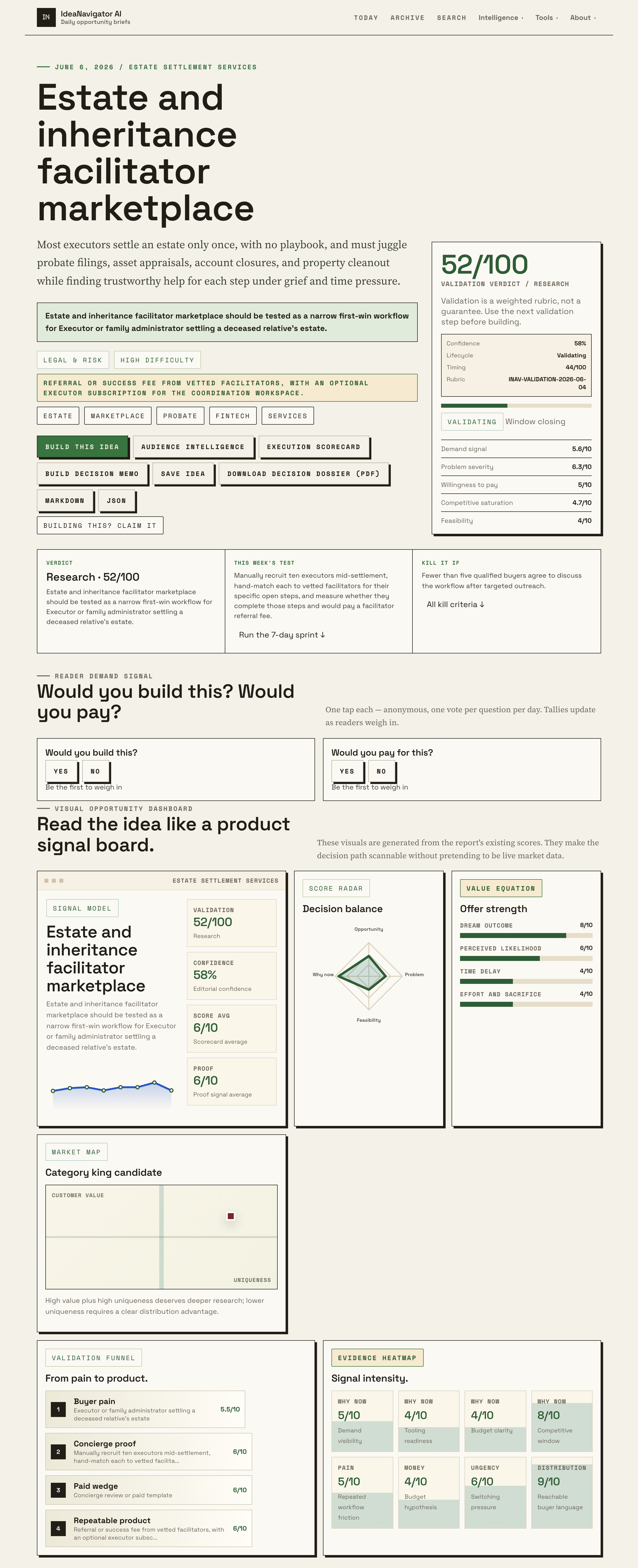
A new estate and inheritance facilitator marketplace is in testing, aiming to simplify estate settlement for executors. The platform will offer guided workflows and vetted service matching, addressing a growing market need.
A new estate and inheritance facilitator marketplace is being tested to streamline estate settlement for executors and family administrators. The platform aims to address common challenges faced during estate settlement, especially as the volume of multi-state and digital asset estates increases amid the largest generational wealth transfer in history.
The marketplace is designed to serve executors or family administrators who manage estate settlements, often under significant emotional and time pressures. Currently, most executors handle estate tasks only once and lack a standardized process, leading to difficulties in coordinating probate filings, asset appraisals, property cleanouts, and account closures.
The proposed MVP involves a guided intake process that diagnoses the specific steps needed for each estate. It then matches these steps with vetted facilitators—such as appraisers, legal advisors, or property managers—and tracks their completion. This concierge-style approach aims to improve efficiency before launching a broader self-serve marketplace.
Revenue is expected to come from referral or success fees paid by facilitators, along with optional subscription fees for executors seeking ongoing coordination tools. The initial validation involves manually recruiting ten executors mid-settlement, assigning facilitators for their open tasks, and measuring whether they complete those steps and are willing to pay for the service.
Implications of a Guided Estate Settlement Platform
This initiative could significantly reduce the complexity and emotional burden of estate settlement, especially as more estates involve multiple states and digital assets. By providing a structured, vetted process, the platform may improve settlement speed, reduce errors, and increase trust in facilitator services.
As the largest wealth transfer in history continues, the demand for efficient estate management solutions is expected to grow. A successful pilot could lead to broader adoption and potentially reshape how estate settlement services are coordinated and delivered.
Products Worth Considering

LG 27GS60QC-B Ultragear 27-inch Curved Gaming Monitor (QHD, 180Hz, 1ms, 1000R)

LG UltraGear 27-inch QHD OLED Gaming Monitor, 240Hz, 0.03ms, G-SYNC Compatible, FreeSync Premium Pro, HDR True Black 400

Canon SELPHY CP1500 Wireless Photo Printer Bundle with 108 Sheets of KP-108 Paper, 3 Ink Cartridges, and Cleaning Cloth
As an affiliate, we earn on qualifying purchases.
Growing Need for Streamlined Estate Settlement Services
Estate settlement has traditionally been a complex, fragmented process involving multiple service providers, often coordinated informally or through scattered directories. The current landscape lacks a centralized, guided approach, which becomes more problematic as estates increase in size, geographic scope, and digital complexity.
The ongoing generational wealth transfer, estimated to involve over $68 trillion in the U.S. alone, is accelerating demand for scalable solutions. Digital assets and multi-state properties add further layers of complication, highlighting the need for more integrated facilitation services.
Until now, few platforms have attempted to offer a comprehensive, guided experience that diagnoses estate needs and ensures trusted facilitator engagement from start to finish.
“The current estate settlement process is often a one-time ordeal for executors, who lack a clear playbook and face scattered service options.”
— an anonymous researcher
Uncertainties About Platform Effectiveness and Adoption
It is not yet clear how effectively the pilot will validate the matching and tracking approach, or whether executors will be willing to pay for such services at scale. The success depends on the quality of facilitator vetting, user experience, and trust-building measures, which are still being tested.
Further, the broader market response and competitive landscape remain uncertain, as traditional service directories continue to operate without integrated workflows.
Next Steps for Pilot Testing and Market Validation
The initial phase involves recruiting ten executors in the midst of estate settlement, assigning vetted facilitators for their open steps, and measuring completion rates and willingness to pay. Based on these results, the platform will refine its matching algorithms and user interface.
If successful, plans include expanding pilot recruitment, integrating more facilitators, and preparing for a broader launch that could reshape estate settlement workflows over the next year.
Key Questions
How does the platform determine which facilitators to match with estate tasks?
The platform uses a vetting process to select trusted facilitators based on expertise, reputation, and past performance, then diagnoses estate-specific needs to match accordingly.
Will this service be available nationwide?
The initial test is limited to specific regions, but the goal is to expand nationwide as the platform matures and facilitator network grows.
What types of estate tasks will the platform handle?
Initially, the focus is on probate filings, asset appraisals, property cleanouts, and account closures, with plans to add more services over time.
How will the platform ensure trust and quality among facilitators?
Facilitators will undergo vetting and ongoing performance monitoring, with user feedback helping maintain high standards.
What are the main benefits for executors using this platform?
Executors can expect a guided, less stressful process with clearer steps, trusted service providers, and progress tracking, reducing the burden during a difficult time.
Source: IdeaNavigator AI