
📊 Full opportunity report: AI In 2026: The 9 Most Exciting Trends on ThorstenMeyerAI.com — validation score, market gap, and execution plan.

Get smart everyday buys delivered free — and shop member deals
- Fast, free delivery on millions of items
- Access to Prime Big Deal Days deals on October 6–7
- Prime Video, Amazon Music and more included
TL;DR
In 2026, nine major AI trends are transforming industries, from advanced automation to ethical AI frameworks. Experts highlight these developments as pivotal for the future of technology and society.
Artificial intelligence in 2026 is marked by nine key trends that are reshaping industries, from automation and ethical frameworks to industry-specific applications, according to recent expert analyses. These developments are set to influence technology, business, and society, making understanding them essential for stakeholders across sectors. For more insights, see AI tools & trends: Why keeping track of Claude Fable is critical.
Experts from leading AI research institutions and industry leaders have identified nine major trends defining the AI landscape in 2026, as detailed in the most influential AI trends for 2026. These include the rise of advanced automation tools, the integration of ethical AI principles, and breakthroughs in industry-specific AI applications such as healthcare, finance, and manufacturing.
One confirmed trend is the widespread adoption of autonomous systems that now perform complex tasks with minimal human oversight, driven by improvements in machine learning algorithms and hardware capabilities. For a review of the latest hardware options, see 9 Best 3D Printers in 2026. Additionally, there is a clear shift towards embedding ethical considerations into AI development, with new frameworks and regulations gaining global traction, according to sources from the AI Ethics Consortium.
Industry-specific AI solutions are becoming more sophisticated, with healthcare AI now capable of diagnosing diseases with higher accuracy, and financial AI systems managing risk more effectively. These advancements are supported by recent deployments and pilot programs, as reported by industry insiders and technology analysts.
The 9 picks
- 1
 Bambu Lab P1S Combo 3D Printer with Auto Bed Leveling and Multi-Color PrintingView on Amazon →
 - 2
 Creality K2 Combo 3D Printer with Multicolor Printing, Auto Leveling, and Sma…View on Amazon →
 - 3
 FlashForge Adventurer 5M Pro 3D Printer with Auto Printing System, 600mm/s Hi…View on Amazon →
 - 4
 Anycubic Kobra X Multicolor 3D Printer with 19-Color Capability and AI Monito…View on Amazon →
 - 5
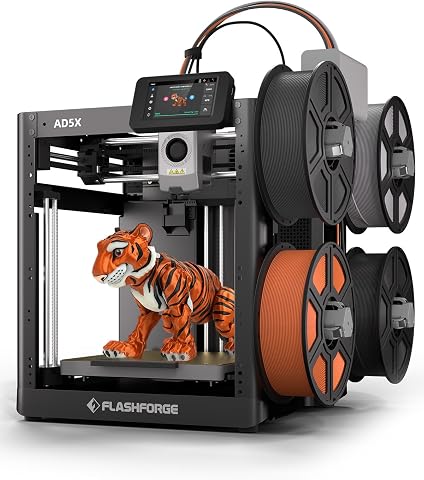 FLASHFORGE AD5X Multi-Color 3D Printer, CoreXY, 600mm/s High-Speed, Auto Leve…View on Amazon →
 - 6
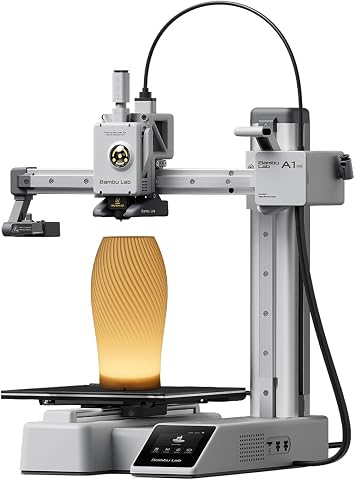 Bambu Lab A1 Mini 3D Printer + LED Lamp Kit, Beginner-Friendly, Quiet OperationView on Amazon →
 - 7
 FlashForge Adventurer 5M 3D Printer with Auto Leveling and High-Speed PrintingView on Amazon →
 - 8
 Creality Ender 3 V3 SE 3D Printer, 250mm/s Faster Print Speed, CR Touch Auto…View on Amazon →
 - 9
 3D Printer with Auto Leveling, 280°C Direct Extruder, CoreXY Metal Structure,…View on Amazon →
Why These AI Trends Are Game-Changing in 2026
The identified trends in AI for 2026 are significant because they directly impact economic productivity, ethical standards, and societal safety. Increased automation can boost efficiency but also raises concerns about job displacement. Ethical AI frameworks aim to address bias and accountability, fostering public trust. Industry-specific innovations improve service quality and operational efficiency, influencing global markets and healthcare outcomes. Understanding these trends helps policymakers, businesses, and consumers prepare for the evolving AI landscape.
Key Developments Leading Up to 2026 AI Trends
Over the past few years, AI has transitioned from experimental technology to integral business and societal tools. Major milestones include the deployment of large language models, the adoption of AI regulations in several jurisdictions, and the expansion of AI into critical sectors like healthcare and finance. These developments have laid the groundwork for the current wave of innovations observed in 2026, driven by continuous improvements in AI algorithms, hardware, and regulatory frameworks.
“The AI trends we see in 2026 are not just incremental; they are transformative, especially in automation and ethical governance, shaping a more responsible and efficient future.”
— Dr. Lisa Chen, AI Research Lead at TechInnovate
Unconfirmed Aspects and Emerging Questions in AI 2026
While the trends are well-documented, several aspects remain uncertain. The long-term societal impacts of increased automation, such as potential job displacement and economic inequality, are still debated. The pace of regulatory adoption and global cooperation on AI ethics varies, creating uncertainties about future governance. Additionally, the extent to which industry-specific AI solutions will be accessible and affordable worldwide is still developing, with disparities likely to persist.
Next Steps for AI Development and Policy in 2026
Moving forward, experts anticipate continued innovation in AI hardware and algorithms, with a focus on making AI more accessible and ethically aligned. Policymakers are expected to refine regulations to balance innovation with safety. Industry leaders will likely expand pilot programs into full-scale deployments, and international cooperation on AI standards may increase. Monitoring these developments will be crucial for understanding AI’s evolving role in society.
Key Questions
What are the most impactful AI trends in 2026?
The most impactful trends include advances in automation, integration of ethical AI principles, and industry-specific AI solutions that improve healthcare, finance, and manufacturing.
How might AI affect jobs in 2026?
Automation could displace some jobs while creating new roles in AI development, maintenance, and oversight. The overall impact depends on policy responses and industry adaptation.
Are there new regulations for AI in 2026?
Yes, several regions are implementing or updating AI regulations to address safety, bias, and accountability, though global consensus remains a work in progress.
Will AI become more accessible to small businesses?
As AI tools become more mature and affordable, small businesses are increasingly adopting AI solutions, though disparities between regions and sectors may persist.
What are the biggest ethical concerns with AI in 2026?
Key concerns include bias and discrimination, privacy violations, and the potential misuse of autonomous systems. Efforts are underway to embed ethical principles into AI development.
Source: ThorstenMeyerAI.com
Fall Picks
fall essentials
As an affiliate, we earn on qualifying purchases.