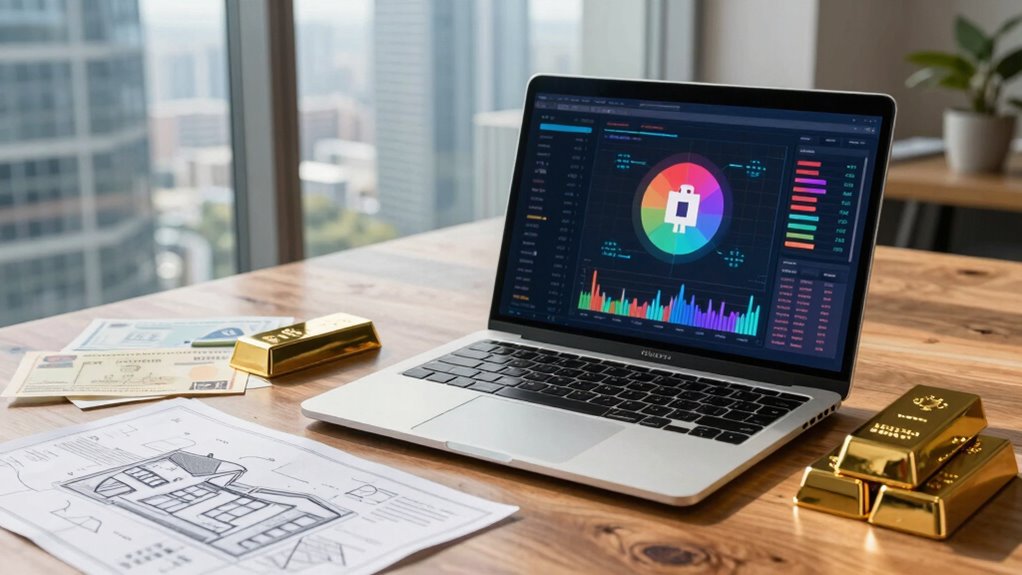

Real-world asset tokens are shaping up as an exciting next trend in the crypto space. They let you own tangible assets like real estate, art, or commodities digitally, making investments more transparent and accessible. By enabling fractional ownership, they lower barriers and increase liquidity, offering a new way to diversify your portfolio. If you keep exploring, you’ll discover how this innovative approach could transform traditional investing and redefine your opportunities in the digital economy.

Get smart everyday buys delivered free with Prime
- Fast, free delivery on millions of items
- Prime Video, Amazon Music and more included
- Member-only deals all year
Key Takeaways
- Real-world asset tokens digitize tangible assets, offering stability over speculative altcoins.
- They enable fractional ownership, making high-value assets more accessible and liquid.
- Growing market adoption signals increasing integration into the digital economy.
- These tokens democratize investments, reducing barriers for individual investors.
- Their practical applications hint at a significant shift toward blockchain-based asset management.

As the cryptocurrency landscape evolves, real-world asset tokens are gaining traction, signaling a shift toward more tangible and practical applications of blockchain technology. These tokens represent physical assets like real estate, commodities, or art, allowing you to digitize ownership in a way that’s transparent and easily transferable. This shift is significant because it moves beyond the speculative nature of many altcoins, offering a way to anchor digital assets to real-world value. With real-world asset tokens, you gain a new level of digital ownership that’s backed by tangible assets, making your investments more stable and meaningful.
Real-world asset tokens transform digital ownership by linking it to tangible, stable assets like real estate and art.
One of the key advantages of these tokens is improved asset liquidity. Traditional assets, such as property or fine art, often take time and effort to buy or sell. But with blockchain-based tokens, you can split these assets into smaller units, enabling fractional ownership. This means you don’t need to sell the entire asset to liquidate part of your investment. Instead, you can trade tokens easily on digital exchanges, opening up liquidity channels that previously didn’t exist. For you, this translates into quicker access to cash and more flexible investment opportunities, especially as the market for real-world asset tokens continues to grow.
You might also notice that real-world asset tokens can democratize access to high-value investments. Instead of needing large amounts of capital to buy a property or a rare piece of art, you can purchase a fraction of the asset through tokens. This lowers the barrier to entry and allows you to diversify your portfolio more effectively. Plus, because blockchain technology ensures transparency and security, you can verify ownership and transaction history at any time, reducing fraud risks. As these tokens become more widely accepted, they could serve as a bridge connecting traditional assets and the digital economy, making your investments more versatile. Additionally, the use of digital concepts in tokenization fosters innovation in asset management and transfer processes, especially when combined with blockchain technology.
As an affiliate, we earn on qualifying purchases.
Frequently Asked Questions
How Do Real-World Asset Tokens Differ From Traditional Security Tokens?
Real-world asset tokens differ from traditional security tokens mainly in how they represent digital ownership of physical assets, like real estate or commodities, through blockchain security. You can directly own and transfer these tokens, which are backed by tangible assets, unlike traditional security tokens that often represent shares or financial instruments. This integration of physical assets into blockchain enhances transparency, liquidity, and security, making real-world asset tokens a more versatile investment option.
What Regulatory Challenges Face Real-World Asset Tokens?
You face regulatory challenges with real-world asset tokens primarily around legal compliance and investor protection. Authorities often scrutinize these tokens to ensure they meet securities laws and anti-fraud measures. Managing different jurisdictions’ regulations can be complex, risking legal penalties or forced halts. To succeed, you need to establish transparent practices, adhere to evolving laws, and prioritize investor protection, building trust and legitimacy in this emerging asset class.
Can Real-World Asset Tokens Provide Better Liquidity Than Physical Assets?
Yes, real-world asset tokens can offer better liquidity than physical assets. By converting tangible assets into digital ownership, you can trade them more easily on blockchain platforms, enabling quicker transactions and access to a broader market. This improves asset diversification, allowing you to spread investments across various assets without the constraints of physical limitations. As a result, you gain more flexibility and efficiency in managing your portfolio.
How Are Valuation and Pricing Determined for Real-World Asset Tokens?
Ever wondered how valuation and pricing for real-world asset tokens are set amidst market volatility? You’ll find that experts rely on valuation models, which analyze factors like asset income, market conditions, and comparable sales. These models help determine fair value, but volatility can cause fluctuations. So, prices aren’t fixed; they evolve based on real-time data and investor sentiment, making transparency and regular updates essential for trust and accuracy.
What Industries Are Most Likely to Adopt Real-World Asset Tokens First?
You’ll likely see industries like real estate, luxury goods, and collectibles adopting real-world asset tokens first because they benefit from enhanced digital ownership and asset diversification. These sectors can tokenize assets to increase liquidity, attract new investors, and simplify ownership transfer. By embracing these tokens, you gain easier access to diverse investment opportunities, making it advantageous for industries aiming to modernize asset management and broaden their market reach through blockchain technology.
art fractional ownership platform
As an affiliate, we earn on qualifying purchases.
As an affiliate, we earn on qualifying purchases.
Conclusion
As you explore the rise of real-world asset tokens, it’s clear they could reshape the crypto landscape, bridging tangible assets with blockchain’s promise. Like a dawn breaking over a new frontier, these tokens invite you to imagine a future where your investments aren’t just digital dreams but rooted in reality. Will they become the next altcoin wave? Only time will tell. But one thing’s certain: the horizon of possibilities has never looked more promising.
As an affiliate, we earn on qualifying purchases.
blockchain asset management tools
As an affiliate, we earn on qualifying purchases.
As an affiliate, we earn on qualifying purchases.
Fall Picks
fall essentials
As an affiliate, we earn on qualifying purchases.