

The SEC’s growing scrutiny of memecoins reflects concerns over market volatility and investor protection. Since memecoins typically lack intrinsic value and function more like collectibles, the SEC may target their hype to enforce regulations. This could lead to increased oversight and potential enforcement actions against projects in the space. As the landscape evolves, it’s important to stay updated on these developments, especially if you’re considering dipping your toes into the memecoin market.
Key Takeaways
- The SEC may target memecoins due to their speculative nature and lack of investor protections.
- Memecoins generally do not qualify as securities, complicating regulatory enforcement.
- Individual assessments are necessary to determine if certain memecoin offerings disguise securities.
- Increased regulatory scrutiny could lead to stricter enforcement and impact the memecoin market.
- Awareness of evolving regulations is crucial for investors to mitigate risks associated with memecoins.

Crypto Wealth Without Wall Street: The Underdog Investor's Guide to Cryptocurrency, Bitcoin, DeFi, Yield Farming, and Creating Financial Freedom Without Banks
As an affiliate, we earn on qualifying purchases.
As an affiliate, we earn on qualifying purchases.
Understanding Memecoins: Definition and Characteristics

What exactly are memecoins, and how do they differ from traditional cryptocurrencies? Memecoins are digital assets inspired by internet memes, trends, or characters, primarily aimed at entertaining online communities. Unlike traditional cryptocurrencies, which often have specific use cases or underlying technology, memecoins lack intrinsic value and functional utility. You’ll find that their worth is largely driven by social sentiment and speculative trading rather than a solid investment foundation. Moreover, memecoins are typically bought for fun and cultural engagement, not serious financial gain. However, their high volatility poses significant risks, as their market value can swing wildly based on collective enthusiasm rather than any tangible backing. Remember, they’re more about community than profit. The rise of memecoins illustrates the importance of user engagement in shaping market dynamics.

Cryptocurrency Regulation: A Primer
As an affiliate, we earn on qualifying purchases.
As an affiliate, we earn on qualifying purchases.
SEC’s Current Regulatory Stance on Memecoins

As the landscape of digital assets evolves, the SEC has clarified its regulatory stance on memecoins, indicating they generally don’t qualify as securities under federal laws. Here are some key points to understand:
- Memecoins resemble collectibles, driven by speculation rather than investment.
- They lack the characteristics of securities, such as profit expectation from promoters.
- Transactions don’t require SEC registration, leaving investors without certain protections.
- The SEC emphasizes that memecoins are primarily for entertainment, not functional utility.
This clarity aims to reduce market uncertainty, but it also highlights the risks you face as an investor in memecoins. Without regulatory oversight, exercising caution is essential when maneuvering through this volatile market. Additionally, the lack of regulatory frameworks for memecoins may lead to increased risks for investors.

Crypto: How to Trade Memes and Profit A Short Practical Guide On Memecoin Trading for All Levels (Beginner, Intermediate, Advanced)
As an affiliate, we earn on qualifying purchases.
As an affiliate, we earn on qualifying purchases.
The Howey Test and Its Implications for Memecoins
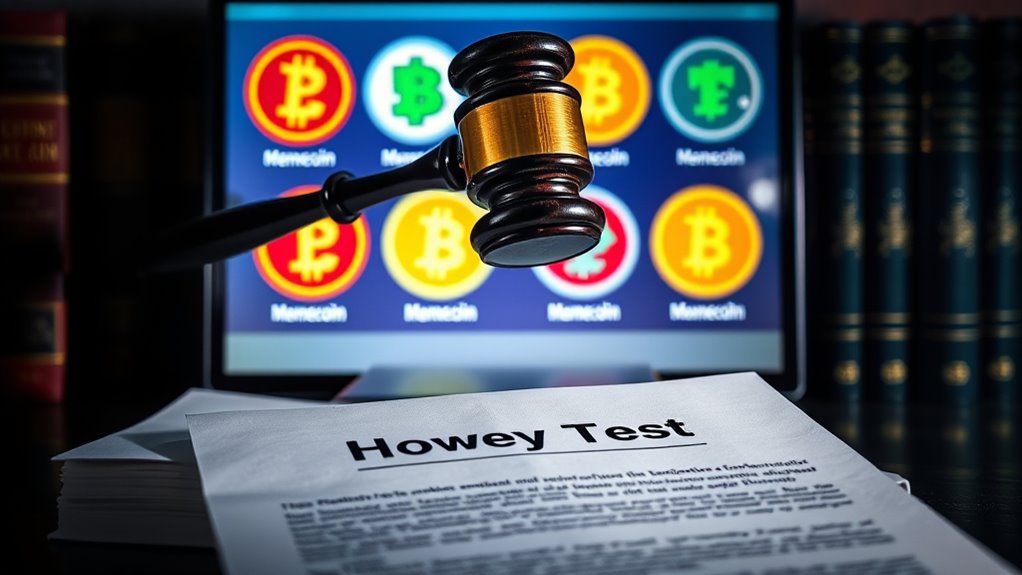
Understanding the Howey test is key to grasping why memecoins typically fall outside the definition of securities. This test evaluates whether an investment contract exists, focusing on expectations of profit from a common enterprise. Memecoins usually fail this criterion because they lack a structured investment opportunity and depend more on community sentiment than on promoter-driven profits. They’re often seen as collectibles rather than securities, attracting buyers primarily for fun and social engagement. Consequently, transactions involving memecoins don’t require SEC registration, leaving investors without federal protections. This distinction highlights the speculative nature of memecoins and why regulators may view them differently from traditional securities, emphasizing the importance of understanding their unique market dynamics. Additionally, the Leave No Trace principles in camping can be compared to the need for responsible investment practices in the memecoin market.

Crypto Seed Cold Storage Wallet with Engraver Pen Kit – Metal Plate and Etching Tool for Cryptocurrency Password Phrase Backup and Recovery
All Inclusive Kit for Crypto Seed Key Storage – Comes a Stainless Steel Plate & Tungsten Steel Engraving…
As an affiliate, we earn on qualifying purchases.
As an affiliate, we earn on qualifying purchases.
Potential Regulatory Challenges and Enforcement Considerations
While the SEC has clarified its stance on memecoins, significant regulatory challenges and enforcement considerations persist. To navigate this landscape, you should be aware of the following:
The SEC’s position on memecoins reveals ongoing regulatory challenges that investors must navigate carefully.
- Some memecoin offerings might disguise securities, risking fraudulent activity.
- Determining securities status often requires a case-by-case analysis, complicating enforcement.
- Commissioner Crenshaw advocates for individual assessments, highlighting memecoins’ diverse characteristics.
- The lack of a clear definition for “memecoin” complicates regulatory classification.
These factors create uncertainty, making it essential for you to stay informed. Although the SEC has provided some clarity, ongoing scrutiny of memecoins means that the regulatory environment may shift, impacting your investment strategies and risk assessments. Additionally, the SEC’s focus on case-by-case analysis reflects its effort to address the unique characteristics of various digital assets.
The Role of Other Regulatory Bodies in Memecoin Oversight
How do other regulatory bodies fit into the oversight of memecoins? While the SEC primarily focuses on securities, other agencies like the CFTC are vital too. The CFTC could classify memecoins as commodities under the Commodity Exchange Act, allowing it to address fraud and market manipulation. Additionally, state regulators may step in, especially regarding consumer protection and fraud outside federal securities laws. This multi-agency involvement can create a fragmented regulatory landscape, with different bodies potentially enforcing various aspects of memecoin transactions. It’s essential for you to stay aware of how these overlapping jurisdictions might affect your investments, as enforcement actions could arise from misrepresentation or improper marketing practices surrounding memecoins. Furthermore, electric dirt bikes highlight the need for regulatory clarity, as emerging technologies often face similar challenges in compliance.
Legislative Developments Impacting Memecoins

As the regulatory landscape evolves, legislative developments are shaping the future of memecoins and their market dynamics. Here are some key factors to contemplate:
- The GENIUS Act of 2025 introduces stringent requirements for stablecoin issuers, hinting at broader crypto regulations.
- While there’s no outright ban on memecoins, failure to comply with regulations could lead to restrictions.
- The SEC Crypto Task Force is actively monitoring trends, which may influence future enforcement actions.
- The new administration’s evolving policies could create uncertainty, impacting how memecoins are treated under the law.
- Understanding investment strategies is crucial for navigating the potential risks associated with memecoins.
As these developments unfold, you’ll want to stay alert to how changes may affect your involvement in memecoins and the overall market landscape.
Market Implications for Investors in Memecoins

As an investor in memecoins, you need to be aware of the significant regulatory protection gaps that leave you vulnerable. The speculative nature of these assets means you’re taking on heightened risks without the safety nets provided by federal securities laws. Given the absence of oversight, it’s essential to evaluate your investment strategy carefully before jumping into this volatile market. Additionally, understanding the lack of regulatory oversight can help you navigate the potential risks associated with these investments.
Regulatory Protection Gaps
While the SEC’s current stance on memecoins offers some clarity, it also highlights significant regulatory protection gaps that could impact investors. These gaps create an environment where you might face risks, such as:
- Lack of Legal Recourse: You can’t seek protection under federal securities laws if things go wrong.
- Increased Fraud Risk: Unscrupulous actors may exploit these gaps, leading to potential scams.
- Market Volatility: The absence of regulatory oversight can fuel unpredictable price swings.
- Uncertain Future Regulations: Changes in policy could suddenly alter the landscape, affecting your investments.
These factors emphasize the importance of being cautious and informed when steering through the memecoin market.
Speculative Investment Risks
Investing in memecoins can feel thrilling, but it also carries significant speculative risks that you should be aware of. These digital assets often lack intrinsic value and depend on market sentiment, making them highly volatile. Since memecoins don’t typically meet the definition of securities, you won’t have protections under federal laws, leaving you exposed to potential losses. The absence of regulation invites fraudulent schemes, increasing the risk of scams targeting unsuspecting investors. Additionally, the market’s unpredictable nature means prices can swing dramatically, often without warning. Before diving into memecoins, it’s imperative to assess your risk tolerance and consider whether the potential rewards outweigh the risks involved in such speculative investments. Moreover, understanding market volatility can help you make more informed decisions about your investments.
Frequently Asked Questions
Can Memecoins Be Classified as Collectibles Under Tax Laws?
Yes, memecoins can be classified as collectibles under tax laws, depending on their characteristics and your intent when purchasing them. If you buy memecoins primarily for entertainment or cultural purposes rather than as an investment, they might fall under the collectibles category. This classification could impact how you report gains or losses on your taxes. Always consult a tax professional to guarantee you’re compliant with current regulations and reporting requirements.
What Are the Potential Risks of Investing in Memecoins?
Investing in memecoins is like riding a rollercoaster—exciting but full of ups and downs. You’re diving into a market driven by speculation and social trends, which means your investment can swing wildly in value. Without regulatory protections, you risk losing your money to fraud or market manipulation. Plus, since there’s no intrinsic value or utility, you might find yourself holding onto something that could plummet without warning. Stay cautious!
How Can I Identify Fraudulent Memecoin Schemes?
To identify fraudulent memecoin schemes, look for red flags like unrealistic promises of high returns, lack of transparency, or anonymous teams behind the project. Research the project’s purpose—if it’s primarily for entertainment or lacks utility, it’s risky. Check for community engagement; scams often lack genuine support. Be cautious of hype-driven marketing tactics and always verify information from multiple sources to avoid falling victim to deceptive practices in this volatile market.
Are There Any Successful Memecoin Projects With Real-World Utility?
Yes, there are successful memecoin projects with real-world utility. You’ll find some memecoins supporting charitable causes, enabling microtransactions, or integrating with gaming platforms. These projects often leverage community engagement, drive social interaction, and foster a unique cultural identity. While they may start as memes, their functionality can develop. Always research the project’s purpose and community impact to guarantee you’re investing in something meaningful, rather than just hopping on the hype train.
What Should I Consider Before Promoting a Memecoin?
Before promoting a memecoin, consider its utility, community engagement, and market volatility. Assess whether it’s driven by genuine interest or mere speculation. Make certain you’re aware of potential regulatory implications and the risks involved, as investors often lack protections. Transparency is key; be honest about the project’s goals and any associated risks. Finally, evaluate the potential for fraud or misrepresentation, as these factors can considerably impact your credibility and the project’s success.
Conclusion
As the SEC zeroes in on the memecoin frenzy, it’s essential to stay informed and vigilant. The potential for regulatory action could shake the market like an earthquake, leaving investors scrambling. By understanding the landscape and the implications of the Howey Test, you can navigate these waters with more confidence. Keep an eye on developments, as the memecoin hype may face a reality check that could change everything for investors. Stay sharp and prepared!