
🔍 Read the full analysis: 15 AI Student Planners That Will Transform How You Study In 2026 on ThorstenMeyerAI.com

Get smart everyday buys delivered free with Prime
- Fast, free delivery on millions of items
- Prime Video, Amazon Music and more included
- Member-only deals all year
TL;DR
In 2026, 15 AI-driven student planners are revolutionizing how students organize their schedules and study routines. These tools vary in features, cost, and usability, catering to different student needs and budgets.
Twenty-five AI-powered student planners have been introduced for 2026, with 15 emerging as the most promising options. These tools leverage artificial intelligence to provide personalized reminders, resource suggestions, and adaptive scheduling, aiming to fundamentally change how students manage their academic routines. The most notable among them is the Global Datebooks 2026-2027 Student Planner, which offers seamless AI integration and tailored notifications, making it a top choice for students seeking advanced productivity tools. You can learn more in the original analysis. These developments matter because they could significantly improve student organization, reduce stress, and enhance academic performance by automating routine tasks and offering personalized support.
Top-ranked AI student planners for 2026 include features such as personalized reminders based on individual schedules, adaptive learning of study habits, and resource suggestions tailored to coursework. For tips on how to make the most of these tools, see Optimize Your Study Schedule With AI Student Planners In 2026. The Global Datebooks 2026-2027 stands out for its comprehensive AI capabilities, including automatic task prioritization and real-time updates across devices. For students on a budget, the Decorably Weekly & Monthly College Student Planner provides essential planning functions without the premium price, focusing on core scheduling tools and basic AI automation. The Aesthetic 2027 Student Planner offers a user-friendly interface designed for beginners, emphasizing simplicity and ease of use. While these planners vary in cost—from free or low-cost options to premium subscriptions—they all aim to enhance productivity through AI-driven features. Discover the best budgeting planners for students to complement your scheduling tools. The tradeoffs include differences in feature depth, complexity, and user experience, with more advanced tools often requiring a steeper learning curve.
The 15 picks
- 1
 Global Datebooks 2026-2027 Elementary Student Planner 8.5" x 11"View on Amazon →
 - 2
 Global Datebooks 2026-2027 Student Planner, 8.5" x 11", Dated Weekly & Monthl…View on Amazon →
 - 3
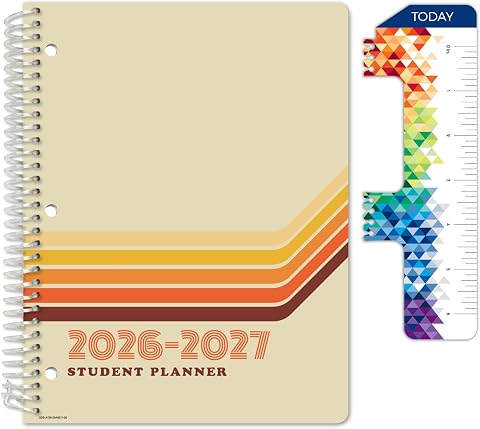 Global Datebooks 2026-2027 Student Planner 8.5" x 11" – Dated Weekly & Monthl…View on Amazon →
 - 4
 AI for Educators Made Easy: Unlock the Power of Artificial Intelligence to En…View on Amazon →
 - 5
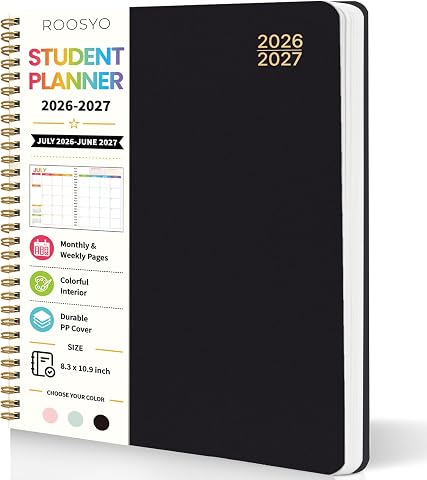 Student Planner 2026-2027, 8.3" x 10.9", Black Spiral Bound Academic OrganizerView on Amazon →
 - 6
 Student Planner 2026-2027, 8.5" x 11" Academic Planner, July 2026 – June 2027…View on Amazon →
 - 7
 Global Datebooks 2026-2027 Student Planner 5.5" x 8.5" – Weekly & Monthly Aca…View on Amazon →
 - 8
 The Power of AI for Educators: Revolutionize Teaching to Stay Competitive, Re…View on Amazon →
 - 9
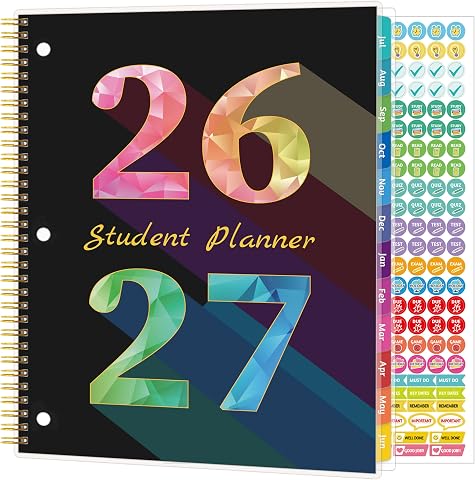 Student Planner 2026-2027, Weekly & Monthly Academic Year Calendar, Jul 2026…View on Amazon →
 - 10
 Student Planner 2026-2027, Weekly & Monthly Academic Year Calendar, Jul 2026…View on Amazon →
 - 11
 Student Planner 2026-2027, Weekly & Monthly Academic Year Calendar, Jul 2026…View on Amazon →
 - 12
 Student Planner 2026-2027 Monthly & Weekly School Planner for Middle and High…View on Amazon →
 - 13
 Decorably 240 Pages Undated Weekly & Monthly College Student PlannerView on Amazon →
 - 14
 Aesthetic 2027 Student Planner for Middle and High School StudentsView on Amazon →
 - 15
 Aesthetic 2027 Student Planner for Middle and High School StudentsView on Amazon →
Impact of AI Student Planners on Academic Success
The adoption of these AI-powered planners in 2026 could transform student productivity by automating routine tasks, reducing missed deadlines, and providing personalized study support. This shift has the potential to improve academic outcomes, especially for students managing heavy workloads or balancing multiple commitments. Furthermore, these tools could help foster better time management skills and reduce stress, contributing to overall well-being. Educational institutions and students alike may see increased efficiency and engagement, as AI integration simplifies complex scheduling and resource management. However, the extent of their impact will depend on user adoption, interface usability, and data security measures.
Rise of AI in Student Planning Tools
Over the past few years, AI integration into productivity apps has gained momentum, with many developers focusing on educational tools. In 2026, this trend has culminated in a new wave of AI-powered student planners, promising more personalized and adaptive scheduling. Previous versions of digital planners offered basic calendar functions, but recent advances enable real-time adjustments based on student behavior and preferences. The launch of these 15 planners reflects a broader industry effort to enhance student organization through AI, with some products already receiving praise for their intuitive interfaces and resource suggestions. The market is also seeing a diversification of options, from budget-friendly apps to high-end solutions with extensive customization, indicating a growing recognition of AI’s role in education.
“These new AI student planners are set to redefine academic organization, offering tailored support that adapts to each student’s unique needs.”
— Thorsten Meyer, AI Productivity Expert
Unclear Long-Term Adoption and Security Concerns
While these AI student planners show promise, it remains uncertain how widely they will be adopted across different educational levels and institutions. Data security and privacy are also ongoing concerns, especially with the collection of personal and academic information. Many providers claim strong encryption and privacy controls, but comprehensive independent verification is lacking. It is not yet clear how these tools will perform over extended use or how they will evolve to meet future educational needs. Additionally, the potential for over-reliance on AI features and the risk of technical issues during critical periods are still under evaluation.
Expected Developments and Market Expansion in 2026
In the coming months, developers are expected to release updates that enhance AI personalization, improve user interfaces, and strengthen data security. Educational institutions may begin integrating these tools into their student support systems, especially as evidence of their benefits grows. Market competition will likely drive further innovation, with new features such as AI-driven study plans and adaptive learning modules becoming standard. Users can anticipate more seamless device integration, expanded customization options, and possibly, broader adoption in secondary and higher education settings. Monitoring user feedback and security performance will be key to assessing long-term viability.
Key Questions
Can AI student planners replace traditional paper planners?
AI-powered digital planners offer automation, reminders, and resource suggestions that paper planners cannot provide. They are designed to complement or replace traditional methods for students seeking enhanced organization and real-time updates. However, some students may prefer tactile planning and might combine both approaches.
Are these AI planners suitable for all student levels?
Most are versatile enough for middle school, high school, and college students, but feature complexity varies. Beginners may prefer simpler interfaces, while advanced students might benefit from detailed customization. Matching the tool’s capabilities with individual needs is essential.
How secure is my data in these AI planners?
Data security depends on the provider. Reputable apps typically implement encryption and privacy controls. It is important to review privacy policies before use, especially if sensitive information is stored. Transparency about data handling is a key factor to consider.
Will AI planners improve my grades?
While AI planners can help organize schedules, reduce missed deadlines, and support study routines, they do not directly improve grades. Their primary benefit is enhancing time management and reducing stress, which can contribute to better academic performance over time.
Source: ThorstenMeyerAI.com
Columbus Day / Indigenous Peoples' Day Picks
long weekend sales
As an affiliate, we earn on qualifying purchases.