To reduce fall risk at home without making it feel clinical, declutter your space and keep pathways clear and well-lit. Wear supportive shoes and install grab bars in key areas like the bathroom. Use bright lighting and contrast decor elements to improve visibility. Stay active with balance exercises, review medications with your doctor, and guarantee your home has simple safety features. For more practical tips to keep your home safe and comfortable, keep exploring the options available to you.

Get smart everyday buys delivered free with Prime
- Fast, free delivery on millions of items
- Prime Video, Amazon Music and more included
- Member-only deals all year
Key Takeaways
- Maintain a clutter-free, well-lit environment with clear pathways and contrast to improve visibility and reduce tripping hazards.
- Wear supportive, slip-resistant footwear indoors and use mobility aids like grab bars and canes for added stability.
- Incorporate simple balance and strength exercises into daily routines to enhance stability and prevent falls.
- Regularly update lighting and use night lights to ensure safe navigation during low-light conditions.
- Stay informed about fall prevention strategies and consult healthcare providers for personalized safety tips.
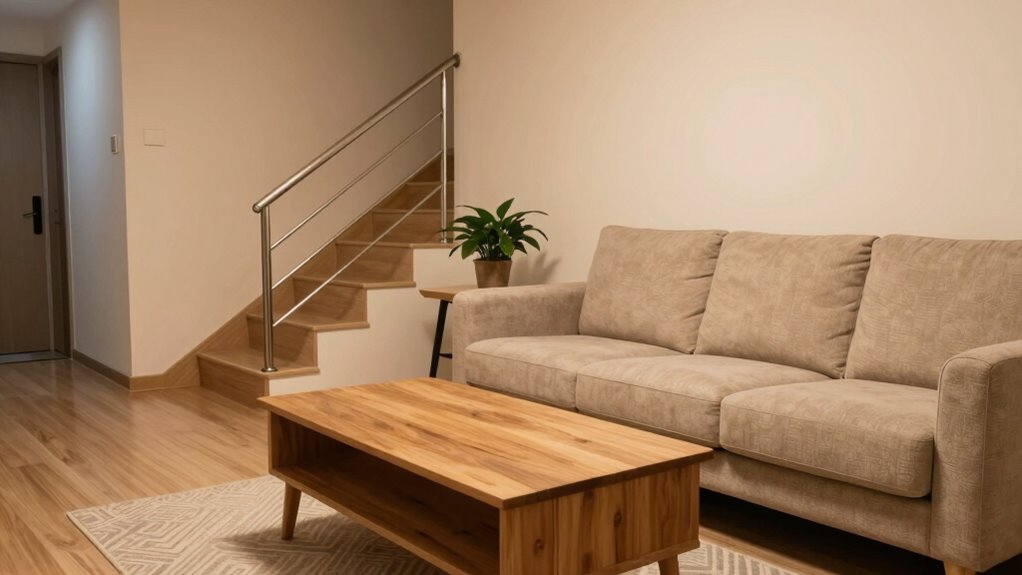
Falls can happen unexpectedly, but you can take steps to lower your risk and stay safer. The key is to make your environment safer without turning your home into a clinical space. One of the most effective ways to do this is by focusing on home safety. Start by decluttering your living areas, removing loose rugs, cords, or clutter that could trip you up. Keep pathways clear and well-lit, especially in hallways and staircases. Installing night lights can help you see better during late-night trips to the bathroom or kitchen.
Reduce fall risks by decluttering, ensuring good lighting, and installing night lights in key areas.
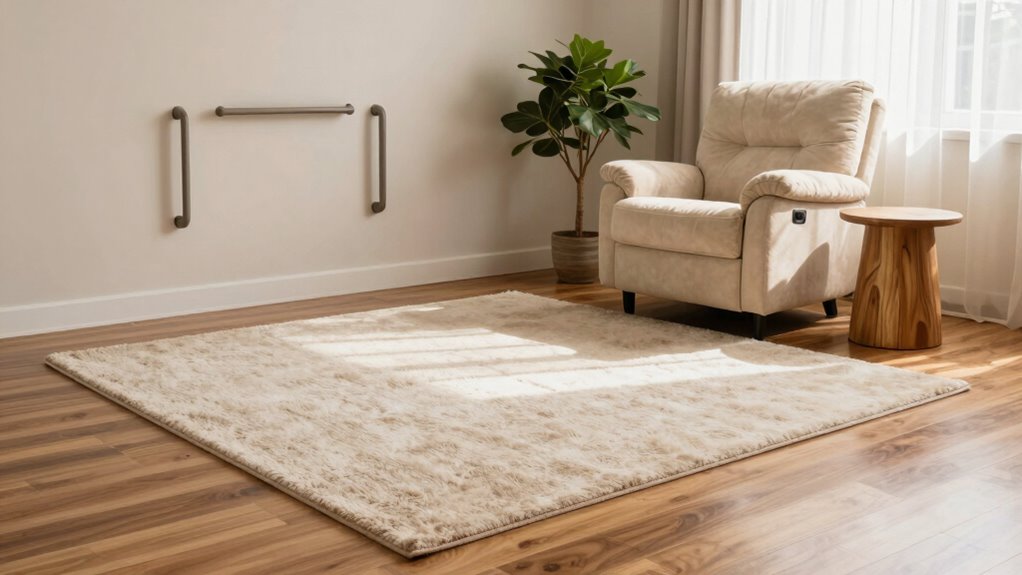
Your footwear also plays an essential role in preventing falls. Wear sturdy, slip-resistant shoes indoors and avoid walking around in socks or slippers that might cause slipping. If you struggle with balance or mobility, consider using mobility aids like grab bars, handrails, or a cane. These devices don’t make your home look institutional; they simply provide extra support where you need it most. Properly installed grab bars in the bathroom, near the toilet, and inside the shower or tub can give you stability and prevent slips.
You should also reassess your furniture and layout. Arrange furniture to create wide, unobstructed walking paths. Sit in your chairs and beds to see if they’re at a comfortable height, and add cushions or risers if necessary. If you have difficulty standing or moving quickly, consider using mobility aids like walkers or canes, which can help you maintain your independence while reducing your fall risk. These aids are meant to support your mobility without making your home feel clinical or unwelcoming. Incorporating home safety principles can further help identify and eliminate hazards that might otherwise be overlooked. Additionally, consulting occupational therapy resources can provide personalized strategies to improve your home safety.
In addition, pay attention to your physical health. Regular exercise, especially balance and strength training, can improve your stability. Consult a healthcare professional to develop a tailored activity plan. Also, review your medications with your doctor, as some drugs can cause dizziness or lightheadedness, increasing your fall risk. Keep your vision sharp by scheduling routine eye exams and updating your glasses if needed. Poor eyesight increases the chance of tripping or missing hazards. Additionally, understanding the importance of contrast ratio in your home lighting and decor can help improve visibility and reduce fall hazards. Incorporating lighting design principles can further enhance safety and visibility throughout your living space.
Furthermore, staying informed about fall prevention strategies can empower you to make safer choices in your daily routine. Finally, be mindful of your routines and habits. Take your time when moving around, especially on stairs or uneven surfaces. Use your mobility aids consistently and don’t hesitate to ask for help when needed. By combining thoughtful home safety measures with appropriate mobility aids and good health practices, you can markedly reduce your fall risk without sacrificing comfort or turning your home into a hospital. Staying proactive is the best way to keep yourself safe while maintaining your independence.
supportive slip-resistant indoor shoes for seniors
As an affiliate, we earn on qualifying purchases.
As an affiliate, we earn on qualifying purchases.
Frequently Asked Questions
Are There Specific Exercises to Improve Balance at Home?
Yes, there are specific exercises you can do at home to improve balance. Focus on strengthening exercises like leg lifts, heel-to-toe walks, and single-leg stands. Incorporate balance drills such as standing on one foot or shifting your weight side to side. Consistently practicing these exercises helps boost your stability, reduces fall risk, and requires minimal equipment, making it easy to include in your daily routine.
How Can I Improve Lighting Without Professional Help?
Did you know that poor lighting increases fall risk by 50%? You can improve your home lighting easily by using smart bulbs, which you can control remotely or schedule for ideal brightness. Adding motion sensors ensures lights turn on automatically when you enter a room, reducing shadows and trip hazards. These simple upgrades make your home safer without needing professional help, helping you maintain independence and confidence.
What Footwear Reduces Fall Risk Indoors?
Wearing footwear with good shoe grip is essential to reduce fall risk indoors. Opt for sturdy, non-slip indoor slippers that provide stability and prevent slipping on smooth surfaces. Avoid worn-out or loose-fitting shoes, as they can cause trips or slips. Choose slippers with firm soles and secure straps if possible. Staying vigilant about your footwear helps you stay safe and confident while moving around your home.
Can Dietary Changes Help Prevent Falls?
You might be surprised, but dietary changes can indeed help prevent falls. When you maintain a nutritional balance, your strength and coordination improve, reducing fall risk. Incorporate foods rich in calcium and Vitamin D, and consider Vitamin supplementation if needed. These nutrients support bone health and muscle function, making falls less likely. A simple tweak in your diet can make a big difference in keeping you steady and safe.
How Often Should I Review My Home Safety?
You should review your home safety regularly, ideally every three to six months, to stay ahead of potential hazards. Conduct home safety inspections during these reviews to identify and fix issues like loose rugs or clutter. Incorporate fall prevention strategies, such as installing grab bars and ensuring good lighting. Regular checks help create a safer environment, reducing the risk of falls and ensuring your home remains a secure space for everyone.
installable grab bars for bathroom
As an affiliate, we earn on qualifying purchases.
As an affiliate, we earn on qualifying purchases.
Conclusion
By making simple tweaks, you can keep your home safe without turning it into a sterile clinic. Remember to clear clutter, add grab bars, and wear proper footwear. Don’t forget, even the most legendary explorers like Marco Polo navigated unfamiliar terrain with caution—so approach your home’s hazards carefully. Staying vigilant and proactive lets you enjoy your space confidently, proving that reducing fall risk isn’t about overdoing it; it’s about smart, everyday choices.
motion sensor night lights for home
As an affiliate, we earn on qualifying purchases.
As an affiliate, we earn on qualifying purchases.
balance and stability exercise equipment
As an affiliate, we earn on qualifying purchases.
As an affiliate, we earn on qualifying purchases.
Halloween Picks
halloween
As an affiliate, we earn on qualifying purchases.