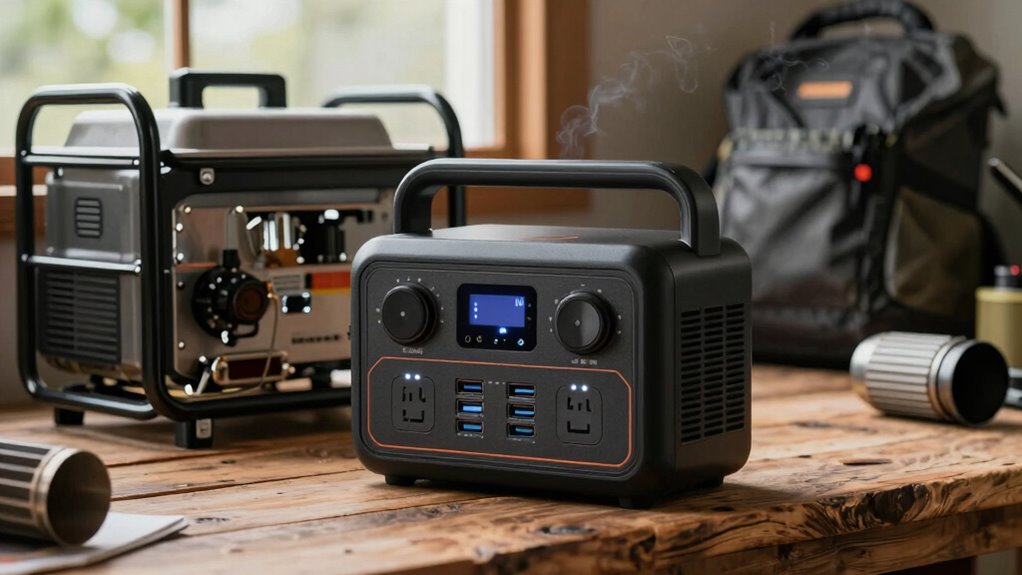

If you’re choosing between a portable power station and a generator, consider your energy needs, environment, and sustainability goals. Power stations are quiet, eco-friendly, and great for charging devices, camping, or emergency situations, but have limited capacity. Generators provide high power for longer durations but are noisy, produce emissions, and require fuel. To discover which option best fits your lifestyle and specific needs, explore the details ahead.

Get smart everyday buys delivered free with Prime
- Fast, free delivery on millions of items
- Prime Video, Amazon Music and more included
- Member-only deals all year
Key Takeaways
- Portable power stations run quietly on rechargeable batteries, ideal for eco-friendly, noise-sensitive situations, while generators produce loud noise using fossil fuels.
- Power stations are suitable for small to medium portable needs, whereas generators provide higher capacity for larger appliances and extended use.
- Power stations can be recharged with solar panels or grid power, supporting renewable energy use; generators depend on gasoline, diesel, or propane.
- Generators emit emissions and noise, impacting the environment and surroundings; power stations produce no emissions and operate silently.
- For sustainable living and outdoor activities, power stations offer a more eco-friendly, long-term solution; generators excel in high-capacity, remote power applications.
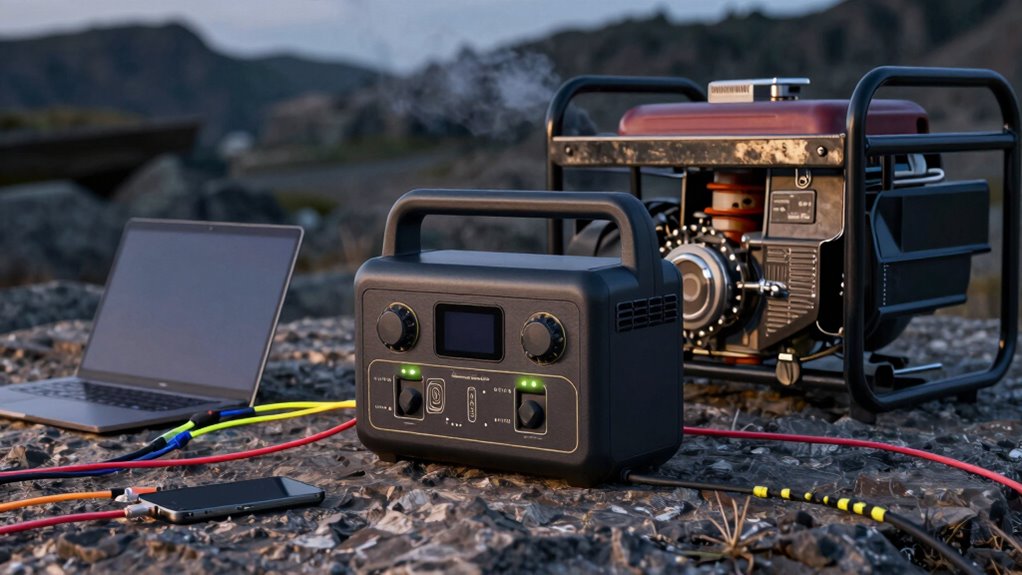
When it comes to providing power on the go, choosing between a portable power station and a generator can be confusing. Both options aim to keep your devices running, but they do so in very different ways. If you’re looking for a clean, quiet, and eco-friendly solution, a portable power station might be the way to go. These devices use rechargeable batteries, often powered by renewable energy sources like solar panels, making them an excellent choice for sustainable living and outdoor adventures. Because they run on stored electricity rather than fuel, they emit no noise, resulting in very low noise levels that won’t disturb your surroundings or your peace of mind. This makes them ideal for camping, outdoor events, or emergency backup in residential settings where noise can be an issue.
On the other hand, if you need a more robust and high-capacity power source capable of running larger appliances or multiple devices for extended periods, a generator might be your better option. Gas-powered generators produce significant power, which is beneficial during power outages or in remote locations where grid electricity isn’t available. However, they tend to be loud, often producing noise levels that can be disruptive, especially in quiet environments. This noise isn’t just a nuisance; it can also attract unwanted attention in outdoor or emergency scenarios. If noise levels are a concern, you’ll need to consider soundproofing or selecting models designed to operate more quietly, but even the quieter models typically produce more noise than a portable power station. Additionally, noise pollution can be a significant factor to consider when choosing your power source.
Renewable energy integration is another factor to consider. Many portable power stations can be recharged via solar panels, making them a sustainable choice that reduces reliance on fossil fuels. This aligns with environmentally conscious lifestyles and can help reduce your carbon footprint, especially during long-term outdoor stays or in off-grid locations. Additionally, derating at altitude or temperature is a crucial consideration for generators, as environmental conditions can significantly impact their performance and longevity. Generators, although powerful, are generally fueled by gasoline, diesel, or propane, which contributes to emissions and environmental impact. If minimizing your ecological footprint is a priority, portable power stations that leverage renewable energy sources offer a compelling advantage.
portable power station for camping
As an affiliate, we earn on qualifying purchases.
As an affiliate, we earn on qualifying purchases.
Frequently Asked Questions
Which Is More Environmentally Friendly: Portable Power Stations or Generators?
A portable power station is more environmentally friendly than a generator because it often uses renewable options like solar panels, reducing your carbon footprint. Generators typically run on fossil fuels, emitting pollutants and greenhouse gases. By choosing a power station with renewable energy capabilities, you minimize environmental impact, support sustainability, and enjoy cleaner energy. This makes portable power stations the greener choice for eco-conscious users.
How Long Can Each Power Station or Generator Run Continuously?
You can expect a portable power station to run for about 8-15 hours on a full battery, depending on its capacity and your device needs. Generators, fueled by gasoline or diesel, can run continuously for days if refueled regularly, thanks to their fuel efficiency. Keep in mind, larger battery capacities or fuel tanks extend runtime, but continuous use depends on power demands and maintenance.
Are Portable Power Stations Suitable for Outdoor Camping Trips?
Yes, portable power stations are great for outdoor camping trips. Their battery capacity provides reliable power for essential devices, and many models offer multiple charging options like solar panels, car chargers, or wall outlets. You can easily keep your devices charged and stay connected without noise or fumes. Just consider your power needs and choose a station with sufficient capacity and flexible charging options for a comfortable camping experience.
Can Portable Power Stations Handle High-Wattage Appliances?
Yes, portable power stations can handle high-wattage appliances, but it depends on their battery capacity and power output. If your appliance’s wattage is within the station’s maximum power output, it should work fine. However, for consistently high-wattage devices, check the power output rating and guarantee the battery capacity is sufficient for longer use. Always verify these specs before plugging in your high-demand appliances.
What Maintenance Is Required for Generators Compared to Power Stations?
You’ll find generators require more maintenance, like regular oil changes and keeping fuel tanks full, but they keep running with proper care. They also need to monitor fuel efficiency and noise levels to stay eco-friendly and quiet. Power stations, on the other hand, are low-maintenance, mainly needing periodic charging and storage. It’s a case of “an ounce of prevention,” ensuring your gear stays reliable when you need it most.
As an affiliate, we earn on qualifying purchases.
Conclusion
So, whether you choose a portable power station or a generator, remember: one’s perfect for a quick, quiet juice-up, and the other’s your loud, smoky hero for bigger jobs. But honestly, if you’re just trying to keep your gadgets alive without turning your backyard into a fireworks show, maybe skip the drama and go for the silent, eco-friendly option. After all, who needs the thrill of a roaring beast when a whisper will do?
quiet portable generator for outdoor use
As an affiliate, we earn on qualifying purchases.
As an affiliate, we earn on qualifying purchases.
high capacity portable power station
As an affiliate, we earn on qualifying purchases.
As an affiliate, we earn on qualifying purchases.
Halloween Picks
halloween
As an affiliate, we earn on qualifying purchases.