
Choosing between whole-house water filtration and point-of-use filters changes how you manage water quality and setup. Whole-house systems treat all household water at the entry point, offering broader protection but requiring higher upfront costs and regular maintenance. Point-of-use filters are simpler, more affordable, and targeted for specific taps or appliances, with easier installation. Each option impacts ongoing costs and effectiveness. To discover more about which suits your needs best, explore the details ahead.

Get smart everyday buys delivered free with Prime
- Fast, free delivery on millions of items
- Prime Video, Amazon Music and more included
- Member-only deals all year
Key Takeaways
- Whole-house systems provide comprehensive treatment for the entire household, while point-of-use filters target specific taps or appliances.
- Installation and initial costs are higher for whole-house systems versus the affordability of point-of-use filters.
- Maintenance frequency differs: whole-house filters typically need replacement every 3-12 months, while point-of-use filters require 1-3 months.
- Water testing helps determine the appropriate system, influencing whether a whole-house or point-of-use filter is more suitable.
- Technology choices (e.g., activated carbon, reverse osmosis) impact water quality and system performance in both options.
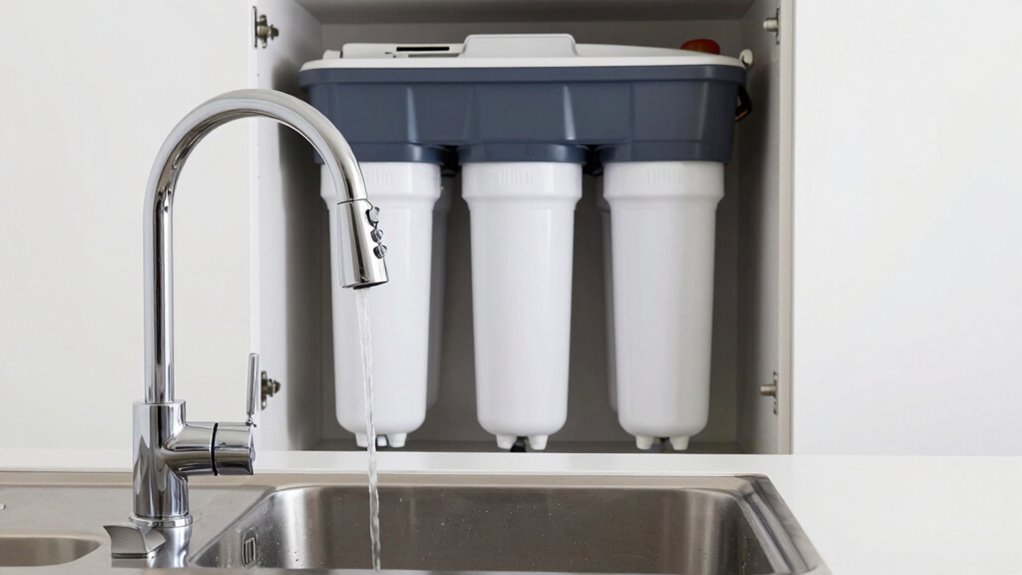
When it comes to guaranteeing clean, safe water in your home, choosing the right filtration system can be confusing. You’ll need to weigh the benefits of whole-house water filtration against point-of-use filters, considering factors like water quality, convenience, and maintenance. Whole-house systems treat water at the point it enters your home, providing filtered water for every faucet and appliance. This setup is ideal if you’re concerned about contaminants like chlorine, sediment, or heavy metals affecting your entire household. However, it requires a significant initial investment and ongoing water filtration maintenance, including regular filter replacement. The filter replacement frequency depends on your water usage and the specific system but generally ranges from every three to twelve months. Staying on top of these replacements guarantees your system functions effectively and prolongs its lifespan, preventing buildup that could compromise water quality. Proper installation and system efficiency can also impact how well your whole-house filtration system performs over time. Additionally, understanding water testing can help you identify specific contaminants and tailor your filtration approach accordingly. Regularly reviewing filtration needs ensures the system remains effective as your household or water sources change over time.
In contrast, point-of-use filters target specific taps or appliances, such as under-sink filters or pitcher systems. They’re more affordable upfront and easier to install, making them a practical solution if your primary concern is drinking water or specific appliances like refrigerators. These filters typically need replacement more frequently—every one to three months—depending on usage and the filter type. Because they focus on a single point, they don’t provide comprehensive treatment for your entire household water supply but are convenient for addressing localized issues. When considering water filtration maintenance for these systems, it’s essential to follow the manufacturer’s recommended replacement schedule. Neglecting timely filter replacement can lead to reduced filtration efficiency, allowing contaminants to pass through and potentially affecting your health.
Additionally, understanding the technology differences like DLP versus LCD can influence your decision, as they affect color fidelity and image quality—paralleling how different filtration systems impact water quality. They also demonstrate how different methods can be optimized for specific needs, much like choosing between whole-house and point-of-use systems. Both systems require attention to filter replacement frequency to maintain peak performance. Whole-house filters demand a proactive schedule, often aligned with water quality and household size, whereas point-of-use filters call for more frequent attention due to their design and limited capacity. Regular maintenance is key—failing to replace filters when needed can cause pressure drops, bacterial growth, and diminished water quality. If you’re unsure about your water’s specific contaminants, testing can help determine which system suits your needs better. Ultimately, your choice depends on your budget, water issues, and convenience preferences. Proper maintenance and timely filter replacements are essential regardless of your system choice, ensuring you enjoy clean, safe water every day without unnecessary hassle.
whole house water filtration system
As an affiliate, we earn on qualifying purchases.
As an affiliate, we earn on qualifying purchases.
Frequently Asked Questions
How Often Should I Replace Filters in Each System?
You should replace filters in your system based on the maintenance frequency and filter lifespan recommendations. Typically, whole-house filters need changing every 6 to 12 months, depending on water quality and usage. Point-of-use filters often require replacement every 2 to 6 months. Regularly check your filters for signs of wear or reduced flow, and follow manufacturer guidelines to guarantee peak performance and water quality.
What Is the Upfront Installation Cost Comparison?
Think of upfront costs as planting a seed—initial investment shapes future savings. Whole-house systems generally have a higher cost comparison due to complex installation and larger equipment, often requiring professional help. Point-of-use filters are simpler, less expensive to install, and usually fit within your existing plumbing. If you want complete coverage, expect higher upfront costs and complex installation; for targeted filtering, lower costs and easier setup work better.
Do These Systems Remove Specific Contaminants Like Lead or Pesticides?
Yes, both systems can target specific contaminants like lead or pesticides, but their effectiveness depends on contaminant specificity and system compatibility. Whole-house filters often handle broad contaminants, including heavy metals, while point-of-use filters can be specialized for more precise removal of pesticides or lead. Make sure you choose a system designed to address your specific water concerns, and check compatibility to achieve maximum contaminant removal.
Can Both Systems Be Used Together for Better Water Quality?
Yes, you can use integrated systems for better water quality, creating a water synergy that benefits your entire home. When you combine whole-house filtration with point-of-use filters, you target contaminants more effectively. This coincidence means cleaner water from every tap and specific filtering at faucets or showers. Using both systems together maximizes protection, ensuring your water stays pure and safe, no matter where you use it.
How Much Water Is Wasted During Filtration?
You’ll notice some water wastage during filtration, especially with certain systems like reverse osmosis, which can waste 3-4 gallons for every gallon filtered. The efficiency comparison shows that point-of-use filters typically waste less water, focusing on specific needs, while whole-house systems may have higher water wastage due to their larger scale. Being aware of these differences helps you choose a system that balances water efficiency and filtration quality.
As an affiliate, we earn on qualifying purchases.
Conclusion
Imagine yourself standing beneath a gentle cascade of pure, crystal-clear water, feeling its freshness invigorate every inch of your home. Choosing between whole-house filtration and point-of-use filters is like selecting the perfect lens to view that cascade—one offers thorough clarity, while the other provides targeted purity. Whichever you choose, you’re sculpting a sanctuary where every drop flows with the promise of health, transforming your daily routine into a ritual of refreshment and peace.
reverse osmosis water filter pitcher
As an affiliate, we earn on qualifying purchases.
As an affiliate, we earn on qualifying purchases.
water filter replacement cartridges
As an affiliate, we earn on qualifying purchases.
As an affiliate, we earn on qualifying purchases.
Halloween Picks
halloween
As an affiliate, we earn on qualifying purchases.