

Personal finance software falls into two broad camps: one-time purchase desktop programs like Moneydance and Banktivity, and subscription-based suites like Quicken Classic Business & Personal that bundle live bank syncing, investment tracking, and business tools. My top overall pick is Quicken Classic Business & Personal, because it covers budgeting, investments, and small-business income in one place — something no budget-only rival here matches. For people who want to buy once and avoid monthly fees, SavePoint stands out with its offline design and retirement planning simulations, while Moneydance is the strongest cross-platform all-rounder. The main tradeoff in this category is cost structure versus convenience: subscriptions buy automation and syncing, but one-time purchases keep your data local and your costs flat. Mac users should also note that several of these Windows-only titles won’t run for them at all. Read on for the full breakdown of all ten options.

Get smart everyday buys delivered free with Prime
- Fast, free delivery on millions of items
- Prime Video, Amazon Music and more included
- Member-only deals all year
Key Takeaways
- Subscription software (Quicken) delivered the broadest feature set, but five of the ten options are one-time purchases that win on long-run cost if you’ll use them for more than two years.
- Platform availability eliminated several contenders early: Banktivity is Mac-only, while three budget-focused titles are Windows-only, so your operating system narrows the field before features even matter.
- SavePoint was the only option offering Monte Carlo retirement simulations and FIRE planning offline with no subscription, making it the outlier pick for long-horizon planners rather than monthly budgeters.
- Budget-first tools like Fun Money and Financial Peace teach habits well but can’t track investments or net worth seriously — buyers who want wealth tracking need a full suite instead.
- Two products in this lineup (Financial Peace and Dave Ramsey’s software) share the same philosophy and audience; choosing between them came down to version depth rather than approach.
| Moneydance Personal Finance Manager for Windows | 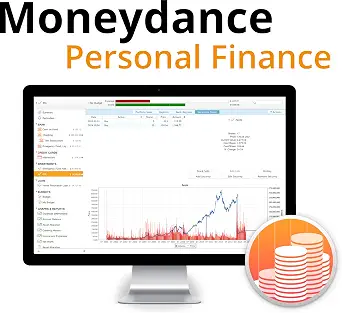 | Best Overall | Platform: Windows desktop | Account Types: Bank accounts, credit cards, investments | Banking: Online banking with bill payment | VIEW LATEST PRICE | See Our Full Breakdown |
| Banktivity 6 Mac Personal Finance Manager |  | Best for Mac Users | Platform: Mac | Connectivity: Connects to multiple banks | Bill Payment: Supported | VIEW LATEST PRICE | See Our Full Breakdown |
| Personal Finance |  | Best for Learning the Fundamentals | Format: Educational guide (not tracking software) | Topics Covered: Budgeting, saving, investing, debt management | Audience Level: Beginner to experienced | VIEW LATEST PRICE | See Our Full Breakdown |
| 3-in-1 Personal Finance 1.0 for Windows [Download] | ” image=”https://m.media-amazon.com/images/I/61RIun5JDSL._AC_SY445_SX342_QL70_FMwebp_.jpg” link=”0″] | Best Value for Hands-On Planners | Platform: Windows | Delivery: Download | Financial Calculators: 14 | VIEW LATEST PRICE | See Our Full Breakdown |
| MoneyWiz 2 – Personal Finance for Windows |  | Best Cross-Platform Pick | Platforms: Windows, iOS, Mac, Android | Bank Sync: Over 15,000 banks in 50+ countries | Import Formats: CSV, QIF, OFX, Quicken, MS Money | VIEW LATEST PRICE | See Our Full Breakdown |
| Financial Peace Personal Finance Software |  | Best for Financial Literacy Beginners | Focus: Budgeting and expense tracking | Approach: Financial literacy driven | Core Tools: Budgeting, expense tracking, financial planning | VIEW LATEST PRICE | See Our Full Breakdown |
| SavePoint Personal Finance Software – Budgeting, FIRE Planning, Monte Carlo Simulations, Balance Sheets, Cash Flow, 100% Offline, No Subscriptions |  | Best for FIRE Planners and Privacy | Data Privacy: Offline, local-only storage | License: Lifetime, no subscriptions | Supported Platforms: Windows PC & Mac | VIEW LATEST PRICE | See Our Full Breakdown |
| Fun Money Budgeting Software for Windows – Personal Finance |  | Best for Debt Payoff Visualization | Platform: Windows | Focus: Debt and savings management | Key Feature: Debt-free prediction graph | VIEW LATEST PRICE | See Our Full Breakdown |
| Quicken Classic Business & Personal for New Subscribers | 1 Year [PC/Mac Online Code] | ” image=”https://m.media-amazon.com/images/I/51sQsom78CL._AC_SX342_SY445_QL70_ML2_.jpg” link=”0″] | Best for Business and Rental Owners | Duration: 1 Year subscription | Platform: PC / Mac | Delivery: Online code | VIEW LATEST PRICE | See Our Full Breakdown |
| Dave Ramsey’s Personal Finance Software Version 5.3 |  | Best for Zero-Friction Setup | Version: 5.3 | Focus: Budgeting and financial planning | Setup: Quick-start design | VIEW LATEST PRICE | See Our Full Breakdown |
| personal finance software | Platform |
|---|---|
| Moneydance Personal Finance Ma | Windows desktop |
| Banktivity 6 Mac Personal Fina | Mac |
| Personal Finance | Not platform-specific |
| 3-in-1 Personal Finance 1.0 fo | Windows |
| MoneyWiz 2 | — |
| Financial Peace Personal Finan | PC |
| SavePoint Personal Finance Sof | — |
| Fun Money Budgeting Software f | Windows |
| Quicken Classic Business & Per | PC / Mac |
| Dave Ramsey’s Personal Finance | — |
More Details on Our Top Picks
Moneydance Personal Finance Manager for Windows
Moneydance earns the top spot because it covers the widest slice of financial life in one package: bank accounts, credit cards, investments, bill payment, and budgeting, with mobile sync thrown in. Compared with 3-in-1 Personal Finance, which relies on manual calculators and static budgets, Moneydance connects directly to your banks and updates automatically — the difference between a living financial picture and a snapshot you have to rebuild each month. Its reporting depth also outpaces MoneyWiz 2, which favors streamlined account organization over granular analysis. The tradeoff is that this is desktop-first software: you install it on Windows, and there’s no browser-based fallback. Pricing transparency is also thin compared with Quicken’s clear subscription model, so budget for some research before committing.
Pros:- Tracks banking, credit, investments, and bills in a single application
- Detailed budgeting and reporting tools that go deeper than most rivals
- iOS and Android sync lets you check finances on the go
- One-time desktop install rather than a forced subscription in most configurations
Cons:- Windows installation only — no browser access if you switch machines
- Pricing and ratings details are not clearly published, making comparison shopping harder
Best for: Households who want one installed program to track banking, budgeting, bills, and investment accounts together with mobile companions
Not ideal for: Buyers who want transparent upfront pricing or a fully web-based tool they can access from any browser
- Platform:Windows desktop
- Account Types:Bank accounts, credit cards, investments
- Banking:Online banking with bill payment
- Budgeting:Built-in budgeting tools
- Reporting:Detailed financial reports
- Mobile Sync:iOS and Android companion apps
- Delivery:Download and local installation
Our verdict“If you want the most complete desktop money manager in this lineup and don’t mind installing software, Moneydance is the pick that will grow with your finances.”
Banktivity 6 Mac Personal Finance Manager
Most personal finance software treats macOS as an afterthought, but Banktivity 6 is built for the Mac first — native interface, clean design, and private cloud sync that keeps your data under your own encryption rather than parked on a vendor’s servers. Setup is where it beats Moneydance: connecting multiple banks is fast, and the budgeting workflow feels approachable rather than accountant-like. Its privacy stance is the standout compared with MoneyWiz 2’s broad bank-sync network, which routes more of your credentials through third-party aggregation. The honest drawback is platform lock-in: if your household mixes Mac and Windows machines, only part of the family can use it, and the absence of confirmed mobile apps limits on-the-go access versus Moneydance’s phone apps.
Pros:- Native Mac experience with an interface designed for macOS, not ported to it
- Quick multi-bank connections make first-time setup painless
- Private cloud synchronization keeps financial data more secure than typical cloud services
- Strong budgeting and bill-payment workflow in one place
Cons:- Mac-only, which rules out most households outright
- Bank syncing requires an internet connection and confirmed mobile app support is missing
Best for: All-Mac households who prioritize a polished native interface and private, encrypted cloud sync
Not ideal for: Mixed-platform families or anyone who primarily manages money from a phone — Windows users and mobile-first buyers should look elsewhere
- Platform:Mac
- Connectivity:Connects to multiple banks
- Bill Payment:Supported
- Budgeting:Built-in budget creation tools
- Cloud Sync:Private cloud synchronization
- Internet Requirement:Required for bank syncing
Our verdict“Banktivity 6 is the clear choice for dedicated Mac users who value design and data privacy over cross-platform flexibility.”
Personal Finance
This entry is the odd one out in this roundup — it’s not account-connecting software at all, but a guide to financial strategy covering budgeting, saving, investing, and debt management. Where Moneydance and Banktivity 6 automate the numbers you already have, this option tackles the question they don’t: what should you actually be doing with your money? That makes it a complement rather than a competitor — a reasonable first purchase for someone who finds terms like asset allocation meaningless before buying 3-in-1 Personal Finance and its fourteen calculators. The drawback is obvious: you’ll still need real software (or a spreadsheet) to execute anything you learn, and the sparse specs and missing reviews make it hard to judge depth before buying.
Pros:- Covers budgeting, saving, investing, and debt management in one resource
- Useful for both beginners and readers with some financial background
- Cheap, low-risk way to build knowledge before buying full software
Cons:- Not actual finance software — no accounts, tracking, or reports
- No detailed specifications or customer reviews to evaluate quality beforehand
Best for: Financial beginners who need to understand budgeting, saving, and debt concepts before committing to any software tool
Not ideal for: Anyone who already knows the basics and needs transaction tracking or bank connectivity — this does neither
- Format:Educational guide (not tracking software)
- Topics Covered:Budgeting, saving, investing, debt management
- Audience Level:Beginner to experienced
- Account Connectivity:None
- Platform:Not platform-specific
Our verdict“Buy this to learn what to do with your money, then buy Moneydance or Banktivity to actually do it — not the other way around.”
3-in-1 Personal Finance 1.0 for Windows [Download]
” image=”https://m.media-amazon.com/images/I/61RIun5JDSL._AC_SY445_SX342_QL70_FMwebp_.jpg” link=”0″]Best Value for Hands-On Planners
View Latest Price3-in-1 Personal Finance takes a deliberately old-school approach: no bank connections, no cloud, just 14 financial calculators, 13 budget categories, and over 110 budget line items you manage yourself. Compared with MoneyWiz 2’s automatic syncing across 15,000 banks, that sounds like a weakness — but for planners who want to model scenarios rather than just record what happened, the calculator suite is genuinely useful for asset allocation and goal projections. Graphical reports and printable summaries give you visible progress without a subscription. The tradeoffs are real: it’s Windows-only, has no mobile companion, and everything is manual entry, so people who want passively updated dashboards will find it tedious where Moneydance automates the same work.
Pros:- 14 financial calculators cover planning scenarios most budget apps ignore
- Highly detailed budget structure with 13 categories and 110+ line items
- Graphical reports and printable summaries make progress tangible
- One-time download purchase with no ongoing subscription
Cons:- Windows-only with no mobile or online access
- All data entry is manual, with no bank connectivity
- No free trial indicated before purchase
Best for: Detail-oriented planners who enjoy manual budgeting and want calculators for investment and goal projections at a low one-time cost
Not ideal for: Anyone who wants automatic bank feeds or mobile access — the manual-only, Windows-only design will feel like a chore
- Platform:Windows
- Delivery:Download
- Financial Calculators:14
- Budget Categories:13
- Budget Items:Over 110
- Reports:Graphical reports, printable summaries
- Bank Connectivity:None — manual entry
Our verdict“This pick makes the most sense for spreadsheet-style planners who’d rather calculate and customize than connect and sync.”
MoneyWiz 2 – Personal Finance for Windows
If your money lives across devices — a Windows PC at work, an Android phone, a family Mac — MoneyWiz 2 is the only option in this batch that follows you everywhere. Its bank synchronization across 15,000+ banks in 50+ countries is far broader than Banktivity 6’s Mac-bound connectivity, and flexible imports (CSV, QIF, OFX, Quicken, MS Money) make switching from older tools like Quicken far less painful than re-entering years of history. Budgets and bill tracking round out a clean organizational core. Compared with Moneydance, it’s lighter on investment tracking and deep reporting — this is about organizing your financial life, not analyzing it. Pricing is also opaque, with no free trial indicated, so confirm the cost structure before switching your whole household over.
Pros:- True cross-platform support across Windows, Mac, iOS, and Android
- Automatic bank sync with over 15,000 banks in 50+ countries
- Imports from Quicken, MS Money, CSV, QIF, and OFX for easy migration
- Unified view of accounts, budgets, and bills
Cons:- Bank sync requires a constant online connection
- No free trial or clear pricing details published
- Shallow investment tracking compared with Moneydance
Best for: Multi-device households and international users who need one app spanning Windows, Mac, iOS, and Android with broad bank support
Not ideal for: Investors wanting deep portfolio analysis or anyone unwilling to commit without a trial — reporting here is simpler than Moneydance
- Platforms:Windows, iOS, Mac, Android
- Bank Sync:Over 15,000 banks in 50+ countries
- Import Formats:CSV, QIF, OFX, Quicken, MS Money
- Core Features:Account organization, budgets, bill tracking
- Internet Requirement:Required for bank synchronization
Our verdict“Choose MoneyWiz 2 when device flexibility and easy migration matter more than heavy-duty investment analysis.”
Financial Peace Personal Finance Software
Financial Peace takes a teaching-first approach that separates it from data-heavy tools like SavePoint, which assumes you already understand concepts like Monte Carlo simulations. This option stands out for buyers who want their software to explain money management while they budget, not just crunch numbers. The comprehensive budgeting tools translate into a guided experience where mistakes become lessons rather than spreadsheet errors. Compared with Fun Money Budgeting Software, which focuses narrowly on debt payoff visuals, Financial Peace covers a broader financial education foundation. The tradeoff is real, though: the basic version feels thin for anyone past the beginner stage, and expect a learning curve before the methodology clicks.
Pros:- User-friendly interface that lowers the barrier for first-time budgeters
- Comprehensive budgeting tools covering core money management habits
- Actively builds financial literacy rather than just tracking numbers
- Guided approach reduces the intimidation factor of managing money
Cons:- Basic version lacks advanced features power users will want
- Requires a learning curve to absorb the methodology
Best for: Budgeting newcomers who want to build financial literacy alongside their first real budget
Not ideal for: Experienced budgeters who need investment tracking or advanced reporting — the basic version is too limited
- Focus:Budgeting and expense tracking
- Approach:Financial literacy driven
- Core Tools:Budgeting, expense tracking, financial planning
- Skill Level:Beginner friendly
- Platform:PC
Our verdict“This pick makes the most sense for someone starting their financial journey who values education over raw features.”
SavePoint Personal Finance Software – Budgeting, FIRE Planning, Monte Carlo Simulations, Balance Sheets, Cash Flow, 100% Offline, No Subscriptions
SavePoint is the most analytically ambitious product in this lineup, and the contrast with Quicken Classic Business & Personal is instructive: Quicken connects everything to the cloud, while SavePoint’s 100% offline operation means your financial life never touches a server. For FIRE enthusiasts, the Monte Carlo simulations turn vague retirement hopes into probability-based outcomes — something no other product here offers. The lifetime license with no subscriptions also flips the pricing model on Quicken’s annual fee. The tradeoffs are meaningful: no cloud backup means you own the responsibility of backing up, and mastering balance sheets and simulations takes genuine effort compared with the plug-and-play simplicity of Fun Money.
Pros:- Monte Carlo simulations and FIRE planning tools rare at this price point
- Full offline operation keeps sensitive data local and private
- Lifetime license with free updates beats recurring subscription costs
- Multi-language support and 150+ currencies for international users
Cons:- No cloud backup — data loss risk falls entirely on the user
- Advanced features carry a steep learning curve
- Desktop only, with no mobile companion
Best for: FIRE movement followers and privacy-conscious planners who want institutional-grade simulations without subscriptions
Not ideal for: Anyone wanting automatic bank syncing or mobile access — this is a desktop-only, manual-entry system
- Data Privacy:Offline, local-only storage
- License:Lifetime, no subscriptions
- Supported Platforms:Windows PC & Mac
- Languages:English, Spanish, French, German, Italian, Portuguese, Japanese, Chinese
- Currencies:150+ supported
- Advanced Tools:Monte Carlo simulations, FIRE planning, balance sheets, cash flow
- Includes:8GB USB Drive
Our verdict“If you’re serious about FIRE math and refuse to hand your data to the cloud, SavePoint is the clear choice — just budget time to learn it.”
Fun Money Budgeting Software for Windows – Personal Finance
Fun Money earns its spot with one standout capability: the debt-free prediction graph, which turns an abstract payoff date into a visual you can chase. Compared with Financial Peace, which teaches broad principles, Fun Money is narrower and more motivational — it shows you exactly when you’ll be debt-free if you stay the course. The visual graphs make progress tangible in a way spreadsheet-style tools like SavePoint don’t attempt. This focus is also its limitation: there’s no investment tracking, no business features, and Windows-only support rules out Mac households. This pick makes the most sense for buyers whose single financial goal right now is eliminating debt without wading through features they won’t use.
Pros:- Debt-free prediction graph makes payoff goals concrete and motivating
- User-friendly interface that’s approachable from day one
- Detailed financial insights presented through visual graphs
- Focused feature set avoids overwhelming beginner budgeters
Cons:- Windows only, with no Mac or mobile version
- Lacks advanced investment and retirement features
Best for: Debt-focused Windows users who want a clear visual finish line for becoming debt-free
Not ideal for: Investors or Mac users — there’s no investment functionality and no cross-platform support
- Platform:Windows
- Focus:Debt and savings management
- Key Feature:Debt-free prediction graph
- Reporting:Visual graphs and financial insights
- Skill Level:Beginner friendly
Our verdict“A focused, affordable tool for Windows users whose top priority is seeing their debt-free date — everyone else should look broader.”
Quicken Classic Business & Personal for New Subscribers | 1 Year [PC/Mac Online Code]
” image=”https://m.media-amazon.com/images/I/51sQsom78CL._AC_SX342_SY445_QL70_ML2_.jpg” link=”0″]Best for Business and Rental Owners
View Latest PriceQuicken Classic Business & Personal is the only product in this roundup built to merge business, rental, and personal finances in one ledger — a capability nothing else here matches. Where SavePoint excels at personal FIRE math, Quicken handles rental property management, P&L statements, and tax-ready reports that a side-business owner or landlord actually needs at filing time. The 30-day risk-free trial softens the commitment, but the model is the opposite of SavePoint’s: this is a subscription, and the cost recurs every year. Online activation is required, so privacy-focused buyers who chose SavePoint for its offline design will want to skip this. This option stands out as the power-tool pick for people whose finances span business and personal.
Pros:- Unifies business, rental, and personal finances in one platform
- Built-in tax reports, P&L, and cash flow tools simplify filing
- Rental property management features rare in personal finance software
- 30-day risk-free trial lets you validate before committing
Cons:- Annual subscription adds up compared with lifetime-license alternatives
- New subscribers only — existing customers can’t use this code
- Requires online activation and internet connectivity
Best for: Small business owners and landlords who want business, rental, and personal finances in a single platform
Not ideal for: Subscription-averse or privacy-focused users — it requires online activation and recurring fees
- Duration:1 Year subscription
- Platform:PC / Mac
- Delivery:Online code
- Key Features:Tax reports, P&L, cash flow, rental property management
- Trial:30-day risk-free
- Eligibility:New subscribers only
Our verdict“If your money spans a business or rental properties, this is the most complete package here — provided you accept the recurring fee.”
Dave Ramsey’s Personal Finance Software Version 5.3
Dave Ramsey’s Personal Finance Software 5.3 wins on immediacy: quick setup means you can build a working budget the same evening, which is exactly the hurdle where tools like SavePoint — with its simulations and balance sheets — lose impatient beginners. The trusted Ramsey brand carries a built-in methodology, so buyers know the philosophy behind the numbers before installing. Compared with Financial Peace, another literacy-oriented option, this version leans harder on speed and simplicity rather than depth of education. That speed comes at a cost: the feature set is thin, with limited detailed capabilities and sparse documentation, so anyone needing investment tracking or reporting depth should step up to Quicken instead. This model is better suited to getting started today than growing with you over years.
Pros:- Quick setup gets a functional budget running the same day
- Recognizable, trusted brand with an established money philosophy
- Simple interface with almost no onboarding friction
- Streamlined for core budgeting and planning tasks
Cons:- Limited detailed features compared with more robust competitors
- Sparse documentation makes deeper planning difficult
Best for: Budgeting beginners who want a trusted, familiar system they can set up in minutes
Not ideal for: Users needing investment tracking, detailed reporting, or room to grow — the feature set is basic
- Version:5.3
- Focus:Budgeting and financial planning
- Setup:Quick-start design
- Brand:Dave Ramsey
- Skill Level:Beginner friendly
Our verdict“The fastest path from zero to a working budget for Ramsey-method followers — power users will outgrow it quickly.”

How We Picked
I evaluated each program through the lens a real buyer uses: what it tracks, how much effort it demands, and what it costs over time. Core criteria included bank connectivity or manual-entry workflow, budgeting depth, investment and net-worth tracking, reporting quality, platform support, and whether the pricing model was a one-time purchase or a recurring subscription. I also weighed learning curve, because software that goes unused is worthless regardless of its feature list, and data privacy, since some buyers specifically want offline tools that never send account credentials to the cloud.
The ranking reflects fit rather than raw feature count. Quicken earned the top spot for breadth across personal and business finances, while Moneydance and Banktivity ranked highly as polished platform-native alternatives. Budget-only and philosophy-driven programs placed lower — not because they’re poorly built, but because they serve narrower needs. Value picks like SavePoint ranked above pricier tools when their one-time pricing and long-horizon planning tools clearly beat what subscription rivals charge for similar capability.
| personal finance software | Platform |
|---|---|
| Moneydance Personal Finance Ma | Windows desktop |
| Banktivity 6 Mac Personal Fina | Mac |
| Personal Finance | Not platform-specific |
| 3-in-1 Personal Finance 1.0 fo | Windows |
| MoneyWiz 2 | — |
| Financial Peace Personal Finan | PC |
| SavePoint Personal Finance Sof | — |
| Fun Money Budgeting Software f | Windows |
| Quicken Classic Business & Per | PC / Mac |
| Dave Ramsey’s Personal Finance | — |
Factors to Consider When Choosing Personal Finance Software
Choosing personal finance software is less about finding the most features and more about matching the tool to how you actually manage money. These are the factors that separated the winners from the also-rans in this comparison.Subscription vs. One-Time Purchase
The single biggest cost decision is whether you’re comfortable paying forever. Subscription suites justify their annual fee with automatic bank downloads, live investment pricing, and ongoing support, but those fees compound — a $50-per-year product costs $250 over five years. One-time purchase software typically relies on manual entry or file-based imports, which trades convenience for permanence. A common mistake is buying a subscription for features you’ll never touch; if you mainly want a budget and a net worth snapshot, a one-time tool covers it. But if you’ll actually use live syncing weekly, the subscription pays for itself in saved time. Do the math based on your intended lifespan with the product, not the sticker price.
Platform Lock-In
Several programs in this category are tied to a single operating system, and that constraint should be your first filter, not an afterthought. Mac users lose access to every Windows-only title, and Windows users lose Banktivity entirely. Cross-platform options like Moneydance and Quicken let you switch machines without repurchasing or re-entering years of data. Also consider mobile companions: some desktop programs have mature phone apps, while others leave you at your desk for every transaction entry. If your household mixes Macs and PCs, a Windows-only budgeting tool will strand half the family. Checking platform support first can eliminate a third of your shortlist in minutes.
Budgeting Depth vs. Wealth Tracking
Not all personal finance software is trying to do the same job. Budget-first tools excel at category limits, spending plans, and behavior change — ideal if your problem is overspending. Wealth-tracking suites focus on investment accounts, cost basis, net worth history, and tax-ready reports — ideal if your problem is visibility. Buyers frequently buy the wrong type: someone with a brokerage account and rental income will outgrow a simple budgeting app within months, while someone drowning in credit card debt doesn’t need Monte Carlo retirement projections. Identify which problem you actually have before comparing feature lists, because the best budgeting tool and the best wealth tracker can both be excellent and still be wrong for you.
Cloud Sync vs. Offline Privacy
Automatic bank syncing requires sharing credentials with a third-party aggregation service, and that’s a genuine tradeoff rather than a free win. Buyers who value local-only data storage should look at offline-first tools like SavePoint, which keep everything on your machine with no account linking at all. The cost is manual work: you’ll import files or type transactions yourself, which also means data can lag reality by days. Cloud-synced tools are always current but depend on the provider staying in business and keeping its sync service running. Neither approach is objectively better — the right answer depends on how much you trust aggregators and how much data entry you’ll tolerate. Hybrid setups, with syncing for banks and manual entry for cash, are common among experienced users.
Long-Horizon Planning Tools
If retirement or financial independence is your goal, generic budgeting software will disappoint you. Tools with Monte Carlo simulations, balance sheets, and cash flow projections let you test whether your savings rate actually supports the future you want — a capability only one or two products in any lineup tend to offer. The mistake most buyers make is assuming any program labeled “personal finance” includes retirement modeling; most don’t. Also check whether projections use your real account balances or require you to maintain a separate model by hand, because duplicate data entry kills these features in practice. Long-horizon planning is where premium and niche tools earn their price, and where free alternatives fall short.
Learning Curve and Household Adoption
The best software on paper fails if nobody in the household will use it. Full suites have steep learning curves with dozens of account types and reconciliation workflows, which suits detail-oriented users but overwhelms beginners. Simpler budgeting programs can be productive within an hour, at the cost of ceiling — you’ll eventually hit limits on reporting or investments. Consider who else needs access: a tool only one spouse can operate creates a single point of failure for the family’s finances. My advice for beginners is to start simple and upgrade only when you feel the ceiling, rather than buying the most powerful suite upfront and abandoning it.
Frequently Asked Questions
Is it worth paying for a subscription like Quicken when free budgeting apps exist?
It depends on what you’re tracking. Free apps generally handle basic budgeting and bank syncing well, but they typically stop at checking, savings, and credit cards. Quicken’s subscription earns its price when you add investment accounts, rental property, or small-business income and expenses — categories free tools either ignore or handle crudely. If you file a Schedule C or manage cost basis across brokerages, the time saved at tax preparation alone can cover the annual fee. But if your finances are a single checking account and a credit card, the subscription buys you nothing a one-time purchase or free app can’t do, and you should skip it.
Are offline, no-subscription programs like SavePoint actually practical in 2026?
They are, provided you accept manual data entry or file imports in exchange for privacy and flat costs. Offline tools appeal to two groups: buyers who don’t want bank credentials flowing through third-party aggregators, and long-horizon planners who want tools like Monte Carlo simulations and FIRE projections without a monthly bill. The practical friction is that your numbers can lag reality — if you don’t log in and update regularly, the projections lose meaning. Households that do weekly money check-ins adapt well; people who want passive, always-current dashboards will find the manual workload annoying. It’s a workflow choice, not a capability gap.
Which option should a complete beginner start with?
Beginners should prioritize a short path from install to first useful budget over raw capability. Simple budgeting programs in this category get you categorizing spending within an hour, which builds the habit before the software gets complicated. Starting with a full suite like Quicken works for some people, but many newcomers abandon it because the first week is spent configuring account structures instead of changing behavior. The one caveat: if you know your finances will get complex soon — a business, investments, rental property — starting with the simpler tool means migrating your history later. For most people just trying to control spending, simple-first is the safer bet and the cheaper mistake.
Do the Dave Ramsey–style programs work if I’m not following that method?
Only partially. These programs are built around a specific philosophy — zero-based budgeting, debt snowball ordering, and cash-envelope thinking — so their workflows assume you want to manage money that way. If you follow the method, the software enforces it well and the friction is a feature. If you don’t, you’ll fight the structure: the reporting emphasizes debt payoff progress over investment growth, and tools for brokerage tracking or net-worth history are thin or absent. A general-purpose program like Moneydance will feel neutral by comparison and won’t push any particular financial worldview. Buy the philosophy-driven software for the philosophy, not the features.
What happens to my data if I stop paying for subscription software?
Policies vary, but typically the automatic bank syncing stops immediately and you’re left with manual entry or read-only access to your historical data. Most desktop-based subscriptions let you keep using the program in a limited mode and export your transaction history, which means years of records aren’t held hostage — but you should verify export options before committing, not after. This is a real argument for one-time purchase software: your data and your program keep working regardless of your payment status. A good habit either way is exporting a full transaction CSV or QIF backup a few times a year. Data portability matters more than most buyers realize until the day they switch tools.
Conclusion
The right choice here depends almost entirely on what you’re managing and how you want to pay for it. For the best overall pick, Quicken Classic Business & Personal covers budgeting, investments, and business finances more broadly than anything else in this lineup, and the subscription is justified if you’ll use that breadth. For best value, SavePoint delivers offline budgeting, balance sheets, and retirement simulations for a single payment with no recurring fees — the strongest long-run cost in the group. For Mac users, Banktivity is the clear platform-native choice, while Moneydance takes the cross-platform crown for mixed households. Beginners and anyone focused purely on spending habits are better served by Fun Money or Financial Peace, which trade power for an easy on-ramp. And if you follow the Ramsey method specifically, the Dave Ramsey software’s structure will reinforce it better than any neutral tool. Match the software to your actual financial life, and the ranking above becomes a simple decision tree.
Fall Picks
fall essentials
As an affiliate, we earn on qualifying purchases.