

Choosing the right investment management tools can significantly impact your financial growth and portfolio performance. The best options balance ease of use, advanced features, and cost, but each has tradeoffs—some are powerful but complex, while others are simple but limited. The best overall pick is Investment Management: A Science to Teach or an Art to Learn?, known for its comprehensive approach. For those seeking budget-friendly options, The Ultimate Investment Portfolio Tracker offers solid tracking at a lower cost. Continue reading for a detailed breakdown of the top tools and what makes each suitable for different investors.

Get smart everyday buys delivered free with Prime
- Fast, free delivery on millions of items
- Prime Video, Amazon Music and more included
- Member-only deals all year
Key Takeaways
- The top-ranked tools combine robust analytics with user-friendly interfaces, making them suitable for a range of investor experience levels.
- Tradeoffs often exist between complexity and accessibility—more advanced tools tend to require a learning curve.
- Cost varies significantly; premium solutions offer deeper features, but many effective options are available at lower price points.
- Tools that integrate with tax planning and financial advising can streamline multi-faceted investment strategies.
- The best tools for beginners focus on simplicity and guidance, while professional-grade options prioritize customization and data depth.
| Tax-Aware Investment Management: The Essential Guide |  | Best for Tax-Efficient Strategies | Format: Print, eBook | Pages: 250 | Intended Audience: Intermediate to advanced investors | VIEW LATEST PRICE | See Our Full Breakdown |
| The Only Investment Guide You’ll Ever Need: Revised Edition |  | Best for General Wealth Building | Format: Print, eBook | Pages: 300 | Intended Audience: Novice to intermediate investors | VIEW LATEST PRICE | See Our Full Breakdown |
| Investment Management: A Science to Teach or an Art to Learn? |  | Best for Theoreticians and Students | Format: Print | Pages: 220 | Intended Audience: Students, academics, finance philosophers | VIEW LATEST PRICE | See Our Full Breakdown |
| Investment Analysis and Portfolio Management |  | Best for Professional Development | Format: Print | Pages: 480 | Intended Audience: Students, financial analysts | VIEW LATEST PRICE | See Our Full Breakdown |
| The Ultimate Investment Portfolio Tracker |  | Best for Active Portfolio Monitoring | Platform: iOS, Android, Web | Price: Free with optional premium | Syncing: Real-time data updates | VIEW LATEST PRICE | See Our Full Breakdown |
| The Theory and Practice of Investment Management: Asset Allocation, Valuation, Portfolio Construction, and Strategies |  | Best for Advanced Investors and Finance Professionals | Content Focus: Asset allocation, valuation, portfolio construction | Target Audience: Finance professionals, graduate students | Approach: Theoretical, comprehensive | VIEW LATEST PRICE | See Our Full Breakdown |
| Investment Planner: 365-Day Guide to Smart Investing and Portfolio Management |  | Best for Organized Investors and Day-to-Day Trackers | Duration: 365 days | Investment Types: Stocks, bonds, real estate, others | Format: Planner/Workbook | VIEW LATEST PRICE | See Our Full Breakdown |
| How to Invest $50-$5,000: The Small Investor’s Step-by-Step Plan for Low-Risk Investing in Today’s Economy | 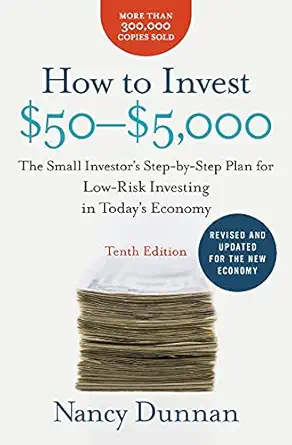 | Best for Entry-Level Small Investors | Investment Range: $50 – $5,000 | Focus: Low-risk, step-by-step guidance | Format: Book | VIEW LATEST PRICE | See Our Full Breakdown |
| The New Wealth Management: The Financial Advisor’s Guide to Managing and Investing Client Assets (CFA Institute Investment Series) |  | Best for Professional Financial Advisors | Target Audience: Financial advisors, wealth managers | Content Focus: Client asset management, industry standards | Approach: Professional, industry-oriented | VIEW LATEST PRICE | See Our Full Breakdown |
| Foundations of Investment Management: Mastering Financial Markets, Asset Classes, and Investment Strategies |  | Best for Students and Professionals Deepening Investment Knowledge | Content Scope: Financial markets, asset classes, strategies | Target Audience: Students, finance professionals | Approach: Educational, explanatory | VIEW LATEST PRICE | See Our Full Breakdown |
| The Tools & Techniques of Investment Planning, 4th Edition |  | Best for Deepening Practical Knowledge of Investment Strategies | Edition: 4th | Pages: 512 | Publisher: Wiley | VIEW LATEST PRICE | See Our Full Breakdown |
| investment management tool | Format |
|---|---|
| Tax-Aware Investment Managemen | Print, eBook |
| The Only Investment Guide You’ | Print, eBook |
| Investment Management: A Scien | |
| Investment Analysis and Portfo | |
| The Ultimate Investment Portfo | — |
| The Theory and Practice of Inv | — |
| Investment Planner: 365-Day Gu | Planner/Workbook |
| How to Invest $50-$5,000: The | Book |
| The New Wealth Management: The | — |
| Foundations of Investment Mana | — |
| The Tools & Techniques of Inve | — |
More Details on Our Top Picks
Tax-Aware Investment Management: The Essential Guide
This book stands out for its in-depth focus on tax-efficient investment strategies, making it an essential resource for investors who want to maximize after-tax returns. Unlike broader investment guides like The Only Investment Guide You’ll Ever Need, it dives into specific principles and case studies that help optimize tax outcomes. The tradeoff is that it’s quite technical and may overwhelm casual readers or those seeking quick tips. If your priority is understanding how taxes impact your portfolio, this guide offers detailed insights that can significantly influence your investment decisions.
Pros:- Provides detailed tax-efficient investment strategies
- Suitable for both beginners and experienced investors
- Includes practical examples and case studies
Cons:- Lacks specific product features or tools
- May be too technical for casual readers
Best for: Investors seeking detailed, actionable strategies to reduce tax burdens on their portfolios, including both beginners with some financial knowledge and experienced investors.
Not ideal for: Casual investors or those looking for quick, simple advice without deep technical content, as the book’s complexity may be a barrier.
- Format:Print, eBook
- Pages:250
- Intended Audience:Intermediate to advanced investors
Our verdict“This guide is ideal for investors focused on optimizing tax outcomes through detailed strategies and case studies.”
The Only Investment Guide You’ll Ever Need: Revised Edition
This book makes the list for its broad, accessible advice on personal finance and investing, similar to Investment Analysis and Portfolio Management, but with a wider focus on wealth building rather than detailed portfolio strategies. It’s ideal for beginners who want a comprehensive overview and practical tips without technical jargon. The major tradeoff is that it doesn’t include specific tools or detailed planning features, so more advanced investors seeking in-depth analysis or portfolio management tools may find it lacking. For those new to investing or looking for a well-rounded financial primer, this revised edition offers a balanced, approachable perspective.
Pros:- Comprehensive investment advice for all levels
- Updated with current financial strategies
- Easy to understand and accessible
Cons:- No specific features or tools included
- Focuses on general advice, not detailed planning
Best for: Beginners or individuals seeking a broad, accessible guide to personal finance and investment basics.
Not ideal for: Experienced investors or finance professionals who need detailed, technical investment tools or strategies, as this book lacks specifics on portfolio techniques.
- Format:Print, eBook
- Pages:300
- Intended Audience:Novice to intermediate investors
Our verdict“This book is best suited for beginners or those looking for an approachable, comprehensive overview of investing and personal finance.”
Investment Management: A Science to Teach or an Art to Learn?
This book distinguishes itself by exploring the philosophical debate between viewing investment management as a science versus an art. Compared with Investment Analysis and Portfolio Management, which offers more practical techniques, this work dives into conceptual frameworks and methodologies, making it more suitable for students and academics. Its focus on theory means it lacks detailed real-world examples, which could challenge readers seeking actionable strategies. If you’re interested in the underlying principles and philosophies shaping investment decisions, this book offers valuable insights, but it’s less useful for immediate portfolio management applications.
Pros:- Provides a comprehensive analysis of investment management approaches
- Suitable for students and professionals interested in finance theory
- Offers deep insights into philosophical debates in investing
Cons:- Lacks detailed practical examples
- May be too theoretical for immediate application
Best for: Finance students, academics, or professionals interested in the conceptual foundations of investment management.
Not ideal for: Practitioners seeking hands-on tools or practical portfolio strategies, as the book leans heavily into theory and philosophy.
- Format:Print
- Pages:220
- Intended Audience:Students, academics, finance philosophers
Our verdict“This work is ideal for readers interested in the philosophical and theoretical aspects of investment management rather than practical tools.”
Investment Analysis and Portfolio Management
This book earns its place by offering a thorough exploration of investment analysis and portfolio strategies, comparable to The Theory and Practice of Investment Management. It’s tailored for students and professionals seeking a solid grounding in financial markets and techniques. While it covers a broad range of strategies with practical examples, it does not specify detailed product features or technical specifications, which could limit its utility for those looking for software or tool-specific guidance. Its comprehensive coverage makes it a worthwhile resource for those aiming to deepen their understanding of investment processes, though it might be dense for complete beginners.
Pros:- Comprehensive coverage of investment strategies
- Includes practical examples for real-world application
- Suitable for students and professionals
Cons:- No detailed technical specifications
- No customer reviews available
Best for: Finance students, analysts, and professionals aiming to strengthen their foundation in investment analysis and portfolio management.
Not ideal for: Investors seeking quick, simplified advice or specific portfolio management tools, as the book emphasizes theory and broad strategies over practical implementation details.
- Format:Print
- Pages:480
- Intended Audience:Students, financial analysts
Our verdict“Ideal for finance professionals and students seeking an in-depth, broad understanding of investment analysis and portfolio management concepts.”
The Ultimate Investment Portfolio Tracker
This portfolio tracker is designed for investors who want to monitor and optimize their investments continuously. Compared with the comprehensive books like Investment Analysis and Portfolio Management, this tool focuses on real-time tracking and performance management. Its simplicity supports wealth growth by helping users stay on top of their investments, but it lacks detailed specifications or advanced features that more sophisticated investors might need. Without user reviews, assessing usability is limited, but for active investors seeking an easy-to-use monitoring tool, this tracker offers a practical solution.
Pros:- Helps track investments and monitor performance
- Aids in maximizing returns through regular oversight
- Supports wealth growth by keeping investments organized
Cons:- Lacks detailed specifications or features
- No user reviews available for validation
Best for: Active investors who need straightforward, ongoing monitoring of their portfolios to maximize returns and manage risk.
Not ideal for: Investors looking for comprehensive analytical tools or in-depth investment planning features, as this is primarily a tracking app without advanced analytics.
- Platform:iOS, Android, Web
- Price:Free with optional premium
- Syncing:Real-time data updates
Our verdict“Best suited for active investors who want a simple, effective tool to oversee their portfolios and boost performance.”
The Theory and Practice of Investment Management: Asset Allocation, Valuation, Portfolio Construction, and Strategies
This book stands out for its detailed exploration of core investment concepts, making it an essential resource for finance professionals and students aiming to deepen their technical knowledge. Unlike more practical guides like Investment Planner, it emphasizes theory and asset valuation, which can be overwhelming for beginners. Its comprehensive approach provides a solid foundation for constructing robust portfolios but sacrifices accessibility with complex language and limited real-world examples. This makes it ideal for those wanting to master the intricacies of asset allocation and valuation, though less suitable for casual investors or those seeking quick tips.
Pros:- In-depth coverage of asset allocation, valuation, and portfolio strategies
- Highly suitable for finance professionals and students aiming for mastery
- Well-structured, comprehensive content provides a solid theoretical foundation
Cons:- May be too technical and dense for investment beginners
- Lacks practical, real-world examples to illustrate concepts
Best for: Finance professionals and advanced students seeking an in-depth understanding of investment strategies
Not ideal for: Beginners or casual investors looking for straightforward, practical advice without heavy technical content
- Content Focus:Asset allocation, valuation, portfolio construction
- Target Audience:Finance professionals, graduate students
- Approach:Theoretical, comprehensive
- Language Complexity:Advanced technical language
Our verdict“This book is ideal for those who want a rigorous, thorough understanding of investment management at a theoretical level.”
Investment Planner: 365-Day Guide to Smart Investing and Portfolio Management
This planner makes a compelling choice for investors who prefer structured, ongoing management of their portfolios, offering a full year of daily tracking and planning tools. Compared with theoretical books like The Theory and Practice of Investment Management, it focuses on practical organization rather than deep strategy, making it perfect for those who want to keep their investments on a steady course. However, its lack of detailed content and absence of user reviews leave some uncertainty about usability and format. It’s best suited for disciplined investors who appreciate routine and systematic tracking but may fall short for those seeking in-depth educational content or complex analysis.
Pros:- Provides a full year of daily investment tracking and planning
- Versatile for multiple investment types including stocks, bonds, and real estate
- Helps users stay organized and disciplined in managing portfolios
Cons:- Limited information about content details or format
- No user reviews or ratings for validation of effectiveness
Best for: Investors who want a daily, organized approach to managing a diverse investment portfolio
Not ideal for: Investors seeking detailed financial education or advanced analytical tools
- Duration:365 days
- Investment Types:Stocks, bonds, real estate, others
- Format:Planner/Workbook
- Target Audience:Organized, disciplined investors
Our verdict“This planner is best for investors who value routine, structure, and long-term tracking over deep educational content.”
How to Invest $50-$5,000: The Small Investor’s Step-by-Step Plan for Low-Risk Investing in Today’s Economy
This book offers practical, easy-to-follow strategies tailored for small-scale investors, focusing on low-risk options suitable for sums from $50 to $5,000. Unlike The Theory and Practice of Investment Management, which is dense and academic, it emphasizes step-by-step guidance and risk reduction, making it accessible for beginners or cautious investors. Its focus on low-risk, manageable investments makes it less appropriate for those seeking aggressive growth or complex portfolio management, but it delivers clear instructions for those just starting out or with limited capital.
Pros:- Clear, step-by-step guidance simplifies investment process
- Focus on low-risk strategies suitable for small investment amounts
- Practical advice tailored to current economic conditions
Cons:- Limited to basic investment advice, no tools or software included
- Does not cover advanced investment strategies or detailed analytics
Best for: Small investors new to the market seeking low-risk, straightforward advice
Not ideal for: Experienced investors or those looking for high-risk, high-reward strategies
- Investment Range:$50 – $5,000
- Focus:Low-risk, step-by-step guidance
- Format:Book
- Target Audience:Small, beginner investors
Our verdict“This book is perfect for beginners or cautious small investors wanting reliable, low-risk strategies without complex explanations.”
The New Wealth Management: The Financial Advisor’s Guide to Managing and Investing Client Assets (CFA Institute Investment Series)
This guide offers a comprehensive approach for financial advisors aiming to enhance their client management skills, emphasizing modern wealth management practices. Compared to more general books like The Theory and Practice of Investment Management, it targets professionals, focusing on client relationships, regulatory considerations, and industry standards. While it provides industry best practices, its dense content and professional jargon make it less suitable for individual investors or those outside the finance industry. This resource is invaluable for advisors seeking to refine their techniques but less relevant for retail investors wanting DIY strategies.
Pros:- Extensive coverage of wealth management and client asset strategies
- Includes industry best practices and regulatory considerations
- Ideal for professional development and credentialing
Cons:- Limited relevance for individual or retail investors
- Lacks practical tools or step-by-step investment plans for everyday investors
Best for: Financial advisors and wealth managers looking to deepen their industry expertise
Not ideal for: Individual investors or novices seeking beginner guides or practical tools
- Target Audience:Financial advisors, wealth managers
- Content Focus:Client asset management, industry standards
- Approach:Professional, industry-oriented
- Relevance:Professional development
Our verdict“This book is designed for financial professionals seeking to elevate their client management and investment strategies in a professional context.”
Foundations of Investment Management: Mastering Financial Markets, Asset Classes, and Investment Strategies
This book provides a broad yet detailed overview of key investment topics, making it suitable for both students and professionals seeking a thorough grounding in financial markets, asset classes, and strategies. Compared with The Theory and Practice of Investment Management, which is more technical, this text emphasizes clarity and understanding of complex concepts, making it accessible to those still learning. Its lack of real-world examples and density may challenge beginners, but it offers a solid foundation for those aiming to deepen their investment knowledge with comprehensive explanations. It’s particularly useful as a classroom resource or for self-study.
Pros:- Comprehensive coverage of markets, asset classes, and strategies
- Clear explanations of complex concepts suitable for learners
- Ideal for academic settings and self-study
Cons:- Lacks detailed real-world examples and case studies
- Can be dense and challenging for absolute beginners
Best for: Students and professionals striving to understand core investment principles in depth
Not ideal for: Investors seeking quick, practical investment tips or real-world case studies
- Content Scope:Financial markets, asset classes, strategies
- Target Audience:Students, finance professionals
- Approach:Educational, explanatory
- Difficulty Level:Moderate to advanced
Our verdict“This book is well-suited for learners and professionals who want a thorough, clear understanding of fundamental investment concepts.”
The Tools & Techniques of Investment Planning, 4th Edition
This book stands out for its comprehensive coverage of investment planning tools, making it an essential resource for both students and practitioners aiming to enhance their technical expertise. Compared with titles like Investment Analysis and Portfolio Management, which focus more on theoretical frameworks, this edition emphasizes practical methods and current techniques used by professionals. While it offers detailed insights, its lack of specific technical specifications and absence of reader reviews limit its immediate applicability for those seeking quick reference or hands-on tools. Nonetheless, it provides a solid foundation for understanding complex investment strategies, especially for users committed to mastering the craft rather than just overview content.
Pros:- Comprehensive coverage of modern investment planning techniques
- Updated content reflecting current market strategies and tools
- Suitable for both educational and professional development
Cons:- Lacks detailed technical specifications for quick referencing
- No reader reviews or ratings to gauge user satisfaction
- Potentially dense for newcomers unfamiliar with advanced investment concepts
Best for: Financial analysts, portfolio managers, or students seeking an in-depth, technical guide to investment planning tools
Not ideal for: Casual investors or beginners looking for straightforward, easy-to-understand investment advice without technical detail
- Edition:4th
- Pages:512
- Publisher:Wiley
- Publication Year:2020
- Focus:Investment planning tools and strategies
- Audience:Students and practitioners
Our verdict“This book is ideal for experienced professionals or advanced students needing an authoritative resource on investment tools and strategies.”

How We Picked
Our evaluation focused on how well each investment management tool balances performance, usability, and value. We considered features such as portfolio analysis, asset allocation, tax efficiency, and reporting capabilities, ensuring they meet real-world investor needs. Ease of use was a priority, especially for those new to investing, but we also included tools with advanced features for experienced users. Cost and support options played a role, too, as budget constraints are common. The ranking reflects a combination of these factors, emphasizing versatility and overall impact on portfolio management.| investment management tool | Format |
|---|---|
| Tax-Aware Investment Managemen | Print, eBook |
| The Only Investment Guide You’ | Print, eBook |
| Investment Management: A Scien | |
| Investment Analysis and Portfo | |
| The Ultimate Investment Portfo | — |
| The Theory and Practice of Inv | — |
| Investment Planner: 365-Day Gu | Planner/Workbook |
| How to Invest $50-$5,000: The | Book |
| The New Wealth Management: The | — |
| Foundations of Investment Mana | — |
| The Tools & Techniques of Inve | — |
Factors to Consider When Choosing Investment Management Tools
When selecting an investment management tool, it’s important to consider factors that align with your investing experience, goals, and budget. The right tool should simplify your decision-making process, not complicate it, so understanding key features and potential pitfalls is essential. Here are some critical factors to guide your choice:Ease of Use and Learning Curve
Some tools are designed for novices with intuitive interfaces and guided workflows, while others cater to professionals with complex analytics. Consider how much time you’re willing to invest in learning new software; overly complicated tools can become barriers rather than enablers. The best choice depends on your comfort level and how actively you manage your investments.
Feature Set and Customization
Look beyond basic tracking—features like tax optimization, risk assessment, and scenario analysis can influence your long-term success. However, more features often mean a steeper learning curve and higher costs. Balance your need for advanced tools with your actual usage to avoid paying for capabilities you won’t utilize.
Cost and Value
Investment tools range from free apps to premium platforms with hefty subscription fees. Consider your investment level and how much you’ll benefit from paid features. Sometimes, a lower-cost or free tool can meet your needs effectively, but for complex portfolios, investing in a more comprehensive solution might deliver better value over time.
Integration and Compatibility
Check whether the tool integrates smoothly with your brokerage accounts, tax software, or financial advisors. Compatibility reduces manual data entry and errors, streamlining your workflow. Be aware that some features may require additional subscriptions or software upgrades, which should factor into your decision.
Support and Community
Access to customer support, tutorials, and user communities can be vital, especially when starting out. Well-supported tools tend to facilitate learning and troubleshooting, saving you time and frustration. Consider the reputation of the platform’s support network before committing, particularly if you’re investing significant assets.
Frequently Asked Questions
Can these tools help me optimize my taxes?
Many of the top investment management tools include features for tax-efficient investing, such as tax-loss harvesting and asset location strategies. These features can help reduce your tax bill, especially as your portfolio grows. However, it’s important to supplement software insights with professional advice, as tax laws can be complex and vary by jurisdiction.
Are free investment management tools sufficient for my needs?
Free tools often provide essential tracking and basic analysis, making them suitable for casual or beginner investors. However, they might lack advanced features like detailed analytics, tax planning, or automated rebalancing. If your portfolio becomes more complex or you seek more control, investing in a paid platform could provide better long-term value.
Should I prioritize ease of use over advanced features?
For most investors, especially newcomers, simplicity is key. An intuitive platform reduces the learning curve and helps maintain consistent investing habits. But if you’re experienced or managing a large, complex portfolio, advanced features like risk modeling and scenario analysis might justify the added complexity. Balancing these needs is essential for making the right choice.
How important is integration with my existing financial accounts?
Seamless integration reduces manual data entry, minimizes errors, and provides a clearer picture of your overall financial health. Platforms that connect directly with your brokerage and bank accounts save time and make rebalancing or tax planning more straightforward. Always verify compatibility before committing to a tool, especially if you use multiple financial services.
Is paid investment management software worth the cost?
Paid platforms often unlock features that support advanced strategies, detailed analytics, and personalized support. If you manage significant assets or seek to optimize every aspect of your portfolio, investing in a premium tool can translate into better performance and savings over time. For casual investors, a free or low-cost option may suffice, but be mindful of the limitations.
Conclusion
For casual or beginner investors, a simple, easy-to-use tool like The Ultimate Investment Portfolio Tracker offers great value without overwhelming complexity. Experienced investors managing larger portfolios should consider premium options like Investment Management: A Science to Teach or an Art to Learn?, which provide advanced analytics and customization. Those on a budget can find effective solutions among free or lower-cost platforms, but should be prepared for more limited features. For professionals and financial advisors, comprehensive tools with integration and reporting capabilities are essential, making higher-end platforms worth the investment. Ultimately, your choice should align with your investing experience, goals, and how much time you’re willing to dedicate to managing your assets.
Fall Picks
fall essentials
As an affiliate, we earn on qualifying purchases.