
The best personal finance book for beginners depends less on prestige and more on fit: where you are in life, how you learn, and how much jargon you can tolerate. The Personal Finance QuickStart Guide takes the top spot because it covers budgeting, credit, saving, and investing in plain language with a clear structure a complete novice can follow start to finish. Get a Financial Life stands out for readers in their twenties and thirties who want real-world guidance on student loans, renting versus buying, and early investing, while The Simple Path to Wealth is the pick if financial independence — not just basic money management — is the goal. The main tradeoff in this category is between breadth and depth: books that cover everything tend to stay surface-level, while books focused on one path, like investing or teen money habits, go deeper but leave gaps elsewhere. Keep reading for the full breakdown of all fifteen picks, including who each one is for and who should skip it.

Get smart everyday buys delivered free with Prime
- Fast, free delivery on millions of items
- Prime Video, Amazon Music and more included
- Member-only deals all year
Key Takeaways
- Structure beats inspiration: the top-ranked books (Personal Finance QuickStart Guide, Personal Finance For Dummies) win because they organize topics into a sequence a beginner can actually follow, not because they motivate.
- Age-targeted books dominated the teen and young-adult niche — Money Skills for Teens, Money Skills for Young Adults, and How to Adult all outperform generalist titles for their audience but are poor fits for anyone over 30.
- The Simple Path to Wealth is the only pick that goes meaningfully beyond basics into financial independence strategy; readers who want budgeting fundamentals first will find it premature.
- Visual learners have exactly one strong option: The Infographic Guide to Personal Finance — its图表-heavy format makes it faster to finish but thinner on nuance than text-based rivals.
- Several budget titles (Finance for Beginners: 101 Concepts, Personal Finance 101, Financial Literacy Essentials For Dummies) overlap heavily; the deciding factors are page count, tone, and whether you want a reference or a read-through guide.
| Personal Finance QuickStart Guide |  | Best Overall | Format: Book | Topic: Personal finance fundamentals | Audience: Beginners | VIEW LATEST PRICE | See Our Full Breakdown |
| Get a Financial Life: Personal Finance in Your Twenties and Thirties |  | Best for Young Professionals | Format: Book | Topic: Personal finance for early adulthood | Target Age Range: Twenties and thirties | VIEW LATEST PRICE | See Our Full Breakdown |
| Personal Finance For Dummies |  | Best Reference Guide | Format: Book | Series: For Dummies | Topic: Personal finance | VIEW LATEST PRICE | See Our Full Breakdown |
| How to Invest $50–$5,000, 10th Edition: The Small Investor’s Step-by-Step Plan for Low-Risk Investing | 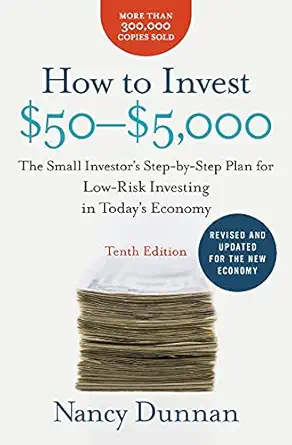 | Best for First-Time Investors | Format: Book | Edition: 10th Edition | Topic: Small-amount investing | VIEW LATEST PRICE | See Our Full Breakdown |
| Money Skills for Young Adults: A Beginner’s Guide to Smart Financial Habits |  | Best for Habit Building | Format: Book | Intended Audience: Young adults | Topic: Financial habits and money management | VIEW LATEST PRICE | See Our Full Breakdown |
| The Simple Path to Wealth: Your Road Map to Financial Independence and a Rich, Free Life |  | Best for the FIRE Mindset | Format: Book | Primary Focus: Financial independence and wealth building | Audience Level: Beginner to intermediate | VIEW LATEST PRICE | See Our Full Breakdown |
| Finance for Beginners: 101 Concepts |  | Best Vocabulary Builder | Format: Book | Structure: 101 distinct concepts | Primary Focus: Personal finance, investing, money management fundamentals | VIEW LATEST PRICE | See Our Full Breakdown |
| The Infographic Guide to Personal Finance: A Visual Reference for Everything You Need to Know | 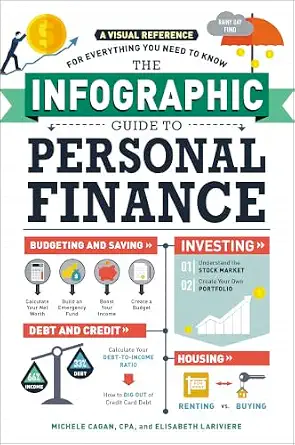 | Best Visual Learner Pick | Format: Print book | Series: Infographic Guide series | Structure: Visual reference with infographic layouts | VIEW LATEST PRICE | See Our Full Breakdown |
| Financial Literacy for Young Adults Simplified |  | Best for Recent Grads | Format: Book | Primary Focus: Money management, saving, and investing | Target Audience: Young adults | VIEW LATEST PRICE | See Our Full Breakdown |
| How to Adult: Personal Finance for the Real World |  | Best for Everyday Practicality | Format: Book | Primary Focus: Practical everyday personal finance skills | Target Audience: Young adults | VIEW LATEST PRICE | See Our Full Breakdown |
| Financial Literacy Essentials For Dummies |  | Best Quick-Reference Primer | Format: Paperback / ebook | Series: For Dummies | Audience: Adult beginners | VIEW LATEST PRICE | See Our Full Breakdown |
| Personal Finance for Beginners: A Simple Guide to Take Control of Your Financial Situation |  | Best for Action-Oriented Starters | Format: Book | Topics: Money Management, Investing Basics | Audience: Adult beginners | VIEW LATEST PRICE | See Our Full Breakdown |
| Personal Finance 101: From Saving and Investing to Taxes and Loans (Adams 101 Series) |  | Best Broad-Coverage Reference | Format: Hardcover / paperback | Series: Adams 101 | Topics: Saving, Investing, Taxes, Loans | VIEW LATEST PRICE | See Our Full Breakdown |
| Money Skills for Teens: A Beginner’s Guide to Budgeting, Saving, and Investing |  | Best for Teen Readers | Format: Paperback | Topics: Budgeting, Saving, Investing | Audience: Tweens and teens | VIEW LATEST PRICE | See Our Full Breakdown |
| Personal Finance for Teens and Young Adults: Budgeting, Saving, and Investing |  | Best Bridge to Financial Independence | Format: Book | Topics: Budgeting, Saving, Investing | Audience: Teens and young adults | VIEW LATEST PRICE | See Our Full Breakdown |
| personal finance books for beginner | Format | Approach |
|---|---|---|
| Personal Finance QuickStart Gu | Book | Step-by-step starter guide |
| Get a Financial Life: Personal | Book | — |
| Personal Finance For Dummies | Book | — |
| How to Invest $50–$5,000 | Book | — |
| Money Skills for Young Adults: | Book | Habit-building beginner guide |
| The Simple Path to Wealth: You | Book | Philosophy and roadmap-driven |
| Finance for Beginners: 101 Con | Book | Concept-by-concept reference |
| The Infographic Guide to Perso | Print book | — |
| Financial Literacy for Young A | Book | Simplified, habit-building |
| How to Adult: Personal Finance | Book | Practical, real-world guidance |
| Financial Literacy Essentials | Paperback / ebook | — |
| Personal Finance for Beginners | Book | Simple and actionable |
| Personal Finance 101: From Sav | Hardcover / paperback | — |
| Money Skills for Teens: A Begi | Paperback | — |
| Personal Finance for Teens and | Book | Hands-on money skills |
More Details on Our Top Picks
Personal Finance QuickStart Guide
Among all the general-purpose beginner books in this roundup, this one earns the top spot for balance. Where Personal Finance For Dummies casts an extremely wide net across every life stage, the QuickStart Guide stays anchored to a single promise: reduce financial stress while building toward independence. That focus makes it feel less like a textbook and more like a starting plan you can act on. Compared with Finance for Beginners: 101 Concepts, which reads more like a reference dictionary, this option frames money decisions around outcomes — less anxiety, more control. The tradeoff is depth: readers who already budget consistently and want advanced investing strategy will outgrow it quickly, and it does not go as deep on any single topic as a dedicated title would.
Pros:- Written specifically for beginners with no assumed prior knowledge
- Connects money habits to reduced financial stress, not just numbers
- Balanced coverage of saving, debt, and wealth-building fundamentals
- Action-oriented structure that encourages immediate implementation
Cons:- Fundamental focus means limited depth on investing strategy
- Broad scope prevents mastery of any single topic like retirement or taxes
Best for: Complete beginners who feel anxious about money and want one reassuring, actionable starting point
Not ideal for: Intermediate readers who already budget and invest — the fundamentals here will feel repetitive
- Format:Book
- Topic:Personal finance fundamentals
- Audience:Beginners
- Focus Areas:Budgeting, saving, wealth building, financial freedom
- Approach:Step-by-step starter guide
- Depth Level:Introductory
Our verdict“If you want one book to start from zero and actually feel calmer about money, this is the pick; skip it if you’re past the basics.”
Get a Financial Life: Personal Finance in Your Twenties and Thirties
This book earns its place by solving a problem most general guides ignore: what money decisions actually look like in your twenties and thirties. Student loans, first jobs, renting versus buying, starting to invest — Get a Financial Life addresses the sequence of choices young adults face, rather than presenting personal finance as one flat topic. Compared with Money Skills for Young Adults, which leans heavily on habit formation, this title goes further into real-life milestones and tradeoffs specific to early career years. It is also a stronger choice than The Simple Path to Wealth for readers who are not yet ready to think about financial independence and just want to get stable first. The drawback: it is deliberately narrow. Readers in their forties or beyond will find whole chapters irrelevant to their situation.
Pros:- Organized around real early-career milestones like student loans and first jobs
- More timely and life-stage specific than general beginner guides
- Practical guidance on starting to invest with limited income
- Accessible tone aimed at readers with zero financial background
Cons:- Narrow age focus limits usefulness outside the target demographic
- Less thorough on retirement planning than whole-life guides like Personal Finance For Dummies
Best for: Young professionals navigating first salaries, student debt, and early investing decisions
Not ideal for: Mid-career or older readers — the twenties-and-thirties framing makes much of the content inapplicable
- Format:Book
- Topic:Personal finance for early adulthood
- Target Age Range:Twenties and thirties
- Focus Areas:Student debt, first jobs, early investing, renting vs. buying
- Depth Level:Beginner with life-stage specificity
- Edition Note:Updated current edition
Our verdict“The clear choice for twenty- and thirty-somethings who want advice matched to their actual life stage rather than generic fundamentals.”
Personal Finance For Dummies
Every roundup needs a cover-everything reference, and this is it. The For Dummies formula — short sections, plain language, skip-around structure — makes this the book you keep on a shelf and return to when a specific question comes up, whether that is taxes, insurance, or retirement accounts. Compared with the QuickStart Guide, it trades motivational momentum for sheer breadth of coverage, spanning budgeting through retirement planning in one volume. It also goes deeper than Financial Literacy Essentials For Dummies, the condensed sibling title, which suits readers who want the abridged version instead. The tradeoff is that reference books rarely change behavior on their own: without a step-by-step plan to follow, some beginners read it, nod along, and change nothing. Readers with existing financial knowledge will find the explanations too elementary to justify the page count.
Pros:- Broadest topic coverage in this lineup, from budgeting to retirement
- Established instructional series with a proven, easy-to-follow format
- Modular structure lets readers jump straight to relevant chapters
- Distills complex concepts into plain, jargon-free language
Cons:- Too basic for readers with existing financial knowledge
- Reference format offers less behavioral momentum than action-oriented guides
Best for: Readers who want a trusted all-in-one reference to consult on specific money questions over time
Not ideal for: Experienced savers and investors who need advanced strategy, not foundational explanations
- Format:Book
- Series:For Dummies
- Topic:Personal finance
- Focus Areas:Budgeting, saving, investing, debt reduction, retirement planning
- Structure:Modular reference format
- Depth Level:Beginner to foundational
Our verdict“Buy this as the encyclopedia on your shelf, not the coach in your ear — ideal for lookups, weaker for motivation.”
How to Invest $50–$5,000, 10th Edition: The Small Investor’s Step-by-Step Plan for Low-Risk Investing
This is the most narrowly focused book in the batch, and that is its entire value proposition. General guides like Personal Finance For Dummies devote a chapter or two to investing; this one walks small-dollar investors through the process step by step, with a low-risk bias that suits people intimidated by the market. The small-amount framing matters: many beginners assume investing requires thousands they do not have, and this book directly dismantles that barrier. Compared with The Simple Path to Wealth, which assumes a longer horizon and bigger appetite for market philosophy, this title is more mechanical and immediate — what to do this month with fifty dollars. The tradeoff is that it is not a personal finance book at all in the broader sense. It will not help you budget, pay down debt, or build an emergency fund first, which is where true beginners should probably start.
Pros:- Designed specifically for small-dollar investors starting at $50
- Step-by-step structure removes guesswork for first-time investors
- Low-risk focus suits cautious readers wary of market volatility
- Regularly updated editions reflect current economic conditions
Cons:- Investing-only scope leaves out budgeting, debt, and emergency fund basics
- Low-risk orientation may underwhelm readers seeking higher growth strategies
Best for: Beginners with small amounts to invest who want concrete, low-risk steps rather than theory
Not ideal for: Readers who still need foundational help with budgeting and debt — investing should not come first for them
- Format:Book
- Edition:10th Edition
- Topic:Small-amount investing
- Investment Range Covered:$50 to $5,000
- Risk Approach:Low-risk strategies
- Structure:Step-by-step plan
Our verdict“Pick this once your financial house is in order and you have modest cash ready to invest; it is the wrong first book if budgeting is still a struggle.”
Money Skills for Young Adults: A Beginner’s Guide to Smart Financial Habits
Where most titles in this roundup teach what to know, this one concentrates on how to behave with money — the habit layer that determines whether knowledge ever gets used. Compared with Get a Financial Life, which tackles big early-career decisions, this book is lighter and more foundational, walking through budgeting, saving toward goals, and first steps into investing as repeatable routines. That makes it a smoother on-ramp than Personal Finance For Dummies for readers who find dense reference books intimidating, and a better fit than Money Skills for Teens for readers already past high school and facing real bills. The tradeoff is depth: it skims investing and retirement rather than explaining them thoroughly, and readers who already have solid money habits will find little new. It is a launching pad, not a destination.
Pros:- Focuses on building repeatable habits, not just memorizing concepts
- Covers the full starter toolkit: budgeting, goal saving, and investing basics
- Gentle, beginner-first tone suited to readers new to independence
- Practical structure geared toward immediate action
Cons:- Shallow coverage of investing and retirement compared with dedicated titles
- Too elementary for anyone already managing money successfully
Best for: Young adults leaving home for the first time who need to build money routines from scratch
Not ideal for: Readers with established budgets and savings habits — the content will feel too elementary
- Format:Book
- Intended Audience:Young adults
- Topic:Financial habits and money management
- Focus Areas:Budgeting, saving for goals, investing basics, financial independence
- Approach:Habit-building beginner guide
- Depth Level:Introductory
Our verdict“The right first book for a young adult building money habits from zero — graduate to a deeper title once the routines stick.”
The Simple Path to Wealth: Your Road Map to Financial Independence and a Rich, Free Life
The Simple Path to Wealth stands out for readers who want more than budgeting basics — it makes financial independence the actual goal rather than an afterthought. Compared with reference-style guides like Personal Finance For Dummies, this option reads as a philosophy of money rather than an encyclopedia of topics, which gives beginners a clear direction instead of a menu of options. The tradeoff is structure: readers who want step-by-step worksheets or a topic-by-topic curriculum may find the big-picture, mindset-driven approach too abstract for their first book. This pick makes the most sense for someone who already suspects they want to retire early or design a freer life, and needs a framework to aim at.
Pros:- Frames money decisions around long-term freedom, which helps beginners see the point of saving
- Simplifies investing philosophy into a repeatable approach rather than overwhelming jargon
- More motivating than reference-style guides for readers who need a ‘why’
- Popular within the financial independence community, so ample companion discussion exists online
Cons:- Assumes a level of comfort with US-market investing conventions that total newcomers may lack
- Light on tactical basics like budgeting mechanics, credit building, and debt payoff order
Best for: Beginners drawn to financial independence and early retirement who want a motivating philosophy, not just tactics
Not ideal for: Readers who want hands-on worksheets, tax specifics, or a structured beginner curriculum
- Format:Book
- Primary Focus:Financial independence and wealth building
- Audience Level:Beginner to intermediate
- Approach:Philosophy and roadmap-driven
- Core Topics:Investing mindset, F-you money, financial freedom
- Style:Narrative and conversational
Our verdict“Choose this if your endgame is financial independence; pair it with a practical primer if you need day-one basics.”
Finance for Beginners: 101 Concepts
Where most beginner books teach through narrative or story, Finance for Beginners: 101 Concepts takes a breadth-first approach — 101 short ideas spanning personal finance, investing, and money management. That makes it the closest thing in this lineup to a glossary-plus-explanations format, sitting somewhere between Personal Finance 101 from the Adams series and Financial Literacy Essentials For Dummies. The advantage for a true novice is fast vocabulary acquisition; you can grasp what compound interest, index funds, and credit scores mean before committing to a 300-page book on any one of them. The drawback is depth — each concept gets limited space, so readers with a specific problem, like escaping debt, will outgrow it quickly.
Pros:- Breadth across personal finance, investing, and money management in one volume
- Short concept-based entries suit short reading sessions
- Functions as a quick-reference companion to deeper books
- Lower commitment than long-form titles for hesitant first-time readers
Cons:- Concept-per-page format limits depth on any single topic
- Less guidance on sequencing — knowing the concepts is not the same as knowing what to do first
Best for: Complete novices who feel intimidated by financial jargon and want to build vocabulary fast
Not ideal for: Readers with a specific money problem to solve who need actionable depth
- Format:Book
- Structure:101 distinct concepts
- Primary Focus:Personal finance, investing, money management fundamentals
- Audience Level:Absolute beginner
- Approach:Concept-by-concept reference
- Reading Style:Short, standalone entries
Our verdict“A smart first purchase for jargon-shy beginners, best treated as a foundation before a deeper guide.”
The Infographic Guide to Personal Finance: A Visual Reference for Everything You Need to Know
The Infographic Guide to Personal Finance earns its place by solving a specific problem: dense financial text that loses readers by chapter two. Its infographic-driven layout turns budgeting, credit, and saving concepts into charts and visual frameworks, which is a genuinely different proposition from text-heavy options like Get a Financial Life. For visual learners or readers who bounce off long prose, this format dramatically lowers the barrier to finishing a finance book. Compared with Finance for Beginners: 101 Concepts, it covers similar ground but with far better retention aids. The tradeoff is that visuals compress nuance — complex topics like investing risk and taxes get simplified, and readers who want thorough reasoning will need a second, longer book afterward.
Pros:- Infographic format makes abstract concepts like compound growth instantly graspable
- Works well as a desk reference you revisit rather than read once
- Fast to skim, which suits busy or easily distracted readers
- Part of a series with a consistent visual design language
Cons:- Visual compression strips out nuance on complex topics
- Not a step-by-step action plan — it explains more than it coaches
Best for: Visual learners and reluctant readers who abandon traditional finance books
Not ideal for: Readers who want detailed reasoning, caveats, and in-depth explanations of each topic
- Format:Print book
- Series:Infographic Guide series
- Structure:Visual reference with infographic layouts
- Primary Focus:Core personal finance topics
- Audience Level:Beginner
- Best Use:Reference and quick skimming
Our verdict“The best entry point for people who learn by seeing; supplement it with a text-based guide for depth.”
Financial Literacy for Young Adults Simplified
This title positions itself squarely for readers in their late teens and early twenties, covering managing, saving, and investing with independence as the through-line. Compared with Get a Financial Life, which targets the same age group but assumes some career momentum, Financial Literacy for Young Adults Simplified starts earlier — first paychecks, first budgets, first savings accounts. Its simplified framing is a real asset for readers with zero financial background, though that same simplicity means it moves quickly past advanced investing detail. Readers who already budget and invest would be better served by a deeper title like The Simple Path to Wealth. For a new grad staring at their first salary, though, the sequencing here feels appropriately matched to real life stages.
Pros:- Sequenced around early-career milestones like first paychecks and first budgets
- Covers the full beginner triangle: management, saving, and investing
- Simplified language suits readers with zero prior exposure
- Frames habits around long-term independence rather than short-term tips
Cons:- Simplification leaves little room for nuanced investing discussion
- Overlaps heavily with other young-adult titles in this roundup, so it may not add much alongside them
Best for: Recent graduates and first-jobbers building money habits from scratch
Not ideal for: Readers already budgeting and investing who need intermediate-level material
- Format:Book
- Primary Focus:Money management, saving, and investing
- Target Audience:Young adults
- Audience Level:Absolute beginner
- Approach:Simplified, habit-building
- Goal Orientation:Financial independence and security
Our verdict“A solid first finance book for someone just starting their first job; skip it if you already have basic habits in place.”
How to Adult: Personal Finance for the Real World
How to Adult wins on tone. Unlike philosophy-driven picks such as The Simple Path to Wealth or concept-survey books like Finance for Beginners: 101 Concepts, this one focuses on everyday adulting tasks — rent, bills, credit, and the unglamorous mechanics of managing money in the real world. That practical bent makes it the best fit for someone moving out or newly responsible for their own expenses, where the question is less ‘what is compound interest’ and more ‘how do I handle all of this at once.’ The obvious tradeoff is depth: experienced readers, or anyone past the first-apartment stage, will find the material too basic and should graduate to a fuller guide like Personal Finance For Dummies. As a confidence-builder for the newly independent, though, it does its job well.
Pros:- Focuses on real-world tasks like rent, bills, and credit rather than theory
- Accessible, encouraging tone suited to anxious first-timers
- Addresses the emotional side of handling money alone for the first time
- Practical orientation makes it immediately actionable
Cons:- Too basic for readers with any existing financial experience
- Limited coverage of investing beyond introductory level
Best for: Young adults newly living on their own who need practical, day-to-day money skills
Not ideal for: Experienced readers or anyone past basic budgeting who will find it too elementary
- Format:Book
- Primary Focus:Practical everyday personal finance skills
- Target Audience:Young adults
- Audience Level:Beginner
- Approach:Practical, real-world guidance
- Reading Style:Accessible and encouraging
Our verdict“Pick this for the practical scramble of first-time independence; move on once the basics feel routine.”
Financial Literacy Essentials For Dummies
Financial Literacy Essentials For Dummies earns its spot as the fastest way to get grounded in financial basics. Where the full Personal Finance For Dummies runs long and thorough, this condensed version trims the discussion down to core concepts a complete beginner can absorb in a weekend. That brevity is the whole point — readers who feel overwhelmed by 400-page manuals get vocabulary, frameworks, and first steps without wading through chapter after chapter of nuance. Compared with Personal Finance 101 from the Adams 101 series, this pick leans more instructional and less encyclopedic, which makes it a better on-ramp but a weaker long-term reference. The tradeoff is real: once you’ve grasped the basics, you’ll outgrow it quickly, and anyone past the absolute-starting-line stage will find the depth thin.
Pros:- Condensed format makes core financial concepts approachable for absolute beginners
- Backed by the recognizable For Dummies instructional style and structure
- Faster read than full-length personal finance manuals
- Good vocabulary-builder before moving to more advanced books
Cons:- Depth is limited by design — it’s a primer, not a complete reference
- Readers will likely need a follow-up book within months
Best for: Complete beginners who want a short, digestible first book before committing to a longer guide
Not ideal for: Readers who already know budgeting and saving basics and want deeper strategy on investing or debt payoff
- Format:Paperback / ebook
- Series:For Dummies
- Audience:Adult beginners
- Focus:Financial literacy fundamentals
- Depth:Condensed primer
- Publisher Series Style:Instructional, plain-language
Our verdict“Buy this if you want the shortest possible path from ‘financially lost’ to ‘financially literate enough to ask the right questions.’”
Personal Finance for Beginners: A Simple Guide to Take Control of Your Financial Situation
This title stands out for its action-first framing — it doesn’t just explain money concepts, it pushes readers toward taking control of their situation immediately. Compared with Financial Literacy Essentials For Dummies, which stays conceptual, this guide pairs money management instruction with early investing basics, so readers finish with a to-do list rather than just definitions. That combination works well for people who learn by doing. The tradeoff mirrors its strength: the simple, plain-spoken approach means readers with any existing financial knowledge will skim large sections without learning much. Where Personal Finance 101 offers broader topic coverage including taxes and loans, this pick goes narrower but deeper on the two things most beginners actually need first — managing money day to day and starting to invest.
Pros:- Emphasizes actionable steps over abstract theory
- Covers both daily money management and investing fundamentals
- Simple language suited to readers with zero financial background
- Compact scope keeps beginners from feeling overwhelmed
Cons:- Too basic for anyone with existing financial knowledge
- Narrower topic range than full-spectrum primers like Personal Finance 101
Best for: Hands-on beginners who want concrete next steps for budgeting and first investments, not just theory
Not ideal for: Readers who already budget consistently and want intermediate-level investing or tax strategy
- Format:Book
- Topics:Money Management, Investing Basics
- Audience:Adult beginners
- Approach:Simple and actionable
- Depth:Beginner introductory
- Structure:Concepts paired with practical steps
Our verdict“A solid first book for doers who want to fix their finances this month rather than study the subject.”
Personal Finance 101: From Saving and Investing to Taxes and Loans (Adams 101 Series)
Personal Finance 101 wins on breadth of coverage — few beginner books pack saving, investing, taxes, and loans into one tidy package. Where Personal Finance for Beginners focuses tightly on management and investing, this Adams 101 title functions more like a mini encyclopedia a reader can return to as life events surface: filing a first tax return, weighing a car loan, opening a brokerage account. The series’ signature digestible format keeps each topic bite-sized rather than exhaustive. The tradeoff for that range is shallowness on every individual subject — someone deciding between investing strategies will outgrow the investing chapter fast and want something like The Simple Path to Wealth next. Still, as a single-volume grounding across the whole personal finance landscape, it’s hard to beat for a first bookshelf addition.
Pros:- Covers an unusually wide range of core topics in one volume
- Digestible format from an established educational series
- Works as a reusable reference when life events raise new questions
- Bite-sized structure suits short reading sessions
Cons:- Individual topics are covered shallowly due to the broad scope
- Too elementary for readers with existing financial grounding
Best for: Beginners who want one wide-ranging reference covering taxes, loans, saving, and investing together
Not ideal for: Readers focused deeply on one area, like investing strategy — individual topics get only surface treatment
- Format:Hardcover / paperback
- Series:Adams 101
- Topics:Saving, Investing, Taxes, Loans
- Audience:Adult beginners
- Structure:Bite-sized topical chapters
- Depth:Introductory across broad scope
- Best Use:First-stop reference
Our verdict“The right first purchase for someone who wants a single book touching every major money topic instead of a shelf of specialists.”
Money Skills for Teens: A Beginner’s Guide to Budgeting, Saving, and Investing
Money Skills for Teens is the clear pick when the reader is still in middle or high school. Its language, examples, and pacing are built for tweens and teens — allowances, first jobs, and college on the horizon — rather than the salary-and-rent realities adult books assume. Compared with Get a Financial Life, which targets twenty-somethings already facing paychecks and student debt, this guide starts one stage earlier, building habits before mistakes happen. Its position in the Life Skills for Tweens & Teens series also makes it an easy gift alongside non-money life skills titles. The tradeoff is a short shelf life: an 18-year-old with a job and a bank account will bump against its ceiling quickly and need a more adult-oriented guide within a year or two.
Pros:- Written specifically for a teen reading level and teen-relevant examples
- Covers the foundational trio of budgeting, saving, and investing
- Part of a broader life skills series that supports gifting
- Habit-building focus that starts before bad patterns form
Cons:- Content ceiling is low — teens outgrow it quickly
- Fewer real-world specifics on adult topics like credit, leases, or taxes
Best for: Parents buying a first money book for a tween or teen who hasn’t yet earned or managed real income
Not ideal for: Young adults with jobs, bills, or accounts — the content skews too young and will feel patronizing
- Format:Paperback
- Topics:Budgeting, Saving, Investing
- Audience:Tweens and teens
- Series:Life Skills for Tweens & Teens
- Reading Level:Teen
- Depth:Foundational habits
Our verdict“The best money book to hand a 13-to-16-year-old before adult financial pressures arrive.”
Personal Finance for Teens and Young Adults: Budgeting, Saving, and Investing
Personal Finance for Teens and Young Adults occupies the bridge years between the two teen titles in this roundup. Where Money Skills for Teens speaks to a 15-year-old, this guide stretches its audience into the young-adult years where financial independence actually begins — first apartments, first credit cards, first investment accounts. Its practical-skills emphasis means less theory and more doing, which suits readers about to leave home or newly on their own. Compared with Get a Financial Life, it stays simpler and more instructional rather than strategy-heavy, which is exactly right for someone signing their first lease. The tradeoff for spanning two age groups is that neither segment gets perfect calibration: older teens may find early chapters slow, and mid-twenties readers may finish hungry for more advanced material on investing and career-stage planning.
Pros:- Extends coverage into the young-adult independence years
- Practical, skills-first approach aimed at real first decisions
- Covers the core budgeting, saving, and investing progression
- Good stepping stone before adult personal finance books
Cons:- Spanning two age groups dilutes focus for each
- Limited depth for readers past the beginner stage
Best for: 17-to-22-year-olds on the cusp of independence who need practical money skills for their first real financial decisions
Not ideal for: Readers well into their twenties with established accounts and income — they’ll want an adult-focused guide
- Format:Book
- Topics:Budgeting, Saving, Investing
- Audience:Teens and young adults
- Focus:Financial independence skills
- Depth:Beginner practical
- Approach:Hands-on money skills
Our verdict“The smart gift for a high school senior or college freshman about to manage money alone for the first time.”

How We Picked
I judged every book in this lineup against the same question: can a complete beginner open it, understand it, and act on it without outside help? That broke down into four criteria. Clarity — whether the author explains concepts without assuming prior knowledge or drowning the reader in jargon. Actionability — whether each chapter ends with something concrete to do, like setting up a budget category or opening an account, rather than vague principles. Coverage fit — how well the book’s scope matches its stated audience, since a teen money guide and an early-career investing guide serve very different readers. Re-readability — whether the book works as a quick reference after the first read, which matters more than most buyers expect.
The ranking order reflects versatility first, specialization second. Generalist guides that serve the widest range of beginners landed at the top, while niche picks — teen-focused, visual, or FI-focused — are placed where their specific audience will find them, not where a general reader would. I also weighted how honestly each book handles tradeoffs, like debt payoff versus investing, because beginners need frameworks for decisions, not one-size-fits-all rules. Any book that felt padded, outdated in its advice, or overly promotional was pushed down regardless of how well it read.
| personal finance books for beginner | Format |
|---|---|
| Personal Finance QuickStart Gu | Book |
| Get a Financial Life: Personal | Book |
| Personal Finance For Dummies | Book |
| How to Invest $50–$5,000 | Book |
| Money Skills for Young Adults: | Book |
| The Simple Path to Wealth: You | Book |
| Finance for Beginners: 101 Con | Book |
| The Infographic Guide to Perso | Print book |
| Financial Literacy for Young A | Book |
| How to Adult: Personal Finance | Book |
| Financial Literacy Essentials | Paperback / ebook |
| Personal Finance for Beginners | Book |
| Personal Finance 101: From Sav | Hardcover / paperback |
| Money Skills for Teens: A Begi | Paperback |
| Personal Finance for Teens and | Book |
Factors to Consider When Choosing Personal Finance Books For Beginners
Before choosing a title, it helps to understand what actually separates a useful beginner finance book from one that sits half-finished on a shelf. These are the factors that shaped my rankings and should shape your choice too.Match the Book to Your Life Stage First
The single biggest mistake buyers make is grabbing a general personal finance book when an age-targeted one would serve them better. A book written for teens assumes no income history, explains banking from scratch, and focuses on first paychecks — content that would bore a 32-year-old. Conversely, books aimed at young professionals dive into 401(k)s, credit scores, and lease agreements that a 16-year-old has no use for yet. Check the subtitle and table of contents for life-stage signals before buying, not just the title. If the book’s examples involve allowances or first jobs and you’re negotiating a salary, keep looking.
Decide Whether You Want a System or a Reference
Beginner finance books generally split into two types, and buyers often don’t realize they’re choosing between them. System books walk you through a sequenced plan — read cover to cover, take action chapter by chapter — and work best if you’re starting from zero and want momentum. Reference books organize topics alphabetically or in short standalone chunks so you can look up debt, taxes, or insurance as needed. The For Dummies line leans reference; quick-start guides lean system. Be honest about your reading habits: a reference book bought by someone who never looks things up ends up unread, and a system book bought by a skimmer feels like homework.
Check the Publication Date and Edition
Personal finance principles age slowly, but the details around them — interest rates, apps, tax thresholds, account types — age quickly. A book that references specific robo-advisors, savings account rates, or pandemic-era programs can mislead a reader two or three years later. Prefer recent editions of established titles over older printings, even when the older copies cost less. That said, don’t dismiss a book solely for its age if its core content is timeless: budgeting mechanics and compound-interest math don’t expire. The danger zone is books heavy on specific tools, platforms, or numbers tied to a particular moment.
Wealth-Building Books Are Not Beginner Books
Many buyers see a popular investing or financial independence title on a bestseller list and assume it’s a starting point. It usually isn’t. Books in the FI and investing niche assume you already budget, have an emergency buffer, and understand basic accounts — skipping those steps to chase investment returns is a common and costly beginner error. If you have credit card debt or no savings cushion, a foundational book will do more for your net worth this year than any investing guide. Buy the wealth-building title second, not first. The exception in this lineup is a small-amount investing guide built explicitly for people starting with modest sums.
Format Matters More Than You’d Expect
How a book presents information affects whether you finish it, and an unfinished finance book teaches nothing. Visual and infographic formats compress ideas into diagrams that suit readers with short attention spans, but they sacrifice nuance and depth. Long-form narrative books build context and judgment yet demand hours of sustained reading. Audio works for commuters but poorly for books with worksheets, tables, or step-by-step exercises. Think about when and how you’ll actually consume the book — ten minutes before bed is a different format need than a weekend study session — and choose accordingly rather than defaulting to whichever format is cheapest.
Avoid Books That Sell a Single Product or Philosophy
Some finance books exist to funnel readers toward a paid course, a coaching program, or one specific investment strategy. These titles tend to overpromise, oversimplify risk, and bury the sales pitch until you’re emotionally invested. A good beginner book teaches you how to make decisions; a bad one makes the decisions for you and charges for the privilege. Scan the back half of any candidate book for promotional chapters or URLs to paid programs. Books from established personal finance authors and educational publishers are less likely to have this problem, which is part of why familiar series names rank well in this guide.
Frequently Asked Questions
Should I read one comprehensive book or several shorter specialized ones?
For most beginners, one well-structured comprehensive book beats three specialized ones, because fragmented knowledge leaves gaps in how the pieces connect — for example, why your emergency fund size should influence your investing risk. A single system-style book forces topics into a logical order, which is exactly what someone starting from zero needs. Specialized books earn their place once you’ve got the foundation and want to go deeper on investing, debt payoff, or financial independence. If budget allows, pair one broad foundational title with one focused follow-up rather than buying three overlapping generalist books, which tend to repeat the same budgeting and credit basics with different covers.
Is a book written for teens or young adults useful if I’m older?
Usually not, and the mismatch cuts both ways. Teen-focused books explain banking, first paychecks, and parental-dependency scenarios that add no value for a 35-year-old, while books for young professionals assume workplace benefits, credit history, and rent or mortgage obligations a teenager doesn’t have. That said, some young-adult titles cover fundamentals so cleanly that a beginner of any age can benefit, provided they skip the life-stage-specific chapters. The practical test is the table of contents: if more than a third of the chapters don’t apply to your situation, choose a generalist title instead. Age-targeted books rank well in this guide precisely for their intended audience, not as universal picks.
Do I still need a personal finance book if free content is everywhere online?
Free content is abundant but unstructured, and that’s the problem — beginners lack the framework to judge conflicting advice, so they end up with fragments from different sources that don’t fit together. A book imposes an order of operations: emergency fund before investing, debt triage before wealth building, and so on. Books also tend to be more carefully edited and fact-checked than the average blog or video, and they don’t depend on clicks, which reduces the incentive toward sensational claims. The efficient approach is a book for the foundation and free content for updates and specific questions afterward. Treat books as the skeleton and online content as the ongoing flesh.
Will the advice in these books be outdated by the time I read it?
The mechanics of good personal finance — spend less than you earn, avoid high-interest debt, diversify, start early — haven’t changed in decades, so the core lessons hold up. What ages badly is the specifics: referenced interest rates, named apps and platforms, tax brackets, and account rules can shift year to year. This is why recent editions matter, especially for books that lean on concrete numbers or tools. When you hit a specific figure in an older book, verify it against a current source before acting on it. Books focused on principles and frameworks age gracefully; books built around the author’s snapshot of the current economy do not.
Which book should I start with if I only want to buy one?
If you want a single purchase that covers the most ground for the most people, a structured generalist guide with budgeting, credit, saving, and investing chapters is the safest bet — that’s why such titles sit at the top of this roundup. Readers in their twenties and thirties get more from a life-stage-specific generalist that addresses student loans and early-career decisions directly. If your real interest is investing with small amounts rather than full money management, a small-sum investing guide will serve you better than a broad overview. And if finishing a book is your biggest obstacle, the visual infographic format is the one you’re most likely to complete. Match the single book to your bottleneck, not to the bestseller list.
Conclusion
There’s no single best finance book — only the best one for where you stand right now. Best overall goes to The Personal Finance QuickStart Guide, which balances coverage, clarity, and actionability for the widest range of beginners. Best value belongs to Financial Literacy Essentials For Dummies, a condensed version of the classic that delivers the core lessons without the page count. Best for beginners who want depth later is The Simple Path to Wealth — buy it once your fundamentals are solid and financial independence becomes the goal. For specific needs: Get a Financial Life for twentysomethings facing student loans and first salaries, Money Skills for Teens or Personal Finance for Teens and Young Adults for younger readers, The Infographic Guide to Personal Finance for visual learners and reluctant readers, and How to Invest $50–$5,000 for anyone ready to start investing with modest sums. Pick one, finish it, act on it — then come back for the second. That sequence does more for your finances than owning every title on this list.
Columbus Day / Indigenous Peoples' Day Picks
long weekend sales
As an affiliate, we earn on qualifying purchases.