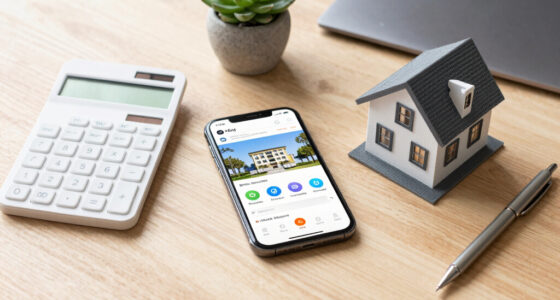

This checklist is for new investors who want a practical, organized place to handle the paperwork and routines that support learning about investing. It focuses on desk tools and references—not specific investments or personalized financial advice.

Get smart everyday buys delivered free with Prime
- Fast, free delivery on millions of items
- Prime Video, Amazon Music and more included
- Member-only deals all year
The sections move from basic money organization to recordkeeping, calculation, document storage, learning resources, and screen privacy. Some slots include a named product; others are advice only, since no product was supplied for those categories.
Use the list as a buying guide, not a requirement to purchase everything. Start with the items that solve a real need, check dimensions and compatibility before ordering, and choose tools you’re likely to use consistently. Investing itself does not require a special desk setup.
Budget Planner Notebook
A planner can give a beginner one place to map recurring bills, note savings goals, and see how routine expenses fit alongside investing plans. The named pick is the Clever Fox Budget Planner, Monthly Bill Tracker Book 5.8″x8.3″ Black. A paper planner may suit someone who prefers writing things down, while someone who already tracks finances elsewhere may not need a second system.
Before choosing a notebook, consider whether its size and layout fit your habits. Check the listed dimensions against the space where you plan to use or store it, and confirm that the product’s description matches the kind of tracking you want. A common mistake is buying a planner because it looks comprehensive, then leaving it unused because updating it takes too much effort. Keep the routine simple: record information you can maintain, and avoid copying sensitive account credentials or full account details into a notebook that could be misplaced.
Use a planner to organize your own household overview, not as a substitute for statements or tax records. If you already have a reliable digital process, prioritize consistency over adding another format. The best fit is the one that makes regular review easier without creating unnecessary duplicate work.
What to look for:
- Confirm the listed 5.8″x8.3″ dimensions suit your desk and storage space.
- Check the product description for monthly bill-tracking features.
- Choose a format you will update consistently.
- Avoid recording passwords or unnecessary account-sensitive details.
- Consider whether a paper planner complements or duplicates your existing system.
Clever Fox Budget Planner, Monthly Bill Tracker Book 5.8"x8.3" Black

This undated budget planner helps users organize finances, track expenses, and set savings and debt goals over 12 months. It features a hardcover, thick paper, multiple trackers, stickers, and a user guide to facilitate financial management.
Pros:
- Undated format allows flexible use throughout the year
- Includes helpful accessories like stickers and a user guide
- High-quality materials with thick paper and durable cover
Cons:
- No specific price information available
- Limited to 12 months, may not suit long-term planners
Best for: Beginners who prefer writing monthly money notes by hand
Not ideal for: People who already maintain a consistent digital tracking system
Bottom line: Choose the Clever Fox planner if its listed size and monthly tracking approach fit a routine you can maintain.
Investment Ledger Book
An investment ledger can help keep personal notes together, such as the date of a transaction, the account involved, and where to find the corresponding statement. This section is advice only: no product was provided. For beginners, the goal is not to create an elaborate parallel accounting system, but to make it easier to review records and locate the original documentation when needed.
Decide first whether a dedicated book adds value beyond your brokerage’s records, statements, or an existing spreadsheet. A common mistake is writing down partial details and treating them as a complete record. Instead, define a simple, repeatable format and keep entries consistent; note the source document or record location when useful. Avoid putting login credentials or other sensitive information in an unsecured notebook.
Think about access and storage before selecting a format. A paper ledger should be easy to update and stored with care; a digital record should be kept in a place you can access and protect. Do not rely on memory or a personal ledger as a replacement for official statements or professional tax guidance. The useful choice is the one that supports clear, retrievable notes without duplicating work you already do.
What to look for:
- Choose a format you can update after relevant account activity.
- Use consistent fields, such as date, account, and record location.
- Keep official statements as the source documents.
- Avoid storing passwords or unnecessary sensitive details.
- Check that the ledger can be stored and retrieved securely.
Financial Calculator
A calculator can help with basic arithmetic when reviewing savings plans, comparing hypothetical contributions, or checking calculations made elsewhere. This section is advice only: no specific product was supplied. A beginner does not necessarily need a specialized financial calculator; the right tool depends on which calculations you expect to perform and whether you are comfortable using an existing calculator or spreadsheet.
Before buying anything, list the tasks you want to handle. Then check that the tool’s functions and instructions cover those tasks. A common mistake is choosing a device based on a long feature list without knowing how to use the functions that matter. Another is treating an output as a forecast or recommendation. Calculations depend on the inputs and assumptions supplied, so verify inputs carefully and treat results as illustrations rather than guarantees.
Consider usability as well as capability: display readability, button layout, and a form factor that fits your desk all matter if you plan to use it regularly. If you use a spreadsheet, confirm that you understand the formulas and can review them. For consequential decisions or tax questions, do not rely on a calculator alone. Pick the simplest option that supports your actual workflow and makes calculations easier to check.
What to look for:
- Identify the calculations you actually plan to perform.
- Confirm the listed functions and instructions cover those tasks.
- Choose a display and button layout that are comfortable to use.
- Check inputs and assumptions instead of treating results as guarantees.
- Consider whether an existing calculator or spreadsheet already meets the need.
Desktop Document Safe
A secure place for important paperwork can help keep financial documents together and reduce the chance that they are casually misplaced. This section is advice only: no product was supplied. Before shopping, decide which physical documents you actually need to retain and whether an existing secure storage location already meets that need.
Do not choose a safe based on the word “desktop” alone. Check its dimensions and capacity against the documents and available space, and read the product details to understand how it is intended to be secured and accessed. A frequent buying mistake is selecting a container that is too small for the papers it is meant to hold, or assuming that any safe offers the same level of protection. Product specifications should guide your choice; avoid relying on assumptions about features that are not stated.
Think through who needs access, where the safe will sit, and how you will keep any access method available to authorized users. Store only documents that make sense to keep in physical form, and maintain appropriate copies or records where needed. A safe is one part of an organized document plan, not a substitute for account security or careful handling of sensitive information. If you have little paper to store, a dedicated safe may not be necessary.
What to look for:
- Measure the available desktop or storage area before choosing a size.
- Check capacity against the documents you plan to keep.
- Review stated access and securing details rather than assuming features.
- Plan how authorized users will access it when needed.
- Consider whether an existing secure storage option is sufficient.
Portfolio Reference Books
A beginner-friendly reference can make it easier to set aside time for learning, especially when the writing and subject matter suit the reader. The listed pick is Investing for Newborn Babies: A Simple and Gentle Investing Book for K. The supplied title suggests a particular audience, so check the complete product listing and description before deciding whether it fits your own needs.
Do not assume that a book’s title alone tells you its full scope, level, or relevance. Read the description and, where available, inspect the contents to see whether the topics match what you want to understand. A common mistake is treating a single book as a complete guide to investing or as a source of individualized financial advice. Use books as learning resources, compare explanations when a topic is important, and distinguish general education from guidance tailored to your circumstances.
Also consider who will read it and what questions they are trying to answer. The supplied title refers to newborn babies, which may make it a better match for some readers or gift-giving situations than for others. If the intended reader is not reflected in the listing, look for a resource whose stated audience and level align more closely. Choose material that encourages careful understanding rather than acting on a title or a single passage alone.
What to look for:
- Read the complete title and product description before buying.
- Check the stated audience and learning level.
- Review the topics covered against your questions.
- Treat the book as education, not personalized financial advice.
- Choose a resource the intended reader will actually use.
Investing for Newborn Babies: A Simple and Gentle Investing Book for Kids, Toddl

This book introduces young children and beginners to the fundamentals of investing, money growth, and the stock market in a simple and gentle way. It aims to build financial confidence from an early age.
Pros:
- Easy-to-understand explanations suitable for kids and beginners
- Focuses on building financial confidence early
- Gentle introduction to investing concepts
Cons:
- Lacks detailed investment strategies
- May not appeal to advanced investors
Best for: Readers whose needs align with the book’s stated audience and description
Not ideal for: Beginners seeking a clearly matched general investing reference without verifying the listing
Bottom line: Review the complete listing for “Investing for Newborn Babies” and confirm its audience and topics suit the reader.
Monitor Privacy Screen
A privacy filter may be useful when you want to limit side-angle visibility while working at a desk or in a shared space. The named pick is the 3M Privacy Filter for 43-Inch Widescreen Monitor – PF430W9B, Black. Monitor accessories are especially dependent on exact dimensions and format, so confirm compatibility before ordering rather than relying on the screen’s diagonal measurement alone.
Check the monitor’s screen dimensions and aspect ratio against the filter’s listed specifications. The product name identifies a 43-inch widescreen monitor, but that alone may not establish a match for every monitor of that diagonal size. Review the model details, display shape, and any installation or attachment requirements in the listing. A common mistake is buying a filter based only on a rounded screen-size label, then finding that the shape or fit does not match.
Consider how you use the display, where other people might view it from, and whether the filter’s described setup works for your workspace. Do not assume an accessory will fit a different monitor model unless the specifications support that match. If you are unsure, compare the monitor’s manual or manufacturer specifications with the filter listing before purchasing. The right pick is the one with confirmed compatibility for your actual screen.
What to look for:
- Confirm the monitor’s exact screen dimensions and aspect ratio.
- Compare the monitor model with the filter’s listed compatibility details.
- Check installation or attachment requirements in the product listing.
- Do not rely on diagonal size alone to establish fit.
- Consider where and how the monitor is used before deciding a filter is needed.
3M Privacy Filter for 43-Inch Widescreen Monitor – PF430W9B, Black
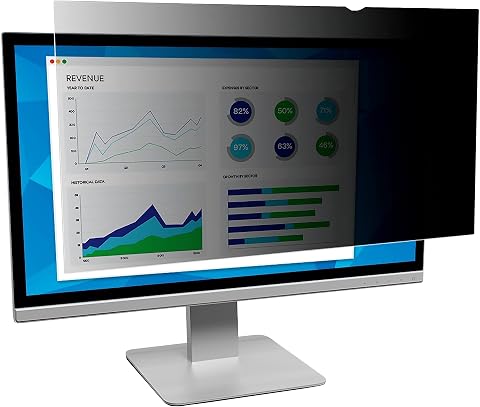
This privacy filter uses microlouver technology to block side views outside a 60-degree angle, ensuring privacy. It is reversible with a glossy or matte finish, reduces blue light transmission by 35%, and minimizes reflections for clear screen visibility.
Pros:
- Effective privacy protection from side views
- Reversible design offers glossy and matte options
- Reduces blue light transmission to lessen eye strain
- Minimizes reflections for clear viewing
Cons:
- May reduce screen brightness slightly
- Designed specifically for 43-inch monitors, less versatile for other sizes
Best for: Owners of a compatible 43-inch widescreen monitor who want a privacy filter
Not ideal for: People whose monitor dimensions or format do not match the listing
Bottom line: Consider the 3M filter only after confirming your monitor’s dimensions, format, and model against its specifications.
For a budget-first buying order, start with recordkeeping: use an existing notebook or digital method before adding a planner or ledger. Next, identify whether you genuinely need a calculator or dedicated document storage. Treat reference books as optional learning tools, and buy a monitor filter only after confirming an exact fit. The aim is to solve real workflow gaps, not fill every category.
A useful investing desk is built around simple, repeatable habits and records you can find when needed. Begin with what you already own, add tools gradually, and check product details before purchasing. You can make the setup more useful over time as your needs become clearer.
Halloween Picks
halloween
As an affiliate, we earn on qualifying purchases.