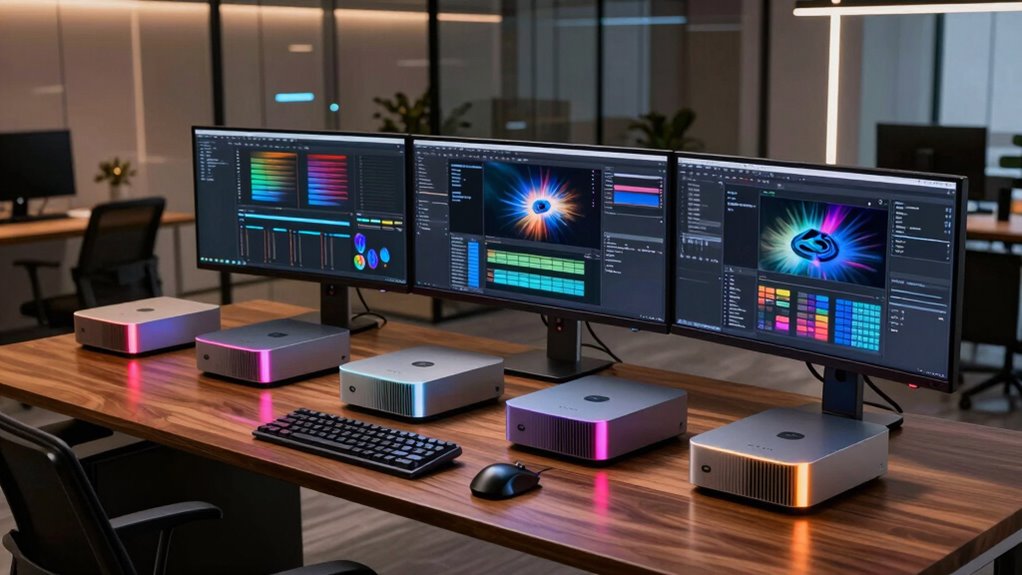

If you’re looking for the best Mac Mini for software development in 2026, I recommend models like the Mac Mini M4 with 16GB RAM and a 256GB SSD, the 2024 Mac Mini with M4 and 512GB storage, the same model with 24GB RAM for larger projects, and the M4 Pro version for high-end performance. These options offer great processing power, expandability, and seamless ecosystem integration. Keep going to see which fits your workflow best.
Key Takeaways
- Prioritize models with M4 Pro chip and 24GB RAM for optimal performance with demanding development workloads.
- Ensure sufficient Thunderbolt, USB-C, and Ethernet ports for seamless peripheral and network connectivity.
- Choose models with 512GB or higher SSD for large codebases, virtual machines, and rapid data access.
- Opt for eco-friendly, privacy-focused Mac Minis with secure hardware and software features in 2026.
- Select compact, future-proof models that integrate effortlessly within the Apple ecosystem for streamlined workflows.
| Apple Mac mini M4 with 16GB 256GB SSD Ethernet |  | Compact Powerhouse | Processor: Apple M4 chip (10-core CPU & GPU) | Memory: 16GB unified memory | Storage Capacity: 256GB SSD | VIEW LATEST PRICE | See Our Full Breakdown |
| Apple 2024 Mac mini with M4 16GB 512GB SSD | | Versatile Performer | Processor: Apple M4 chip (10-core CPU & GPU) | Memory: 16GB unified memory | Storage Capacity: 512GB SSD | VIEW LATEST PRICE | See Our Full Breakdown |
| Apple 2024 Mac mini with M4 Chip and 24GB RAM | | High-Performance Workstation | Processor: Apple M4 chip (10-core CPU & GPU) | Memory: 24GB unified memory | Storage Capacity: 512GB SSD | VIEW LATEST PRICE | See Our Full Breakdown |
| Apple 2024 Mac mini with M4 Pro chip | | Enterprise-Grade Power | Processor: Apple M4 Pro chip (12-core CPU & 16-core GPU) | Memory: 24GB unified memory | Storage Capacity: 512GB SSD | VIEW LATEST PRICE | See Our Full Breakdown |
More Details on Our Top Picks
-
Apple 2024 Mac mini Desktop Computer with M4 chip with 10‑core CPU and 10‑core GPU: Built for Apple Intelligence, 16GB Unified Memory, 512GB SSD Storage, Gigabit Ethernet. Works with iPhone/iPad
SIZE DOWN. POWER UP — The far mightier, way tinier Mac mini desktop computer is five by five...
As an affiliate, we earn on qualifying purchases.
Apple Mac mini M4 with 16GB 256GB SSD Ethernet
If you’re looking for a compact yet powerful machine for software development, the Apple Mac mini M4 with 16GB RAM and a 256GB SSD is an excellent choice. Its sleek five-by-five-inch design fits easily next to any monitor, saving space while delivering impressive performance. Powered by the Apple M4 chip with a 10-core CPU and GPU, it handles multitasking and demanding tasks effortlessly. The 16GB unified memory and fast SSD ensure quick app loading and smooth workflows. Plus, with versatile connectivity options like Thunderbolt, HDMI, Ethernet, and USB-C, I can connect all my devices seamlessly. This Mac mini combines compactness with power, perfect for a productive workspace.
- Processor:Apple M4 chip (10-core CPU & GPU)
- Memory:16GB unified memory
- Storage Capacity:256GB SSD
- Connectivity Ports:Thunderbolt, HDMI, Ethernet, USB-C, headphone jack
- Size:5×5 inches
- Ecosystem Integration:Seamless with Apple devices, mirroring, FaceTime
- Additional Feature:Compact desktop design
- Additional Feature:Apple Silicon optimized
- Additional Feature:Environmental sustainability
-
Apple 2024 Mac mini Desktop Computer with M4 chip with 10‑core CPU and 10‑core GPU: Built for Apple Intelligence, 24GB Unified Memory, 512GB SSD Storage, Gigabit Ethernet. Works with iPhone/iPad
SIZE DOWN. POWER UP — The far mightier, way tinier Mac mini desktop computer is five by five...
As an affiliate, we earn on qualifying purchases.
Apple 2024 Mac mini with M4 16GB 512GB SSD
The Apple 2024 Mac mini with M4, 16GB, and 512GB SSD stands out as an ideal choice for developers who need powerful performance in a compact form factor. Its sleek five-by-five-inch design easily fits next to a monitor, saving space without sacrificing capability. Powered by the M4 chip with a 10-core CPU and GPU, it delivers snappy, fluid performance perfect for demanding coding and multitasking. With 16GB of unified memory and a 512GB SSD, it handles large projects smoothly. Multiple ports—including Thunderbolt, HDMI, and Gigabit Ethernet—offer flexible connectivity. Plus, its seamless integration with Apple’s ecosystem enhances productivity and security.
- Processor:Apple M4 chip (10-core CPU & GPU)
- Memory:16GB unified memory
- Storage Capacity:512GB SSD
- Connectivity Ports:Thunderbolt, HDMI, Ethernet, USB-C, headphone jack
- Size:5×5 inches
- Ecosystem Integration:Seamless with Apple devices, mirroring, Messages
- Additional Feature:512GB SSD storage
- Additional Feature:Supports Apple ecosystem
- Additional Feature:Privacy protections included
-
Apple 2024 Mac mini Desktop Computer with M4 Pro chip with 12‑core CPU and 16‑core GPU: Built for Apple Intelligence, 24GB Unified Memory, 512GB SSD Storage, Gigabit Ethernet. Works with iPhone/iPad
SIZE DOWN. POWER UP — The far mightier, way tinier Mac mini desktop computer is five by five...
As an affiliate, we earn on qualifying purchases.
Apple 2024 Mac mini with M4 Chip and 24GB RAM
For developers seeking a compact yet powerful machine, the Apple 2024 Mac mini with M4 chip and 24GB RAM stands out. Its small five-by-five-inch design fits easily into any workspace, yet it packs impressive performance with a 10-core CPU, 10-core GPU, and 24GB of unified memory. The 512GB SSD guarantees quick data access, and the versatile ports—including Thunderbolt, HDMI, USB-C, Ethernet, and a headphone jack—support various peripherals. Built on macOS, it runs demanding applications smoothly and integrates seamlessly with other Apple devices. This Mac mini offers a perfect blend of power, compactness, and connectivity for software development needs.
- Processor:Apple M4 chip (10-core CPU & GPU)
- Memory:24GB unified memory
- Storage Capacity:512GB SSD
- Connectivity Ports:Thunderbolt, HDMI, Ethernet, USB-C, headphone jack
- Size:5×5 inches
- Ecosystem Integration:Seamless with Apple devices, mirroring, FaceTime
- Additional Feature:24GB unified memory
- Additional Feature:Seamless device integration
- Additional Feature:macOS compatibility
Apple 2024 Mac mini with M4 Pro chip
Powered by the M4 Pro chip, the 2024 Mac mini delivers exceptional performance in a compact form factor, making it ideal for software developers who need speed and efficiency without sacrificing desk space. Its five-by-five-inch design fits easily next to your monitor and offers space-saving convenience. With a 12-core CPU and 16-core GPU, plus 24GB of unified memory and a 512GB SSD, it handles demanding tasks like large code compilations and complex projects effortlessly. Multiple ports—including Thunderbolt, HDMI, and USB-C—ensure seamless connectivity. This Mac mini combines power, versatility, and space efficiency, making it a standout choice for developers in 2026.
- Processor:Apple M4 Pro chip (12-core CPU & 16-core GPU)
- Memory:24GB unified memory
- Storage Capacity:512GB SSD
- Connectivity Ports:Thunderbolt, HDMI, Ethernet, USB-C, headphone jack
- Size:5×5 inches
- Ecosystem Integration:Seamless with Apple devices, mirroring, Messages
- Additional Feature:M4 Pro CPU/GPU
- Additional Feature:Designed for demanding tasks
- Additional Feature:Space-efficient size
Factors to Consider When Choosing a Mac Mini for Software Development

When selecting a Mac Mini for software development, I focus on processor power and speed to handle demanding tasks. I also consider memory and storage needs to guarantee smooth multitasking and ample space for projects. Finally, I check connectivity options and tool compatibility to support my workflow efficiently.
Processor Power and Speed
Choosing a Mac Mini with a powerful processor is essential for efficient software development. A fast CPU, like a 10-core model, drastically cuts compile times and boosts overall productivity. Higher core counts in both CPU and GPU allow for smoother multitasking and better handling of demanding development tools and virtual environments. An advanced architecture, such as Apple’s M4 chip, offers optimized performance within the macOS ecosystem, making workflows more seamless. Increased processing power reduces lag during complex debugging, testing, and compiling large codebases. Upgrading to a processor with more cores and higher clock speeds also future-proofs your setup against evolving software demands. Ultimately, a powerful processor helps you work faster, more efficiently, and with less frustration, which is vital for development success.
Memory Capacity Needs
A powerful processor helps speed up compilation and multitasking, but without enough memory, your Mac Mini can still bottleneck your workflow. Adequate memory capacity is essential for smooth multitasking when running multiple development tools, IDEs, and virtual machines. Most developers find 16GB of RAM sufficient for everyday tasks, but complex projects or large codebases benefit from 24GB or more. Insufficient memory causes sluggish performance, longer compile times, and increased disk swapping, which hampers productivity. When choosing a Mac Mini, consider future needs—more RAM can help you stay productive as your workflows and software requirements grow. Ultimately, the amount of memory you need depends on your specific development environment and whether you run memory-intensive applications alongside your code.
Storage Requirements
Ensuring sufficient storage capacity is essential for smooth software development on a Mac Mini, as it directly impacts your ability to store large projects, virtual machines, and necessary tools. SSDs offer faster read and write speeds, which helps reduce wait times during compilation and data transfers. When choosing a storage size, consider your current needs and future growth; opting for higher capacities like 512GB or more now can save you from external drives or upgrades later. Keep in mind that storage options are typically fixed at purchase, so selecting a capacity that aligns with your workload and anticipated project size is critical. Adequate storage ensures seamless workflow, minimizes disruptions, and provides enough space for all your development essentials.
Connectivity Options
Connectivity options play a essential role in setting up an efficient software development environment on a Mac Mini, as they determine how easily you can connect peripherals, displays, and network resources. Multiple ports, like Thunderbolt, HDMI, and USB-C, make it simple to connect multiple monitors, external drives, and other peripherals necessary for coding, testing, and debugging. Front-facing USB-C ports offer quick access for peripherals or charging without reaching behind the device. Gigabit Ethernet ensures fast, reliable internet for downloading large files, cloud services, and remote collaboration. Thunderbolt ports support high-speed data transfer, which is critical for managing large codebases and resource-heavy applications. A diverse range of ports ensures seamless integration with development hardware, testing devices, and peripherals, boosting your workflow efficiency.
Compatibility With Tools
When choosing a Mac Mini for software development, it’s crucial to verify that it can run all your tools smoothly. Make sure it has at least 16GB of RAM to handle multiple development environments without slowing down. Check that the macOS version supports your required tools, especially if you rely on newer or specialized software. Confirm the availability of high-speed ports like Thunderbolt and USB-C for connecting monitors, external drives, and peripherals. Ensure the processor architecture (Apple Silicon M4 or M4 Pro) is compatible with your development environment and tools, particularly if you use software optimized for Intel or ARM. Finally, consider storage capacity—256GB SSD is the minimum for managing large codebases, dependencies, and project files efficiently.
Ecosystem Integration Ease
Choosing a Mac Mini for software development becomes much easier when it integrates seamlessly with your other Apple devices. This integration allows for effortless file transfers, screen mirroring, and messaging, which boosts productivity. Features like Handoff, Universal Clipboard, and AirDrop make workflows smoother across Mac, iPhone, and iPad. Using macOS on a Mac Mini also means native support for iPhone and iPad apps, creating a unified experience. Additionally, Apple’s ecosystem services like iCloud ensure your files, calendars, and contacts stay synchronized across devices. This consistent connectivity reduces setup time and technical hurdles, letting you focus more on development tasks. Overall, a well-integrated ecosystem simplifies multitasking and keeps your workflow fluid, making your Mac Mini a more effective development tool.
Port Availability and Access
Having the right ports on your Mac Mini is essential for a smooth software development experience. Multiple Thunderbolt ports are vital for high-speed data transfer and connecting external displays, which helps streamline multitasking. Accessible USB-C ports on the front or back allow easy connection of peripherals like external drives, keyboards, and mice, reducing clutter. A Gigabit Ethernet port is significant for stable wired internet, especially when transferring large files or working in network-intensive environments. HDMI ports enable you to connect external monitors, expanding your workspace and improving productivity. When choosing a Mac Mini, consider its overall port configuration to guarantee it supports your current needs and future expansion, making your development setup flexible and efficient.
Environmental and Privacy Factors
Prioritizing environmental and privacy factors guarantees your Mac Mini aligns with sustainable practices and keeps your development work secure. I recommend choosing models that are carbon neutral, which helps reduce environmental impact and supports eco-friendly development. Look for devices with strong privacy protections, such as advanced data encryption and secure boot processes, to safeguard sensitive information. It’s also important to consider the manufacturer’s commitments to sustainability, like energy-efficient manufacturing and eco-conscious materials. A Mac Mini that integrates seamlessly within the Apple ecosystem offers enhanced security features, such as device mirroring and encrypted messaging, adding extra layers of protection. In conclusion, opt for models with secure hardware components and privacy-focused software to minimize vulnerabilities and ensure your projects and data stay protected at all times.
Frequently Asked Questions
How Does the M4 Chip Compare to Previous Mac Mini Processors?
The M4 chip is markedly more powerful than previous Mac Mini processors, offering better performance and efficiency. I’ve noticed faster compile times, smoother multitasking, and improved energy savings with the M4. It’s a leap forward, making software development more seamless. If you’re comparing it to earlier Intel or M1/M2 chips, the M4 provides a notable boost in speed and capabilities, especially for demanding coding tasks and multitasking.
Is Upgrading to 24GB RAM Worth It for Heavy Development Tasks?
Absolutely, upgrading to 24GB of RAM is like giving your development setup a turbo boost. For heavy tasks like running virtual machines or complex IDEs, it makes a big difference. I’ve found that extra RAM helps reduce lag and keeps everything running smoothly. If you’re serious about multitasking and heavy-duty coding, it’s worth the investment. Otherwise, 16GB may suffice, but more RAM always offers a smoother experience.
What Are the Best Peripherals to Pair With the Mac Mini for Coding?
For coding, I recommend pairing your Mac Mini with a high-quality mechanical keyboard and a precise mouse or trackpad for comfort during long sessions. An external monitor with good color accuracy and a high resolution makes coding much easier. Additionally, a USB-C hub or dock can expand connectivity for accessories like external drives, webcams, or audio gear. These peripherals boost productivity and make your coding setup much more efficient.
How Does the Storage Capacity Impact Development Workflow?
Sure, storage capacity is like a digital closet—bigger means no more frantic deletions or external drives cluttering your workspace. With ample space, I can keep my projects, libraries, and backups all in one place, speeding up my workflow and reducing downtime. Conversely, limited storage forces constant juggling, risking data loss and frustration. So, more storage isn’t just luxury; it’s a productivity superpower for any developer.
Can the Mac Mini Handle Virtual Machines and Containerization Efficiently?
Yes, the Mac Mini can handle virtual machines and containerization efficiently, especially with the latest models featuring powerful M-series chips. I’ve found that with sufficient RAM and fast storage, it runs multiple VMs smoothly, making development seamless. Upgrading to at least 16GB of RAM and utilizing SSD storage helps guarantee that virtual environments don’t slow down your workflow, providing a solid setup for intensive development tasks.
Conclusion
Choosing the right Mac mini is like finding the perfect partner for your coding adventures—powerful, reliable, and ready to grow with you. Whether you prefer the steady beat of the M4 or the extra punch of the M4 Pro, these options will fuel your creativity and keep your projects humming. So, pick the one that feels like a natural extension of your workflow, and let your software development journey soar to new heights.