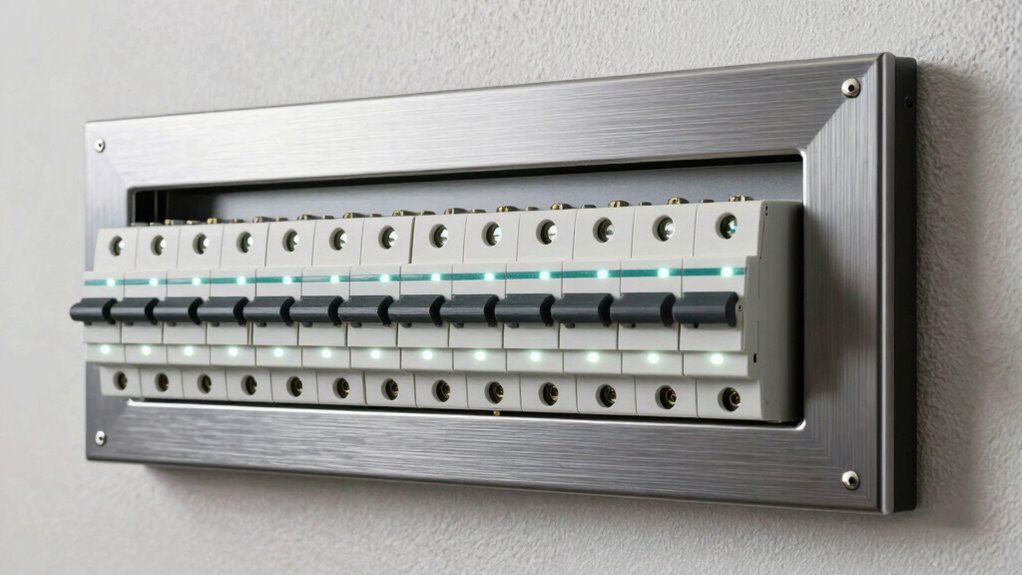

Choosing a whole house surge protector panel is essential for safeguarding your home’s electrical system and sensitive devices from power surges. The best overall pick, the Eaton CHSPT2SURGE, offers reliable protection with durable NEMA 4 enclosure, while the Square D HEPD80 provides a high surge current capacity ideal for homes with extensive electronics. However, tradeoffs include cost and installation complexity, which can be daunting for some homeowners. Continue reading for a detailed breakdown of these options to find the right fit for your needs.

Get smart everyday buys delivered free with Prime
- Fast, free delivery on millions of items
- Prime Video, Amazon Music and more included
- Member-only deals all year
Key Takeaways
- The highest surge current capacity doesn’t always mean better overall protection; matching capacity to your home’s needs is key.
- Indoor vs. outdoor ratings significantly influence which surge protector is suitable for your installation environment.
- Premium units offer longer warranties and more robust construction, but may be overkill for small or basic homes.
- Ease of installation varies; some units require professional wiring, impacting overall costs and complexity.
- Cost-effective options provide solid protection but may lack advanced features or durability found in higher-end models.



| whole house surge protector panel | Voltage | Enclosure |
|---|---|---|
| Eaton CHSPT2SURGE Type 2 Whole | 120/240 VAC | NEMA 4 |
| Square D HEPD80 Universal Whol | 120/240V | — |
| Square D by Schneider Electric | 120/240V | NEMA 4X |
| Gloyatin HSPD Square Whole Hom | 120/240VAC | — |
| ABB ThomesurgEP Whole Home Sur | 120/240V | NEMA 3R |
| FHSPD108S Whole House Surge Pr | 120/240V | Commercial-grade |
| Eaton Surge Protection Device | 120/240V | — |
| FHSPD36S Whole House Surge Pro | 120/240V | — |
More Details on Our Top Picks
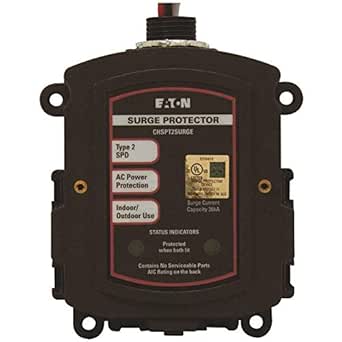
Eaton CHSPT2SURGE Type 2 Whole Home Surge Protector, NEMA 4, Single Phase, 120/240V
This Eaton model stands out for its robust NEMA 4 enclosure, making it ideal for outdoor installations where weather resistance is critical. Compared with the Square D HEPD80, it offers a straightforward, reliable connection with quick-connect features, but it requires installation on the load side of the main disconnect, which may complicate setup for some homeowners. Its durability and simple LED indicators make it suitable for those seeking long-term outdoor protection without complex monitoring systems. However, it lacks remote monitoring capabilities and is limited to single-phase systems, which could be a constraint for larger or more complex setups.
Pros:- Durable NEMA 4 outdoor-rated enclosure for harsh weather conditions
- Easy to install with quick connect design
- Reliable surge protection with a 22 kA surge current capacity
Cons:- Requires connection on load side of main disconnect, adding complexity
- Limited to single-phase systems, not suitable for multi-phase setups
Best for: Homeowners needing outdoor-rated surge protection for residential load centers with straightforward installation.
Not ideal for: Those with multi-phase systems or seeking remote monitoring features, as this model is single-phase and lacks connectivity options.
- Voltage:120/240 VAC
- Phase:Single
- Maximum Continuous Operating Voltage:150 V L–N
- Surge Current Capacity:22 kA
- Enclosure:NEMA 4
- LED Indicators:Yes
Our verdict“This pick is perfect for outdoor residential installations where durability and straightforward setup are priorities.”
Square D HEPD80 Universal Whole House Surge Protection Device, 1-Phase, 3-Wire for 120/240V, 80kA
The Square D HEPD80 provides a solid balance of cost and protection, making it suitable for homeowners who want reliable surge suppression without extra bells and whistles. Compared with the ABB ThomesurgEP, it offers similar surge capacity but is easier to integrate into existing residential load centers, especially for those on a budget. Its LED indicator simplifies status monitoring, and its 80kA capacity effectively shields electronics from typical residential surges. However, professional installation is recommended to ensure optimal performance, and there’s limited information on its long-term lifespan or maintenance requirements, which could affect ongoing reliability.
Pros:- Affordable, reliable surge protection with 80kA capacity
- Easy to install with clear LED status indicator
- Enhances lifespan of electronics and appliances by reducing voltage spikes
Cons:- Requires professional installation for best results
- Limited details on long-term durability or maintenance
Best for: Cost-conscious homeowners seeking dependable, straightforward whole house surge protection with easy installation.
Not ideal for: Homeowners with complex or multi-phase electrical systems, as this unit is designed specifically for single-phase setups and lacks detailed compatibility info.
- Type:Whole House Surge Protector
- Phase:1-Phase
- Wiring:3-Wire
- Voltage:120/240V
- Surge Current Capacity:80kA
Our verdict“This model offers excellent value for homeowners needing reliable surge protection without extra complexity.”
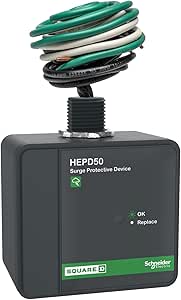
Square D by Schneider Electric HEPD50 Universal Whole House Surge Protection Device, 1-Phase, 3-Wire + Ground for 120/240V, 50kA
The HEPD50 is tailored for those needing a balance of protection and affordability, with a 50kA surge rating that suits most residential needs. Unlike the HEPD80, it offers a slightly lower surge capacity but still provides comprehensive protection with an easy-to-recognize LED indicator. Its NEMA 4X rating ensures durability outdoors, making it a good choice for exterior load centers. Its lightweight build raises questions about durability, and limited info on lifespan or maintenance could be a concern for homeowners seeking long-term reliability.
Pros:- Provides solid surge protection with a 50kA rating
- Easy to install with universal compatibility
- NEMA 4X enclosure suitable for outdoor use
Cons:- Lower surge capacity compared to higher-rated models
- Limited info on lifespan or ongoing maintenance
Best for: Homeowners seeking reliable, moderate surge protection with outdoor durability, especially in environments with typical storm activity.
Not ideal for: Properties with higher surge risks or a need for maximum capacity, as this unit’s 50kA rating might be insufficient in severe weather zones.
- Brand:Square D by Schneider Electric
- Voltage:120/240V
- Phase:1-Phase
- Wires:3-Wire + Ground
- Surge Current Rating:50kA
- Enclosure:NEMA 4X
Our verdict“Ideal for those needing reliable outdoor protection at a moderate surge capacity, without excessive cost.”
Gloyatin HSPD Square Whole Home Surge Protective Device, Type 1 SPD, 120/240VAC
The HSPD from Gloyatin excels in offering high surge capacity (80kA) within a compact form, making it suitable for both indoor and outdoor applications. Its broad compatibility with various circuit breakers makes it flexible for different systems, and its high surge capacity ensures robust protection against voltage spikes. Unlike the others, this model emphasizes a sleek, space-saving design that appeals to those with limited panel space or aesthetic considerations. The lack of detailed lifespan or maintenance info, however, could make long-term planning tricky for cautious buyers.
Pros:- High surge capacity of 80kA for reliable protection
- Compact design fits in limited spaces
- Compatible with various circuit breakers
Cons:- Limited information on maintenance or lifespan
- Requires professional installation for safety
Best for: Homeowners with limited space or seeking a versatile, high-capacity surge protector suitable for both indoor and outdoor use.
Not ideal for: Those who prefer detailed product lifespan information or require integrated monitoring features, as this model does not specify these aspects.
- Surge Capacity:80kA
- Voltage:120/240VAC
- Model:HSPD-25
- Brand:Gloyatin
Our verdict“This surge protector is well-suited for homeowners needing high capacity and space-efficient design in diverse environments.”
ABB ThomesurgEP Whole Home Surge Protection Device Type 1 SPD NEMA 3R
The ABB ThomesurgEP offers reliable Type 1 surge protection with a 36kA per phase rating, making it suitable for service entrance or sub-panel installation. Its NEMA 3R enclosure simplifies outdoor mounting, and it complies with the latest NEC 2023 standards, giving peace of mind for code compliance. Compared to the higher-capacity models, its 36kA rating might seem lower, but for many residential applications, it provides sufficient shield against typical surges. Its professional installation requirement ensures it’s correctly set up but may add initial costs, especially for those unfamiliar with NEC standards.
Pros:- Meets NEC 2023 standards for safety and compliance
- Easy to install at service entrance or sub-panel
- NEMA 3R enclosure suitable for outdoor use
Cons:- Lower surge capacity compared to some models
- Requires professional installation for proper safety and compliance
Best for: Homeowners needing NEC 2023 compliant surge protection at the service entry or sub-panel level, especially in outdoor or exposed locations.
Not ideal for: Properties with high surge risks requiring higher capacity units, or DIYers seeking plug-and-play options, as installation needs professional handling.
- Type:Type 1 SPD
- Protection Rating:36kA per phase
- Voltage:120/240V
- Enclosure:NEMA 3R
- SCCR:200kA
Our verdict“This surge protector is a smart choice for code-compliant outdoor or service entrance protection with a focus on safety and standards.”
FHSPD108S Whole House Surge Protector for 108,000 Amps, Indoor/Outdoor Use, 120/240V
The FHSPD108S stands out for its impressive surge capacity of 108,000 Amps, making it well-suited for homes with high electrical loads or those in storm-prone areas. Its compact, space-saving design allows for easy integration into existing load centers, and its indoor/outdoor versatility broadens installation options. Compared to the FHSPD36S, which offers less surge capacity, the FHSPD108S provides more robust protection but involves a more complex installation process, particularly for grounding. The LED indicators simplify monitoring system status, a feature less emphasized in simpler models. However, it requires an electrician familiar with surge protectors, and improper grounding could cause startup issues or reduce effectiveness. This pick makes the most sense for homeowners seeking maximum surge capacity and reliable protection without sacrificing space efficiency, especially in outdoor or high-risk environments.
Pros:- High surge capacity of 108,000 Amps ensures robust protection
- Compact, space-efficient design fits easily into existing load centers
- Suitable for both indoor and outdoor installation
- LED status indicators for straightforward monitoring
Cons:- Installation requires a qualified electrician familiar with surge protectors
- Potential startup issues if grounding is improperly done
Best for: Homeowners in storm-prone regions or with high-value electronics needing maximum surge capacity
Not ideal for: DIY enthusiasts or those with basic electrical setups, due to professional installation requirements
- Capacity:108,000 Amps
- Voltage:120/240V
- Frequency:60Hz
- Enclosure:Commercial-grade
Our verdict“Ideal for homes requiring maximum surge protection and outdoor versatility, but best handled by professionals.”
Eaton Surge Protection Device, 1 Phase, 120/240V, 2 Poles, 2 Wires
The Eaton Surge Protection Device offers a straightforward solution for those with existing load centers, especially because of its universal compatibility with 120/240V systems and easy plug-in design. It’s a practical choice for residents who prefer a simple, plug-and-play option, unlike the FHSPD108S, which may require more extensive wiring and grounding. However, its limited to 1-phase systems and lack of detailed performance specs mean it might not satisfy homeowners with more complex or high-capacity needs. This device is ideal for small to medium homes or upgrades where ease of installation is a priority, but it’s not suitable for larger or more storm-prone environments where higher surge capacity is necessary.
Pros:- Universal compatibility with various load centers
- Simple, quick installation process
- High-quality construction ensures longevity
Cons:- Limited to 1-phase electrical systems
- Lacks detailed performance specifications, making capacity assessment harder
Best for: Homeowners seeking an easy-to-install, reliable surge protector for standard 120/240V systems
Not ideal for: Homes with high surge risk or complex electrical systems requiring higher capacity or detailed specs
- Model Number:CHSPT2ULTRA
- Voltage:120/240V
- Poles:2
- Wires:2
Our verdict“Best suited for users needing a straightforward, reliable surge protection device for standard systems, but not for high-demand environments.”
FHSPD36S Whole House Surge Protector for 36,000 Amps, Indoor/Outdoor Use
The FHSPD36S offers a balanced approach with a 36,000 Amp surge capacity, making it suitable for most typical households that face occasional thunderstorms or electrical surges. Its compact design allows for installation in tight spaces, and its indoor/outdoor compatibility makes it versatile for various environments. Compared with the FHSPD108S, which provides higher capacity, the FHSPD36S is easier to install and less costly, but it provides less protection against extreme surges. Its LED indicators simplify system monitoring, though professional installation remains recommended to ensure correct grounding. This model is most appropriate for average-sized homes or areas with moderate surge activity, but it might fall short in storm-prone regions or larger properties requiring more robust protection.
Pros:- Solid surge capacity of 36,000 Amps offers comprehensive protection
- Compact, space-saving design fits in tight electrical panels
- Suitable for indoor and outdoor use
- Easy-to-read LED status indicators
Cons:- Requires professional grounding for optimal performance
- Less capacity than larger units like FHSPD108S, limiting protection in extreme conditions
Best for: Homeowners needing reliable surge protection without high capacity demands, especially in moderate-risk areas
Not ideal for: Large homes or locations with frequent severe electrical storms, where higher capacity protection is preferable
- Capacity:36,000 Amps
- Voltage:120/240V
- Application:Indoor/Outdoor
- Compatibility:All brands of load centers and circuit breakers
Our verdict“A practical choice for average homes needing effective surge protection with easy installation, but less suited for high-risk storm environments.”

How We Picked
To evaluate these whole house surge protector panels, I focused on performance, durability, ease of installation, and value for money. I considered surge current ratings, environmental ratings (indoor vs. outdoor use), and compatibility with typical residential electrical systems. Priority was given to products that balance protection capacity with practical installation features, ensuring they suit a range of home sizes and user expertise. The ranking reflects a combination of technical specifications, user safety features, and overall reliability in real-world scenarios.| whole house surge protector panel | Enclosure |
|---|---|
| Eaton CHSPT2SURGE Type 2 Whole | NEMA 4 |
| Square D HEPD80 Universal Whol | — |
| Square D by Schneider Electric | NEMA 4X |
| Gloyatin HSPD Square Whole Hom | — |
| ABB ThomesurgEP Whole Home Sur | NEMA 3R |
| FHSPD108S Whole House Surge Pr | Commercial-grade |
| Eaton Surge Protection Device | — |
| FHSPD36S Whole House Surge Pro | — |
Factors to Consider When Choosing Whole House Surge Protector Panel
When selecting a whole house surge protector panel, it’s vital to consider factors that impact both safety and practicality. A well-chosen unit not only protects your electronics but also fits seamlessly into your home’s electrical setup. Below are key considerations that can help you make an informed decision beyond just surge capacity.Surge Current Rating and Clamping Voltage
The surge current rating indicates how much energy the device can handle during a power surge, with higher ratings offering more robust protection. Clamping voltage determines at what voltage level the device begins to divert excess energy—lower values mean better protection for sensitive electronics. Matching these specs to your home’s needs ensures your investment offers solid defense without unnecessary expense.
Environmental Ratings (Indoor vs. Outdoor)
Choosing between indoor and outdoor-rated surge protectors depends on where they will be installed. Outdoor units need weatherproof enclosures rated NEMA 3R or higher to withstand elements like rain, dust, and temperature fluctuations. Installing an indoor-only unit outdoors could lead to premature failure, so verify the environmental rating to avoid costly replacements.
Installation Complexity and Cost
Some surge protectors are straightforward plug-in units, while others require professional wiring into your electrical panel. Overlooking installation requirements can lead to unforeseen expenses and safety risks. If you’re comfortable with electrical work, some units offer DIY-friendly features, but for most homeowners, hiring an electrician guarantees proper setup and compliance with local codes.
Warranty and Longevity
Longer warranties and replacement guarantees reflect confidence in a product’s durability. Premium models often include features like thermal fuses and corrosion-resistant materials, extending lifespan. Bear in mind, however, that the most expensive units aren’t always necessary for smaller homes or minimal surge risks, so balance coverage with your specific protection needs.
Cost and Value
While it’s tempting to opt for the cheapest option, investing in a higher-quality surge protector can save money over time by preventing costly damage. Evaluate the features, ratings, and warranty against the price to determine true value. Remember, a lower upfront cost may lead to higher expenses if the unit fails prematurely or doesn’t provide adequate protection.
Frequently Asked Questions
Can I install a whole house surge protector myself?
Installing a whole house surge protector typically requires working directly with your electrical panel, which involves handling high-voltage components. While some units are designed for DIY installation, most homeowners should hire a licensed electrician to ensure safety and compliance with local electrical codes. Proper installation not only guarantees effectiveness but also prevents potential hazards or voiding warranties.
How often should I replace or upgrade my surge protector?
Most surge protectors are designed to last for several years, but their protective components can degrade over time, especially after multiple surges. Many manufacturers recommend inspecting or replacing your device every 5 to 10 years. If you experience frequent electrical storms or notice signs of wear, upgrading sooner can help maintain reliable protection for your home electronics.
Is an outdoor surge protector worth the extra cost?
Outdoor surge protectors are crucial if you want to protect external equipment like outdoor lighting, pools, or solar panels. They are built to withstand environmental elements, which indoor units aren’t rated for. Although they tend to be more expensive, outdoor-rated units offer peace of mind against weather-related surges that could otherwise bypass indoor protections.
What surge current rating should I look for in a home unit?
A surge current rating of at least 50kA is generally recommended for typical homes, providing a good balance of protection and affordability. Larger homes or those with extensive electronics may benefit from units rated above 80kA. Choosing a unit with an appropriate surge current rating ensures your system can handle the energy of common power surges without failing prematurely.
Will a surge protector protect against all power surges?
While a high-quality whole house surge protector significantly reduces the risk of damage from most surges, no device can guarantee complete protection against every power event. External factors like lightning strikes or utility grid issues can produce surges that surpass standard units. Combining surge protection with other safeguards, such as backup power sources, provides a more comprehensive approach to home safety.
Conclusion
For most homeowners seeking reliable, all-around protection, the Eaton CHSPT2SURGE offers an excellent blend of durability, performance, and value, making it the best overall choice. If you’re on a tighter budget or want a straightforward installation, the Square D HEPD80 provides impressive surge capacity at a more accessible price point. For those with outdoor setups or more complex systems, investing in outdoor-rated units like the ABB ThomesurgEP ensures long-term, weatherproof protection. Beginners or small homes can opt for simpler plug-in options, but larger properties or tech-heavy households should prioritize units with higher ratings and longer warranties. Carefully matching your needs with these specifications guarantees the best protection for your home and electronics.
Halloween Picks
halloween
As an affiliate, we earn on qualifying purchases.