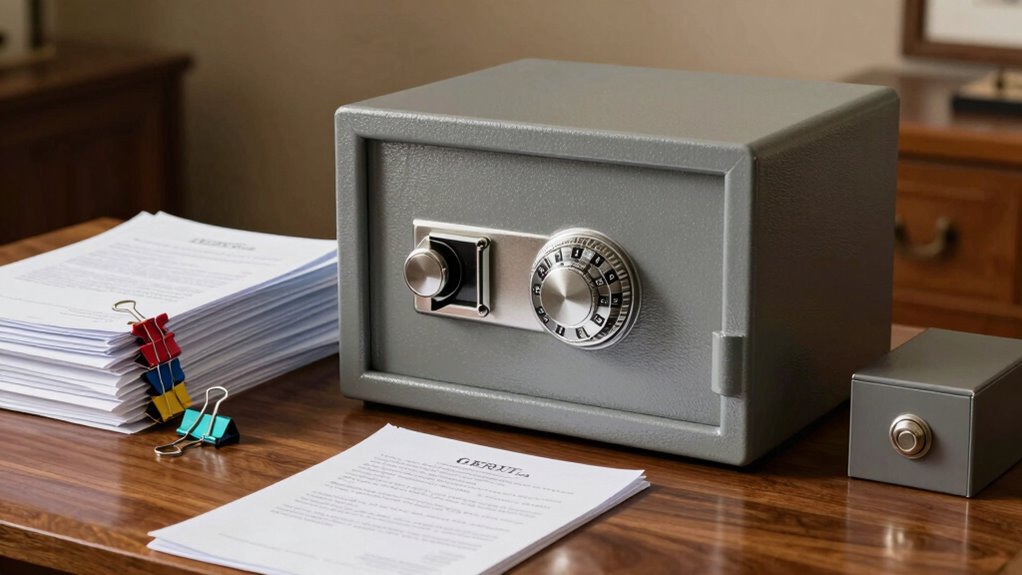

To keep your estate documents secure without overcomplicating things, organize both physical and digital copies in a straightforward way. Use strong encryption for digital files and store them in a secure cloud or password-protected location. Keep physical documents in a trusted safe deposit box or fireproof cabinet, and update your inventory regularly. Share access details with trusted contacts to prevent surprises. If you want simple, effective tips to enhance your security, your next step has more useful insights.

Get smart everyday buys delivered free — and shop member deals
- Fast, free delivery on millions of items
- Access to Prime Big Deal Days deals on October 6–7
- Prime Video, Amazon Music and more included
Key Takeaways
- Use a single, trusted safe deposit box for physical documents to minimize complexity.
- Encrypt digital copies and store them securely in a cloud service with strong access controls.
- Keep an organized inventory and share access details only with trusted contacts.
- Regularly review and update estate documents to ensure accuracy without overhauling the system.
- Maintain straightforward security practices, such as strong passwords and clear access instructions.
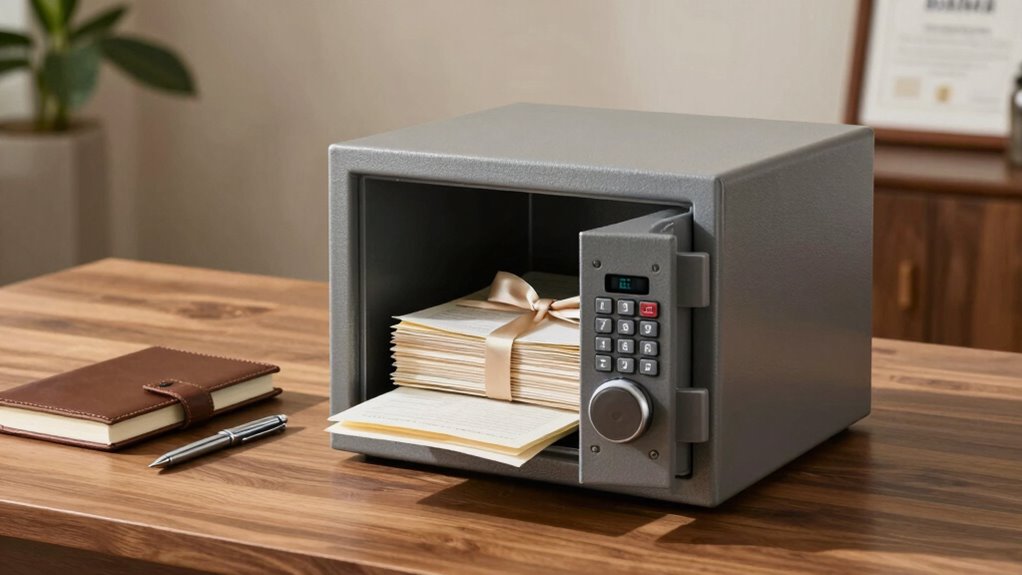
Securing your estate documents is fundamental to guarantee your wishes are honored and your loved ones are protected. You want to make sure that these important papers are accessible to the right people when needed, but also protected from unauthorized access. You can also consider spiritual alignment with your intentions to reinforce your commitment to safeguarding your estate plans. One effective way to do this is by using digital encryption. When you store digital copies of your estate documents, encrypting them adds a crucial layer of security. Digital encryption transforms your files into a code that only you or someone with the correct decryption key can access. This means that even if someone manages to access your files without permission, they won’t be able to read or use the information contained within. It’s a straightforward step that markedly reduces the risk of identity theft or tampering, especially if you’re storing sensitive documents like wills or power of attorney papers online or on cloud services. Additionally, understanding the horsepower of electric dirt bikes can be helpful if you’re considering including digital or electronic components in your security setup, as some advanced systems may require higher power capacities. Incorporating proper cybersecurity practices can further enhance your digital security by protecting your files from cyber threats or hacking attempts. Exploring encryption standards can help you choose the most secure methods for protecting your sensitive information. In addition to encryption, a safe deposit box offers a reliable physical storage option. You can rent a safe deposit box at your local bank or credit union and keep your estate documents inside. This method ensures your papers are protected from theft, fire, or other disasters that could damage or destroy your home storage. When you choose a safe deposit, you retain control over who has access, and the bank’s security measures add an extra layer of safety. Be sure to keep an updated list of what you store in the box and inform trusted loved ones or your estate executor about its location. Remember, some institutions might require proof of your identity, so keep your identification handy when accessing the safe deposit. To keep things simple, consider combining digital encryption with physical storage in a safe deposit box. Encrypt your digital copies of estate documents and store the decrypted versions securely in the safe deposit. This approach aligns with backyard transformation essentials, providing a comprehensive security method that is both straightforward and effective. Make sure to regularly review and update your estate documents, and inform your trusted contacts about the existence and location of these stored documents. This approach ensures that your wishes are clear, protected, and easily accessible when needed, without overcomplicating your setup. Keeping things straightforward and secure is the key, giving you peace of mind that your estate plans are well-protected and ready for the future.
As an affiliate, we earn on qualifying purchases.
Frequently Asked Questions
Can I Secure Estate Documents Using Only Digital Methods?
Yes, you can safeguard estate documents using only digital methods. You should use digital encryption to protect sensitive files and store them securely in a reputable cloud storage service. Make sure your passwords are strong and unique, and enable two-factor authentication for added security. Regularly update your security settings and back up your files in multiple locations to prevent loss, making your estate documents both accessible and well-protected.
How Often Should I Update My Estate Documents?
You should review and update your estate planning documents at least every three to five years, or when major life changes occur, like marriage, divorce, or new beneficiaries. Regular updates guarantee your documents stay current and accessible when needed. Keep your estate planning organized, and consider digital backups to improve document accessibility. Staying proactive helps prevent potential complications and ensures your wishes are clearly communicated and easily executable.
What Are the Risks of Not Securing Estate Documents Properly?
If you don’t secure your estate documents properly, you risk losing control over your estate planning decisions and exposing sensitive information. Unauthorized access could lead to identity theft or disputes among heirs. Failing to maintain document confidentiality might result in delays or legal issues during estate settlement. To avoid these risks, keep your estate documents secure, update them regularly, and store them in a safe, accessible location.
Are There Legal Requirements for Storing Estate Documents Securely?
You need to know that legal requirements for storing estate documents securely are strict to protect your estate planning and document confidentiality. You might think it’s just a minor detail, but failing to comply can lead to severe consequences. Often, laws demand secure storage solutions like safes or authorized digital platforms. Meeting these legal standards guarantees your estate’s details stay confidential and protected from unauthorized access.
What Affordable Options Exist for Securing Estate Documents?
You can use affordable options like digital vaults and cloud storage to secure your estate documents. Digital vaults offer encrypted, password-protected storage, ensuring your files stay private. Cloud storage services like Google Drive or Dropbox provide easy access and backup, often at low costs. Just make sure to choose reputable providers, enable two-factor authentication, and regularly update your passwords to keep your estate documents safe and simple to access when needed.
digital document encryption software
As an affiliate, we earn on qualifying purchases.
As an affiliate, we earn on qualifying purchases.
Conclusion
You’ve learned how to protect your estate documents—store them safely, keep them updated, and share access wisely. You’ve taken steps to secure your legacy, to guarantee your wishes are honored, and to bring peace of mind to your loved ones. By staying vigilant, by planning ahead, and by safeguarding what matters most, you’re not just securing papers—you’re securing peace, security, and trust for those you care about most.
password protected cloud storage
As an affiliate, we earn on qualifying purchases.
As an affiliate, we earn on qualifying purchases.
estate planning document organizer
As an affiliate, we earn on qualifying purchases.
As an affiliate, we earn on qualifying purchases.
Fall Picks
fall essentials
As an affiliate, we earn on qualifying purchases.