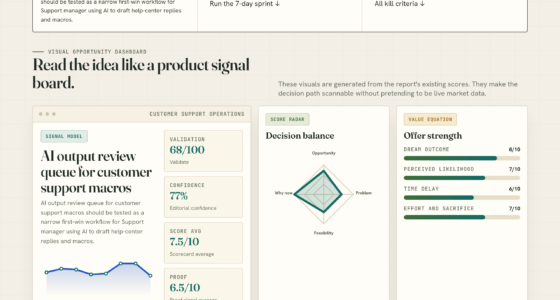

📊 Full opportunity report: Women’s Health Radar on IdeaNavigator AI — validation score, market gap, and execution plan.

Get smart everyday buys delivered free with Prime
- Fast, free delivery on millions of items
- Prime Video, Amazon Music and more included
- Member-only deals all year
TL;DR
Women aged 40-58 experiencing unexplained perimenopausal symptoms now have a potential digital solution to detect early signs. The Women’s Health Radar app compares daily symptom patterns to validated scales, flagging likely transition signals for early intervention. The initiative targets consumer women and employers aiming to improve health outcomes and reduce absenteeism.
Women’s Health Radar is a new digital tool currently in development aimed at early detection of perimenopause symptoms in women aged 40-58. The platform uses symptom logging and pattern detection to identify likely transition signals, enabling earlier medical intervention. This initiative is significant because it addresses the widespread issue of misdiagnosed or undiagnosed perimenopause, which can impact women’s health and workforce participation. You can also explore related grant deadline radar for arts nonprofits to see how funding opportunities support health initiatives.
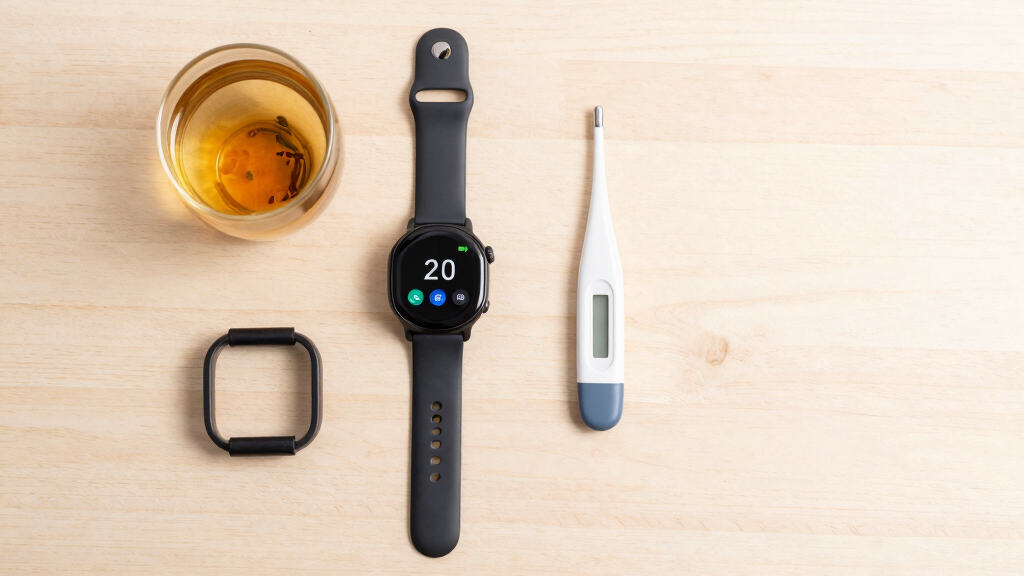
The Women’s Health Radar project proposes a mobile app where women in the target age group log daily symptoms such as sleep quality, mood, hot flashes, menstrual cycle irregularities, and energy levels. Trade and supply-chain operations signal monitor: Chicago, Illinois weather forecast. Optional wearable device data can also be integrated. The app employs a rules-based and machine learning algorithm to compare logged symptoms against validated perimenopause scales, flagging patterns that suggest the transition is underway.
Once a likely perimenopause pattern is identified, the app generates a shareable, clinician-ready symptom summary and suggests pathways to covered telehealth or local menopause specialists. The system is positioned as an educational tool that detects patterns, not as a diagnostic device. For more on health-related innovations, visit our homepage. The initiative aims to serve both direct-to-consumer women and secondary buyers, such as employers and health plans, seeking to reduce attrition and absenteeism linked to unmanaged menopause symptoms.
Why Early Detection of Perimenopause Matters
This development could significantly improve health outcomes for women by enabling earlier diagnosis and treatment of perimenopausal symptoms, which are often misattributed to stress or aging. It also offers potential benefits for employers and health plans by reducing work disruptions and healthcare costs associated with unmanaged symptoms. As menopause becomes a growing focus within femtech, tools like Women’s Health Radar could shift the standard approach from reactive to proactive care, improving quality of life and productivity for millions of women.
women's hot flash relief supplements
As an affiliate, we earn on qualifying purchases.
As an affiliate, we earn on qualifying purchases.
Perimenopause Diagnosis Challenges and Market Growth
Perimenopause symptoms such as sleep disruption, mood changes, brain fog, and hot flashes are frequently misdiagnosed or dismissed, leading to years of untreated symptoms. Many primary-care providers lack specialized training in menopause, which compounds the problem. Meanwhile, menopause has become a prominent category within femtech, with companies like Midi Health reaching a $1 billion valuation in early 2026. Insurers are increasingly covering virtual menopause consultations, creating a favorable environment for digital health solutions targeting this transition.
The use of validated symptom scales, consumer wearables, and AI pattern detection makes early identification more feasible than ever. The Women’s Health Radar project aims to leverage these advancements to fill a critical gap in menopause care.
“Early detection through digital symptom monitoring could transform menopause care, enabling women to seek timely treatment before symptoms worsen.”
— an anonymous researcher
sleep tracking devices for menopause
As an affiliate, we earn on qualifying purchases.
As an affiliate, we earn on qualifying purchases.
Uncertainties Around Validation and Adoption
It is not yet clear how accurately the app’s pattern detection will perform in real-world settings or how women will respond to the symptom logging process. The pilot phase will test user engagement and the rate at which women request clinician summaries or referrals. Further validation studies are needed to confirm clinical utility and integration into healthcare workflows.
mood support supplements for perimenopause
As an affiliate, we earn on qualifying purchases.
As an affiliate, we earn on qualifying purchases.
Next Steps for Testing and Scaling the Radar Tool
The project plans to conduct a 4-6 week landing-page and waitlist test targeting women aged 40-55, measuring engagement metrics such as quiz completion, ongoing symptom tracking, and referral requests. Successful results could lead to broader pilot studies and eventual commercialization, with potential integration into employer wellness programs and insurer offerings.
As an affiliate, we earn on qualifying purchases.
Key Questions
How does the Women’s Health Radar app identify perimenopause?
The app logs daily symptoms and optional wearable data, then uses rules-based and machine learning algorithms to compare patterns against validated scales, flagging likely perimenopause signals.
Is this a diagnostic tool?
No, the app is positioned as an educational pattern detection system that helps women and providers identify potential transition signals early, not as a formal diagnosis.
Who can benefit from this tool?
Women aged 40-58 experiencing unexplained symptoms, as well as employers and health plans seeking to reduce work disruptions and healthcare costs associated with menopause.
What are the next steps for this project?
The team plans to run pilot tests using a landing page and waitlist to measure user engagement and referral requests, with potential scaling based on initial results.
When might this tool become widely available?
If pilot results are positive, broader validation and development could take several months, with eventual commercial rollout potentially within 1-2 years.
Source: IdeaNavigator AI
Fall Picks
fall essentials
As an affiliate, we earn on qualifying purchases.