📊 Full opportunity report: Vertigo relief app on IdeaNavigator AI — validation score, market gap, and execution plan.

Get smart everyday buys delivered free with Prime
- Fast, free delivery on millions of items
- Prime Video, Amazon Music and more included
- Member-only deals all year
TL;DR
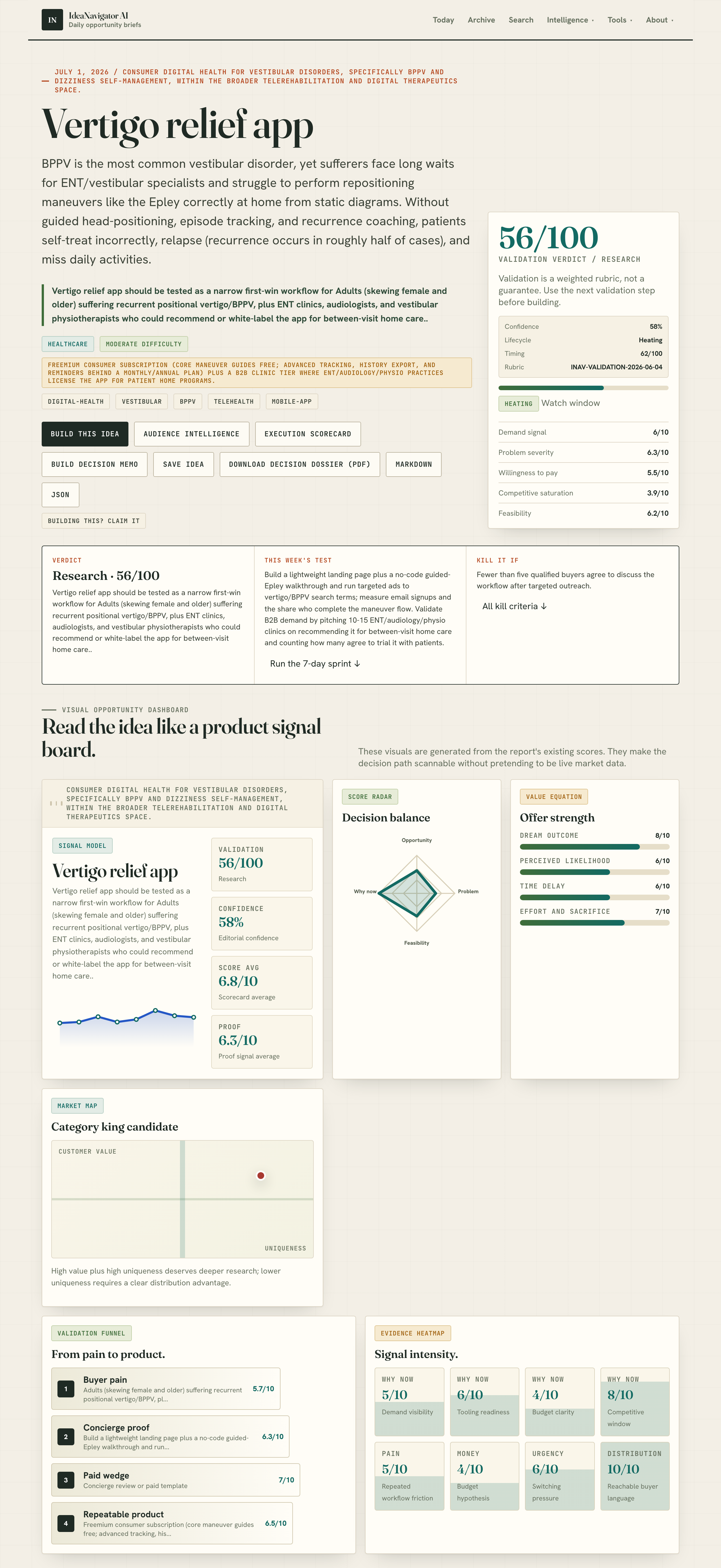
A new vertigo relief app is being developed to assist adults with BPPV in performing repositioning maneuvers at home. The app targets both consumers and clinics, aiming to improve self-treatment and reduce relapse rates. Validation and pilot testing are underway.
A new vertigo relief app is in development to guide adults with benign paroxysmal positional vertigo (BPPV) through repositioning maneuvers at home, aiming to improve self-treatment and reduce recurrence. The app is designed for both consumer use and integration into clinical workflows, targeting a growing market for digital vestibular rehabilitation solutions.
The app will feature step-by-step animated guides, audio cues, and real-time gyroscope-based head-angle feedback to ensure correct execution of maneuvers such as the Epley and Brandt-Daroff. It also includes episode logging and symptom tracking to monitor progress over time. The initial focus is on adults, primarily women and older individuals, who frequently suffer from recurrent BPPV.
Developers plan to test the app through a lightweight landing page, guided demos, and targeted ads aimed at vertigo sufferers. They will measure email signups and user engagement with the maneuver instructions, similar to how Fomo raises funding for consumer apps. They will measure email signups and user engagement with the maneuver instructions. Additionally, they intend to pitch ENT clinics, audiologists, and vestibular physiotherapists to adopt the app as a recommended home-care tool, with a licensing model for clinics to white-label the platform.
Potential Impact on Vertigo Self-Management
This app could address a significant gap in at-home vertigo treatment, where many patients struggle to perform repositioning maneuvers correctly without guidance. By improving maneuver accuracy and providing symptom tracking, it may reduce relapse rates, which occur in about half of BPPV cases. The integration of gyroscope sensors and digital therapeutics aligns with broader trends in telehealth and remote rehabilitation, potentially transforming standard care pathways and reducing wait times for specialist treatment.
As an affiliate, we earn on qualifying purchases.
Growing Market for Digital Vestibular Therapies
The digital therapeutics market for vestibular disorders was estimated near USD 498 million in 2024, with a projected compound annual growth rate of approximately 13.5% through 2033. COVID-19 accelerated the adoption of telehealth and remote rehab solutions, creating a favorable environment for apps targeting BPPV and dizziness management. Currently, most patients rely on static diagrams and in-person visits, which can lead to incorrect self-treatment and higher relapse risk. The new app aims to leverage smartphone sensors and digital guidance to improve outcomes and accessibility.
“The integration of gyroscope-based feedback and step-by-step guidance could significantly improve the accuracy of at-home repositioning maneuvers.”
— an anonymous researcher
As an affiliate, we earn on qualifying purchases.
Uncertainties Around Clinical Validation and Adoption
It remains unclear how effectively the app will perform in real-world settings and whether patients will adopt it without direct supervision. Clinical validation studies are still in planning stages, and the actual impact on relapse rates and symptom management has yet to be demonstrated through trials. Additionally, the willingness of clinics to adopt and recommend the app is still being assessed.
As an affiliate, we earn on qualifying purchases.
Next Steps for Development and Pilot Testing
Developers plan to launch a landing page with a guided Epley maneuver demo and run targeted advertising campaigns to gauge interest and user engagement. They will also begin pitching ENT and vestibular clinics to participate in pilot programs, measuring clinician interest and patient outcomes. Further clinical validation studies are expected to follow initial testing phases to establish efficacy and safety.
As an affiliate, we earn on qualifying purchases.
Key Questions
How does the app guide users through repositioning maneuvers?
The app provides animated step-by-step instructions, audio cues, and real-time head-angle feedback using gyroscope sensors embedded in smartphones to ensure correct execution.
Is this app intended to replace medical consultation?
No, the app includes disclaimers emphasizing it is not a substitute for professional medical advice. Users are advised to consult a healthcare provider if red-flag symptoms occur.
Will clinics be able to customize or white-label the app for their patients?
Yes, the development plan includes a clinic licensing model that would allow ENT and vestibular practices to white-label the platform for patient use between visits.
When is the app expected to be available for wider testing?
Initial testing phases, including landing page validation and clinic pilot programs, are planned in the coming months, with broader availability pending validation results.
What are the main benefits of using a digital app for BPPV self-treatment?
The app aims to improve maneuver accuracy, enable symptom tracking, reduce relapse risk, and provide convenient, accessible guidance for patients managing vertigo at home.
Source: IdeaNavigator AI
Fall Picks
fall essentials
As an affiliate, we earn on qualifying purchases.