
TL;DR

Get smart everyday buys delivered free — and shop member deals
- Fast, free delivery on millions of items
- Access to Prime Big Deal Days deals on October 6–7
- Prime Video, Amazon Music and more included
Federal Reserve Governor Christopher Waller said AI could help improve cross-border payment screening and routing, while warning that autonomous purchasing raises new trust and security challenges. In a speech at Sibos 2026, he described agentic commerce as an early-stage development, with consumer-controlled, agent-assisted purchases likely to precede delegated transactions.
Federal Reserve Governor Christopher J. Waller said artificial intelligence could improve cross-border payment screening and routing, while the rise of agents able to make purchases on consumers’ behalf will require stronger trust mechanisms and safeguards. In a speech at Sibos 2026 in Miami, Waller described agentic commerce as an early-stage development that could reshape payments if adoption grows.
Waller said payment companies have used machine learning for years to combat fraud and have adopted large language models for work such as payment reconciliation. He said AI agents that can plan and carry out multistep tasks are now prompting the industry to build infrastructure for transactions initiated with less direct human involvement.
For cross-border payments, Waller pointed to sanctions screening and anti-money-laundering systems as areas where large language models may help. He cited research indicating that these models can reduce false-positive alerts, potentially freeing staff to investigate higher-risk cases and allowing legitimate payments to face less friction. He expects large language models to augment, not replace, faster anomaly-detection methods.
He also discussed AI’s possible role in payment routing and foreign-exchange operations, which involve balancing cost, speed and reliability across routes and currencies. Waller said AI agents could help address these optimization problems when given appropriate data and criteria. He also warned that AI may increase the sophistication of cyberattacks, even as it supports defensive work such as threat detection and identifying software vulnerabilities.
How Agents Could Change Checkout
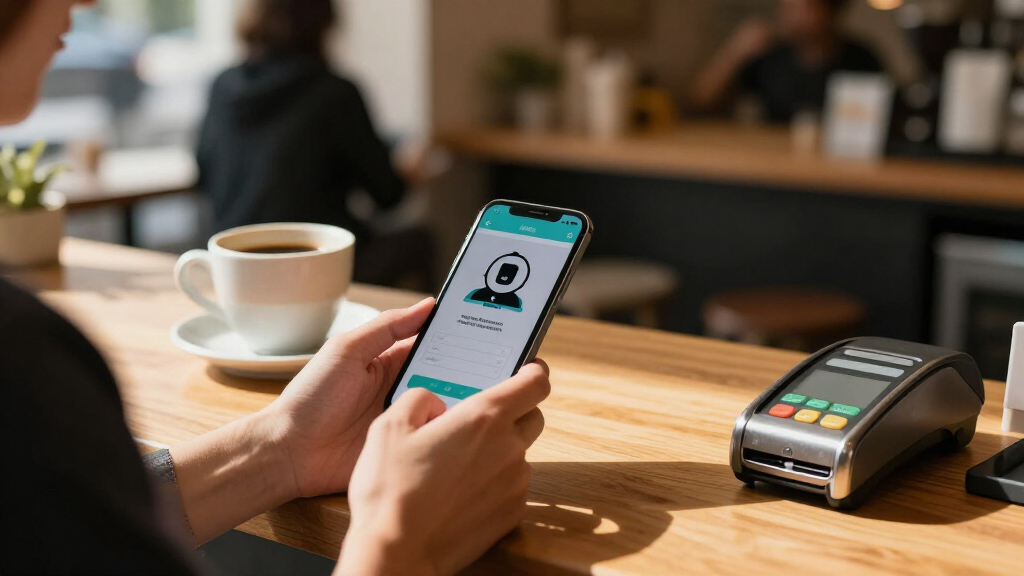
Agentic commerce shifts some decisions traditionally made by shoppers to software. In an agent-assisted model, an agent helps find products, but the consumer chooses what to buy and makes the payment. In an agent-delegated model, the consumer authorizes an agent to shop and pay within specified limits.
That distinction matters for consumers, merchants and payment providers. Delegated purchases may save time, but an agent acting on a shopper’s behalf also creates a risk of unintended transactions. Waller said this model requires a more extensive buildout of trust mechanisms and guardrails. The speech did not set out a specific technical standard or regulatory framework, but it identified consumer authorization and limits on agent activity as central issues for the industry.
AI-powered cross-border payment security tools
As an affiliate, we earn on qualifying purchases.
As an affiliate, we earn on qualifying purchases.
From Fraud Tools to Shopping Agents
Waller framed agentic commerce as an extension of the payments sector’s existing use of AI, rather than a fully established consumer practice. Payment firms have already applied machine learning to fraud detection and large language models to operational tasks such as reconciliation. The newer development is the possibility that agents will use AI to make decisions and carry out transactions across multiple steps.
At a Federal Reserve industry roundtable earlier in the summer, participants discussed agentic commerce. According to Waller, they broadly viewed it as being in an early phase. He said consumer-to-business transactions are expected to form the first wave, with agent-assisted shopping preceding more autonomous, delegated purchases. Consumers could use general-purpose agents from AI firms or agents offered by individual merchants; personal assistants may also become a channel.
“I expect LLMs to augment, rather than replace, faster, more traditional anomaly detection methods.”
— Christopher J. Waller, Federal Reserve governor, in his Sibos 2026 speech
agent-assisted payment processing devices
As an affiliate, we earn on qualifying purchases.
As an affiliate, we earn on qualifying purchases.
Safeguards and Adoption Remain Open
Waller’s speech did not specify when agent-delegated shopping might become widespread or how quickly merchants and payment providers will support it. It also did not detail the technical standards, liability rules or authorization processes that would govern disputed purchases, spending limits or agent errors. The scale of any reduction in false-positive screening alerts was not quantified in the speech.
It remains unclear how AI agents will securely access current product information, payment credentials and consumer preferences across different providers. Waller said agents need broad, real-time knowledge to be useful, but the available source material does not describe how that access would be provided or controlled. The potential benefits and risks he outlined are possibilities, not measured outcomes from broad deployment.
fraud detection AI software for payments
As an affiliate, we earn on qualifying purchases.
As an affiliate, we earn on qualifying purchases.
Industry Work on Agent Controls
The next steps depend on payment firms, merchants and AI providers developing systems that let consumers grant and limit an agent’s authority, while making transactions secure and reviewable. Waller’s speech points to the need for work on trust mechanisms, cybersecurity and payment infrastructure, but does not announce a specific Federal Reserve initiative or implementation timetable.
As agent-assisted shopping develops, a key question will be whether consumers and businesses adopt it and how providers handle the move toward delegated purchases. For cross-border payments, operators will also need to test whether AI improves screening and routing in practice without weakening security or relying on systems too slow for high-velocity transactions.
payment routing optimization AI tools
As an affiliate, we earn on qualifying purchases.
As an affiliate, we earn on qualifying purchases.
Key Questions
What is agentic commerce?
Agentic commerce refers to using AI agents to help make e-commerce purchases. Waller described both agents that assist with product discovery and agents authorized to shop and pay for a consumer.
How do agent-assisted and agent-delegated shopping differ?
With agent-assisted shopping, the consumer makes the purchase decision and handles payment. With agent-delegated shopping, the consumer gives an agent authority to buy within set instructions or limits.
How might AI affect cross-border payments?
Waller said AI could help with sanctions and anti-money-laundering screening, route selection, and foreign-exchange and liquidity decisions. He presented these as potential uses, not established results at scale.
Did Waller say AI will replace existing payment security tools?
No. He said large language models are expected to augment faster, traditional anomaly-detection methods. He also warned that AI could aid cyberattacks as well as defensive security work.
Source: primary
Halloween Picks
halloween
As an affiliate, we earn on qualifying purchases.