
Litecoin and Bitcoin Cash still hold significant positions in the cryptocurrency market, but their relevance depends on ongoing innovation and real-world application. While Litecoin’s faster transactions and Bitcoin Cash’s focus on low-fee peer-to-peer payments provide unique advantages, both face stiff competition from newer platforms. To maintain their status, they must enhance their ecosystems and foster user engagement. Discovering how they plan to evolve can give you a clearer picture of their future potential.

Get smart everyday buys delivered free — and shop member deals
- Fast, free delivery on millions of items
- Access to Prime Big Deal Days deals on October 6–7
- Prime Video, Amazon Music and more included
Key Takeaways
- Litecoin and Bitcoin Cash maintain significant market positions, both ranking within the top 20 cryptocurrencies, indicating ongoing relevance.
- Their market caps demonstrate investor interest, with Litecoin around $7-12 billion and Bitcoin Cash approximately $9.5-12 billion.
- Both cryptocurrencies face competition from newer platforms offering advanced functionalities, challenging their long-term dominance and relevance.
- Adoption hurdles and the need for innovation are critical for their sustained viability in an evolving crypto landscape.
- Continued efforts in expanding use cases and fostering developer engagement are essential for both Litecoin and Bitcoin Cash to remain relevant.
As an affiliate, we earn on qualifying purchases.
Market Capitalization and Ranking Analysis

As you explore the market capitalization and ranking of Litecoin (LTC) and Bitcoin Cash (BCH), you’ll find that both cryptocurrencies hold significant yet not dominant positions within the crypto ecosystem. Litecoin’s market cap hovers around $7-12 billion, positioning it at approximately #20. In contrast, Bitcoin Cash boasts a market cap between $9.5-12 billion and ranks around #15. Despite fluctuations, both remain in the top 20, signaling their relevance among countless altcoins. Litecoin’s circulating supply is about 76.4 million coins, while Bitcoin Cash has around 19.9 million. This data illustrates their established presence, although neither can claim a leading innovation role compared to newer blockchain technologies. They both continue to draw investor interest and maintain remarkable market positions. Additionally, as cryptocurrencies like LTC and BCH evolve, the integration of on-device AI capabilities could further influence their adoption and functionality in the digital finance landscape.
As an affiliate, we earn on qualifying purchases.
Price Performance and Future Predictions
How do Litecoin (LTC) and Bitcoin Cash (BCH) compare regarding price performance and future predictions? Currently, LTC trades between $90 and $105, with forecasts suggesting a future range of $92 to $120 by 2025, potentially reaching $300 to over $900 by 2030. In contrast, BCH is priced around $470-$480, expected to range between $558 and $570 in 2025, and may soar to about $4,800 by 2030, with some optimistic estimates even predicting prices in the $80,000s by 2040. Both coins have shown volatility recently, with BCH dropping over 12% and LTC around 6-7%. While predictions vary widely, they indicate substantial growth potential, especially during favorable market conditions. As investors seek to unlock their potential in the cryptocurrency space, understanding the historical performance of these altcoins can provide valuable insights for future decisions.
cryptocurrency portfolio tracker
As an affiliate, we earn on qualifying purchases.
As an affiliate, we earn on qualifying purchases.
Transaction Speed and Blockchain Utility Comparison

While both Litecoin (LTC) and Bitcoin Cash (BCH) were designed to improve upon Bitcoin’s limitations, they achieve this through different approaches to transaction speed and blockchain utility. Litecoin processes blocks roughly every 2.5 minutes, offering quicker transaction confirmations compared to Bitcoin Cash, which takes about 10 minutes per block. This speed advantage makes Litecoin more appealing for users seeking faster transactions. On the other hand, Bitcoin Cash focuses on increasing block size to enhance transaction throughput. Despite these advancements, both cryptocurrencies face competition from newer technologies offering even higher speeds and lower fees. As the blockchain landscape evolves, the significance of Litecoin’s speed remains, but its uniqueness may diminish as alternatives emerge. Additionally, power management systems in cryptocurrency mining setups can help optimize energy consumption, contributing to overall efficiency.
As an affiliate, we earn on qualifying purchases.
Investment Considerations and Associated Risks
Understanding the investment landscape for Litecoin (LTC) and Bitcoin Cash (BCH) is essential, especially given their inherent volatility and regulatory challenges. Both assets experience significant price fluctuations, making it vital for you to stay informed about market trends. Regulatory changes can impact your investment strategy, so consider the differing environments in various regions. Short-term price dips might present buying opportunities, but they also highlight the risks associated with altcoins. To mitigate these risks, conduct thorough research and consult experts before making decisions. Diversifying your portfolio and implementing solid risk management strategies will help you navigate the unpredictable nature of cryptocurrency investments. Ultimately, being aware of these considerations can guide your approach to investing in LTC and BCH. Additionally, the effectiveness of thorough research in understanding market dynamics can significantly enhance your investment decisions.
Market Adoption and Ecosystem Development
What drives the market adoption and ecosystem development of Litecoin (LTC) and Bitcoin Cash (BCH)? Both cryptocurrencies have built substantial communities and infrastructure since their inception. Litecoin has positioned itself as “digital silver,” while BCH strives for peer-to-peer transactions.
Here’s a quick comparison:
| Feature | Litecoin (LTC) |
|---|---|
| Launch Year | 2011 |
| Market Cap | $7-12 billion |
| Transaction Speed | ~2.5 minutes per block |
| Adoption Focus | Payment systems and retail |
Despite their established presence, both face challenges in innovation and real-world use compared to newer projects. Remaining relevant depends on enhancing adoption and steering through an evolving crypto landscape. Additionally, the ability to foster creativity in a virtual environment may play a crucial role in attracting developers and users to their platforms.
Relevance in the Current Crypto Market Landscape
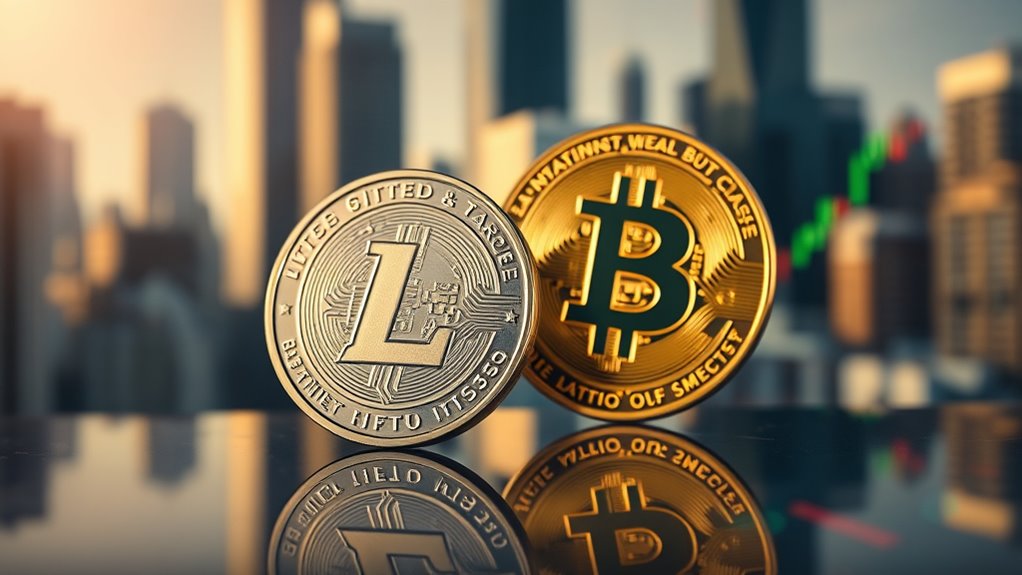
As you explore the relevance of Litecoin and Bitcoin Cash in today’s crypto market, you’ll notice their stable market positions despite ongoing adoption challenges. Both cryptocurrencies face stiff competition from newer technologies that prioritize innovation and user preferences. Keeping an eye on these dynamics will help you understand their potential roles in this rapidly changing landscape. Additionally, the importance of community support in fostering user adoption and engagement can significantly influence the longevity of these early altcoins.
Market Position Stability
While Litecoin and Bitcoin Cash navigate a rapidly changing crypto landscape, their positions within the market remain surprisingly stable. Both coins consistently rank in the top 20 by market capitalization, with Litecoin around $7-12 billion and Bitcoin Cash between $9.5-12 billion. This stability indicates sustained investor interest, even amid fierce competition. You’ll find that Litecoin benefits from faster transaction times, while Bitcoin Cash offers a robust peer-to-peer cash solution. Despite recent price volatility, predictions suggest potential growth for both coins in the coming years. Their established presence provides a layer of security for investors, but staying informed about market trends is vital. As the crypto environment evolves, their adaptability will determine their long-term relevance. Additionally, understanding good lighting in the context of digital asset visibility can enhance investor engagement and awareness.
Adoption Challenges Ahead
Despite their stable market positions, Litecoin and Bitcoin Cash face significant adoption challenges that could impact their future relevance. As you explore these coins, you’ll notice a few key hurdles:
- Limited real-world usage: Both cryptocurrencies struggle to gain traction as everyday payment methods compared to Bitcoin and newer altcoins.
- Competition from innovative platforms: Emerging technologies and DeFi solutions are attracting users, making it harder for Litecoin and Bitcoin Cash to stand out.
- Regulatory uncertainties: Ongoing changes in regulations could hinder adoption, as investors and merchants may hesitate to engage without clear guidelines.
These factors highlight the ongoing battle for mainstream acceptance, putting pressure on Litecoin and Bitcoin Cash to adapt and enhance their value propositions in a rapidly evolving market. Additionally, as the market shifts, the importance of protecting delicate skin from harmful elements becomes increasingly relevant, paralleling the need for cryptocurrencies to secure their place in everyday transactions.
Competition and Innovation Trends
Although Litecoin and Bitcoin Cash maintain established positions in the crypto market, they face fierce competition from innovative platforms that are reshaping the landscape. Newer cryptocurrencies, particularly those focusing on DeFi and smart contracts, are attracting user interest with advanced functionalities. While Litecoin offers faster transactions, Bitcoin Cash aims for everyday usability, yet both struggle to keep pace with emerging technologies that promise higher throughput and lower fees. The rise of these alternatives puts pressure on LTC and BCH to innovate and adapt. As investor sentiment shifts, staying relevant means embracing change, enhancing utility, and potentially expanding their ecosystems. Ultimately, their ability to navigate this competitive environment will determine their future relevance in the evolving crypto space. Additionally, the emphasis on innovation in the cryptocurrency sector highlights the need for established coins to evolve continuously to meet user expectations.
Long-Term Viability of Litecoin and Bitcoin Cash
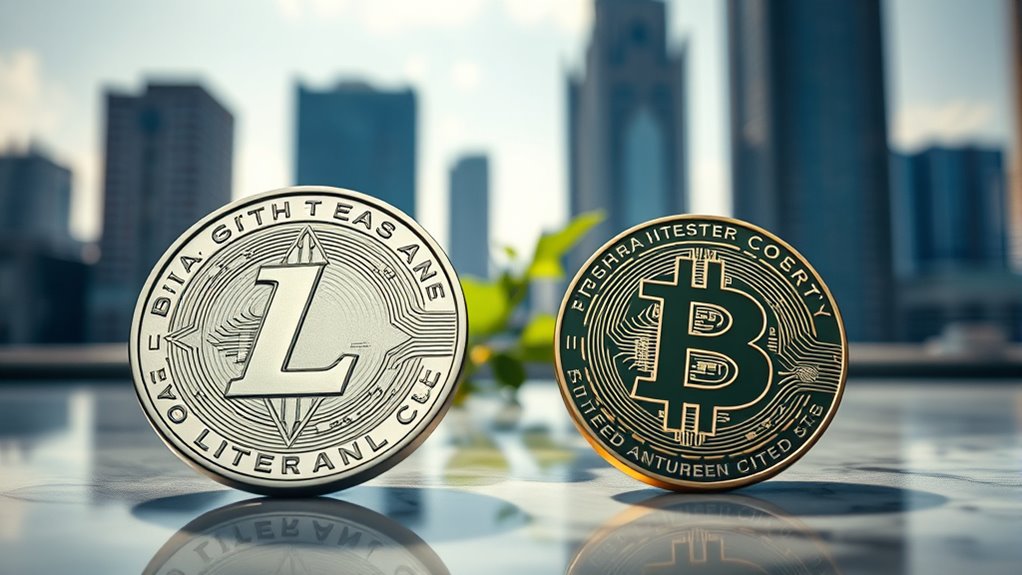
When considering the long-term viability of Litecoin and Bitcoin Cash, you should look at their market position stability and the adoption of their use cases. Both coins face challenges adapting to rapidly evolving technologies and competition. It’s essential to assess how well they can maintain relevance and user interest in the years to come. Additionally, understanding the impact of market position stability on cryptocurrency success could provide valuable insights into their future.
Market Position Stability
As the cryptocurrency market continues to evolve, the long-term viability of Litecoin and Bitcoin Cash hinges on their ability to adapt to changing technologies and user needs. Both coins maintain stable market positions, but they face challenges that could impact their future.
- Market Cap Stability: Both Litecoin and Bitcoin Cash rank within the top 20 cryptocurrencies, showing significant investor interest.
- Price Volatility: Short-term price fluctuations can present buying opportunities, but they also reflect inherent market risks.
- Competition: Newer technologies and altcoins are emerging, pushing Litecoin and Bitcoin Cash to innovate or risk losing relevance.
Ultimately, their market position stability will depend on how effectively they respond to these challenges and continue to engage users.
Adoption and Use Cases
While both Litecoin and Bitcoin Cash have made strides in the crypto space, their long-term viability largely depends on widespread adoption and practical use cases. Litecoin has established itself as a reliable option for transactions, often dubbed “digital silver” due to its role in payment systems. Its faster transaction speeds give it an edge for everyday purchases. Bitcoin Cash, on the other hand, aims to be a peer-to-peer cash solution, focusing on low fees for transactions. However, it struggles with broader adoption compared to top cryptocurrencies. If you see both coins becoming more integrated into everyday commerce, their relevance could grow, but they’ll need to compete with newer technologies and maintain user trust to thrive in the long run.
Technological Adaptability Challenges
Although Litecoin and Bitcoin Cash have carved out their niches in the cryptocurrency landscape, they face significant challenges in adapting to rapidly evolving technology. As newer blockchain solutions emerge, both coins must address their limitations to remain relevant. Here are some key adaptability challenges:
- Transaction Speed: While Litecoin offers faster transactions, it’s losing ground to newer platforms with even quicker speeds.
- Smart Contracts: Both coins lag behind in adopting advanced features like smart contracts, limiting their utility compared to leading blockchains.
- User Adoption: They struggle to attract new users, facing competition from innovative altcoins that cater to changing market demands.
Ultimately, without strategic updates, Litecoin and Bitcoin Cash risk becoming less significant in the ever-changing crypto ecosystem.
Frequently Asked Questions
What Are the Main Differences Between Litecoin and Bitcoin Cash?
Litecoin and Bitcoin Cash differ primarily in transaction speed and block size. Litecoin generates blocks every 2.5 minutes, making it faster for transactions, while Bitcoin Cash takes about 10 minutes. Litecoin focuses on quicker transaction confirmations, whereas Bitcoin Cash increases block size for higher throughput. Both aim to improve Bitcoin’s scalability, yet they cater to different user needs: Litecoin as “digital silver” and Bitcoin Cash as a peer-to-peer cash solution.
How Do Litecoin and Bitcoin Cash Handle Security Features?
Litecoin and Bitcoin Cash both use proof-of-work consensus mechanisms to secure their networks. You’ll find that Litecoin employs Scrypt as its hashing algorithm, making it resistant to certain types of mining hardware. Bitcoin Cash, on the other hand, uses SHA-256, similar to Bitcoin. Both coins have active developer communities that regularly enhance security features, but you should stay aware of the risks inherent in any cryptocurrency investment as market dynamics evolve.
Can Litecoin and Bitcoin Cash Be Used for Everyday Purchases?
Yes, you can use Litecoin and Bitcoin Cash for everyday purchases. Many merchants accept them due to their faster transaction speeds and lower fees compared to Bitcoin. You’ll find options ranging from online retailers to local shops that accept these cryptocurrencies. However, their adoption isn’t universal, so always check if a vendor accepts them before attempting a transaction. As more businesses adopt crypto, using these coins for everyday purchases should become even easier.
What Are the Community Sentiments Towards Litecoin and Bitcoin Cash?
When you dip your toes into the crypto pond, you’ll find waves of sentiment swirling around Litecoin and Bitcoin Cash. Many in the community appreciate Litecoin’s speed and reliability, likening it to a trusty steed in the digital sphere. Conversely, Bitcoin Cash enthusiasts champion its peer-to-peer vision, though some feel it struggles for attention. Overall, both coins have dedicated supporters, but whispers of innovation keep the air charged with anticipation for their futures.
How Do Litecoin and Bitcoin Cash Compare to Newer Cryptocurrencies?
Litecoin and Bitcoin Cash offer faster transaction speeds and lower fees compared to many newer cryptocurrencies, but they face stiff competition. Newer coins often incorporate advanced features like smart contracts and decentralized finance applications, which can attract more developers and users. While LTC and BCH maintain solid market positions, their relevance hinges on adapting to evolving technology and user preferences. You’ll want to weigh these factors when considering investments in the crypto space.
Conclusion
In summary, while Litecoin and Bitcoin Cash may not dominate headlines like newer cryptocurrencies, they still hold significant value in the market. For instance, Litecoin’s transaction speed is impressive, processing blocks every 2.5 minutes compared to Bitcoin’s 10 minutes. This efficiency highlights their ongoing utility. As you weigh investment opportunities, consider their established presence and potential for growth, especially as the crypto landscape evolves. Early altcoins still have a seat at the table, proving their relevance in today’s market.
Fall Picks
fall essentials
As an affiliate, we earn on qualifying purchases.