
TL;DR
Open a free Amazon Business account
Business pricing, bulk buying and tax-exempt orders.
Create a free accountAs an affiliate, we earn on qualifying purchases.
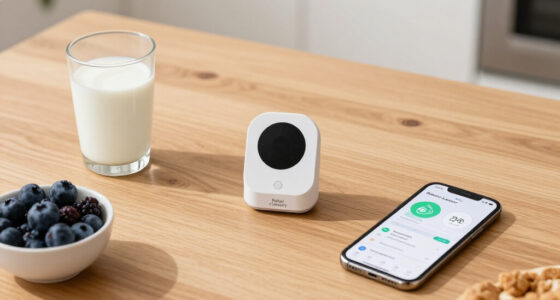
AI studio microphones are set to become the standard in professional recording studios by 2026. Recent technological advancements are driving their adoption, promising improved sound quality and workflow efficiency. This shift could reshape the industry landscape.
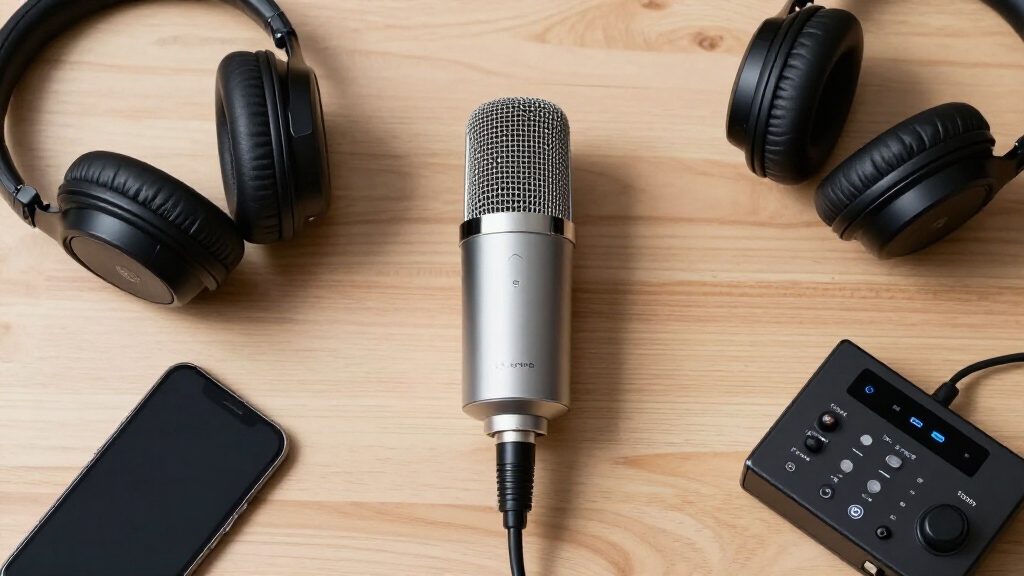
AI-driven studio microphones are emerging as the leading choice for professional recording studios by 2026, according to industry sources. These microphones leverage artificial intelligence to enhance sound quality, reduce noise, and adapt dynamically to recording environments, making them a game-changer for audio production. Learn more about top options in the best studio condenser microphones. The trend reflects rapid technological progress and industry interest in AI-enabled solutions.
Multiple manufacturers, including RØDE, Audio-Technica, and Shure, are developing AI-enhanced microphones that incorporate features such as automatic noise suppression, adaptive polar patterns, and real-time sound optimization. For more insights, see the top studio microphone reviews. These features are designed to improve clarity, reduce background noise, and simplify setup, making AI microphones attractive for both high-end studios and emerging markets.
Industry insiders indicate that AI microphones offer significant advantages over traditional models, including improved self-noise levels, better handling of complex acoustic environments, and enhanced user control through intelligent algorithms. Early adopters report noticeable improvements in vocal clarity and overall recording fidelity.
While these microphones are still in the early stages of widespread adoption, their integration with existing studio workflows is advancing rapidly, with several models expected to be commercially available by late 2025 or early 2026.
The 8 picks
- 1
 Shure SM4 XLR Studio Condenser Microphone Kit for RecordingView on Amazon →
 - 2
 Audio-Technica AT2035 Cardioid Condenser Microphone with Shock Mount and Acce…View on Amazon →
 - 3
 RØDE NT1 Signature Series Large-Diaphragm Condenser Microphone with Shock Mou…View on Amazon →
 - 4
 Audio-Technica AT2020 Cardioid Condenser Studio XLR MicrophoneView on Amazon →
 - 5
 AKG Pro Audio P120 Condenser MicrophoneView on Amazon →
 - 6
 MAONO A04 Gen2 XLR/USB Condenser Microphone Kit for PC and Content CreationView on Amazon →
 - 7
 Mackie EM-Series Large-Diaphragm Condenser Microphone (EM-91C)View on Amazon →
 - 8
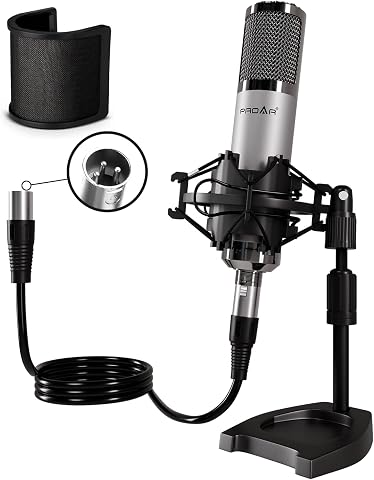 XLR Condenser Microphone with Desktop Stand for Vocals and PodcastingView on Amazon →
Transformative Impact on Professional Recording
The rise of AI studio microphones represents a potential paradigm shift in audio recording, with benefits including higher sound fidelity, reduced post-production effort, and greater accessibility for users at different skill levels. For studios, this could mean lower costs, faster setup times, and improved consistency across recordings. For the industry, it signals a move toward smarter, more adaptable equipment that leverages artificial intelligence to meet evolving production demands.
Moreover, AI microphones could democratize high-quality recording, enabling smaller studios and individual creators to achieve professional results without extensive technical expertise or expensive gear. This democratization may accelerate innovation and competition within the audio industry.
Advances in AI and Microphone Technology Since 2023
Since 2023, AI technology has rapidly progressed, with major tech firms and audio manufacturers investing heavily in integrating AI into audio hardware. Early models featured basic noise reduction and auto-tuning, but recent developments include real-time adaptive polar patterns, intelligent sound source recognition, and automatic room compensation.
Industry analysts note that these advancements are driven by improvements in machine learning algorithms, increased processing power in compact devices, and growing demand for high-quality, easy-to-use recording equipment. These trends set the stage for AI microphones to become mainstream in professional studios by 2026.
Previous industry shifts, such as the transition from analog to digital, demonstrate the potential for AI integration to redefine standards and workflows in audio production.
Key Uncertainties in AI Microphone Adoption
It remains unclear how quickly AI microphones will be adopted across different segments of the recording industry, especially among budget-conscious studios. There are also questions about the long-term reliability of AI algorithms in varied acoustic environments and how well these microphones will integrate with existing studio gear.
Additionally, regulatory and intellectual property issues related to AI technology could influence development timelines and market availability. The degree to which AI microphones will replace or complement traditional models is also still uncertain, pending further industry testing and feedback.
Expected Milestones for AI Microphone Integration in Studios
Manufacturers are expected to release several AI-enhanced microphone models by late 2025, with initial adoption primarily among high-end studios. Industry conferences and trade shows scheduled for mid-2025 will showcase these innovations, providing insights into their performance and integration capabilities.
Further, pilot programs and early user feedback will inform improvements and standardization efforts, shaping the market landscape leading into 2026. Continued advancements in AI algorithms and processing hardware are likely to enhance features and reliability over the coming months.
Key Questions
Are AI studio microphones ready for professional use now?
Some AI microphones are already available and suitable for professional use, especially in high-end studios. However, widespread adoption is expected to accelerate as new models with enhanced features are released in 2025 and 2026.
What advantages do AI microphones offer over traditional models?
AI microphones provide real-time noise reduction, adaptive polar patterns, and automatic sound optimization, resulting in clearer recordings, easier setup, and better performance in complex acoustic environments.
Will AI microphones replace all traditional microphones?
It is unlikely they will replace all traditional microphones immediately. Instead, AI features will complement existing models, with adoption depending on user needs, budget, and compatibility with existing studio workflows.
Are there any drawbacks to AI microphones?
Potential drawbacks include reliance on software algorithms that may have bugs or limitations, higher initial costs, and the need for ongoing updates. Long-term reliability and performance consistency remain under evaluation.
Source: ThorstenMeyerAI.com
Flea & tick season Picks
flea and tick prevention
As an affiliate, we earn on qualifying purchases.