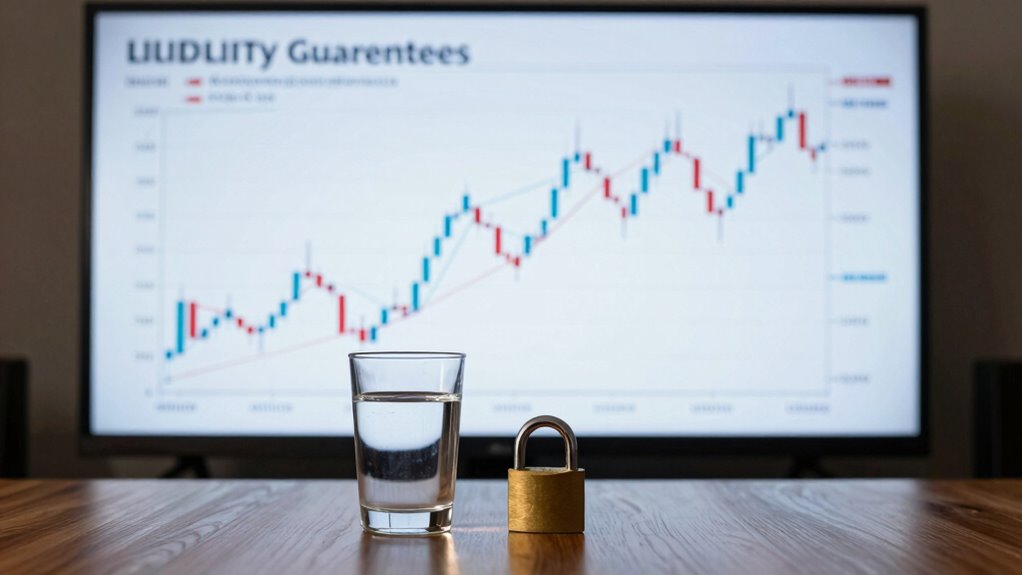

You often face a hidden trade-off between liquidity and guarantees in your financial choices. Prioritizing quick access to funds usually means sacrificing some security, as highly liquid assets like cash offer less protection in market downturns. Conversely, assets with strong guarantees tend to be less accessible and might cost more. Understanding this balance helps you align your investments with your goals and risk comfort. Keep exploring to see how balancing these factors can shape your financial stability.

Get smart everyday buys delivered free with Prime
- Fast, free delivery on millions of items
- Prime Video, Amazon Music and more included
- Member-only deals all year
Key Takeaways
- Increasing guarantees often reduce liquidity, limiting quick access to funds during urgent needs.
- Highly liquid assets typically offer lower returns due to their ease of access and market stability.
- Stronger guarantees can come with higher costs, impacting overall investment returns.
- Less liquid assets may be more stable but restrict flexibility and quick response to market changes.
- Balancing liquidity and guarantees depends on individual risk tolerance, financial goals, and market conditions.

Have you ever wondered why some financial assets provide quick access to cash while others offer stronger guarantees? It all boils down to a fundamental trade-off between liquidity and security. Assets that are highly liquid, like cash or money market funds, allow you to access your money instantly whenever you need it. But this convenience often comes with trade-offs, especially when market volatility ramps up. During times of economic turbulence, the value of less liquid investments, like real estate or certain bonds, can fluctuate markedly. In contrast, assets with high liquidity tend to be more stable in the short term, but they might not yield as much return over time. This is because investors often pay a premium for the ability to access their funds immediately, which can lead to lower overall returns.
High liquidity offers quick access but may result in lower returns during market volatility.
On the other hand, assets that promise stronger guarantees—such as fixed deposits, insurance policies, or government bonds—are designed to protect your principal and provide a sense of security. These investments are less affected by market volatility, which is especially important when uncertainty is high. But this safety comes at a cost. Insurance costs, for example, are built into these products to cover the risk of default or other unforeseen events. These costs can eat into your potential gains and make these assets less flexible in the short term. Because they’re less liquid, you might face penalties or lose some of your guarantees if you try to cash out early, which can be a notable drawback if your circumstances change suddenly.
This trade-off becomes especially vital during periods of market volatility. When markets swing wildly, assets with weaker guarantees can lose value swiftly, risking your financial stability. Conversely, more secure investments tend to hold their value better but might not provide the quick access you need for unexpected expenses or opportunities. You need to weigh the importance of immediate liquidity against the peace of mind that comes from stronger guarantees. Remember, higher guarantees often mean higher insurance costs, and less liquidity can limit your flexibility. Striking the right balance depends on your financial goals, risk tolerance, and time horizon.
Additionally, the cost of guarantees can vary significantly based on the type of insurance or security involved, affecting your overall investment strategy. This awareness of the liquidity and guarantees trade-off allows you to better understand market dynamics and manage your investments accordingly. By recognizing how market volatility influences asset stability and how insurance costs impact your returns, you can craft a financial plan that offers both enough liquidity and the security you desire. This understanding helps you navigate uncertain times with greater confidence, ensuring your financial strategy aligns with your needs and comfort level. As the diversification of assets plays a key role, balancing these factors can lead to a more resilient portfolio in fluctuating markets.
As an affiliate, we earn on qualifying purchases.
Frequently Asked Questions
How Do Market Fluctuations Affect Liquidity and Guarantees Simultaneously?
Market fluctuations can reduce liquidity as assets become harder to sell quickly during volatility, making it riskier to access cash when needed. Simultaneously, guarantees might be pressured if market downturns threaten the value of your investments. You need to actively manage risk by monitoring market volatility, adjusting your strategies, and ensuring sufficient liquidity. This way, you balance the safety provided by guarantees with the flexibility needed during unpredictable market conditions.
What Industries Are Most Affected by This Trade-Off?
You’ll find that industries like banking, insurance, and asset management are most affected by this trade-off. Industry-specific risks, such as credit risks or market volatility, directly influence liquidity and guarantees. When market fluctuations shake investor confidence, these industries face tough choices balancing liquidity needs with providing guarantees. As a result, they often tighten controls or adjust offerings to maintain stability and reassure investors, which impacts their overall operations.
Can Technological Advances Reduce the Trade-Off’s Impact?
Imagine a bank using innovative solutions like real-time data analytics to better assess liquidity risks. Technological advances can substantially reduce the impact of this trade-off by enhancing risk mitigation strategies, allowing companies to offer higher liquidity without sacrificing guarantees. These tools enable more precise decision-making, balancing the need for quick access to funds with the security of guarantees, ultimately making financial products safer and more adaptable to changing market conditions.
How Do Regulatory Changes Influence Liquidity vs. Guarantees?
Regulatory changes considerably influence liquidity versus guarantees by enforcing stricter compliance standards that require more risk mitigation strategies. You’ll need to balance adhering to new rules while maintaining sufficient liquidity, which often means reducing guarantees to meet regulatory capital requirements. These adjustments help manage systemic risks, but they can also limit your ability to offer extensive guarantees, highlighting the ongoing trade-off between ensuring liquidity and providing security.
What Are the Long-Term Risks of Prioritizing Liquidity Over Guarantees?
Prioritizing liquidity over guarantees exposes you to long-term risks like reduced risk mitigation, making your portfolio vulnerable during downturns. You might sacrifice asset diversification, limiting your ability to spread risk effectively. This approach can lead to significant losses if market conditions worsen, as you lack the safety net guarantees provide. To balance both, confirm your strategy incorporates sufficient guarantees to support stability while maintaining adequate liquidity.
As an affiliate, we earn on qualifying purchases.
Conclusion
So, next time you’re tempted to chase liquidity for quick gains, remember: those guarantees you sacrifice might be the safety net you’ll wish you had when markets turn sour. Ironically, in your quest for flexibility, you might just be trading away the security you need most. It’s a delicate balance—one where, often, the true trade-off isn’t just about money, but about peace of mind. Choose wisely; or, at least, don’t be surprised.
As an affiliate, we earn on qualifying purchases.
insurance policies for financial security
As an affiliate, we earn on qualifying purchases.
As an affiliate, we earn on qualifying purchases.
Evergreen bestsellers Picks
bestsellers
As an affiliate, we earn on qualifying purchases.