
As you explore El Salvador's evolving Bitcoin status, you'll notice a marked shift in its financial strategy post-IMF deal. The country is moving from mandating Bitcoin as legal tender to allowing it as a voluntary option. This change reflects business preferences for traditional cash, raising questions about the future of cryptocurrency in the nation. What implications does this have for El Salvador's economic stability and its Bitcoin reserves? The answers might surprise you.

Get smart everyday buys delivered free — and shop member deals
- Fast, free delivery on millions of items
- Access to Prime Big Deal Days deals on October 6–7
- Prime Video, Amazon Music and more included

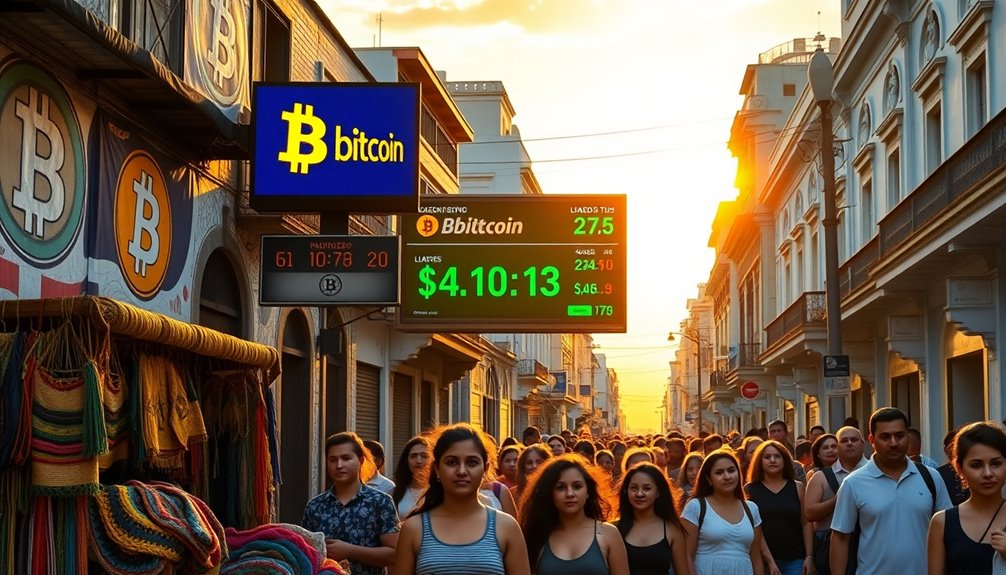
As El Salvador reassesses its relationship with Bitcoin, it's clear that the cryptocurrency has shifted from being legal tender to a more voluntary option for trade. This change comes in the wake of an agreement with the International Monetary Fund (IMF) for a $1.4 billion loan. Initially, Bitcoin had high hopes for transforming the financial landscape, but now the government's involvement is diminishing, allowing businesses and consumers to decide whether to engage with Bitcoin without any obligation.
You might find it interesting that the IMF had long raised concerns about the financial risks associated with Bitcoin. In securing the loan, El Salvador agreed to mitigate those risks, which led to the decision to no longer require businesses to accept Bitcoin. Instead, its use will be voluntary, offering a more flexible approach for merchants who've been hesitant due to Bitcoin's notorious volatility.
In fact, a staggering 86% of local businesses reported no Bitcoin transactions by 2022, illustrating a clear preference for traditional cash. Additionally, the government's involvement in Chivo Wallet is being reduced, indicating a shift in its approach to cryptocurrency management.
The transition also involves changes to the state-backed Chivo wallet, which the government plans to sell or wind down. This move signals a significant shift in how the government views its role in the cryptocurrency space. While cash remains the dominant payment method in El Salvador, the initial vision of using Bitcoin to reduce remittance costs appears to be faltering, as only 15% of the population trusted the cryptocurrency back in 2021.
Looking ahead, El Salvador continues to expand its Bitcoin reserves despite these changes. The government aims to buy one Bitcoin per day, showcasing an ongoing commitment to the cryptocurrency even as its legal status evolves. This strategy might attract international interest as other nations explore Bitcoin reserves, potentially challenging IMF perspectives on the currency's viability.
The new regulatory environment allows businesses the option to choose whether to accept Bitcoin, which is a significant departure from the previous mandate. However, the IMF will maintain substantial oversight of El Salvador's financial policies during the loan period, ensuring that the country adheres to agreed-upon reforms.
This evolving situation presents both challenges and opportunities for El Salvador as it navigates the balance between innovation and financial stability.
As an affiliate, we earn on qualifying purchases.
Chivo Wallet compatible accessories
As an affiliate, we earn on qualifying purchases.
As an affiliate, we earn on qualifying purchases.
As an affiliate, we earn on qualifying purchases.
As an affiliate, we earn on qualifying purchases.
Fall Picks
fall essentials
As an affiliate, we earn on qualifying purchases.