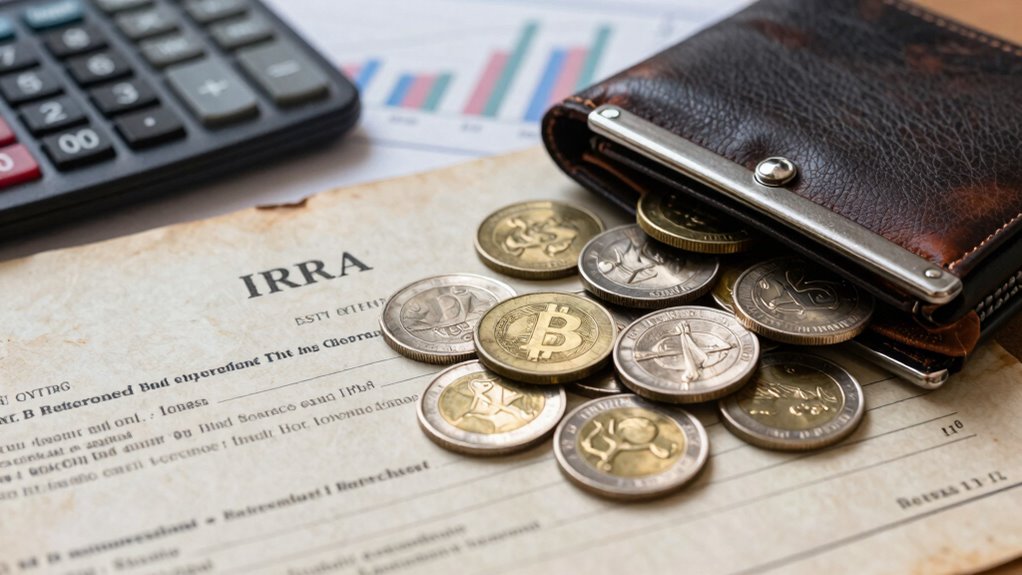

Moving an old IRA into crypto can be tricky because strict IRS rules, custodial challenges, and security risks can cause unexpected problems. If you don’t handle rollovers carefully, you could face hefty taxes, penalties, or security breaches. Finding a trustworthy custodian and ensuring proper storage of private keys takes effort. Taking shortcuts or making mistakes might nullify your tax advantages and expose your assets to loss. Keep exploring, and you’ll discover how to navigate these hidden hurdles effectively.

Get smart everyday buys delivered free with Prime
- Fast, free delivery on millions of items
- Prime Video, Amazon Music and more included
- Member-only deals all year
Key Takeaways
- Complex IRS regulations can cause unintentional taxable events during IRA to crypto transfers.
- Limited custodial options for digital assets increase security and compliance challenges.
- Improper handling of rollovers may trigger penalties and costly tax liabilities.
- Securing and managing private keys adds significant complexity and risk.
- Lack of due diligence on custodial support and security can lead to asset loss or legal issues.

Have you ever wondered what obstacles might lie ahead when transferring an old IRA into the world of cryptocurrencies? Moving your IRA into crypto isn’t as straightforward as it sounds. There are hidden frictions that could catch you off guard, especially around tax implications and custodial challenges. Understanding these hurdles is key to making a smooth transition without unexpected costs or legal issues.
First, let’s talk about tax implications. When you transfer your traditional IRA into a crypto account, you need to be aware of potential tax consequences. If you’re doing a direct rollover or transfer, you might avoid immediate taxes, but it’s not always guaranteed. If the transfer isn’t handled correctly or if you accidentally take a distribution instead of a rollover, you could face hefty tax bills, plus penalties if you’re under age 59½. Moreover, once your IRA is invested in cryptocurrencies, any gains are typically tax-deferred until withdrawal, but the IRS has strict rules about how these transfers are executed. Missteps can trigger taxable events, undermining the advantage of tax deferral. You’ll want to make sure you follow IRS guidelines carefully and consult a tax professional to prevent costly mistakes. Additionally, understanding the regulatory landscape surrounding cryptocurrencies can help you stay compliant and avoid potential legal issues. Staying informed about software quality assurance and compliance requirements is vital, as the regulatory environment around digital assets is constantly evolving.
Custodial challenges also pose a significant hurdle. Traditional IRAs are managed by custodians who are familiar with stock, bond, and mutual fund investments. Cryptocurrencies, however, require custodians with specialized knowledge and infrastructure. Not all IRA custodians support digital assets, so you might need to find a custodian that offers crypto custody services, which can be limited or expensive. Managing your crypto IRA also involves ensuring the secure storage of private keys, which adds complexity. If you choose an untrustworthy custodian or mishandle your keys, you risk losing your investment entirely. This custodial challenge isn’t just about finding the right provider; it’s about understanding the security measures they employ and whether they’re regulated by authorities. Without proper custodial support, your crypto assets could be vulnerable to theft or loss, defeating the purpose of a retirement account. Additionally, awareness of regulatory compliance is essential, as the evolving legal landscape can impact your ability to hold certain assets. Ensuring the custodian adheres to security protocols and maintains proper oversight is crucial to safeguarding your holdings. Proper due diligence on custodial providers, including their security protocols and compliance standards, can significantly reduce these risks.
In essence, moving an old IRA into crypto involves charting a tricky landscape of tax rules and custodial arrangements. It’s not enough to simply transfer funds; you need a clear strategy that accounts for potential tax liabilities and custodial limitations. Failing to do so could result in unexpected taxes, security risks, or even jeopardize your retirement savings. So, before you make the leap, do your homework. Consult with financial and tax experts, verify custodial support, and verify your move complies with all regulations. Only then can you unlock the potential of cryptocurrencies within your retirement plan without falling prey to hidden friction.
As an affiliate, we earn on qualifying purchases.
Frequently Asked Questions
Can I Transfer an IRA Directly Into Any Cryptocurrency?
You can’t transfer an IRA directly into any cryptocurrency. Instead, you’ll need an IRA rollover into a self-directed IRA that allows crypto investments. This process involves moving funds from your traditional or Roth IRA into a specialized account, which then enables you to buy cryptocurrencies. Be aware of crypto regulations, as they impact how you execute the rollover and what assets are permitted. Always consult a financial advisor to guarantee compliance and smooth transfer.
What Are the Tax Implications of Moving an IRA Into Crypto?
Moving an IRA into crypto generally triggers a taxable event, meaning you’ll owe income taxes on any gains. Did you know that nearly 60% of Americans are concerned about insufficient retirement savings? This highlights the importance of smart retirement planning and investment diversification. When transferring to crypto, consider the tax implications carefully, as it can considerably impact your overall retirement strategy and future financial security.
How Long Does the Transfer Process Typically Take?
The transfer process usually takes between 2 to 6 weeks, but transfer delays can extend this timeframe. Processing times depend on your IRA custodian and the crypto platform’s efficiency. You should stay in contact with both parties and provide any requested documentation promptly. Be patient, as some transfers face unexpected delays. Planning ahead and maintaining clear communication can help speed up the process and reduce frustration.
Are There Specific Crypto Platforms Authorized for IRA Transfers?
You should choose crypto platforms that are specifically authorized for IRA transfers, considering cryptocurrency regulations and IRA custodian requirements. Not all exchanges qualify, so verify they support IRA accounts and are compliant with regulations. Look for platforms with a reputable custodian, clear procedures, and proper licensing. This guarantees your transfer aligns with legal standards, making the process smoother and reducing potential issues with regulatory compliance or custodial restrictions.
What Penalties Exist for Early or Improper IRA Transfers?
If you make an early or improper IRA transfer, you could face penalties under IRA regulations, including a 10% early withdrawal penalty and income taxes. However, penalty exceptions may apply, such as transfers due to qualified rollovers or specific hardship situations. To avoid these penalties, make certain you follow IRS rules carefully, including proper timing and documentation. Consulting a financial advisor helps you navigate IRA regulations and avoid costly mistakes.
cryptocurrency private key storage hardware
As an affiliate, we earn on qualifying purchases.
As an affiliate, we earn on qualifying purchases.
Conclusion
So, as you navigate the maze of transferring your old IRA into crypto, remember that it’s not quite like sending a telegram or riding in a Model T. The process has its quirks and hidden frictions, but with patience and the right guidance, you can modernize your retirement portfolio without getting stuck in the past. Just don’t forget—this isn’t the Wild West, even if it sometimes feels like it. Stay savvy, and your future self will thank you.
As an affiliate, we earn on qualifying purchases.
As an affiliate, we earn on qualifying purchases.
Columbus Day / Indigenous Peoples' Day Picks
long weekend sales
As an affiliate, we earn on qualifying purchases.