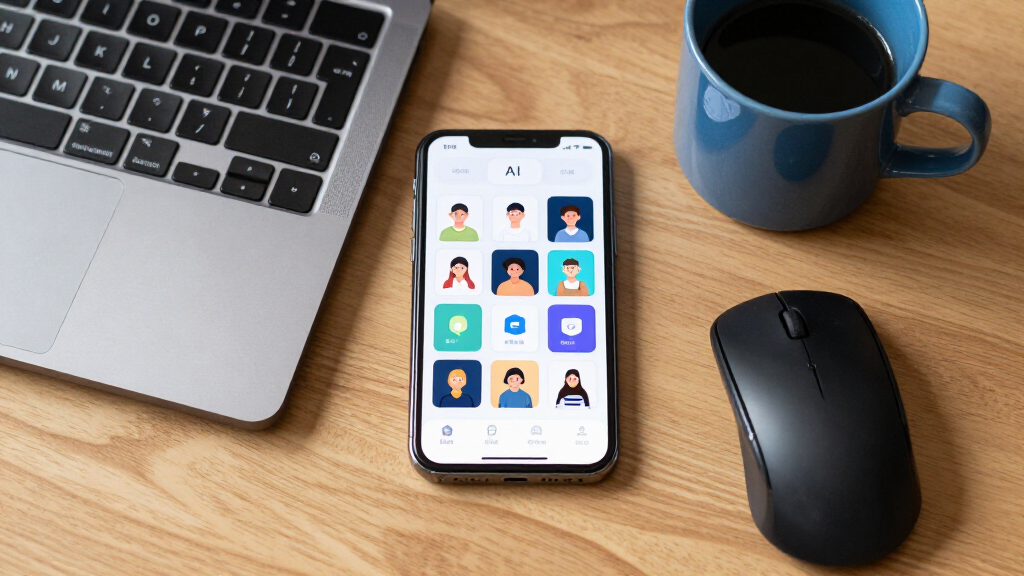

📊 Full opportunity report: Stay Ahead In School With 9 AI Student Apps In 2026 on ThorstenMeyerAI.com — validation score, market gap, and execution plan.

Get smart everyday buys delivered free — and shop member deals
- Fast, free delivery on millions of items
- Access to Prime Big Deal Days deals on October 6–7
- Prime Video, Amazon Music and more included
TL;DR
In 2026, nine AI-powered student apps are transforming how students organize, research, and learn. These tools offer automation, integration, and customization to enhance academic performance. The development highlights the growing role of AI in education, though details on specific app features vary.
In 2026, nine new or significantly updated AI-powered student apps are gaining attention for their potential to boost student organization, research, and learning. These apps are discussed in the original analysis. These tools, designed to integrate seamlessly into existing workflows, aim to help students stay ahead academically. The emergence of these apps reflects a broader trend of AI integration into educational technology, with implications for student productivity and digital literacy.
According to Thorsten Meyer AI, the top AI student apps combine natural language processing with task management features to streamline workflows. For more insights, see this detailed review. These apps vary in sophistication, with some offering advanced research assistance and scheduling automation, while others focus on simplicity and ease of use. Cost structures range from free basic versions to premium subscriptions with enhanced capabilities, making them accessible to a wide range of students.
Many apps are designed to easily integrate with popular platforms like Google Workspace, Microsoft Office, and learning management systems, reducing setup time and increasing efficiency. You can explore related tools in our guide to student budgeting apps. User interface design and customization options are key factors influencing their adoption, with intuitive, clutter-free dashboards preferred by students. While most apps are user-friendly, some require minimal technical skills for advanced features, prompting providers to include tutorials and support resources.
The 9 picks
- 1
 AI for Educators Made Easy: Unlock the Power of Artificial Intelligence to En…View on Amazon →
 - 2
 AI-Powered Growth: The 7-Step AI Adoption System for GTM TransformationView on Amazon →
 - 3
 The AI-Powered Student Operating System: A Practical Framework for Learning,…View on Amazon →
 - 4
 AI Made Simple for Students and Educators: Practical Applications of Artifici…View on Amazon →
 - 5
 The AI-Powered Web Apps From Zero to Hero: How to Make Apps with AI, Build AI…View on Amazon →
 - 6
 The AI-Powered Educator: A Practical Guide to Using Artificial Intelligence W…View on Amazon →
 - 7
 AI for Students: Smart Ways to Study, Research, and Learn with Artificial Int…View on Amazon →
 - 8
 AI Tools for Students 2026 Edition: The Complete Guide to Learning Smarter wi…View on Amazon →
 - 9
 Building Your First AI-Powered App Without Coding: A Step-by-Step Guide for N…View on Amazon →
Impact of AI Apps on Student Learning in 2026
The proliferation of AI-powered student apps in 2026 signifies a shift towards more personalized and efficient learning environments. These tools can automate routine tasks, enhance research capabilities, and improve organization, potentially leading to better academic outcomes. For students, especially those balancing multiple responsibilities, these apps offer critical support in managing time and resources effectively. However, reliance on AI also raises questions about data privacy, digital literacy, and equitable access, which are still being addressed by developers and educators.
Recent Trends in Educational AI Tools
Over the past few years, AI integration into educational technology has accelerated, with numerous apps emerging to assist students in organizing coursework, conducting research, and managing schedules. The 2026 wave of apps builds on this momentum, with a focus on user-friendly interfaces and deeper customization. Prior to this, early AI tools were often complex and costly, limiting adoption. The current landscape indicates a move towards more accessible, versatile solutions tailored to student needs, driven by advances in natural language processing and cloud computing.
Features and Adoption of New AI Student Apps Still Evolving
It is not yet clear which of the nine apps will achieve widespread adoption or how their features will evolve throughout 2026. Details about specific functionalities, pricing tiers, and long-term support remain emerging, and some claims about their effectiveness are based on early user feedback rather than comprehensive studies. Additionally, the impact on academic integrity and data privacy continues to be debated among educators and developers.
Upcoming Updates and How Students Can Prepare
In the coming months, developers are expected to release updates that enhance AI capabilities, improve integration, and expand customization options. Students interested in these tools should monitor official app announcements, participate in beta testing if available, and evaluate which apps best fit their workflows. Educational institutions may also begin recommending specific apps or integrating them into broader digital literacy programs.
Key Questions
Can these AI-powered apps replace my traditional study methods?
These apps are designed to supplement, not replace, traditional study techniques. They automate routine tasks and improve organization but still require active engagement with coursework for optimal learning.
Are these AI student apps safe to use with my personal data?
Most reputable apps prioritize data security and employ encryption. However, students should review privacy policies and be cautious with sensitive information, ensuring the platform complies with standards like GDPR or CCPA.
Do I need technical skills to use these AI apps effectively?
Many apps are designed to be user-friendly and require minimal technical knowledge. Some advanced features may need basic digital literacy, but tutorials and support are typically available.
How do I choose the best AI app for my needs and budget?
Evaluate your specific requirements, consider the app’s features, ease of use, and cost. Free versions can be useful for basic needs, while premium options may offer advanced capabilities worth the investment.
Source: ThorstenMeyerAI.com
Halloween Picks
halloween
As an affiliate, we earn on qualifying purchases.