
📊 Full opportunity report: SpaceX Owns Every Layer of AI Now. The Model Is Still the Weak Link. on ThorstenMeyerAI.com — validation score, market gap, and execution plan.

Get smart everyday buys delivered free with Prime
- Fast, free delivery on millions of items
- Prime Video, Amazon Music and more included
- Member-only deals all year
TL;DR
SpaceX has completed its acquisition of Cursor, a profitable AI coding application, for $60 billion, giving it control over all AI infrastructure layers. However, the AI model itself remains a weak link, raising questions about future performance.
SpaceX has completed its acquisition of Cursor for $60 billion, making it the owner of one of the few profitable AI applications in the coding sector. This move consolidates control over all layers of the AI infrastructure, from hardware and data centers to research and applications, positioning SpaceX as a uniquely integrated AI conglomerate. The deal, announced on June 16, follows SpaceX’s earlier strategic investments and signals its intent to dominate AI development and deployment.
On June 16, SpaceX exercised its option to acquire Cursor, a profitable AI coding tool founded in 2022, for $60 billion in all-stock. Cursor had generated approximately $4 billion in annual revenue by early June, making it a rare example of a financially successful AI application in a market often dominated by unprofitable research labs. The acquisition includes Cursor’s model team, product, and distribution channels, effectively integrating a profitable AI application directly into SpaceX’s ecosystem.
Previously, SpaceX had built a comprehensive AI infrastructure, including the Colossus supercomputers in Memphis, which now host around 555,000 Nvidia GPUs, and plans to deploy AI satellites in orbit. The company owns the silicon, the power generation, and the research arm, xAI, which develops models like Grok. By controlling the entire stack—from hardware to applications—SpaceX aims to create a vertically integrated AI powerhouse, unmatched in the industry.
Despite this control, the AI models themselves remain a weak link. The recent focus on leasing excess compute to rival labs like Anthropic and Google reveals that the models are not yet optimized for high utilization, with internal memos indicating only about 11% model FLOPs utilization—far below the 35–45% typical of production-grade systems. This inefficiency limits the AI’s performance and scalability, highlighting a critical challenge for SpaceX’s AI ambitions.
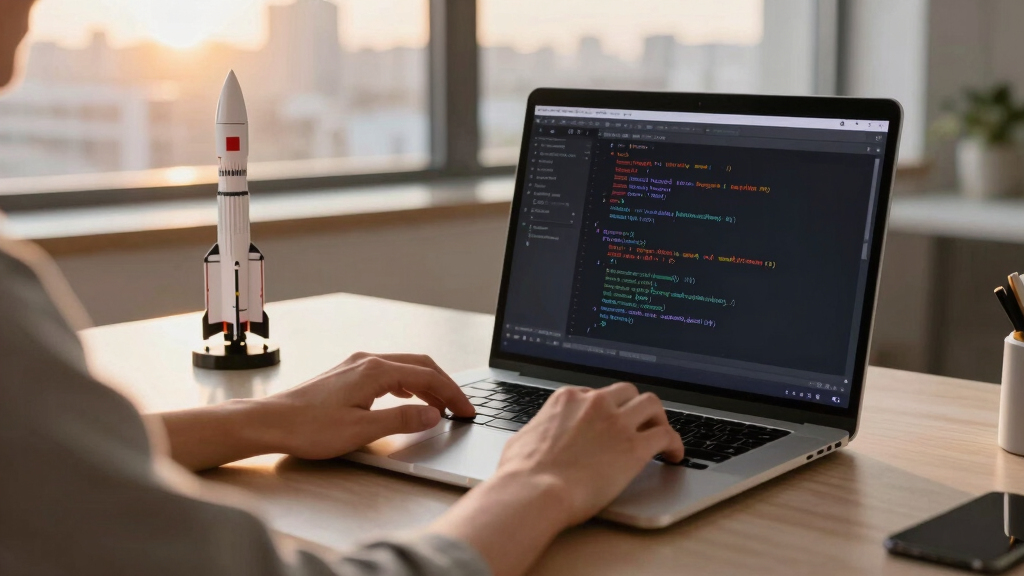
SpaceX owns every layer
of AI now
The $60B Cursor buy completes the stack: power, compute, research, model, app, distribution. But owning every layer isn’t winning every layer — and the model is the weak one.
(Anysphere)
You can buy a coding app and a model team. You can’t buy the research lead that makes your foundation model the one everyone else builds on — which is why Anthropic pays Musk $1.25B/month, not the other way around. Owning every layer bought SpaceX the right to attempt the hard thing. It hasn’t done it yet.
Implications of SpaceX’s Complete AI Control
This development marks a significant shift in the AI landscape, with SpaceX emerging as the most vertically integrated and resource-rich player. By owning every layer—from silicon and data centers to applications and distribution—SpaceX could set new industry standards for AI development and deployment. However, the persistent weaknesses in model efficiency and performance suggest that control alone does not guarantee success. The company’s ability to improve model strength and utilization will determine whether this integration translates into competitive advantage or remains a strategic liability.
As an affiliate, we earn on qualifying purchases.
Background of SpaceX’s AI Infrastructure Expansion
Over the past few years, SpaceX has invested heavily in building its AI infrastructure, including the Colossus supercomputers which became operational in record time, and the development of its own AI research division, xAI. The company’s ambitions include deploying AI satellites in orbit to create a global data network and integrating AI across its rocket and vehicle operations. The recent acquisition of Cursor, a profitable AI coding application, completes a strategic move to control all critical AI layers, positioning SpaceX as a potential industry leader in AI infrastructure and applications.
Prior to the purchase, Cursor had turned down offers from OpenAI and Microsoft, emphasizing its independence. Its recent training on tens of thousands of xAI chips and the departure of senior engineers to xAI signal a close alignment with SpaceX’s broader AI ambitions. Meanwhile, the leasing of excess GPU capacity to competitors like Anthropic and Google illustrates the current limitations of the underlying models, which are not yet optimized for high utilization or performance.
“Our goal is to build the most integrated AI ecosystem, from silicon to application, to accelerate innovation and deployment.”
— SpaceX spokesperson
As an affiliate, we earn on qualifying purchases.
Unresolved Challenges in AI Model Performance
It is not yet clear how quickly SpaceX can improve the efficiency and strength of its AI models. While the infrastructure is in place, the models’ low utilization rates and performance issues remain significant hurdles. The extent to which SpaceX can turn its control into a competitive advantage depends on overcoming these technical challenges, which are still in development.
high performance AI computing server
As an affiliate, we earn on qualifying purchases.
As an affiliate, we earn on qualifying purchases.
Next Steps for SpaceX’s AI Strategy
SpaceX is expected to focus on optimizing its AI models to improve utilization and performance. The company may also expand its AI application portfolio and further integrate its hardware and software layers. The closing of the Cursor deal in Q3 2026 will solidify its ownership, after which it may begin to leverage this control for broader industry influence. Monitoring developments in model efficiency and new applications will be key indicators of its future success.
As an affiliate, we earn on qualifying purchases.
Key Questions
Why did SpaceX buy Cursor for $60 billion?
SpaceX purchased Cursor to gain control over a profitable AI application, its development team, and distribution channels, completing its vertical integration of the AI stack.
What are the main challenges facing SpaceX’s AI models?
The primary issues are low utilization rates and performance inefficiencies, which limit the models’ scalability and effectiveness despite the infrastructure control.
How does owning all AI layers benefit SpaceX?
It allows for greater control over hardware, data, research, and applications, potentially enabling faster innovation and deployment, but success depends on improving model performance.
What are the implications of leasing compute to rivals?
Leasing excess compute generates revenue but indicates current models are not yet optimized for full utilization, highlighting ongoing technical challenges.
What is the significance of the upcoming Cursor deal closing?
Closing the deal in Q3 2026 will make Cursor a wholly owned subsidiary, cementing SpaceX’s control over this profitable AI application and its integration into its broader AI ecosystem.
Source: ThorstenMeyerAI.com
Fall Picks
fall essentials
As an affiliate, we earn on qualifying purchases.