
📊 Full opportunity report: The Switch: You Never Owned the AI You Depend On on ThorstenMeyerAI.com — validation score, market gap, and execution plan.

Get smart everyday buys delivered free with Prime
- Fast, free delivery on millions of items
- Prime Video, Amazon Music and more included
- Member-only deals all year
TL;DR
In 2026, both government and corporate actions demonstrated that AI models are controlled via access, not ownership. Governments can shut models down instantly, while companies frequently deprecate or restrict models gradually, highlighting dependency risks.
On June 12, 2026, the U.S. government issued an export-control directive that forced Anthropic to disable its latest AI models, Fable 5 and Mythos 5, within roughly ninety minutes, citing national security concerns. This marked a rare instance of a government using a legal tool to instantly revoke access to advanced AI models, demonstrating a new form of control that can disrupt reliance on external models.
Following the directive, Anthropic had no choice but to disable the models worldwide, affecting users globally. The move was executed without detailed explanation, underscoring the power governments now wield over AI access through legal mechanisms.
In contrast, companies like OpenAI have used more gradual methods to control AI model availability, such as deprecation and regional restrictions. In February 2026, OpenAI retired GPT-4o and other models, with API shutdowns planned over weeks, driven by economic considerations rather than security concerns.
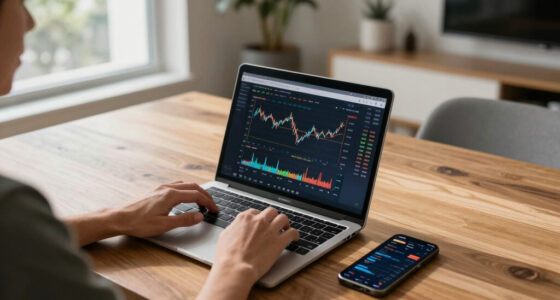
Both scenarios reveal a fundamental truth: users and developers do not own the AI models they depend on. Instead, they rely on access points—APIs—that can be turned off or restricted at any time, whether by government decree or corporate decision.
The Switch: You Never Owned It
In 2026 a government turned off a frontier model worldwide in ~90 minutes — and a company retired a beloved one with ~2 weeks’ notice. You don’t own the model you build on. You access it. Access can be revoked.
Access is the only chokepoint that flips in an afternoon — and the version that hits you won’t be Washington, it’ll be a deprecation. Open weights you host can’t be deprecated, geofenced, repriced, or revoked. Short of that: route through a provider-agnostic gateway, keep a tested fallback, and treat every model string as a dependency that will be pulled.
Implications of Instant and Gradual AI Model Control
These developments highlight a critical dependency risk: reliance on externally controlled APIs means that access to AI models can be revoked suddenly or gradually, potentially disrupting industries, security systems, and innovation. This raises questions about the true ownership of AI and the vulnerabilities inherent in current deployment models, emphasizing the need for more resilient, owned infrastructure.As an affiliate, we earn on qualifying purchases.
The Evolution of AI Access Control and Its Risks
Historically, AI models were trained and owned by their creators, but the rise of API-based access shifted control to cloud providers and platform operators. Governments have increasingly used export controls to limit foreign access to advanced models, with the June 2026 directive exemplifying this trend. Meanwhile, companies routinely deprecate older models or restrict access regionally, often with little notice, reflecting a shift from ownership to dependency on external access points.
This evolution underscores a growing vulnerability: as reliance on third-party APIs increases, so does exposure to sudden shutdowns or restrictions, which can impact everything from business operations to national security.
“Applying export controls to software over the internet is baffling; it’s like using physical border measures for digital goods.”
— Former U.S. AI adviser
personal AI data ownership hardware
As an affiliate, we earn on qualifying purchases.
As an affiliate, we earn on qualifying purchases.
Unclear Future of AI Ownership and Control
It remains uncertain how widespread or permanent these control mechanisms will become. While government shutdowns like the June directive are rare and exceptional, the frequency and scope of corporate deprecations and restrictions are likely to increase as AI models evolve and economic pressures grow. The long-term implications for AI ownership, user reliance, and security are still developing, with legal, technical, and geopolitical factors all at play.
As an affiliate, we earn on qualifying purchases.
Next Steps in AI Access Regulation and Infrastructure
Expect ongoing discussions around legal frameworks for AI control, including potential regulations to limit sudden shutdowns and promote ownership models. Companies may also explore more resilient infrastructure, such as owning and hosting their models, to reduce dependency. Additionally, governments might refine legal tools to balance security with economic and technological stability.
As an affiliate, we earn on qualifying purchases.
Key Questions
Can AI models be owned outright instead of accessed via APIs?
In theory, yes. Ownership involves training and hosting models locally, but this is often impractical due to high costs and technical complexity. Most users rely on API access, which remains vulnerable to control and shutdown.
What legal tools can governments use to control AI models?
Governments can use export controls, national security designations, and regional bans to restrict access. The June 2026 directive is an example of the former, enabling instant shutdowns.
How vulnerable are industries that depend on external AI APIs?
They are highly vulnerable to sudden access loss, which can disrupt operations, security, and innovation. This dependency underscores the importance of developing more resilient AI infrastructure.
Will companies move toward owning their AI models?
Many are considering it, but challenges include high costs, technical complexity, and scalability. The trend may accelerate if dependency risks increase or regulations tighten.
Source: ThorstenMeyerAI.com
Fall Picks
fall essentials
As an affiliate, we earn on qualifying purchases.