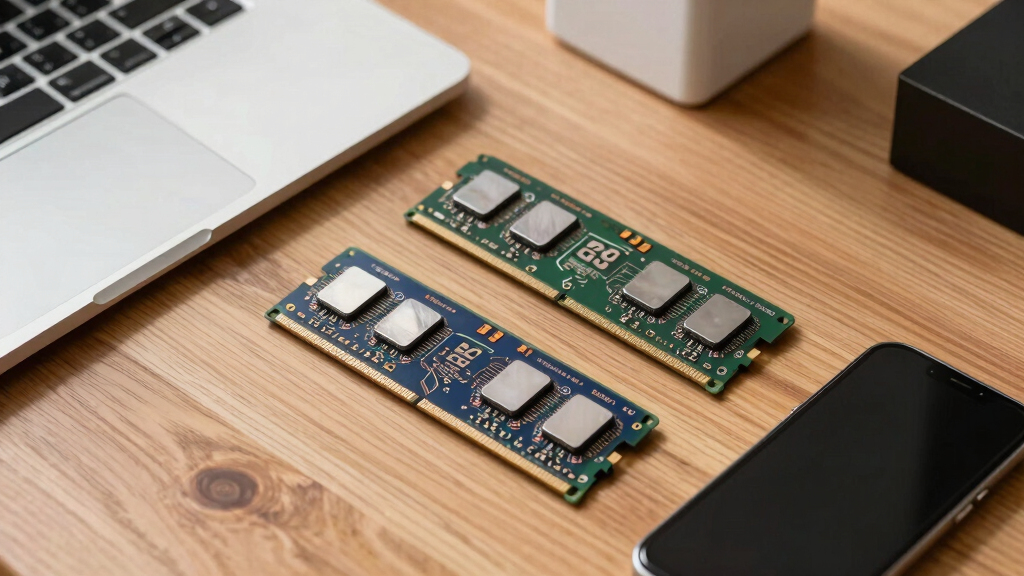

📊 Full opportunity report: DDR5 Now, DDR6 Soon: A Buyer’s Field Guide on ThorstenMeyerAI.com — validation score, market gap, and execution plan.

Get smart everyday buys delivered free with Prime
- Fast, free delivery on millions of items
- Prime Video, Amazon Music and more included
- Member-only deals all year
TL;DR
Despite rumors of DDR6 arriving soon, experts advise purchasing DDR5 now for mainstream builds, as DDR6 won’t be widely available until 2027 and will cost more. Waiting is unlikely to save money.
Market forecasts and industry sources confirm that DDR6 will not be ready for mainstream consumers before 2027, and current prices for DDR5 remain high. Experts recommend buying DDR5 now for current and near-future builds, as waiting for DDR6 could mean missing out on performance improvements and paying a premium for early adoption.
Industry analysts from ThorstenMeyerAI.com emphasize that DDR6 technology is still in the early stages, with mass production not expected until 2026–27. The initial DDR6 modules will target enterprise and AI servers, with mainstream desktops arriving no earlier than 2027. Meanwhile, DDR5 remains the standard for new builds, with the DDR5-6000 CL30 configuration being the optimal balance of performance and price for most users through 2028.
Market conditions currently prevent significant price drops for DDR5, and forecasts suggest that prices will remain high until at least 2028. The article advises against overbuying capacity—32GB for most users and 64GB for heavy multitaskers—highlighting that buying more than needed now locks in high prices. Additionally, DDR4 is no longer a cost-effective option for new builds, as manufacturers have phased it out and DDR4 prices are comparable to DDR5.
Regarding DDR6, the technology features a major architectural leap with four 24-bit sub-channels and much higher speeds, but it is incompatible with current systems. The rollout will be staged, with enterprise and AI applications leading, and consumer adoption not expected before 2027. Early DDR6 modules will come with issues like limited capacity and stability challenges, making them unsuitable for most users now.
DDR5 now, DDR6 soon
A buyer’s field guide. The 20-year instinct — wait for prices to drop, or wait for the next generation — is broken this cycle. Buy the DDR5 you actually need now; don’t wait for DDR6. Here’s the reasoning.
Driven to end-of-life, production slashed. Same money, dead-end socket. Leave a working DDR4 box alone — but never start a new build on DDR4 to “save.”
A framework, not a gamble. Buy the DDR5 you need now, at the sweet spot, in the capacity you’ll actually use — don’t buy DDR4, don’t wait for DDR6. The two costliest mistakes in this market are the ones that feel prudent: waiting for a price drop that isn’t coming, and waiting for a next-gen part that launches dearer than what’s on the shelf. Next: The SSD Squeeze.
Why Buying DDR5 Now Is the Best Choice
This guidance impacts a wide range of consumers and professionals planning new PCs or upgrades. By understanding that DDR6 is still years away and expensive, buyers can avoid premature investments and optimize their spending. Buying DDR5 now ensures compatibility, better pricing, and performance that meets current needs, preventing costly obsolescence or overpaying for early DDR6 modules.
As an affiliate, we earn on qualifying purchases.
Current Market Trends and Future DDR Developments
Historically, memory technology cycles have favored patience, with prices dropping and new generations providing better value over time. However, the 2026 cycle differs: DDR5 prices remain high due to supply constraints, and forecasts indicate no significant relief until 2028. DDR6, announced as a future standard, is still in development, with initial deployment limited to enterprise and AI markets. The transition to DDR6 will be gradual, with full mainstream adoption not expected until around 2030, following a similar pattern to DDR4’s evolution from 2014 to 2018.
Manufacturers are pushing DDR5 as the current standard, and most new platforms are optimized for DDR5. Building on DDR4 now is discouraged, as DDR4 is being phased out and offers no future upgrade path. The upcoming DDR6 standard promises major performance improvements but is incompatible with existing hardware and will carry a premium price at launch.
“DDR6 introduces a significant architecture leap, but it’s still in early stages, with limited capacities and stability issues expected initially.”
— Tech industry sources
As an affiliate, we earn on qualifying purchases.
Unresolved Questions About DDR6 Adoption and Pricing
While DDR6 is expected to launch in 2026–27, details about pricing, capacity, and stability remain uncertain. It is unclear how quickly DDR6 will become affordable and widely available for consumers, and whether early modules will meet performance expectations without issues. The timeline for full adoption and the impact on DDR5 prices also remains uncertain.
high performance DDR5 RAM for gaming
As an affiliate, we earn on qualifying purchases.
As an affiliate, we earn on qualifying purchases.
Next Steps for Buyers and Industry Watchers
Consumers should focus on building or upgrading with DDR5 now, selecting configurations aligned with their workload needs. Industry developments to watch include the JEDEC standards finalization for DDR6, the appearance of compatible motherboards and modules on QVL lists, and early reviews of DDR6 modules once they are released. Market prices for DDR5 are unlikely to drop significantly before 2028, so patience for price relief is not advisable.
As an affiliate, we earn on qualifying purchases.
Key Questions
Should I wait for DDR6 before upgrading my PC?
No. DDR6 is not expected to be practical or affordable for mainstream consumers until at least 2027, and current forecasts suggest it will be more expensive and less stable initially. Building with DDR5 now is more cost-effective and future-proof for most users.
Is DDR4 still a good choice for new builds in 2026?
No. DDR4 is being phased out, and new platforms are optimized for DDR5. Building on DDR4 now will limit future upgrade options and may not be compatible with upcoming hardware.
What are the main advantages of DDR6 over DDR5?
DDR6 offers higher speeds, wider bandwidth, and architectural improvements, but these benefits are primarily relevant for enterprise, AI, and scientific workloads. For most consumers, DDR5 provides sufficient performance for years to come.
When will DDR6 be widely available for mainstream desktops?
Expect DDR6 to become mainstream around 2027–28, starting with high-end and enterprise systems, with broad adoption unlikely before 2030.
Are there risks in adopting early DDR6 modules?
Yes. Early DDR6 modules may face issues such as limited capacity, instability, and high costs. It is generally better to wait until the standard matures and compatible hardware is widely available.
Source: ThorstenMeyerAI.com
Halloween Picks
halloween
As an affiliate, we earn on qualifying purchases.