

This guide helps students find and choose personal finance books that suit their learning needs. It covers how to select books that build foundational money skills, understand budgeting, saving, and investing. Designed for beginners, this process takes about 30 to 60 minutes to complete and results in a curated list of accessible, relevant books to start improving financial literacy.

Get smart everyday buys delivered free — and shop member deals
- Fast, free delivery on millions of items
- Access to Prime Big Deal Days deals on October 6–7
- Prime Video, Amazon Music and more included

Personal Finance for Teens and Young Adults: Learn Money Skills Not Taught in School
- ✔ Target Audience: Teens and young adults
- ✔ Content Focus: Budgeting, Saving, Investing
- ✔ Ease of Use: Beginner-friendly

How to Adult: Personal Finance for the Real World
- ✔ Target Audience: Beginners and young adults
- ✔ Content Focus: Budgeting, Financial Planning
- ✔ Ease of Use: Very accessible
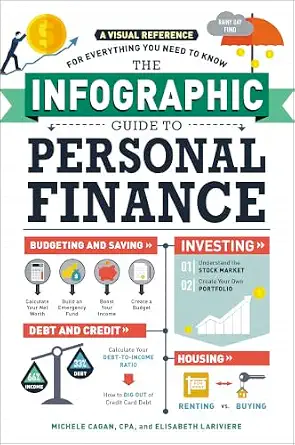
The Infographic Guide to Personal Finance: A Visual Reference for Everything You Need to Know
- ✔ Target Audience: Visual learners, quick-reference seekers
- ✔ Content Focus: Broad overview, Infographics
- ✔ Ease of Use: Very accessible
Difficulty: Beginner | Time: 30-60 minutes
What You’ll Need
Tools & Materials:
- Internet access
- Device for browsing (computer, tablet, or smartphone)
Knowledge:
- Basic understanding of personal finance concepts (optional)
Have a notepad or note-taking app ready to record your selected books and key points.
Personal Finance for Teens and Young Adults: Learn Money Skills Not Taught in School
<p><strong>This book stands out for its focus on practical skills like budgeting, saving, and investing, which are often missing from traditional curricula.</strong> Compared with other titles, it provides a solid foundation for teens and young adults seeking to achieve financial independence. However, it might be too basic for those already familiar with personal finance concepts. The lack of detailed strategies means advanced learners may need additional resources.</p>
Pros:
- Provides practical financial skills tailored for young adults
- Focuses on essential topics like budgeting, saving, and investing
- Helps build a strong foundation for financial independence
Cons:
- Limited in scope; may be too basic for experienced learners
- No detailed financial strategies or advanced topics
- Content may feel somewhat generic for those with prior financial knowledge
Best for: Students new to personal finance seeking practical, easy-to-understand guidance
Not ideal for: Advanced learners looking for in-depth financial strategies or investment techniques
Bottom line: A highly accessible and practical guide perfect for beginners starting their financial journey.
“A highly accessible and practical guide perfect for beginners starting their financial journey.”
How to Adult: Personal Finance for the Real World
<p><strong>This pick makes the most sense for students who want straightforward, real-world financial tips they can apply immediately.</strong> Compared to more theoretical guides, it offers practical advice that demystifies everyday money management. Its simplicity is a strength for beginners, but it lacks detailed financial planning strategies for those looking to deepen their knowledge. If you want a quick, reliable overview, this is a great choice.</p>
Pros:
- Practical and easy-to-understand advice
- Covers essential topics like budgeting and financial planning
- Great for learners new to managing personal finances
Cons:
- Limited depth; lacks detailed financial strategies
- Does not cover advanced topics or investment plans
- Content may be too basic for experienced students
Best for: Beginners seeking practical, everyday financial advice
Not ideal for: Advanced learners or those looking for in-depth investment techniques
Bottom line: Ideal for beginners who want clear, actionable financial advice for everyday life.
“Ideal for beginners who want clear, actionable financial advice for everyday life.”
The Infographic Guide to Personal Finance: A Visual Reference for Everything You Need to Know
<p><strong>This book excels at presenting complex financial concepts through engaging infographics, making it ideal for visual learners or as a quick-reference tool.</strong> Compared to text-heavy guides, it offers a broad overview of personal finance topics in a visually appealing format. However, its lack of detailed explanations means it’s less suitable for those wanting an in-depth understanding or advanced strategies. It’s best used as a supplement rather than a standalone resource.</p>
Pros:
- Visually engaging and easy to understand
- Provides a comprehensive overview of personal finance topics
- Excellent as a quick reference guide
Cons:
- Lacks detailed explanations for complex topics
- Not suitable for in-depth learning
- Limited depth on advanced financial strategies
Best for: Visual learners or students seeking a quick, easy-to-navigate reference
Not ideal for: Those needing comprehensive, detailed financial education or advanced strategies
Bottom line: A highly effective visual reference for quick, accessible financial overviews, best used alongside more detailed texts.
“A highly effective visual reference for quick, accessible financial overviews, best used alongside more detailed texts.”
As an Amazon Associate we earn from qualifying purchases.
Before You Start
Ensure your device has internet access to research book options. Prepare to evaluate books based on clarity, relevance, and readability. Be aware that some books may have different editions or formats; prioritize recent publications for the most up-to-date advice.
Step-by-Step Instructions
Step 1: Define your learning goals
Write down specific financial topics you want to learn about, such as budgeting, saving, investing, or managing debt. Clear goals will help you choose the most relevant books.
Tip: Focus on fundamental topics if you’re new to personal finance; advanced topics can come later.
Check: You have a list of 3-5 clear topics or skills you want to improve.
Step 2: Research recommended books for students
Search online for lists of top personal finance books for students or beginners. Use trusted sources like financial literacy websites, educational blogs, or library recommendations.
Tip: Look for books that specifically mention students, beginners, or personal finance basics.
Check: You have compiled a list of at least 5 potential books with their titles and authors.
Step 3: Evaluate the books based on clarity and relevance
Read reviews and summaries to assess whether each book simplifies complex concepts and matches your learning goals. Prioritize books with positive reviews from students or beginners.
Tip: Check for books that include practical examples and actionable advice.
Check: You have selected 2-3 books that match your goals and are well-reviewed for clarity.
Step 4: Check the publication date and format
Verify the publication date to ensure the content is current. Decide on the format (print or digital) based on your preference and accessibility.
Tip: Choose recent editions to access the latest financial advice and data.
Check: You have confirmed the publication recency and chosen the preferred format for your selected books.
Step 5: Create a reading plan
Develop a schedule to read and review your selected books, such as dedicating 15-30 minutes daily or weekly. Set specific milestones for completing each book.
Tip: Use reminders or calendar alerts to stay on track.
Check: You have a clear, realistic reading schedule with set goals.
Common Mistakes to Avoid
- Choosing overly advanced or complex books. — Select books labeled as beginner-friendly or aimed at students. Read reviews to verify suitability for your knowledge level.
- Ignoring publication dates, leading to outdated information. — Check the publication year and prefer recent editions to access current advice and data.
- Not setting specific learning goals, resulting in unfocused reading. — Define clear topics or skills you want to learn before picking books to ensure targeted learning.
Troubleshooting
Problem: Struggling to find relevant books or reviews.
Solution: Use multiple search terms like ‘best personal finance books for students 2023’ or visit library and educational websites for curated lists.
Problem: Books seem too difficult or confusing.
Solution: Choose books marked as beginner or introductory, and consider starting with shorter or more visual guides.
Problem: Reviews conflict or are mixed.
Solution: Read the most recent reviews and focus on those with detailed feedback about clarity and usefulness.
What Success Looks Like
You have selected 2-3 clear, beginner-friendly personal finance books relevant to your goals, verified their recency, and developed a reading plan. You feel confident about starting your reading and applying the knowledge gained.
Next Steps
Begin reading your selected books according to your schedule. Take notes on key concepts and practical tips. Revisit your goals periodically to adjust your reading list or expand your learning as needed. Seek additional resources or courses if you want to deepen your understanding.
Frequently Asked Questions
How do I know if a book is suitable for beginners?
Look for books labeled as ‘beginner,’ ‘for students,’ or ‘introductory.’ Read reviews to confirm they explain concepts clearly without assuming prior knowledge.
Should I buy or borrow personal finance books?
Start with borrowing from a library or digital resources to test if the book suits your learning style. Purchase if you plan to revisit or want permanent access.
How many books should I read at once?
Focus on one book at a time to avoid confusion. Complete each before moving to the next for better retention.
What if I find a book too difficult?
Switch to a more basic book or supplement with online tutorials and videos. Return to the difficult book later when your understanding improves.
Halloween Picks
halloween
As an affiliate, we earn on qualifying purchases.