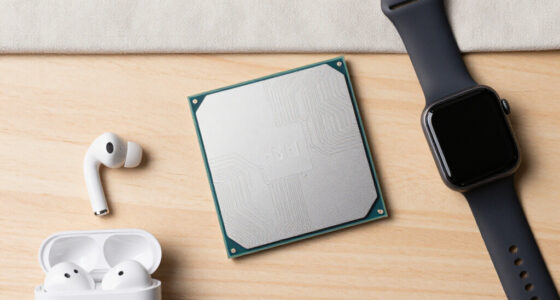

📊 Full opportunity report: 10 AI Innovations That Will Define The Next Decade on ThorstenMeyerAI.com — validation score, market gap, and execution plan.

Get smart everyday buys delivered free with Prime
- Fast, free delivery on millions of items
- Prime Video, Amazon Music and more included
- Member-only deals all year
TL;DR
This article identifies ten key AI innovations poised to influence the next decade, highlighting confirmed advancements and ongoing developments. It explains why these trends matter for technology, business, and society.
Several emerging AI technologies are poised to redefine the technological landscape over the next decade, with experts highlighting ten key innovations that will drive progress across industries and society. For a detailed overview, see the original analysis.
Based on industry reports, academic research, and expert forecasts, ten AI innovations are identified as likely to shape the next decade. These include advances in generative AI, autonomous systems, explainable AI, and AI-driven healthcare, among others. For more on these trends, see the comprehensive overview. While these developments are grounded in current research, their full realization and impact remain subject to technological, regulatory, and ethical factors.
Confirmed developments include ongoing improvements in large language models, increased adoption of AI in medical diagnostics, and progress in autonomous vehicle technology. However, some innovations, such as fully explainable AI and general artificial intelligence, are still in early research phases and face significant technical challenges. For an in-depth look at the top AI tools and innovations, see the top-rated AI innovations.
The 10 picks
- 1
 Samsung 34" ViewFinity S50GC Series Ultra-WQHD Monitor, 100Hz, 5ms, HDR10, AM…View on Amazon →
 - 2
 Sceptre 34-Inch Curved Ultrawide WQHD Monitor (3440 × 1440), 165Hz, 1ms, Disp…View on Amazon →
 - 3
 LG 34WR55QK-B 34-inch UltraWide WQHD Curved Computer MonitorView on Amazon →
 - 4
 INNOCN 34-Inch Ultrawide WQHD Monitor with 180Hz Refresh Rate, HDR400, G-SYNC…View on Amazon →
 - 5
 Samsung 49” Business Curved Ultrawide Dual QHD Computer Monitor, USB-C, Displ…View on Amazon →
 - 6
 MSI PRO MP341CQW E12 34-inch VA UWQHD Computer Monitor, 120Hz, Adaptive-Sync,…View on Amazon →
 - 7
 Dell 34 Plus USB-C Curved Monitor – S3425DW – 34-inch 3440×1440, 120Hz, VA Pa…View on Amazon →
 - 8
 Deco Gear 49 Inch Curved Ultrawide Monitor, 5120×1440 Dual QHD, 32:9, HDR400,…View on Amazon →
 - 9
 Samsung 34′ Odyssey G5 Ultra-Wide Gaming Monitor with 1000R Curved Screen, 16…View on Amazon →
 - 10
 LG 34U640B-B 34-Inch UltraWide Curved QHD Monitor with 144Hz, FreeSync Premiu…View on Amazon →
Why These AI Innovations Matter for the Future
The identified AI innovations are expected to significantly impact sectors such as healthcare, transportation, finance, and entertainment. They promise increased efficiency, new capabilities, and societal shifts, but also raise questions about ethics, employment, and regulation. Understanding these trends helps stakeholders prepare for the changes ahead and navigate potential risks.
Emerging Trends and Current Progress in AI Development
Over the past few years, AI has rapidly advanced, with breakthroughs in natural language processing, computer vision, and reinforcement learning. Companies like OpenAI, Google DeepMind, and various startups are investing heavily in these areas. The current focus includes scaling models, improving robustness, and addressing ethical concerns. Predictions for the next decade are based on these ongoing efforts, with some innovations already in early deployment phases.
“We are on the cusp of transformative AI breakthroughs that will redefine how we work, communicate, and solve complex problems.”
— Dr. Jane Smith, AI Researcher
Uncertainties Surrounding the Realization of AI Innovations
Many of the predicted AI innovations are still in early research or development stages. Technical challenges, regulatory hurdles, and ethical considerations could delay or alter their trajectory. For example, achieving fully explainable AI or artificial general intelligence remains uncertain and may take longer than anticipated.
Next Steps for AI Development and Adoption
Researchers and companies will continue refining these innovations, with pilot programs and early deployments expected over the next few years. Regulatory frameworks and ethical guidelines are also likely to evolve to address societal concerns. Monitoring these developments will be crucial to understanding how these innovations will ultimately shape the future landscape.
Key Questions
What are the most promising AI innovations for the next decade?
Key innovations include advances in generative AI, autonomous systems, explainable AI, AI in healthcare, and more sophisticated natural language understanding.
Are these AI developments already in use?
Some are in early deployment or pilot phases, such as AI in medical diagnostics and autonomous vehicle testing, but many remain in research stages.
What are the main challenges facing these AI innovations?
Technical hurdles, ethical concerns, regulatory approval, and societal acceptance are the primary challenges to realizing these innovations fully.
How might AI impact jobs and society in the next decade?
AI could automate many tasks, create new roles, and transform industries, but also raise issues related to employment, privacy, and ethical use that need careful management.
Source: ThorstenMeyerAI.com
Halloween Picks
halloween
As an affiliate, we earn on qualifying purchases.