
🔍 Read the full analysis: A Home Recording Roundup: 10 Best Studio Condenser Mics In 2026 on ThorstenMeyerAI.com

Get smart everyday buys delivered free with Prime
- Fast, free delivery on millions of items
- Prime Video, Amazon Music and more included
- Member-only deals all year
TL;DR
ThorstenMeyerAI.com’s roundup ranks the RØDE NT1 5th Generation first, citing its USB-C and XLR connections, and compares seven other named microphones. The supplied source identifies only eight distinct models, so two picks promised by the title cannot be verified from the available material.
According to ThorstenMeyerAI.com’s roundup, the ranking considers connection options, setup demands, controls and included accessories, as well as how each microphone fits a home-recording workflow. The article describes the NT1 5th Generation as the most adaptable option as a setup changes. The supplied source includes no test results, prices or detailed specifications for the models.
The roundup names the Audio-Technica AT2020, FIFINE T669, AKG P120, MAONO A04 Gen2, PM320S, RØDE NT1 Signature Series and TZ Stellar X2 alongside the NT1 5th Generation, in a selection of studio microphones. It characterizes the AT2020 and P120 as focused XLR options, the T669, A04 Gen2 and PM320S as kits that bundle setup gear, and the NT1 Signature Series and Stellar X2 as dedicated XLR choices.
The supplied source does not give a complete numbered ranking for all eight models or enough model-specific detail to compare their sound, build, price or performance. These descriptions are editorial assessments from ThorstenMeyerAI.com; the material provided does not include independently documented test findings.
The 10 picks
- 1
 RØDE NT1 5th Generation Studio Condenser Microphone, XLR and USB-C, SilverView on Amazon →
 - 2
 TZ Stellar X2 Large Diaphragm Cardioid Condenser XLR MicrophoneView on Amazon →
 - 3
 RØDE NT1 Signature Series Studio Condenser Microphone, BlackView on Amazon →
 - 4
 Audio-Technica AT2020 Cardioid Condenser XLR Studio MicrophoneView on Amazon →
 - 5
 AKG Pro Audio P120 – Affordable 2/3-Inch Diaphragm Condenser Microphone for C…View on Amazon →
 - 6
 MAONO A04 Gen2 XLR/USB Condenser Microphone Kit for PC Podcast RecordingView on Amazon →
 - 7
 Maono PM320S Condenser PC Microphone with XLR Cable, Boom Arm, Pop FilterView on Amazon →
 - 8
 FIFINE T669 Studio Condenser USB Microphone for Recording PodcastingView on Amazon →
 - 9
 Mackie EM-Series Large-Diaphragm Condenser Microphone (EM-91C)View on Amazon →
 - 10
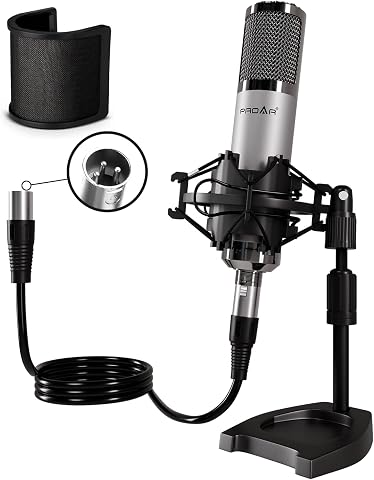 XLR Condenser Microphone with Desktop Stand for Vocals and PodcastingView on Amazon →
RØDE NT1 5th Generation
ThorstenMeyerAI.com places this model at number one, citing its USB-C and XLR connections. The article says this combination may suit someone who wants a direct computer connection now and the option of an XLR chain later. It does not explain whether controls or features work identically in both connection modes.
Audio-Technica AT2020
The roundup describes the AT2020 as a straightforward XLR choice. For computer recording, an XLR microphone requires an audio interface or mixer, according to the article. The supplied source offers no further model-specific findings, so the recommendation is presented as a category fit rather than a verified performance comparison.
FIFINE T669
ThorstenMeyerAI.com presents the T669 as a ready-to-use USB kit. The article suggests bundled parts may reduce separate purchases for a new recorder, but does not list the package contents or assess their quality and adjustability.
AKG P120
The roundup groups the P120 with the AT2020 as a focused XLR pick for buyers with, or planning to add, an interface. The supplied material does not specify how the two models differ in sound or features.
MAONO A04 Gen2
ThorstenMeyerAI.com groups the A04 Gen2 with the bundled setup options. The article suggests this may help someone start with fewer purchases, but gives no exact accessory list or compatibility details.
PM320S
The roundup also describes the PM320S as a kit that includes setup gear. It does not list the package contents, so readers would need to check what is included and whether it fits their desk and workflow.
RØDE NT1 Signature Series
ThorstenMeyerAI.com positions this model as a dedicated XLR microphone for buyers prioritizing a conventional studio chain over USB convenience. The supplied source does not establish its sound quality relative to the 5th Generation model.
TZ Stellar X2
The roundup likewise presents the Stellar X2 as an XLR-focused option. Its use in a computer-based setup depends on the additional gear required for XLR, according to the article. The material supplies no detailed specifications or direct comparison with the other named models.
Ninth pick not identified
The title promises a ninth pick, but the supplied source names no ninth model. Naming one would require information beyond the source material, so no product recommendation can be verified for this slot.
Tenth pick not identified
The same gap applies to the tenth slot: the supplied source names no tenth distinct microphone. The roundup’s complete 10-model selection cannot be reconstructed from the available text.
Matching Mics to Home Setups
ThorstenMeyerAI.com’s roundup emphasizes that connection type and room conditions shape a microphone purchase. It describes USB as a simpler computer connection and says XLR requires an interface or mixer for computer recording while fitting a traditional studio chain. The article presents a dual-connection model as a potentially flexible choice but does not detail how its modes compare.
The source also says condenser microphones can capture reflections and background noise, and that cardioid pickup does not eliminate sound from the sides or rear. It identifies placement and room treatment as factors that may affect a recording. The roundup mentions bundled stands and filters as potentially useful for new users but does not establish their quality or suitability.
How the Roundup Ranks Models
ThorstenMeyerAI.com says it ranked models for distinct recording needs, weighing flexibility, setup requirements and accessories. The article describes USB as simpler for direct computer use and XLR as requiring extra equipment while allowing more freedom to change studio components.
The source advises budgeting for the complete signal chain, including items such as an interface, cable, stand or pop filter where needed. It also says buyers should consider their room and likely recording sources. The supplied material provides no publication date beyond the 2026 framing, and no price or testing data.
Two Picks Remain Unnamed
Two of the promised 10 microphones are missing from the supplied ThorstenMeyerAI.com source, which identifies eight distinct models. The material also does not provide model-by-model measurements, test methods, current prices or full accessory lists. It is unclear whether those details appear elsewhere in the original roundup.
The ranking is an editorial assessment attributed to ThorstenMeyerAI.com. The supplied material includes no independent review evidence or manufacturer statements to substantiate comparative performance claims.
Verify the Complete Selection
A complete 10-pick roundup would require the two omitted model names and their supporting descriptions, which are absent from the supplied source. Readers comparing the eight named options can check current specifications, connection requirements and package contents with retailers or manufacturers, then assess the microphone in the room and recording chain they plan to use.
Key Questions
Which microphone does the roundup rank first?
ThorstenMeyerAI.com ranks the RØDE NT1 5th Generation first, citing its USB-C and XLR connections.
How many distinct microphones are named in the supplied source?
The supplied source names eight distinct models, although its title promises 10 picks. Two models are not identified in the text provided.
Which listed options are described as USB or bundled kits?
ThorstenMeyerAI.com describes the FIFINE T669 as a ready-to-use USB kit and groups the MAONO A04 Gen2 and PM320S with bundled setup gear.
Do the XLR models need extra equipment?
According to the roundup, XLR microphones require an audio interface or mixer for computer-based recording. The article also mentions an XLR cable and stand as possible additional needs.
What does the source say about recording-room noise?
ThorstenMeyerAI.com says condenser microphones can pick up room reflections and background sounds. The roundup identifies placement and room treatment as factors to consider, and says cardioid pickup does not remove all sound from other directions.
Source: ThorstenMeyerAI.com
Halloween Picks
halloween
As an affiliate, we earn on qualifying purchases.