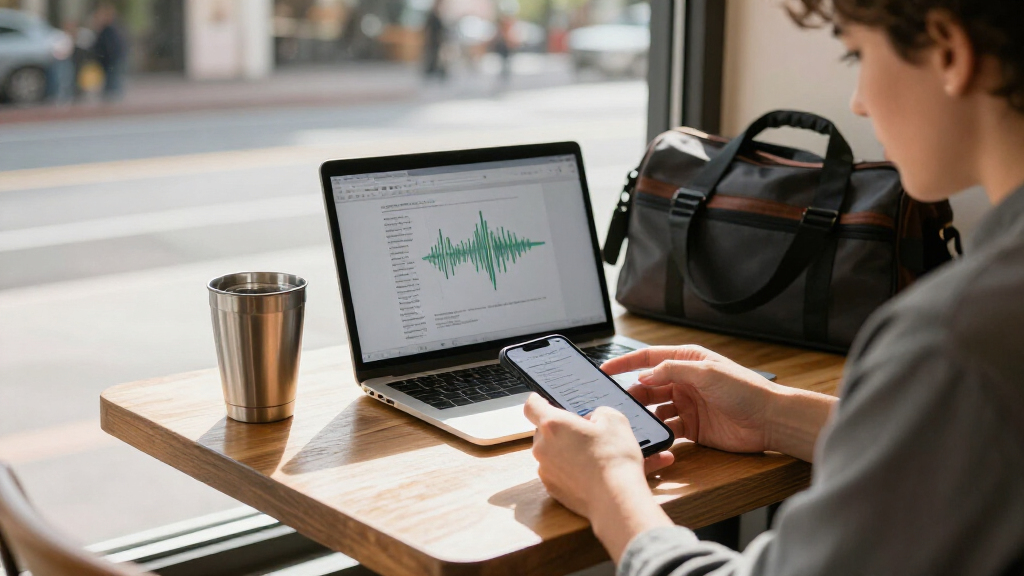

🔍 Read the full analysis: Choosing AI Transcription Software For Office And Field Work In 2027 on ThorstenMeyerAI.com

Get smart everyday buys delivered free with Prime
- Fast, free delivery on millions of items
- Prime Video, Amazon Music and more included
- Member-only deals all year
TL;DR
A product roundup from ThorstenMeyerAI.com compares 11 tools spanning AI recording devices, dictation software and traditional transcription programs. It highlights viaim NoteKit for meeting capture, OM SYSTEM AS-2700 for a recorder-and-software workflow, and manual transcription tools for users who need playback control; accuracy, privacy and language details still require verification.
ThorstenMeyerAI.com’s 2027 buyer guide compares 11 transcription products for office and field work, from AI meeting recorders to desktop software for manually typing from audio, as detailed in the original analysis. The guide names the viaim NoteKit as its overall pick for meeting capture and AI assistance, while stressing that the best choice depends on the task, device compatibility, privacy needs and whether users want automated transcripts or hands-on playback control.
The roundup treats products as tools for different jobs rather than interchangeable options. AI recorders focus on capturing audio and producing transcripts, sometimes with summaries or translation. By contrast, Express Scribe and SpeechExec support more controlled audio playback and manual transcription, a workflow that can include a foot pedal.
Among the named picks, the guide describes the OM SYSTEM AS-2700 as a hardware-and-software transcription kit and PenPower AI VoiceWriter as an option for dictating directly into writing tools. It identifies CortexaNote N1 as aimed at clinicians and says the MMQ recorder emphasizes translation. These are descriptions in the source guide, not independent assessments of product performance.
The guide says it ranked products by fit with intended workflows, including capture, dictation, summaries or translation where specified, compatibility cues, and included hardware. It does not provide comparative accuracy test results or establish that every product performs equally well across languages, recording conditions or operating systems.
The 11 picks
- 1
 OM SYSTEM AS-2700 Audio Transcription KitView on Amazon →
- 2
 Philips SpeechExec Transcribe Software, 2-Year Subscription, Version 11.5View on Amazon →
- 3
 Express Scribe Pro Transcription Software with Infinity IN-USB-3 USB Foot PedalView on Amazon →
- 4
 CortexaNote N1 AI Voice Recorder for CliniciansView on Amazon →
- 5
 Express Scribe Pro Transcription Software for PC and Mac (CD-ROM)View on Amazon →
- 6
 OLZO AI Voice Recorder with Transcription and SummariesView on Amazon →
- 7
 viaim NoteKit AI Meeting Assistant and Voice RecorderView on Amazon →
- 8
 Express Scribe Transcription Software – Use with Foot PedalView on Amazon →
- 9
 MMQ AI Voice Recorder with Real-Time Translation and TranscriptionView on Amazon →
- 10
 PenPower AI VoiceWriter Dictation and Writing Assistant for Windows and MacView on Amazon →
- 11
 AI Voice Recorder with Magnetic Back, Transcription and SummariesView on Amazon →
Choosing Around the Audio Workflow
The comparison matters because a tool that records a meeting is not necessarily suited to editing long interviews, dictating documents or processing files supplied by other people. Matching the product to the audio’s source can prevent extra steps: buyers should map how a recording moves from capture through correction to a finished transcript before settling on a device or desktop program.
For field teams, a recorder’s portability and capture process may be central. In offices handling existing audio files, playback controls and compatibility with current equipment may matter more than automated summaries. Human review remains relevant, particularly when a mistaken word could alter a record, instruction or published account. The guide advises testing representative audio rather than treating a clean-looking summary as proof that a transcript is complete.
Products Worth Considering

Apple Mac mini (2018), 3.0 GHz 6-Core Intel Core i5, 32 GB RAM, 256 GB SSD

Dell UltraSharp 27 Thunderbolt Hub Monitor (U2726DER), QHD

Logitech MX Master 4 for Mac Wireless Ergonomic Mouse, White Silver
As an affiliate, we earn on qualifying purchases.
Automation and Manual Transcription
The lineup covers several categories: standalone AI recorders, a clinician-oriented recorder, dictation software, a translation-focused recorder, and traditional transcription programs. The source guide’s central distinction is between automated convenience—capture followed by transcription or review features—and manual control, where users play back audio, correct it and type with software or a foot pedal.
Those categories can overlap, but product labels alone do not establish what a buyer can do. A recorder may generate text without providing the editing workflow needed for long recordings, while a transcription program may not capture live meetings. The roundup urges buyers to check file formats, device compatibility, language support and privacy terms for the specific product and service they intend to use.
Accuracy and Privacy Need Checking
The supplied material does not include independent tests, pricing, a publication date, or detailed specifications for all 11 products. It also does not establish transcription accuracy, supported languages, platform compatibility, or whether audio is processed locally or uploaded to a service. Those details should not be inferred from a product’s category or from the presence of AI features.
Audio quality can vary with microphone placement, background noise, overlapping speakers, accents and specialist vocabulary. For sensitive or regulated recordings, the guide recommends checking processing location, retention periods, access controls and deletion options, then confirming that the workflow meets organizational rules. Recording consent requirements also remain the responsibility of the user; a convenient recorder does not settle them.
Test Before Adopting a Tool
The next step for buyers is to test shortlisted products using realistic recordings: the languages, terminology, noise levels and speaker patterns they encounter in daily work. Compare the transcript against the audio, assess how easily errors can be corrected, and check whether summaries preserve the details users need. Verify privacy and compatibility terms with the vendor and, where relevant, the organization’s IT or compliance team before uploading confidential material.
The guide offers a starting point rather than a final verdict on performance. A purchase decision should follow confirmation of the required workflow, service conditions and hardware fit. The source material does not state whether further product testing or updates to the roundup are planned.
Key Questions
Which product does the guide name as its overall pick?
The guide names the viaim NoteKit AI Meeting Assistant and Voice Recorder for buyers seeking meeting capture paired with AI assistance. That recommendation reflects the guide’s stated workflow ranking, not a published independent accuracy test.
What is the difference between an AI recorder and transcription software?
In the roundup, AI recorders are primarily for capturing audio and generating transcripts or related features. Programs such as Express Scribe and SpeechExec are presented as options for controlled playback and manual transcription, sometimes with a foot pedal.
Does the roundup verify transcription accuracy?
No comparative accuracy results are included in the supplied material. Accuracy can vary with recording conditions and vocabulary, so buyers should test their own representative audio and plan for human review where errors matter.
What should users check before recording confidential audio?
Check where audio and transcripts are processed, how long they are retained, who can access them, and whether deletion controls are available. Confirm the product’s terms meet relevant organizational rules, and follow applicable recording consent requirements.
Source: ThorstenMeyerAI.com