🔍 Read the full analysis: The AI Tower In Focus: Twelve Rooms Of Responsible AI Application on ThorstenMeyerAI.com

Get smart everyday buys delivered free with Prime
- Fast, free delivery on millions of items
- Prime Video, Amazon Music and more included
- Member-only deals all year
TL;DR
The AI Tower introduces twelve key areas for responsible AI application, offering practical insights into building, managing, and understanding AI systems. This development aims to promote safer, more transparent AI use across industries.
Thorsten Meyer AI has unveiled the AI Tower, a virtual platform designed to educate users on responsible AI practices through twelve interactive rooms. This initiative aims to foster safer and more transparent AI deployment by providing practical guidance on key questions surrounding AI use, accessible directly in web browsers without sign-up or tracking.
The AI Tower is part of Meyer’s Inside AI series, following previous installments focused on AI museums and engine rooms. It features twelve dedicated rooms, each addressing a specific aspect of responsible AI application, such as how AI answers from personal documents, builds custom assistants, writes prompts, and automates tasks. The platform emphasizes transparency, safety, and user control, offering hands-on experiments in a browser environment that works on phones, tablets, and computers.
According to Meyer, the platform is designed to be accessible and practical, allowing users to test AI functionalities directly—such as linking AI to personal or organizational documents, setting up custom assistants, and understanding AI automation workflows—without requiring programming skills. The platform also highlights limitations, such as potential inaccuracies in retrieval-based answers and the importance of verifying AI sources, reflecting ongoing concerns about AI reliability and safety.
Inside AI · Responsible application
The AI Tower In Focus
Twelve interactive rooms turn responsible AI questions into practical browser-based experiments—designed to make systems easier to understand, test, and use with care.
01 / The development
A hands-on guide to AI
Part of Thorsten Meyer AI’s Inside AI series, following earlier explorations of AI museums and engine rooms.
The AI Tower is a virtual platform for learning how AI tools work and where care is needed. Its twelve rooms address practical topics such as answering questions from personal documents, building custom assistants, writing prompts, and automating tasks.
Visitors can explore directly in a web browser on phones, tablets, or computers. The experience is presented without sign-up or tracking and is intended for developers, organizations, and everyday users alike.
Its central promise: make experimentation accessible while keeping transparency, safety, and user control in view.
02 / Inside the tower
Twelve rooms, practical questions
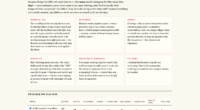
Each room is framed around an AI capability or workflow. The themes below summarize the areas highlighted in the platform description.
Ask your files
Connect AI to personal or organizational documents and explore document-based answers.
Build a helper
Give an assistant instructions and materials for a specific task, then test its responses.
Write with intent
See how clear instructions shape the results an AI system produces.
Map the workflow
Understand how AI can connect steps—and why each handoff needs attention.
Try before use
Experiment with capabilities in a browser environment before relying on them.
Check the answer
Review sources and claims instead of treating fluent output as proof.
See what is happening
Build a clearer picture of how an AI task uses instructions and information.
Consider the risks
Notice where errors, misuse, or overreliance could affect people and work.
Keep people involved
Explore ways to make AI use understandable and subject to human judgment.
Learn in a browser
Use the platform across phones, tablets, and computers without programming skills.
Recognize uncertainty
Learn that retrieval and automation can still produce incomplete or incorrect results.
Bring it to practice
Consider how responsible principles apply to real workflows across sectors.
03 / Responsible deployment
Three principles to carry forward
The platform’s educational approach responds to growing reliance on AI in daily workflows and the need to understand its limits.
Transparency
Help people understand what a system is doing, what information it uses, and where its answer comes from.
Safety
Expect errors and consider how misuse, misinformation, or automation failures could cause harm.
User control
Keep people able to test, question, and verify AI outputs before acting on them.
04 / A closer look
Retrieval helps. Verification still matters.
Retrieval-augmented generation gives an AI system relevant documents to use when answering a question.
Grounding an answer in documents can help, but it does not guarantee accuracy. The supplied material may be incomplete, the system may misread it, or the answer may cite sources poorly.
The article cites a 2024 Stanford report and says retrieval-based answers can be incorrect or poorly sourced in up to 33% of cases. Treat that figure as a reported limitation, not a universal rate for every system or task.
Reported error or source issues in some RAG cases
Practice: verify important claims against the original documents and check whether cited sources support the answer.
05 / From learning to use
A responsible adoption loop
Hands-on learning is a starting point. Real-world impact depends on feedback, careful use, and continued updates.
Explore
Try capabilities in the browser and understand the workflow.
Verify
Check answers, sources, and failure cases before relying on results.
Apply
Use AI with clear human oversight in a real task or setting.
Improve
Gather feedback and update guidance as tools and risks change.
06 / Open questions
What comes next?
The long-term effect of an educational platform depends on whether lessons carry into everyday decisions.
Will it change practice at scale?
The platform’s influence on user behavior and industry standards remains to be evaluated.
Can guidance keep pace?
Rapid AI advances bring new questions, including misinformation and automation errors.
How will the content improve?
Meyer’s team plans to gather user feedback to refine the platform’s content and usability.
Where could it be adopted?
Expected outreach includes educational institutions, industry groups, and regulators; real-world outcomes will need monitoring.
07 / Key questions
Quick answers
What is the AI Tower for?
It teaches responsible AI practices through practical lessons across twelve areas, emphasizing transparency, safety, and user control.
Can I try it without signing up?
Yes. The platform is described as browser-accessible across phones, tablets, and computers without sign-up or tracking.
How do custom assistants work?
Users can provide instructions and documents to create helpers for specific tasks, then test how they perform.
What is the long-term goal?
To encourage wider understanding and adoption of responsible AI principles across sectors.
Implications for Responsible AI Deployment
The AI Tower serves as a practical resource to promote responsible AI practices among a broad audience, including developers, businesses, and individual users. By emphasizing transparency, safety, and user control, it aims to mitigate risks associated with AI misuse or misunderstanding. As AI systems become more integrated into daily workflows, such educational tools are critical in fostering trust and ensuring ethical deployment, especially given the documented limitations of retrieval-augmented generation and automation errors.
This initiative aligns with ongoing industry and regulatory efforts to establish standards for responsible AI, making it a relevant development for policymakers, technologists, and users seeking safer AI integration.
As an affiliate, we earn on qualifying purchases.
Background on Responsible AI Education
Thorsten Meyer AI’s Inside AI series has previously explored foundational AI topics, including museums of AI and engine rooms that demystify AI mechanics. The launch of the AI Tower builds on this educational mission by offering an interactive, accessible platform for understanding complex AI concepts in a practical manner. The platform reflects broader industry trends emphasizing transparency, safety, and user empowerment, especially as AI adoption accelerates across sectors.
Recent studies, such as a 2024 Stanford report, highlight ongoing challenges with AI reliability, particularly in retrieval-augmented generation, where answers can be incorrect or poorly sourced. The AI Tower’s focus on hands-on experimentation aims to address these issues by encouraging users to verify AI outputs and understand underlying mechanisms.
“The AI Tower is designed to make responsible AI practices accessible and understandable for everyone, from developers to everyday users.”
— Thorsten Meyer
As an affiliate, we earn on qualifying purchases.
Unresolved Challenges and Future Developments
While the AI Tower offers practical guidance, it is not yet clear how effectively it will influence responsible AI practices at scale. Its impact on user behavior and industry standards remains to be seen. Additionally, the platform’s ability to keep pace with rapid AI advancements and address emerging risks, such as misinformation or automation errors, is still developing. The long-term effectiveness of this educational approach and its integration into broader regulatory frameworks are also uncertain.
As an affiliate, we earn on qualifying purchases.
Next Steps for Adoption and Impact Evaluation
Following the launch, Meyer’s team plans to gather user feedback to refine the platform’s content and usability. Broader outreach efforts are expected to include collaborations with educational institutions, industry groups, and regulators to embed responsible AI principles more deeply. Monitoring how users apply these lessons in real-world scenarios will be critical, alongside ongoing updates to address new AI challenges and incorporate technological advances.
As an affiliate, we earn on qualifying purchases.
Key Questions
What is the main purpose of the AI Tower?
The AI Tower aims to educate users about responsible AI practices through interactive, practical lessons across twelve key areas, promoting transparency, safety, and user control.
Can I try the AI Tower without signing up?
Yes, the platform is accessible directly in web browsers on phones, tablets, and computers without requiring sign-up, cookies, or tracking.
What are retrieval-augmented generation and its limitations?
Retrieval-augmented generation (RAG) is a method where AI fetches relevant documents to answer questions. It can still produce incorrect answers or source errors in up to 33% of cases, highlighting the importance of verification.
How does the platform help with building custom AI assistants?
Users can give instructions and upload documents to create tailored AI helpers for specific tasks, testing their performance before deployment.
What is the long-term goal of the AI Tower?
To promote widespread understanding and adoption of responsible AI principles, encouraging safer and more transparent AI use across various sectors.
Source: ThorstenMeyerAI.com
Halloween Picks
halloween
As an affiliate, we earn on qualifying purchases.