
When comparing Gold and Bitcoin IRAs, you’ll find each offers distinct advantages and risks. Bitcoin promises high returns but comes with significant volatility, while gold provides a steady, stable growth as a reliable store of value. Storage is easier for Bitcoin, thanks to digital wallets, while gold requires physical storage in depositories. Both can complement each other in your portfolio, influencing your strategy. There’s more to explore about their market dynamics and future prospects.
Key Takeaways
- Bitcoin IRAs offer high returns with significant volatility, appealing to risk-tolerant investors seeking growth opportunities.
- Gold IRAs provide stability and a reliable store of value, making them suitable for conservative investors focused on capital preservation.
- Combining Bitcoin and gold in a portfolio can manage risk while pursuing growth tailored to individual financial goals.
- Bitcoin’s digital nature allows for quick trades, whereas gold requires physical storage, impacting liquidity and accessibility.
- Diversifying investments between gold and Bitcoin optimizes strategies in light of differing market supports and future outlooks.
Investment Characteristics and Returns

When considering investment characteristics and returns, you’ll find that Bitcoin IRAs have historically outperformed gold, especially since Bitcoin’s inception in 2009. While Bitcoin offers the potential for high returns, it comes with significant volatility, often experiencing double-digit price swings. This makes it a riskier choice compared to gold, which tends to provide stability and steady growth, appealing to conservative investors. Gold’s value is rooted in its historical use and scarcity, making it a reliable store of value over time. In contrast, Bitcoin’s value largely depends on speculative demand and market sentiment. As you weigh your options, consider your risk tolerance and investment goals to determine which asset aligns best with your financial strategy. Additionally, just as monitoring fetal development is crucial during pregnancy, keeping an eye on market trends is vital for informed investment decisions.
Storage and Accessibility
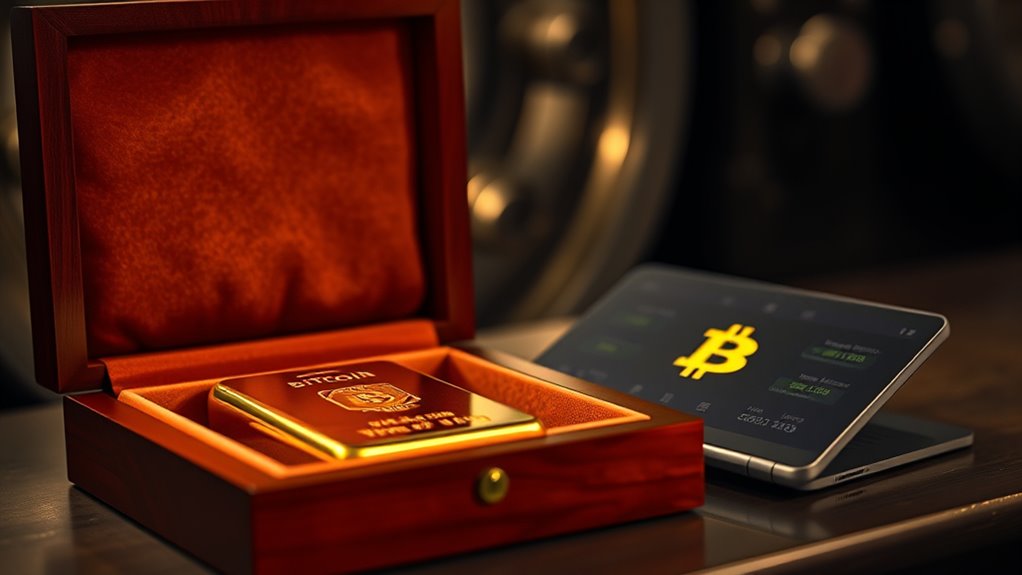
As you explore storage and accessibility options for your investments, it is essential to understand the key differences between Bitcoin and gold IRAs. Bitcoin is stored electronically in digital wallets or custodial accounts approved by the IRS, offering almost instant liquidity for trades or transfers. In contrast, gold IRAs require physical storage in IRS-approved depositories, which can lead to higher costs and less liquidity, as you must manage handling fees and premiums. Additionally, investing in cryptocurrencies typically involves self-directed accounts, while traditional IRAs may only allow crypto ETFs. This difference in storage considerably impacts how quickly you can access your assets, making Bitcoin a more accessible choice for those looking for immediate trading opportunities.
Inflation Hedge Potential

While both gold and Bitcoin are often considered as potential hedges against inflation, they approach this role in different ways. Gold has a long history of preserving value during inflationary periods, making it a trusted option for many investors. Its track record spans thousands of years, providing stability and reliability. On the other hand, Bitcoin’s inflation hedging potential stems from its capped supply of 21 million coins, designed to resist inflation over time. However, Bitcoin’s relatively short history makes it less proven compared to gold. While some see Bitcoin as a speculative asset with inflation resistance, it requires careful monitoring due to evolving market dynamics. Ultimately, your choice may depend on your investment strategy and risk tolerance. Additionally, understanding the importance of risk assessments can enhance your investment decision-making process.
Risk Profiles and Suitability
Understanding the risk profiles and suitability of Bitcoin and gold IRAs is essential for aligning your investments with your financial goals. If you have a higher risk tolerance and seek potential high returns, a Bitcoin IRA might be suitable for you. However, keep in mind that its volatility can lead to significant price swings. On the other hand, if you prefer stability and long-term capital preservation, a gold IRA aligns well with conservative investment strategies. Gold is less susceptible to market shocks, making it a safer choice for risk-averse investors. Balancing both assets in your portfolio can help you manage risk while pursuing growth, allowing you to tailor your investment strategy to your unique financial situation. Additionally, incorporating eco-friendly options like sustainable investments can further diversify your portfolio while supporting responsible practices.
Market Support, Regulation, and Future Outlook

Although both gold and Bitcoin enjoy distinct market support and regulatory environments, their future outlooks diverge considerably. Gold benefits from robust institutional backing, with central banks and investment funds consistently supporting its value. This foundation provides you with confidence in gold’s stability. In contrast, Bitcoin’s ecosystem is evolving rapidly, with emerging ETFs and trading platforms, yet it faces significant regulatory scrutiny. While Bitcoin’s integration into retirement portfolios is increasing, it must contend with competition from Central Bank Digital Currencies and altcoins. As you evaluate these assets, consider that gold offers a more established path, while Bitcoin presents a speculative opportunity filled with potential but also volatility. Balancing both could enhance your investment strategy. Additionally, newborn feeding options highlight the importance of diversifying your investments as you would diversify your baby’s nutrition for optimal growth.
Frequently Asked Questions
How Do I Choose Between a Gold IRA and a Bitcoin IRA?
To choose between a gold IRA and a Bitcoin IRA, assess your risk tolerance and investment goals. If you prefer stability and long-term growth, go for a gold IRA. If you’re comfortable with volatility and seek higher returns, consider a Bitcoin IRA. Think about your liquidity needs and how each asset fits into your overall portfolio strategy. Diversifying between both could also help balance risk and reward in your retirement plan.
What Are the Fees Associated With Gold and Bitcoin IRAS?
You’d think investing in gold would be straightforward, but surprise—there are fees! Gold IRAs typically involve storage fees, dealer premiums, and custodial fees, which can add up. On the other hand, Bitcoin IRAs often come with lower transaction fees but might have higher fees for wallet storage. Each has its own quirks, so you’ll want to review the fee structures carefully to make certain you’re not caught off guard.
Can I Convert My Existing IRA to a Bitcoin or Gold IRA?
Yes, you can convert your existing IRA to a Bitcoin or gold IRA. You’ll need to initiate a rollover process, which involves transferring your funds to a self-directed IRA provider that allows these assets. Make sure to adhere to IRS regulations to avoid taxes or penalties. It’s wise to consult with a financial advisor to understand the implications and ensure you’re making the best choice for your investment goals.
Are There Minimum Investment Requirements for Gold and Bitcoin IRAS?
Yes, there are minimum investment requirements for both gold and Bitcoin IRAs. Typically, you’ll find that gold IRAs require a minimum of $5,000 to $10,000, while Bitcoin IRAs often have lower thresholds, sometimes starting around $1,000. Keep in mind, though, that individual providers may have different policies, so check their specific terms. By understanding these requirements, you can better plan your investment strategy and make informed decisions about your retirement portfolio.
How Do I Withdraw Funds From Gold and Bitcoin IRAS?
To withdraw funds from your gold or Bitcoin IRA, you’ll need to follow specific procedures. For gold, contact your custodian to arrange for the physical delivery or sale of your bullion. For Bitcoin, you can request a direct transfer to your digital wallet or sell it for cash. Keep in mind that taxes may apply, so consider consulting a tax professional to understand the implications of your withdrawal.
Conclusion
In the dance of investment, gold shines with timeless stability, while Bitcoin twinkles with the allure of innovation. As you weigh these two alternative assets, envision a balanced scale—one side drenched in the warm glow of gold, the other flickering with the electric pulse of cryptocurrency. Both can fortify your financial future, but it’s up to you to find harmony between tradition and technology. Choose wisely, and let your portfolio bloom in the light of both worlds.