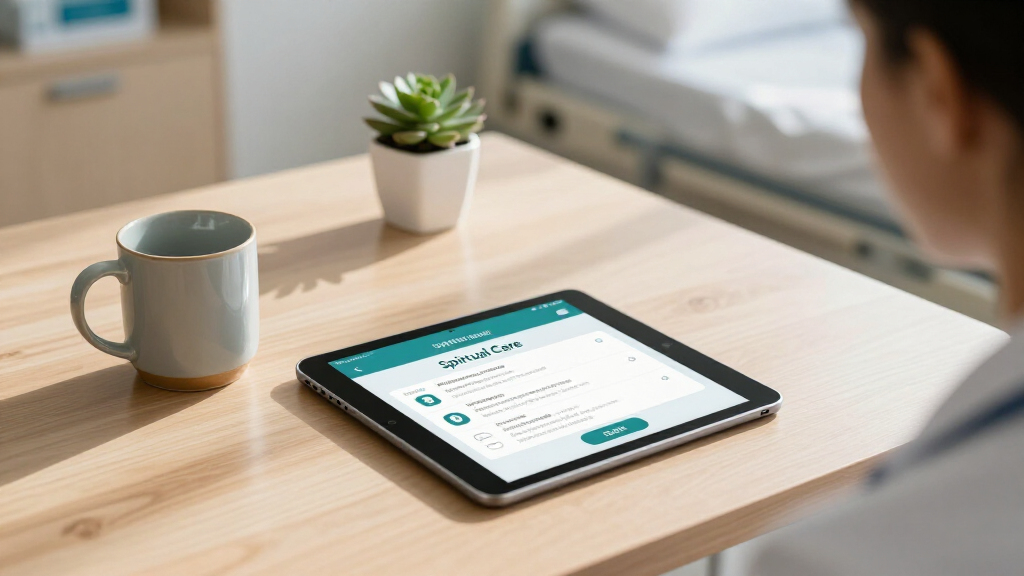

📊 Full opportunity report: How Modern Software Supports Hospital Chaplaincy And Spiritual Care on IdeaNavigator AI — validation score, market gap, and execution plan.

Get smart everyday buys delivered free with Prime
- Fast, free delivery on millions of items
- Prime Video, Amazon Music and more included
- Member-only deals all year
TL;DR
A new software prototype is being tested at a mid-sized hospital to digitize chaplaincy workflows, including scheduling and visit logging. This development aims to improve documentation, efficiency, and compliance in spiritual care services.
A hospital chaplaincy department is testing a new operations software aimed at replacing manual scheduling and paper-based visit logs. This development addresses long-standing inefficiencies and documentation gaps in spiritual care, with the potential to standardize and digitize chaplaincy workflows.
The software prototype focuses on two core workflows: automated rotation scheduling with real-time coverage alerts, and structured visit logging that records spiritual distress levels, family decision-makers, religious traditions, and follow-up needs. These features are designed to streamline administrative tasks, improve accuracy, and facilitate compliance with accreditation requirements.
According to an anonymous researcher involved in the project, the goal is to validate the software’s effectiveness through pilot testing with three chaplaincy directors at mid-sized hospitals. The pilot will measure reductions in administrative hours and improvements in same-day visit documentation rates. The software will also include a layer for religious matching and accreditation reporting once initial workflows prove reliable.
Implications for Hospital Spiritual Care Efficiency
This initiative represents a significant step toward modernizing hospital chaplaincy services, which have traditionally relied on manual and paper-based processes. Automating scheduling and documentation can reduce administrative burdens, improve accuracy, and ensure better compliance with healthcare standards and accreditation bodies. As hospitals digitize clinical functions, integrating spiritual care into electronic health records becomes increasingly important for holistic patient management and reporting.
hospital chaplaincy scheduling software
As an affiliate, we earn on qualifying purchases.
As an affiliate, we earn on qualifying purchases.
Background on Digital Transformation in Healthcare
While most clinical departments have adopted digital tools for patient records and operations, hospital chaplaincy remains one of the last areas relying heavily on manual methods such as handwritten notes and group texts for on-call rotations. Healthcare systems are under pressure to standardize and document all aspects of patient care, including spiritual support, especially as accreditation reviews now require documented evidence of spiritual and emotional care provision. The development of dedicated software for chaplaincy workflows is a response to this broader trend of digital transformation in healthcare.
“The goal is to create a reliable, easy-to-use platform that reduces administrative time and improves documentation quality in hospital spiritual care.”
— an anonymous researcher
digital visit logging system for hospitals
As an affiliate, we earn on qualifying purchases.
As an affiliate, we earn on qualifying purchases.
Uncertainties About Software Adoption and Impact
It is not yet clear how widely this software will be adopted across different hospital settings or how much it will reduce administrative workload in practice. The pilot is ongoing, and detailed results on efficiency gains and user satisfaction are still to be reported. Additionally, integration with existing electronic health record systems remains a technical challenge under evaluation.
spiritual care documentation software
As an affiliate, we earn on qualifying purchases.
As an affiliate, we earn on qualifying purchases.
Next Steps in Pilot Testing and Evaluation
The pilot program will continue over the coming months, with data collection on workflow efficiency and documentation accuracy. If successful, the developers plan to refine the platform based on user feedback and expand testing to additional hospitals. A broader rollout could follow within the next year, alongside efforts to integrate the software with existing hospital information systems.
healthcare accreditation reporting tools
As an affiliate, we earn on qualifying purchases.
As an affiliate, we earn on qualifying purchases.
Key Questions
What specific workflows does the new software support?
The software supports automated rotation scheduling with coverage alerts and structured visit logging, including details like spiritual distress levels, family decision-makers, and follow-up needs.
How will this software improve hospital chaplaincy services?
It aims to reduce administrative hours, improve documentation accuracy, and facilitate compliance with accreditation standards, ultimately enhancing the quality of spiritual care.
Is this software available for hospitals outside the pilot program?
Currently, the software is in pilot testing at a mid-sized hospital, with plans for broader development if initial results are positive.
What technical challenges are involved in integrating with existing hospital systems?
Integration with electronic health records and existing hospital IT infrastructure remains a key challenge under evaluation, with technical feasibility and data security being priorities.
When can hospitals expect to see wider adoption of this software?
If pilot results are favorable, a broader rollout could occur within the next 12 months, pending further development and integration efforts.
Source: IdeaNavigator AI
Columbus Day / Indigenous Peoples' Day Picks
long weekend sales
As an affiliate, we earn on qualifying purchases.