
📊 Full opportunity report: Appointment no-show recovery planner for therapy practices on IdeaNavigator AI — validation score, market gap, and execution plan.

Get smart everyday buys delivered free with Prime
- Fast, free delivery on millions of items
- Prime Video, Amazon Music and more included
- Member-only deals all year
TL;DR
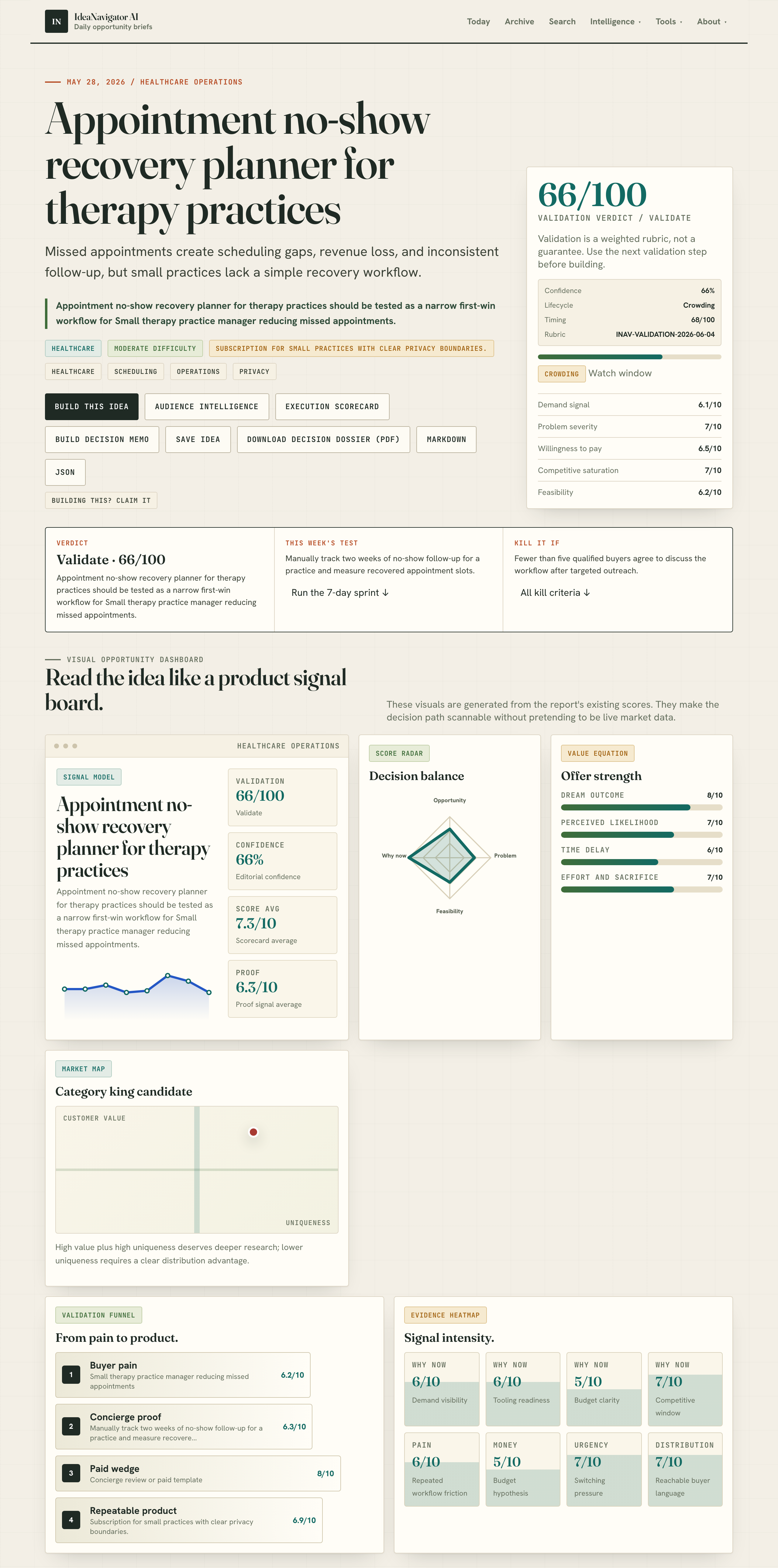
A new workflow tool for small therapy practices aims to reduce missed appointments by tracking no-shows, reminders, and rescheduling efforts. It is currently in testing, with plans for a subscription-based model.
A new appointment no-show recovery planner is being tested for small therapy practices to help reduce missed appointments and improve scheduling efficiency. The tool aims to log missed visits, automate reminder attempts, and streamline rescheduling efforts, addressing a common challenge for small practices.
The proposed workflow is designed specifically for small therapy practices that lack simple, operational tools to manage no-shows. It involves a non-clinical tracker that records missed appointments, sends automated reminders, and tracks outreach attempts. The initial testing phase involves manually tracking two weeks of follow-up efforts to measure how many appointment slots can be recovered.
According to the developers, the goal is to create a subscription-based platform that offers these features with clear privacy boundaries, making it accessible and easy to integrate into existing practice management routines. The focus is on operational improvements rather than clinical interventions, aligning with current needs for practical tools in healthcare operations.
Operational Impact for Small Therapy Practices
This development could significantly improve scheduling efficiency and revenue stability for small therapy practices by reducing the number of missed appointments. As missed sessions lead to gaps in scheduling and income loss, an effective recovery tool could help practices better follow up with clients and optimize their appointment slots, ultimately enhancing service delivery and financial health.
Products Worth Considering

FLEXISPOT 3-in-1 Convertible Chair and Table for Four

Logitech MX Master 4 Ergonomic Wireless Mouse with Haptics – Graphite

Apple Mac mini Desktop Computer with M5 Pro Chip (2026)
As an affiliate, we earn on qualifying purchases.
Addressing a Common Practice Management Challenge
Missed appointments are a widespread issue in therapy practices, especially small ones lacking dedicated operational tools. Currently, many practices rely on manual follow-up, which can be inconsistent and time-consuming. The idea of a simple, dedicated no-show recovery workflow has been gaining interest as a way to address these gaps without requiring clinical interventions. This initiative follows broader trends in healthcare operations to adopt lightweight, scalable tools that improve efficiency without overstepping clinical boundaries.
“The goal is to create a straightforward workflow that helps small practices recover missed appointments without adding clinical complexity.”
— an anonymous researcher
Details of Implementation and Effectiveness Still Unclear
It is not yet confirmed how effective the no-show recovery planner will be in practice, as testing is still in early phases. The actual impact on recovered appointment slots, patient engagement, and practice revenue remains to be measured. Additionally, questions about integration with existing practice management systems and privacy safeguards are still open.
Planned Pilot Testing and Evaluation Metrics
The next steps involve conducting a two-week manual tracking period to assess how many missed appointments can be recovered using the new workflow. If successful, developers plan to refine the tool and prepare for broader deployment through a subscription model. Further evaluation will focus on user feedback, effectiveness, and integration challenges.
Key Questions
How will the no-show recovery planner work in practice?
The tool will log missed appointments, attempt automated reminders, and track outreach efforts to reschedule clients, aiming to recover as many missed slots as possible.
Is this tool intended to replace existing practice management software?
No, it is designed as a lightweight, non-clinical addition focused specifically on no-show recovery, meant to complement current systems.
Will this be available for all therapy practice types?
The initial testing targets small practices, with plans to expand if proven effective. Details on broader applicability are still emerging.
What privacy protections will be in place?
Developers emphasize clear privacy boundaries, with data handling focused solely on operational follow-up without accessing sensitive clinical information.
When will the tool be generally available?
A timeline has not yet been announced; the current phase involves testing and refinement before potential wider rollout.
Source: IdeaNavigator AI