

In 2025, non-Bitcoin altcoins will reshape the crypto landscape through innovations in AI integration, tokenization, and decentralized finance. You’ll see projects that enhance liquidity and enable fractional ownership, making investments more accessible. Institutional interest will grow, particularly in ETFs targeting altcoins, driving market dynamics. As regulatory clarity increases, altcoin adoption will flourish. Get ready to explore how these trends will redefine your approach to cryptocurrency and investment opportunities.
Key Takeaways
- AI-driven altcoins are revolutionizing the crypto landscape, with over 200 tokens valued at over $36 billion enhancing blockchain technology integration.
- Tokenization of real assets into digital tokens is improving liquidity and enabling fractional ownership, democratizing access to high-value investments.
- The rise of stablecoins is enhancing transaction efficiency and reducing volatility risks, facilitating seamless swaps between altcoins and traditional finance.
- Institutional inflows through ETFs are driving significant altcoin growth, with projected investments in Solana and XRP expected to invigorate the market further.
- DeFi integration with tokenized assets is creating innovative financial products, expanding investment opportunities and market inclusivity across altcoin ecosystems.

Tokens for Artificial Intelligence: How Render (RNDR), Bittensor (TAO), and Fetch.ai (FET) are shaping the economy of the future
As an affiliate, we earn on qualifying purchases.
As an affiliate, we earn on qualifying purchases.
AI-Driven Altcoins: Transforming the Crypto Landscape

How are AI-driven altcoins reshaping the crypto landscape? You’re witnessing a remarkable fusion of artificial intelligence and blockchain technology. Projects like Render enable decentralized video rendering, allowing GPU sharing through the blockchain. The Artificial Superintelligence Alliance is also making waves, merging platforms like SingularityNET and Fetch.ai under a unified token, which decentralizes AI development. With over 200 AI-related tokens boasting a market value exceeding $36 billion, you’re seeing significant growth in this niche. Tokens like BitTensor (TAO) are leading the charge, offering various functions such as payments and governance rights. As these innovations unfold, you’re not just observing a new financial ecosystem; you’re participating in a transformative shift that promises to redefine how we interact with technology and cryptocurrencies. This evolution echoes the importance of open communication about feelings as individuals navigate the complexities of these changes.

Real-World Asset Tokenization.: A practical and accessible guide for everyone.
As an affiliate, we earn on qualifying purchases.
As an affiliate, we earn on qualifying purchases.
Institutional Capital: Fueling Altcoin Growth

In 2025, institutional capital is playing a vital role in driving altcoin growth, with significant inflows into ETFs and other investment vehicles. You’ll notice how the surge in altcoin trading dynamics reflects the increasing interest from hedge funds and institutional traders. This shift not only boosts liquidity but also reshapes the overall altcoin market landscape. Moreover, the influence of color accuracy in visual representations of market trends is becoming more critical as institutions seek to present data effectively.
Institutional Inflows Surge
As institutional investors increasingly recognize the potential of altcoins, their inflows are markedly reshaping the market landscape. You’ll notice Bitcoin’s dominance dipping below 59%, signaling a shift in investor focus. In August 2025, Ether ETFs alone attracted nearly $4 billion, showcasing strong institutional demand. Meanwhile, the potential approval of Solana and XRP ETFs could unbind inflows between $4.3 billion and $8.4 billion, further energizing the altcoin market. The introduction of SOL/XRP futures options by CME has drawn hedge funds and institutional traders, amplifying interest. With altcoin trading volume on Binance Futures hitting $100.7 billion daily, it’s clear that institutional capital is a driving force, fueling altcoin growth and diversifying your investment opportunities. Furthermore, effective wall organization can enhance overall room design, making spaces more appealing to investors looking to integrate technology with lifestyle.
ETF Market Expansion
Institutional interest in altcoins is now driving a significant expansion in the ETF market. As you observe, Ether ETFs alone saw nearly $4 billion in inflows in August 2025, showcasing the growing demand for altcoin investments. With Solana and XRP ETFs under review, the potential approval of XRP could open inflows estimated between $4.3 billion and $8.4 billion. This influx of institutional capital is transforming altcoin liquidity dynamics. CME’s launch of SOL/XRP futures options has attracted hedge funds and institutional traders, further signaling confidence in altcoins. You’re witnessing a pivotal moment where regulatory clarity and ETF developments are shaping a more mature market, enticing both institutional and retail investors to explore altcoin opportunities.
Altcoin Trading Dynamics
While the altcoin market has faced challenges, the influx of institutional capital is reshaping trading dynamics and driving growth. You’ll notice Bitcoin’s dominance dipping below 59%, making room for altcoins to thrive. In August 2025, Ether ETFs saw nearly $4 billion in inflows, showcasing strong institutional demand. With XRP ETF approval likely, additional inflows between $4.3 billion and $8.4 billion could soon follow. The launch of SOL/XRP futures options has caught the attention of hedge funds, further fueling interest. Daily trading volume on Binance Futures reached a staggering $100.7 billion, primarily driven by altcoin-to-stablecoin trades. This evolving landscape emphasizes how institutional capital is vital for enhancing liquidity and propelling altcoin markets forward. Additionally, regular visits to dental check-ups are essential for maintaining overall health, which can indirectly affect investment decisions.

Decentralized Finance (DeFi) Demystified: A Practical Guide to Financial Freedom (Crypto Mastery Series: Navigating the Future of Digital Finance)
As an affiliate, we earn on qualifying purchases.
As an affiliate, we earn on qualifying purchases.
Tokenization: Redefining Ownership in Finance

Tokenization is changing how you think about ownership and finance by turning real assets into digital tokens, enhancing liquidity. With fractional ownership, you can invest in everything from real estate to art without needing a fortune. Plus, its integration with DeFi opens up new avenues for financial opportunities you might not have considered before. Additionally, fostering open dialogue and vulnerability in financial partnerships can lead to more informed investment decisions and collaborative growth.
Asset Liquidity Enhancement
As the financial landscape evolves, the concept of tokenization is reshaping how we perceive ownership and liquidity in various assets. You’ll find that tokenization converts tangible assets, like real estate and art, into digital tokens, boosting their liquidity. This shift enables you to trade and invest in fractional ownership, making it easier to enter markets that were once out of reach. By integrating tokenized assets with decentralized finance (DeFi), new financial products emerge, such as loans backed by these assets. This not only enhances market efficiency but also fosters greater inclusivity for investors. As liquidity improves, you can expect a broader range of investment opportunities and a more dynamic financial environment. Additionally, understanding networking infrastructure is crucial for effectively managing the technological backbone that supports these innovations.
Fractional Ownership Accessibility
With the advent of fractional ownership, you can now access investments that were once reserved for the wealthy elite. This transformation empowers you to invest in high-value assets, like real estate and art, by purchasing only a fraction. Tokenization plays a vital role in this shift, converting these assets into digital tokens that represent ownership. As a result, you enjoy increased liquidity and reduced barriers to entry. You don’t need substantial capital to diversify your portfolio anymore. Platforms supporting fractional ownership offer a seamless experience, allowing you to buy, sell, or trade these tokens easily. Ultimately, this innovation democratizes investing, making it possible for anyone to participate in markets previously thought inaccessible.
DeFi Integration Potential
While you might think of decentralized finance (DeFi) as a separate entity, its integration with tokenization is transforming how ownership and finance interact. You’ll find that tokenization allows real assets—like real estate, art, and gold—to be converted into fractional digital tokens, enhancing liquidity and accessibility. This innovation opens doors for new financial products, such as loans backed by tokenized assets. As you explore these developments, you’ll notice they foster greater inclusion for investors, breaking down barriers that previously limited participation. With DeFi and tokenization working together, the landscape of finance is evolving, paving the way for opportunities that redefine ownership and create more efficient markets. Embracing these changes could be key to your financial future. Additionally, this synergy mirrors the way changing gears can enhance performance in cycling, underscoring the importance of adapting to new conditions for optimized results.

Crypto for Beginners Made Easy: A Step-by-Step Guide to Safely Investing in Bitcoin, Ethereum, and Altcoins – Even If You’re Starting from Zero (Mastery Made Easy Series)
As an affiliate, we earn on qualifying purchases.
As an affiliate, we earn on qualifying purchases.

Steering the altcoin market can be challenging due to liquidity issues that often plague many tokens. Many altcoins remain significantly below their all-time highs, indicating a lack of strong market sentiment. You’ll notice that liquidity bottlenecks hinder broad rallies, making it tough for smaller tokens to gain traction. While Bitcoin and a few large-cap tokens recover, altcoin trading typically surges in niche sectors, like AI or meme coins. This uneven interest can leave you feeling uncertain about where to invest. To enhance your success, focus on understanding the interplay between institutional and retail investors, as this dynamic will be vital in shaping future liquidity trends and potential growth in the altcoin market. Additionally, exploring unique preppy dog names can help you connect with fellow crypto enthusiasts who share a passion for stylish and trendy themes.
Regulatory Clarity: Enhancing Altcoin Adoption

As regulatory clarity increases in 2025, you’re likely to see a significant boost in altcoin adoption. This shift simplifies investor participation and enhances market confidence. Here are three key ways regulatory clarity is making a difference:
- Streamlined ETF Listings: With smoother processes for altcoin ETFs, more investors can easily access diverse altcoin options.
- Improved Investor Protections: Enhanced regulations reduce the risks of speculation, making altcoins more appealing to cautious investors.
- Increased Market Liquidity: Predictions of substantial inflows from approved ETFs, like the XRP ETF, are set to invigorate altcoin markets.
Additionally, the implementation of effective fraud prevention tools will further secure the altcoin trading environment, attracting more participants.
These factors collectively create a more mature ecosystem, encouraging both retail and institutional engagement in altcoins, ultimately driving their widespread adoption.
DeFi Integration: Expanding Altcoin Use Cases
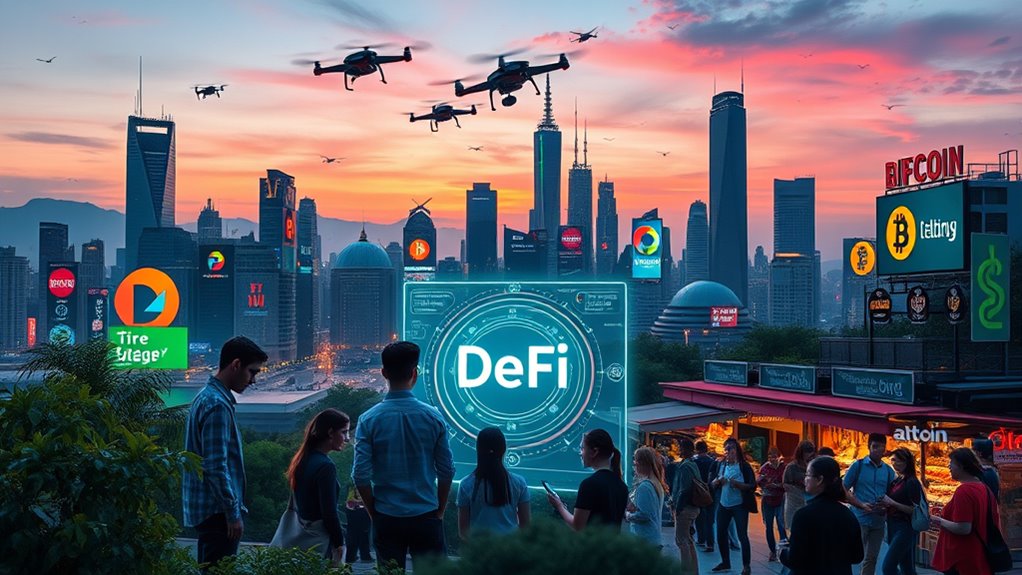
Regulatory clarity is paving the way for innovative applications in decentralized finance (DeFi), substantially expanding the use cases for altcoins. As the total value locked in DeFi surpasses $140 billion, altcoins are increasingly being utilized for lending, borrowing, and yield farming. You’ll notice that projects are tokenizing real-world assets, allowing you to collateralize loans with diverse altcoins. This integration enhances liquidity and accessibility, making it easier for you to engage in decentralized financial activities. Moreover, stablecoins are facilitating seamless altcoin-to-stablecoin swaps, which are essential for trading and liquidity. With these advancements, your opportunities in the DeFi space are growing, driving broader altcoin adoption and fostering a more efficient financial ecosystem. Additionally, understanding tax consequences related to asset transfers can further optimize your investment strategies in this evolving landscape.
Stablecoin Trends: Bridging Altcoins and Traditional Finance

While stablecoins have gained traction as a bridge between altcoins and traditional finance, their role in enhancing liquidity and stability within the crypto ecosystem is undeniable. You’ll find that stablecoins offer several key benefits:
- Facilitating Transactions: Stablecoins allow for quick and efficient transactions between altcoins and fiat currencies, reducing volatility risks.
- Enhancing Liquidity: They increase market liquidity by enabling seamless altcoin-to-stablecoin swaps, making it easier for traders to enter and exit positions.
- Encouraging Adoption: As more businesses accept stablecoins, it fosters greater acceptance of altcoins in everyday transactions, further integrating them into traditional finance.
These trends show that stablecoins are essential for bridging the gap between the crypto world and conventional financial systems, ensuring a more stable and accessible market for all.
The Rise of AI Tokens in the Altcoin Ecosystem

With the rapid advancement of artificial intelligence, AI tokens have emerged as a significant force within the altcoin ecosystem, capturing the attention of investors and developers alike. By mid-2025, over 200 AI-related tokens collectively surpassed a staggering $36 billion market value. These tokens serve multiple purposes—facilitating payments, governance rights, and access to decentralized AI services. Particularly, projects like Render and the Artificial Superintelligence Alliance are revolutionizing how we think about AI and blockchain integration. As you explore this dynamic landscape, keep an eye on leading tokens like BitTensor (TAO), which has shown impressive price gains. The rise of AI tokens signals an exciting intersection of technology and finance, inviting new opportunities for engagement in the altcoin market.
Frequently Asked Questions
What Are the Top AI Altcoins to Watch in 2025?
In 2025, you should definitely keep an eye on BitTensor (TAO), Render, and the Artificial Superintelligence Alliance’s ASI token. These projects are leading the AI altcoin space, showcasing impressive growth and innovative applications. BitTensor stands out with its decentralized ecosystem, while Render enables efficient GPU sharing. ASI aims to unify various AI platforms, potentially revolutionizing AI development and data access. With their strong market presence, these altcoins could offer great investment opportunities.
How Can Investors Assess Altcoin Project Legitimacy?
To assess altcoin project legitimacy, you should start by researching the team behind the project, examining their credentials and past successes. Check the project’s whitepaper for clarity and feasibility, and evaluate its community engagement on social media and forums. Look for partnerships and real-world use cases that demonstrate value. Additionally, review market performance and trading volume to gauge investor interest and trust. Always stay updated on regulatory developments that could impact the project.
What Risks Are Associated With Investing in Altcoins?
Investing in altcoins can feel like traversing a dense jungle—exciting but fraught with hidden dangers. You could encounter scams or projects that vanish overnight, leaving you with nothing but regret. Market volatility can spike unexpectedly, leading to significant losses, especially in a speculative environment. Additionally, regulatory changes may impact your investments. So, stay informed and vigilant to steer clear of potential pitfalls while exploring this vibrant landscape.
How Do Tokenized Assets Impact Traditional Investment Strategies?
Tokenized assets transform traditional investment strategies by increasing liquidity and accessibility. You can now invest in fractions of high-value assets like real estate or art, lowering entry barriers. This diversification allows you to explore new financial products and reduce risks. With tokenization integrated into DeFi, you gain access to innovative lending options and collateralized loans, enhancing your portfolio’s efficiency and adaptability in a rapidly evolving market landscape.
Are There Specific Altcoins Focusing on Sustainable Technologies?
In the garden of cryptocurrencies, some altcoins bloom with a focus on sustainable technologies. You’ll find projects like Cardano and Algorand championing eco-friendly solutions, utilizing energy-efficient proof-of-stake mechanisms. These altcoins aim to reduce carbon footprints while promoting greener blockchain practices. Additionally, VeChain integrates sustainability into supply chain management, ensuring transparency and accountability. By investing in these innovative projects, you’re not just supporting a financial revolution; you’re nurturing a healthier planet.
Conclusion
In 2025, altcoins are set to dance gracefully into the spotlight, blending innovation with opportunity. As AI-driven tokens and institutional investments waltz together, they’ll redefine ownership and challenge liquidity hurdles. With regulatory clarity paving the way, altcoins will find their place in the financial symphony. Together with DeFi and stablecoins, these digital assets will harmonize with traditional finance, crafting a vibrant future that invites everyone to join the exhilarating ride of the crypto revolution.