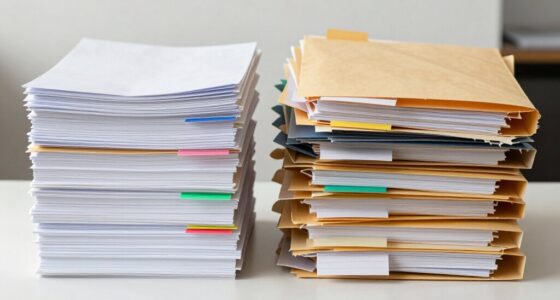
Humidity quietly weakens your paper records by absorbing moisture from the air, causing warping, curling, and physical damage that often go unnoticed. Over time, it promotes mold growth, which leads to musty odors and deteriorates the paper’s structure. Fading inks and pigments happen gradually, making damage less obvious until it’s extensive. If you want to understand how to catch these issues early and protect your documents, there’s more to discover below.

Get smart everyday buys delivered free with Prime
- Fast, free delivery on millions of items
- Prime Video, Amazon Music and more included
- Member-only deals all year
Key Takeaways
- Humidity causes gradual absorption of moisture, leading to unseen warping and curling of paper records.
- Moisture promotes mold growth and mold-related odors before physical damage is apparent.
- Fading of ink and pigments occurs silently, compromising document integrity over time.
- Physical deformation weakens paper, increasing susceptibility to tears before any visible signs appear.
- Unnoticed humidity fluctuations accelerate long-term deterioration, making early detection crucial for preservation.
Have you ever wondered how humidity can silently ruin your valuable paper records? It’s a subtle threat that often goes unnoticed until the damage is extensive. Humidity causes paper to absorb moisture from the air, which can lead to a variety of issues like warping, curling, or even mold growth. These changes don’t happen overnight, but over time, the effects become glaringly obvious, making your records unreadable or unsalvageable. To prevent this, understanding conservation techniques and implementing effective climate control measures are essential. Conservation techniques focus on handling and storing records properly, but controlling the environment is the most effective way to minimize humidity’s impact.
Humidity can silently damage paper records, causing warping, mold, and fading over time.
Climate control involves maintaining a stable atmosphere that discourages moisture buildup. You should aim for a relative humidity level of around 30-50%, depending on the type of paper and storage conditions. Using dehumidifiers and air conditioning systems can help you achieve and sustain the right environment. These tools work together to remove excess moisture from the air, creating a stable setting that slows down deterioration. If you’re working in a humid climate, investing in reliable climate control systems is a must, especially if your records are valuable or irreplaceable. Not only does this safeguard your documents, but it also prolongs their lifespan, saving you time and money on repairs or replacements later. Additionally, understanding how climate control systems operate can help you optimize their effectiveness for your specific environment. Proper environmental monitoring can further ensure optimal conditions and early detection of humidity-related issues. Regularly adjusting and calibrating these systems based on monitored data ensures continuous protection. Implementing monitoring techniques can help you stay ahead of potential problems before they cause significant damage. Moreover, staying informed about humidity levels and their fluctuations can empower you to take timely action to prevent damage.
Conservation techniques don’t just involve controlling humidity but also include proper storage practices. Keep your records away from direct sunlight, which can accelerate deterioration and cause fading. Store papers in acid-free folders and boxes, and avoid stacking too many documents in one place to prevent physical damage. Regularly inspecting your collection can help you catch early signs of humidity damage, like mold or musty odors, before they become unmanageable. When combined with climate control, these conservation techniques form a comprehensive approach to preserving paper records for the long term. Engaging in preventive conservation practices can significantly extend the life of your collection and reduce costly repairs in the future. Remember, proactive measures are often more effective and less expensive than repairing damage after it occurs.
In essence, humidity doesn’t have to be your enemy if you take proactive steps. By understanding how climate control works and applying proper conservation techniques, you protect your records from silent, gradual damage. It’s about creating a stable environment where moisture levels stay within safe limits, ensuring your paper collections remain intact and legible for years to come. The key is to be vigilant and consistent in your efforts, so humidity’s hidden threat doesn’t catch you off guard.
As an affiliate, we earn on qualifying purchases.
Frequently Asked Questions
Can Humidity Damage Digital Documents as Well as Paper?
Yes, humidity can damage digital documents too, especially if stored improperly. Excess moisture can cause corrosion in hardware or lead to data corruption. To protect your digital records, focus on digital security by using climate-controlled storage and preservation techniques like regular backups and encryption. Maintaining a stable environment helps prevent humidity-related issues, ensuring your digital documents stay safe and accessible over time.
What Are the Signs of Hidden Humidity Damage in Paper Records?
You’ll notice signs of hidden humidity damage in your paper records through mold growth, which appears as fuzzy or discolored spots, and paper warping, causing pages to curl or bend. These issues often develop quietly over time, so checking for any unusual odors, dampness, or changes in texture helps you catch damage early. Regular inspections can prevent further deterioration and preserve your important records.
How Quickly Can Humidity Cause Irreversible Damage to Paper?
You can see damage from humidity within just 48 hours, with mold growth and ink smudging becoming visible signs. If you don’t control moisture, this damage can become irreversible in a matter of days. Mold spores thrive in damp environments, quickly compromising paper integrity. Ink smudging occurs when humidity causes paper fibers to swell, making documents unreadable. Act fast—address humidity issues before permanent damage takes hold.
Are Certain Types of Paper More Susceptible to Humidity Damage?
Yes, certain types of paper are more susceptible to humidity damage. Regular paper easily absorbs moisture, leading to warping, mold, and deterioration. Specialized paper, like archival or acid-free paper, resists humidity better. To protect your records, store them in humidity-resistant storage environments, which help maintain ideal conditions and prevent long-term damage, especially for delicate or valuable documents.
What Environmental Conditions Prevent Humidity-Related Paper Deterioration?
Maintaining meticulous moisture management minimizes humidity-related damage. You should control humidity levels with dehumidifiers and climate stabilization systems, keeping the environment consistently dry and cool. Avoid fluctuating temperatures and damp environments, as these accelerate deterioration. Proper humidity control preserves paper integrity, preventing mold and warping. By stabilizing climate conditions, you protect your records proactively, ensuring longevity and safeguarding valuable information from the silent threat of humidity.
climate control system for archives
As an affiliate, we earn on qualifying purchases.
As an affiliate, we earn on qualifying purchases.
Conclusion
If you ignore humidity’s subtle assault, your paper records can become as fragile as dried-out leaves, crumbling before you even notice. By controlling moisture levels and storing documents properly, you safeguard their longevity and preserve their value. Think of it as giving your records a protective shield, much like an umbrella shields you from rain. Don’t wait for damage to become obvious—act now, and keep your valuable documents safe from the unseen threat of humidity.
acid-free document storage boxes
As an affiliate, we earn on qualifying purchases.
As an affiliate, we earn on qualifying purchases.
As an affiliate, we earn on qualifying purchases.
Halloween Picks
halloween
As an affiliate, we earn on qualifying purchases.