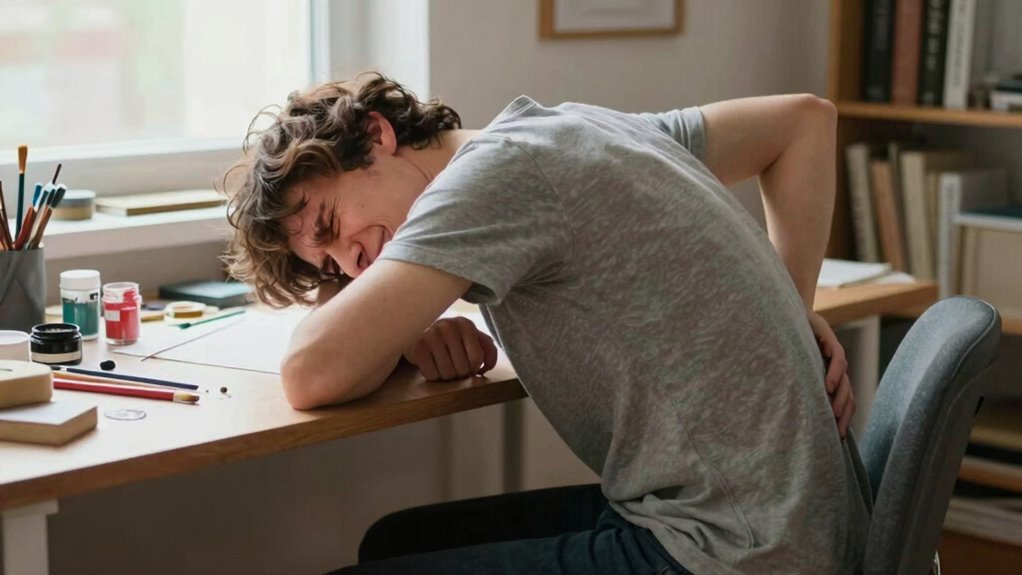

If you ignore proper posture and ergonomic principles during hobbies, you risk turning enjoyable activities into back pain sources. Common mistakes include slouching, leaning forward, and using unsuitable tools or furniture. Prolonged improper sitting or twisting while gardening or gaming can strain your spine. Small missteps add up over time. To keep enjoying your hobbies pain-free, it’s essential to recognize these errors and make simple adjustments. Discover more ways to protect your back and stay comfortable.

Get smart everyday buys delivered free with Prime
- Fast, free delivery on millions of items
- Prime Video, Amazon Music and more included
- Member-only deals all year
Key Takeaways
- Maintaining poor posture during hobbies like gardening or gaming can increase back strain over time.
- Prolonged sitting without ergonomic adjustments leads to muscle fatigue and spinal misalignment.
- Neglecting proper body mechanics when lifting or moving hobby equipment causes unnecessary back injury.
- Failing to take regular breaks and stretch allows tension to accumulate in back muscles.
- Using unsuitable furniture or tools without ergonomic support exacerbates back discomfort during activities.

Back pain is a common issue, often caused by ergonomic mistakes we unknowingly make while working or sitting for long periods. But did you know that your hobbies can also contribute to back pain if you’re not mindful? Whether you’re gardening, gaming, crafting, or doing other leisure activities, small ergonomic missteps can add up and lead to discomfort or injury over time. The good news is that with some simple posture correction and workspace adjustments, you can enjoy your hobbies without risking your back.
Many people tend to neglect proper posture during their hobbies, especially when they become engrossed or distracted. For example, if you spend hours hunched over a computer screen or a craft table without paying attention to your body position, you’re setting yourself up for strain. To prevent this, focus on maintaining a neutral spine position. Keep your shoulders relaxed and back, and avoid leaning forward excessively. This posture correction helps distribute your body’s weight evenly and reduces stress on your lower back. Additionally, incorporating ergonomic principles into your routine allows you to recognize and correct postures that might lead to discomfort. Being aware of body mechanics can help you make more informed adjustments to your activities.
Maintain a neutral spine, keep shoulders relaxed, and avoid leaning forward during hobbies to prevent back strain.
Workspace adjustments are equally important. Make sure your hobby space is ergonomically set up to support good posture. If you’re gaming or working on a craft, adjust your chair height so that your feet are flat on the floor and your knees are roughly at a 90-degree angle. Your work surface should be at elbow height, allowing your arms to rest comfortably without reaching up or down. Using ergonomic tools, like a supportive chair or an adjustable table, can make a big difference. Additionally, consider incorporating a standing desk or taking frequent breaks to change positions, which helps prevent prolonged pressure on one part of your back. Proper lifting techniques** are also crucial for hobbies that involve moving heavy objects, such as gardening tools or crafting supplies. Remember that posture awareness** during these activities can significantly decrease the risk of strain and injury.
Another common mistake is ignoring the importance of proper lifting techniques during hobbies that involve moving heavy objects, such as gardening tools or crafting supplies. Always lift with your legs, not your back, and avoid twisting your spine while carrying items. Incorporating core strengthening exercises can also provide better support for your back during activities that require physical effort. Paying attention to your body’s signals is essential—if you start to feel discomfort, take a break and stretch. Small adjustments in posture and workspace setup, combined with awareness of how you’re engaging in your hobbies, can considerably reduce the risk of back pain. Remember, protecting your back isn’t just about work—it’s about making mindful choices during all your leisure activities. With these ergonomic strategies, you can continue enjoying your hobbies without the lingering worry of back pain.
ergonomic gaming chair with lumbar support
As an affiliate, we earn on qualifying purchases.
As an affiliate, we earn on qualifying purchases.
Frequently Asked Questions
How Can I Identify if My Hobby Ergonomics Are Causing Back Pain?
You can identify if your hobby ergonomics are causing back pain by noticing persistent discomfort or stiffness after activity. Do an ergonomic assessment of your setup, checking if your posture is correct and your equipment supports proper alignment. If you feel strain in your back, neck, or shoulders, it’s time for posture correction and adjustments. Listening to your body and making these changes can prevent further pain and improve comfort during your hobby.
Are There Specific Tools to Improve Ergonomic Safety in Hobbies?
You can dramatically reduce back pain with ergonomic tools and hobby-specific equipment designed just for you! Think of specialized chairs, adjustable workstations, or cushioned mats that transform your hobby space into a pain-free zone. These tools are crafted to support your posture, prevent strain, and boost comfort. Investing in ergonomic gear tailored to your hobby guarantees you enjoy your favorite activities without risking back pain or injury.
Can Incorrect Posture During Hobbies Lead to Long-Term Back Issues?
Incorrect posture during hobbies can definitely lead to long-term back issues. By practicing posture awareness, you can identify when you’re slouching or straining. Make equipment adjustments, like ergonomic chairs or proper tools, to support better alignment. Regularly checking your posture and modifying your setup helps prevent chronic pain, ensuring you enjoy your hobbies without risking long-term back damage. Stay mindful, and prioritize ergonomic safety in your activities.
What Early Signs Indicate Ergonomic Problems While Engaging in Hobbies?
Did you know that nearly 70% of hobby-related back pain cases show early signs like persistent discomfort or stiffness? These symptoms often indicate ergonomic problems. Pay attention to any aches after activities, and use ergonomic accessories to support your posture. Improving posture awareness helps you catch issues early, preventing long-term pain. If you notice these signs, adjust your workspace and habits promptly to stay comfortable and avoid future problems.
How Often Should I Take Breaks to Prevent Back Strain During Hobbies?
You should take breaks every 30 to 60 minutes to prevent back strain during hobbies. Use ergonomic accessories like supportive chairs or cushions to maintain good posture, and do posture adjustments regularly to avoid stress on your back. Short, frequent breaks help you stretch and reset your position, reducing the risk of ergonomic problems. Remember, staying mindful of your posture and incorporating these habits can keep your hobbies enjoyable without back pain.
adjustable standing desk for hobby activities
As an affiliate, we earn on qualifying purchases.
As an affiliate, we earn on qualifying purchases.
Conclusion
By paying attention to your posture and making simple adjustments, you can avoid turning your hobbies into back pain. Remember, a stitch in time saves nine—addressing ergonomic mistakes early keeps problems at bay. Don’t let a small oversight snowball into a bigger issue. Stay mindful of your body, take breaks, and set up your space properly. When you prioritize ergonomics, you’re more likely to enjoy your hobbies pain-free and keep your back in tip-top shape.
ergonomic gardening kneeling pad
As an affiliate, we earn on qualifying purchases.
As an affiliate, we earn on qualifying purchases.
crafting table with ergonomic height adjustment
As an affiliate, we earn on qualifying purchases.
As an affiliate, we earn on qualifying purchases.
Columbus Day / Indigenous Peoples' Day Picks
long weekend sales
As an affiliate, we earn on qualifying purchases.