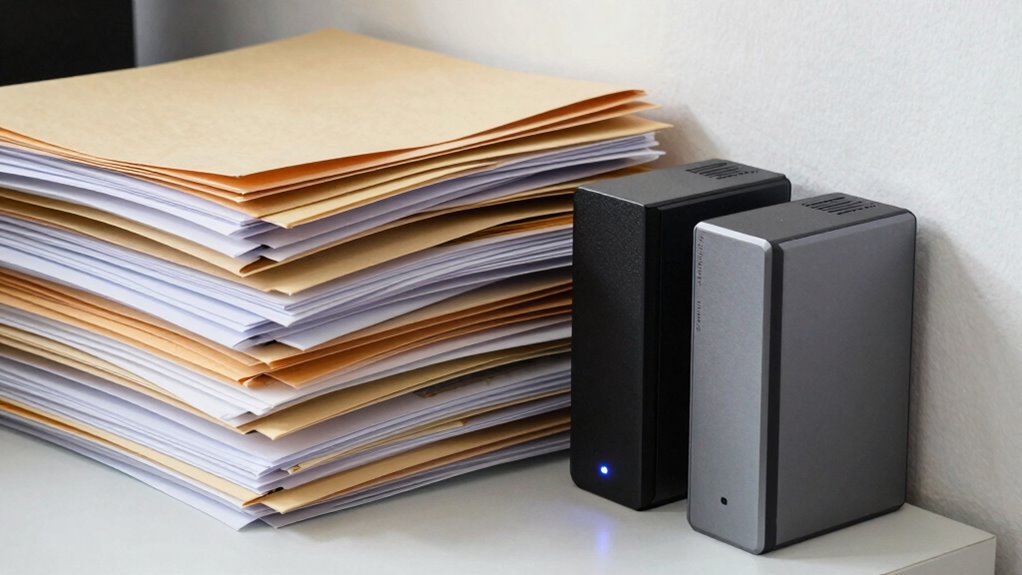

Storing backup drives near paper files can expose them to environmental hazards like humidity, temperature fluctuations, and spills, which may cause corrosion or condensation inside the drives. Physical clutter increases the risk of accidental knocks, drops, or damage from mechanical impacts. These conditions threaten the hardware’s longevity and data security, leading to potential data loss and costly recovery efforts. If you want to understand how to better protect your backups, you’ll find valuable information ahead.

Get smart everyday buys delivered free with Prime
- Fast, free delivery on millions of items
- Prime Video, Amazon Music and more included
- Member-only deals all year
Key Takeaways
- Paper storage environments can cause condensation inside backup drives, leading to corrosion and hardware damage.
- Closeness to paper files increases risk of physical impacts, knocks, or accidental drops.
- Environmental factors like humidity and temperature fluctuations accelerate hardware failure over time.
- Damage from proximity to paper can corrupt data security, encryption, and make drives unreadable.
- Proper separation and storage practices significantly extend backup drive lifespan and data integrity.

Many people underestimate the risk of storing backup drives near paper files, but doing so can lead to data loss and hardware damage. While it might seem like a convenient way to keep everything in one place, this setup exposes your backup drives to various hazards. Paper files are often stored in environments with fluctuating humidity, temperature, and potential for spills, which can severely impact the hardware durability of your backup drives. When placed too close, these environmental factors can cause condensation or corrosion inside the drives, leading to hardware failure over time.
Additionally, paper clutter increases the likelihood of accidental physical damage to your backup drives. A misplaced stack of papers or a sudden movement can cause a drive to fall or get knocked over, risking mechanical damage or even data corruption. It’s a simple mistake with serious consequences, especially since backup drives are designed for durability but not invincibility. Maintaining a safe distance helps preserve their longevity and ensures your data remains accessible when you need it most. Proper hardware storage practices can significantly extend the lifespan of your backup drives. Furthermore, some backup drives, such as external SSDs or HDDs, are sensitive to environmental conditions and require proper storage to function reliably.
Beyond physical concerns, storing backup drives near paper files can also compromise your data security. Many backup drives utilize digital encryption to protect sensitive information from unauthorized access. However, physical damage resulting from environmental exposure can corrupt the drive’s hardware, rendering the encryption useless if the device becomes unreadable. Protecting your hardware’s integrity and security is essential to maintain the security and accessibility of your data. A damaged drive can mean lost encryption keys, unrecoverable files, and the need for costly data recovery services.
As an affiliate, we earn on qualifying purchases.
Frequently Asked Questions
Can Paper Files Cause Damage to Backup Drive Data Integrity?
Yes, paper files can cause damage to backup drive data integrity if stored too close. They can contribute to a poor storage environment by increasing humidity and attracting dust or pests, which threaten digital security. Over time, these conditions can lead to corrosion or damage to your backup drives. To protect your data, guarantee your storage environment is clean, dry, and separate from paper files, maintaining ideal conditions for your backup drives.
What Specific Materials in Paper Files Pose the Most Risk?
Think of paper files as silent troublemakers. The most risky materials are chemical residues and pesticide contamination, which can seep into backup drives stored nearby. These substances can corrode metal parts and damage sensitive electronic components over time. Even seemingly harmless paper can harbor harmful residues, making it essential to keep backup drives away from paper files to preserve their integrity and guarantee your data stays safe.
How Often Should Backup Drives Be Inspected for Damage?
You should inspect backup drives at least every three to six months, considering environmental factors like humidity and temperature that can cause damage. Follow storage guidelines by checking for signs of corrosion, warping, or data corruption. Regular inspections help you catch issues early, preventing data loss. Keeping backup drives in a stable environment and adhering to recommended storage practices extend their lifespan and guarantee your data remains safe and accessible over time.
Are There Safety Standards for Storing Backup Drives and Paper Files Together?
Yes, safety standards do exist for storing backup drives and paper files together, focusing on environmental hazards and storage regulations. You should guarantee proper climate control, like maintaining low humidity and temperature, to prevent damage. Keep storage areas well-ventilated and away from direct sunlight, water, or chemicals. Following these guidelines helps protect your data and complies with safety standards, reducing risks associated with environmental hazards.
What Are Alternative Storage Solutions to Prevent Damage?
Storing backup drives near paper files is like keeping fire and gasoline together. To prevent damage, consider using cloud storage for your backups, which offers secure, off-site protection. Digital encryption adds an extra layer of security. Alternatively, invest in fireproof safes or climate-controlled storage units. These options help protect your data from physical hazards, ensuring your backups stay safe regardless of environmental risks.
As an affiliate, we earn on qualifying purchases.
Conclusion
Think of your backup drives and paper files as two sides of the same coin—if one falls, the other might follow. By keeping them close, you risk losing both in a single blow. Don’t let your data be the victim of a silent threat lurking nearby. Instead, give your backups the respect they deserve by storing them separately. After all, isn’t safeguarding your information worth more than the fleeting comfort of proximity?
anti-static backup drive storage box
As an affiliate, we earn on qualifying purchases.
As an affiliate, we earn on qualifying purchases.
humidity controlled external hard drive enclosure
As an affiliate, we earn on qualifying purchases.
As an affiliate, we earn on qualifying purchases.
Halloween Picks
halloween
As an affiliate, we earn on qualifying purchases.