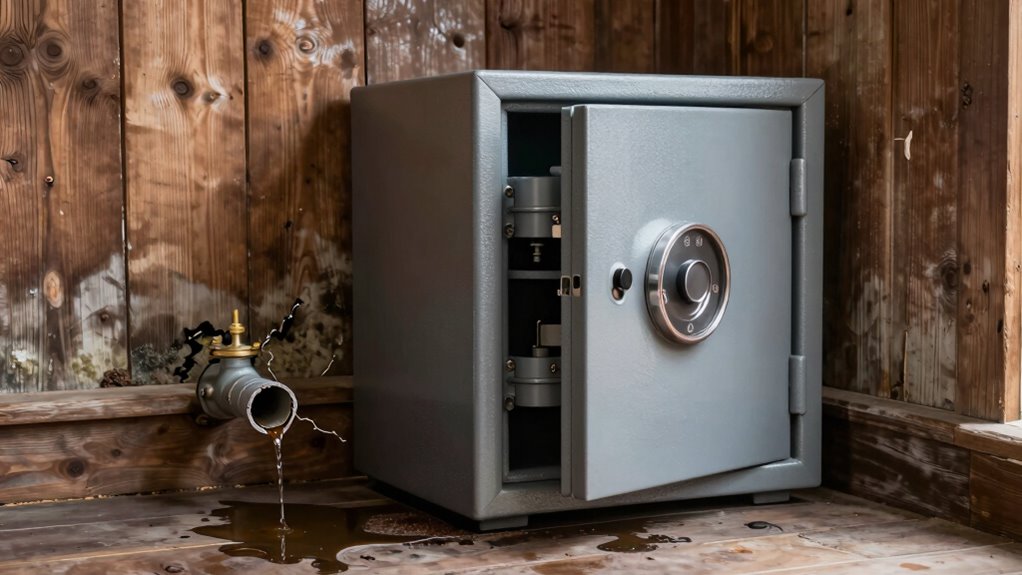

Storing valuables near water sources or damp areas increases the risk of hidden damage that can ruin belongings over time. Water leaks, humidity, and moisture can cause corrosion, mold, and irreversible deterioration before you even notice. These environments also pose security concerns, making theft easier. If moisture persists, it can weaken packaging and compromise fragile items. Staying aware of these hidden water risks helps protect your valuables—learn more to keep your belongings safe and sound.

Get smart everyday buys delivered free — and shop member deals
- Fast, free delivery on millions of items
- Access to Prime Big Deal Days deals on October 6–7
- Prime Video, Amazon Music and more included
Key Takeaways
- Hidden water leaks and moisture can cause ongoing damage to valuables without immediate visible signs.
- Storage near water sources increases vulnerability to flooding, spills, and long-term humidity-related deterioration.
- Damp environments promote mold, corrosion, and decay, compromising the integrity of stored valuables.
- Moisture exposure can lead to irreversible damage before owners notice any issues.
- Poor security in water-adjacent areas raises theft risks, especially when valuables are damaged or discarded due to water damage.
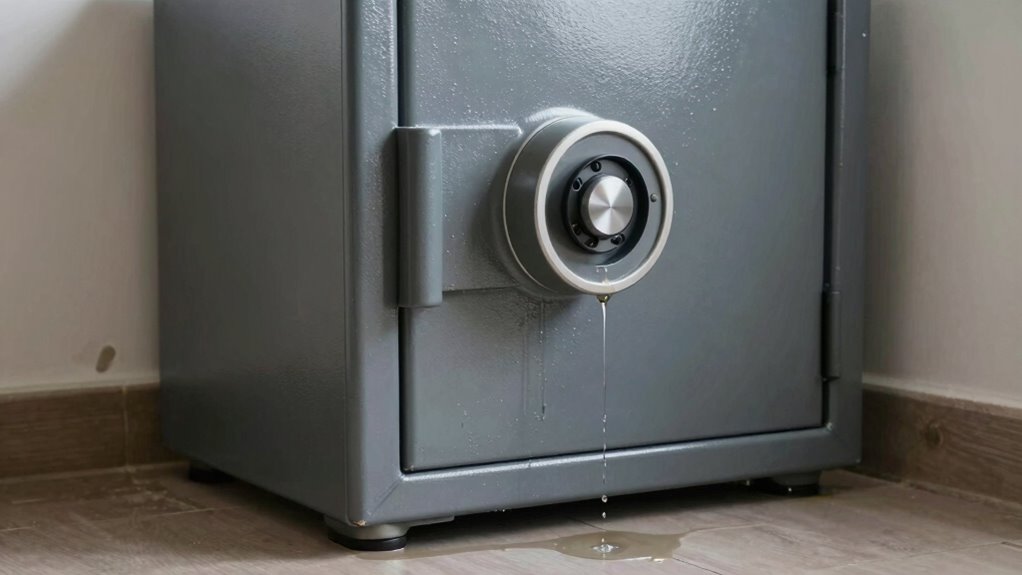
Storing valuables near water might seem convenient, but it comes with significant risks. Water damage is a primary concern because even a small leak or accidental spill can ruin your treasured items. When valuables are kept close to water sources—like sinks, basements, or outdoor storage areas—you leave them vulnerable to unforeseen accidents. Water can seep into containers, damage packaging, or corrode metal components, making it impossible to retrieve or use your belongings without costly repairs or replacements. The threat isn’t always obvious; hidden leaks or rising damp can go unnoticed until damage is extensive, leaving you to deal with the aftermath.
Beyond water damage, storing valuables near water sources also complicates theft prevention. Water often draws attention to certain storage spots—like outdoor sheds or basement areas—making them more tempting targets. Thieves are aware that water-damaged items may be discarded or abandoned, which can make theft easier to conceal. Plus, if your valuables are in a damp environment, their value diminishes, sometimes tempting someone to steal and discard items they deem worthless, even if they’re valuable to you. The risk increases if these storage areas aren’t well-secured, giving burglars an easier opportunity to access your belongings without raising suspicion. Additionally, humidity control is essential because high moisture levels can accelerate deterioration, even without direct water exposure. Maintaining proper ventilation can help reduce moisture buildup and protect your valuables over time.
You might think that keeping valuables away from water is enough, but the risks aren’t limited to just flooding or leaks. Humidity itself can cause damage over time, especially to paper, electronics, or delicate items. Moist environments foster mold growth and corrosion, degrading your valuables long before you realize they’re at risk. Regular checks and environmental monitoring can help identify potential issues early, preventing irreversible damage. In fact, proper storage techniques are vital to safeguard your belongings from long-term harm caused by unseen moisture. The longer you store items in such conditions, the more likely they are to suffer irreversible harm. It’s essential to *factor in* not only the immediate threat of water but also the cumulative effects of moisture exposure. Regularly monitoring indoor air quality can help detect elevated humidity levels and prevent long-term damage to your belongings.
As an affiliate, we earn on qualifying purchases.
Frequently Asked Questions
How Do Water Risks Vary by Climate and Region?
Water risks vary by climate patterns and regional vulnerabilities. In wetter regions, heavy rainfall can lead to flooding, increasing water damage risks for valuables. Arid areas face droughts, causing soil instability and potential water shortages that threaten storage safety. Coastal regions are vulnerable to hurricanes and storm surges, while inland areas may experience rising groundwater levels. Recognizing these regional vulnerabilities helps you choose safer storage locations, minimizing water-related damage risks.
What Types of Valuables Are Most Vulnerable to Water Damage?
Electronics vulnerability makes devices like smartphones, laptops, and cameras highly susceptible to water damage, risking total loss. Document preservation is also a concern, as paper documents, photographs, and heirlooms can quickly deteriorate or become illegible when exposed to moisture. To protect your valuables, store electronics and important papers in waterproof containers, and consider climate-controlled environments to minimize water-related risks and guarantee longevity.
Are There Specific Storage Containers That Better Protect Valuables From Water?
Yes, opting for water-resistant containers and airtight storage can substantially protect your valuables from water damage. These containers prevent moisture seepage and keep out humidity, which is essential if you’re storing items near hidden water risks. Look for durable, sealed boxes made from plastic or metal, ensuring they’re labeled water-resistant. Proper storage in these containers minimizes exposure to water, helping preserve your valuables’ condition over time.
How Can I Detect Hidden Water Risks in My Storage Area?
To detect hidden water risks in your storage area, start by inspecting for signs of moisture, mold, or water stains. Use moisture detection tools like moisture meters or hygrometers to identify hidden dampness. Implement waterproofing techniques such as sealing cracks or installing vapor barriers. Regularly check for leaks or condensation, especially around pipes and windows, to prevent water damage and protect your valuables effectively.
What Are the Long-Term Effects of Water Exposure on Different Materials?
Water absorption causes materials like paper or wood to swell, weaken, and become brittle over time, leading to deterioration. For example, a family’s antique books suffered long-term water damage, resulting in pages sticking together and mold growth. Different materials react uniquely; metals may corrode, fabrics mold, and plastics crack. Regularly exposing stored items to moisture accelerates these effects, making proper water risk management essential for long-term preservation of valuables.
moisture-proof storage containers
As an affiliate, we earn on qualifying purchases.
As an affiliate, we earn on qualifying purchases.
Conclusion
Think of your valuables as precious ships sailing through your home’s waters. When you store near hidden water risks, it’s like anchoring in treacherous waters—danger lurking beneath the surface. Protect your treasures by steering clear of these hidden hazards, guiding them safely to calmer, secure harbors. Remember, a vigilant eye on water risks keeps your valuables afloat and your peace of mind sailing smoothly. Stay aware, stay safe, and navigate wisely.
As an affiliate, we earn on qualifying purchases.
As an affiliate, we earn on qualifying purchases.
Fall Picks
fall essentials
As an affiliate, we earn on qualifying purchases.