
The right investing book depends on where you are starting from: some titles teach index-fund strategy, others focus on the mindset behind money decisions, and a few barely cover investing at all. My top pick is The Simple Path to Wealth, which pairs a clear, actionable low-cost index strategy with a genuinely motivating framework for financial independence. If you want the philosophy behind why most investors underperform, The Little Book of Common Sense Investing is the sharper read, while How to Invest $50-$5,000 is the friendliest entry point for small budgets. The main tradeoff across this category is depth versus readability — the densest books reward patient readers, and the breeziest ones can leave you without a concrete plan. Read on for the full breakdown of all 11 titles and who each one suits best.

Get smart everyday buys delivered free with Prime
- Fast, free delivery on millions of items
- Prime Video, Amazon Music and more included
- Member-only deals all year
Key Takeaways
- Books with a specific investing philosophy (The Simple Path to Wealth, The Little Book of Common Sense Investing) ranked higher than broad personal finance primers because they leave you with an actual strategy, not just vocabulary.
- Several books marketed as investing titles — The Infographic Guide to Personal Finance and Personal Finance 101 — spend most of their pages on budgeting and debt, making them better first books than second books.
- The Psychology of Money is the only title that changes how you behave rather than what you buy, which is why it works best as a companion to a strategy-focused pick rather than a standalone investing guide.
- Small-dollar investors are poorly served by most titles; How to Invest $50-$5,000 is the only book built specifically around starting with modest amounts and low risk.
- Reference-style books (the WSJ Guidebook, For Dummies) offer breadth and long shelf life but demand more patience — they scored lower on momentum but higher on staying useful over years.
| How to Invest $50-$5,000: The Small Investor’s Step-by-Step Plan for Low-Risk Investing in Today’s Economy | 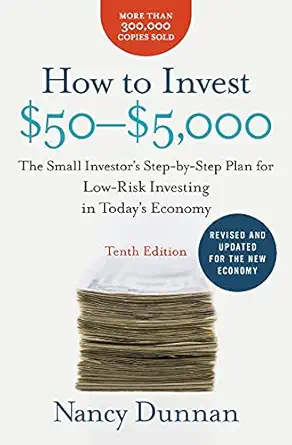 | Best for Small Budgets | Format: Paperback | Target audience: Small-dollar and first-time investors | Investment range covered: $50–$5,000 | VIEW LATEST PRICE | See Our Full Breakdown |
| The Infographic Guide to Personal Finance: A Visual Reference for Everything You Need to Know | 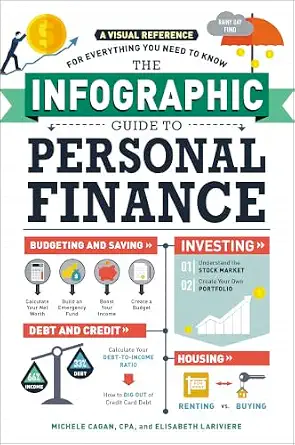 | Best Visual Learner Pick | Format: Paperback | Presentation style: Infographic-based visual reference | Topics covered: Budgeting, saving, investing, credit, financial planning | VIEW LATEST PRICE | See Our Full Breakdown |
| Personal Finance 101: From Saving and Investing to Taxes and Loans, an Essential Primer on Personal Finance |  | Best Beginner Foundation | Format: Paperback | Topics covered: Saving, investing, taxes, loans | Depth level: Essential primer / introductory | VIEW LATEST PRICE | See Our Full Breakdown |
| The Ultimate Guide to Personal Finance: From Debt to Financial Freedom |  | Best for Debt-to-Investing Journeys | Format: Paperback / digital | Topics covered: Debt management, saving, investing, financial independence | Structure: Progressive journey from debt to freedom | VIEW LATEST PRICE | See Our Full Breakdown |
| Investing 101: From Stocks and Bonds to ETFs and IPOs, an Essential Primer on Building a Profitable Portfolio |  | Best Investing Vocabulary Builder | Format: Paperback | Topics covered: Stocks, bonds, ETFs, IPOs, portfolio building | Depth level: Introductory to foundational | VIEW LATEST PRICE | See Our Full Breakdown |
| The Wall Street Journal Complete Personal Finance Guidebook |  | Best Reference for Whole-Picture Money Management | Format: Paperback guidebook | Primary Focus: Budgeting, saving, and investing fundamentals | Audience Level: Beginner to intermediate | VIEW LATEST PRICE | See Our Full Breakdown |
| The Dumb Investor: How the Everyday Investor Can Beat the Pros |  | Best Mindset Builder for New Investors | Format: Book (digital and print editions) | Primary Focus: Investment mindset and practical strategy for non-professionals | Audience Level: Beginner | VIEW LATEST PRICE | See Our Full Breakdown |
| The Simple Path to Wealth: Your Road Map to Financial Independence and a Rich, Free Life |  | Best for Financial Independence Seekers | Format: Book (paperback, ebook, audiobook editions) | Primary Focus: Financial independence through simple investing | Audience Level: Beginner to intermediate | VIEW LATEST PRICE | See Our Full Breakdown |
| Personal Finance For Dummies |  | Best Classroom-Style Starter Text | Format: Paperback, For Dummies series | Primary Focus: Budgeting, saving, investing, and debt management | Audience Level: Absolute beginner | VIEW LATEST PRICE | See Our Full Breakdown |
| The Little Book of Common Sense Investing: The Only Way to Guarantee Your Fair Share of Stock Market Returns |  | Best Investing Philosophy Pick | Format: Hardcover/ebook, Little Book series | Primary Focus: Low-cost index fund investing | Audience Level: Beginner to intermediate | VIEW LATEST PRICE | See Our Full Breakdown |
| The Psychology of Money: Timeless Lessons on Wealth, Greed, and Happiness |  | Best for Investor Mindset | Format: Hardcover, Paperback, Kindle, Audiobook | Author: Morgan Housel | Page Count: Approximately 256 pages | VIEW LATEST PRICE | See Our Full Breakdown |
| personal finance books for investing | Format | Structure | Primary focus |
|---|---|---|---|
| How to Invest $50-$5,000: The | Paperback | Step-by-step plan | — |
| The Infographic Guide to Perso | Paperback | — | — |
| Personal Finance 101: From Sav | Paperback | Topic-by-topic primer format | — |
| The Ultimate Guide to Personal | Paperback / digital | Progressive journey from debt to freedom | Financial freedom framework |
| Investing 101: From Stocks and | Paperback | — | — |
| The Wall Street Journal Comple | Paperback guidebook | Reference-style chapters across personal finance topics | Budgeting, saving, and investing fundamentals |
| The Dumb Investor: How the Eve | Book (digital and print editions) | — | Investment mindset and practical strategy for non-professionals |
| The Simple Path to Wealth: You | Book (paperback, ebook, audiobook editions) | — | Financial independence through simple investing |
| Personal Finance For Dummies | Paperback, For Dummies series | Textbook-style chapters with instructional organization | Budgeting, saving, investing, and debt management |
| The Little Book of Common Sens | Hardcover/ebook, Little Book series | — | Low-cost index fund investing |
| The Psychology of Money: Timel | Hardcover, Paperback, Kindle, Audiobook | Short standalone essays/lessons | — |
More Details on Our Top Picks
How to Invest $50-$5,000: The Small Investor’s Step-by-Step Plan for Low-Risk Investing in Today’s Economy
Most investing books implicitly assume you have a meaningful pile of cash to deploy, which makes them frustrating for someone starting with a few hundred dollars. This option stands out for doing the opposite: it builds its entire plan around $50 to $5,000 of investable money, treating that range as legitimate rather than a placeholder for future wealth. Compared with Investing 101, which walks through the full menu of asset classes, this book is narrower on purpose — it prioritizes low-risk, step-by-step execution over breadth. That focus is its strength and its ceiling. Readers who outgrow the small-dollar framing, or who want deeper market analysis, will hit the book’s limits quickly, and the treatment of recent economic shifts feels thin. This pick makes the most sense for a first-time investor who wants permission and a plan, not a philosophy.
Pros:- Step-by-step plan sized specifically for small-dollar investors
- Emphasizes low-risk strategies appropriate for beginners protecting limited capital
- Actionable from day one — you can follow the plan without prior knowledge
- Avoids the intimidation factor of books written for wealthier audiences
Cons:- Shallow market analysis that won’t satisfy curious readers
- Doesn’t discuss specific investment products, leaving execution details vague
- Limited coverage of recent economic changes despite referencing ‘today’s economy’
Best for: First-time investors with $50 to $5,000 saved who want a concrete, low-risk action plan rather than theory
Not ideal for: Readers with larger portfolios or an appetite for growth investing — the low-risk framing and light market analysis will feel limiting
- Format:Paperback
- Target audience:Small-dollar and first-time investors
- Investment range covered:$50–$5,000
- Risk approach:Low-risk strategies
- Structure:Step-by-step plan
- Experience level:Beginner-friendly
Our verdict“If you have a small amount of money and no idea where to start, this gives you a plan; anyone with real capital should look elsewhere.”
The Infographic Guide to Personal Finance: A Visual Reference for Everything You Need to Know
Not everyone absorbs dense financial prose, and this book exists for that reader. By translating budgeting, investing, credit, and financial planning into infographics, it turns concepts that usually require multiple readings into something you can grasp in a single sitting. Where Personal Finance 101 covers similar ground in conventional chapters, this version trades depth for speed — and that tradeoff defines who should buy it. Compared with The Psychology of Money, which uses storytelling to build financial intuition, this is a reference tool, not a narrative; you’ll flip back to it when you need a quick answer, not read it cover to cover for wisdom. The drawback is real: explanations stop at the surface, and anyone past the basics will find nothing on advanced strategy. Treat it as the on-ramp, not the destination.
Pros:- Infographic format makes complex topics genuinely quick to absorb
- Broad coverage of personal finance from budgeting to investing in one volume
- Works well as a desk reference you return to repeatedly
- Approachable for readers intimidated by text-heavy finance books
Cons:- Explanations lack depth — the ‘why’ behind strategies is often skipped
- No coverage of advanced financial strategies or nuanced investing decisions
Best for: Visual learners and financial newcomers who want a fast, scannable reference instead of a textbook-style read
Not ideal for: Intermediate investors or readers who want detailed reasoning behind each strategy — the graphics compress explanations to the point of oversimplification
- Format:Paperback
- Presentation style:Infographic-based visual reference
- Topics covered:Budgeting, saving, investing, credit, financial planning
- Depth level:Introductory overview
- Best use case:Quick reference guide
- Experience level:Beginner
Our verdict“This is the right first book for someone who learns by seeing, and the wrong book for anyone who already knows the basics.”
Personal Finance 101: From Saving and Investing to Taxes and Loans, an Essential Primer on Personal Finance
This is the broadest foundational pick in the lineup, covering saving, investing, taxes, and loans under one roof before you’ve committed to any single specialty. That breadth is what separates it from Investing 101: where that book goes deep on portfolio building, this one gives you the full financial picture first — which matters if you still carry high-interest debt or don’t understand how taxes affect returns. Compared with Personal Finance For Dummies, a similarly wide-ranging classic, this primer is shorter and more digestible, though the Dummies franchise carries more established authorship and reader track record. The tradeoff for that clean, accessible sweep is depth: each topic gets an introduction, not mastery, so readers whose finances are already organized will skim large sections. This pick makes the most sense as your first finance book, not your last.
Pros:- Covers the full personal finance stack, not just investing, in one primer
- Clear, accessible explanations designed for zero prior knowledge
- Logical structure that builds concepts in the right order
- Short enough to finish, unlike many sprawling finance tomes
Cons:- Introductory depth on every topic — investing coverage alone won’t build a portfolio strategy
- Sparse author and edition details make it harder to evaluate credibility upfront
Best for: Complete beginners who want one accessible book covering all the fundamentals before specializing in investing
Not ideal for: Readers with organized finances who want investing depth — much of the saving, taxes, and loans material will be review
- Format:Paperback
- Topics covered:Saving, investing, taxes, loans
- Depth level:Essential primer / introductory
- Structure:Topic-by-topic primer format
- Experience level:Complete beginner
- Scope:Broad personal finance overview
Our verdict“If your finances feel chaotic and investing is just one puzzle piece, start here; if investing is your only gap, choose a specialized book instead.”
The Ultimate Guide to Personal Finance: From Debt to Financial Freedom
What distinguishes this guide is its sequencing: it starts at debt management and only then moves through saving and investing toward financial independence. That arc fills a gap the other picks leave open. The Simple Path to Wealth targets readers who can already invest and want a philosophy for compounding; How to Invest $50-$5,000 assumes your balance sheet is clean enough to start buying assets. This book sits earlier in the journey, which makes it the right entry point if credit card debt or loans are your actual first problem. The tradeoff is dilution — spanning debt, saving, investing, and independence means each subject gets less precision than a dedicated title provides, and the absence of established reviews or named edition details makes it harder to vet than the BogleHaus classics in this roundup. Strong starting point, moderate finishing school.
Pros:- Full-journey structure that addresses debt before investing, in the right order
- Practical strategies rather than abstract financial theory
- Frames every decision around the goal of financial freedom
- Accessible to beginners while still useful to readers restarting their finances
Cons:- Breadth across many topics means none receive deep, actionable precision
- No customer reviews or ratings available to validate the advice
- Lacks specific editions, credentials, or price transparency
Best for: Readers carrying debt who need a full roadmap from payoff through saving to first investments
Not ideal for: Debt-free readers focused purely on portfolio strategy — the early chapters will be irrelevant and the investing sections lack depth
- Format:Paperback / digital
- Topics covered:Debt management, saving, investing, financial independence
- Structure:Progressive journey from debt to freedom
- Experience level:Beginner to intermediate
- Primary focus:Financial freedom framework
- Provenance:Independent title with limited review history
Our verdict“If debt is blocking your investing, this book’s payoff-first roadmap fits; if your finances are already clean, a dedicated investing title serves you better.”
Investing 101: From Stocks and Bonds to ETFs and IPOs, an Essential Primer on Building a Profitable Portfolio
Once you’ve decided investing is the priority, this is the most focused of the primer-style picks here. It walks through stocks, bonds, ETFs, and IPOs — the full vocabulary of a brokerage account — and ties each concept back to building an actual portfolio. Compared with Personal Finance 101, it sacrifices taxes, loans, and budgeting to go deeper on markets, which is the right trade if your finances are already stable. It is more of a reference education than a philosophy: next to The Little Book of Common Sense Investing, which argues forcefully for one indexing approach, this book explains all the options without taking a strong stance on which you should choose. That neutrality is a con for readers who want a recommended path, and the thin author-credential information makes the guidance harder to weigh. Best treated as the dictionary you keep beside a strategy book.
Pros:- Thorough coverage of stocks, bonds, ETFs, and IPOs in one accessible primer
- Directly connects concepts to practical portfolio construction
- Neutral, educational tone that doesn’t push products or platforms
- Useful as an ongoing reference while you actually invest
Cons:- No strong strategic point of view, unlike conviction-driven books like The Little Book of Common Sense Investing
- Limited author-credential information available to evaluate the advice
- Beginner pacing means experienced investors will find little new
Best for: New investors with stable finances who want to understand every asset type and term before committing money
Not ideal for: Readers who want a specific recommended strategy — this explains the whole menu without telling you what to order
- Format:Paperback
- Topics covered:Stocks, bonds, ETFs, IPOs, portfolio building
- Depth level:Introductory to foundational
- Focus:Investing only — no budgeting or debt content
- Experience level:Beginner
- Best use case:Asset-class education and reference
Our verdict“This is the best pick for learning what everything in your brokerage account actually means, but pair it with an opinionated strategy book before you buy anything.”
The Wall Street Journal Complete Personal Finance Guidebook
This guidebook earns its spot as the broadest reference work in the lineup. Where The Simple Path to Wealth zeroes in on investing for independence, this book spreads across budgeting, saving, and investing so readers can see how each piece of their finances connects to the others. The Wall Street Journal name carries weight, and the plain-English explanations make it a solid shelf companion rather than a one-time read.
The tradeoff is breadth over depth. It lacks the detailed case studies that make Personal Finance For Dummies feel concrete, and advanced investors will outgrow it quickly. Compared with The Little Book of Common Sense Investing, its investing sections feel like an overview rather than a philosophy you can act on.
Pros:- Covers budgeting, saving, and investing in one volume
- Backed by the Wall Street Journal’s editorial reputation
- Clear language that works for financial newcomers
- Functions as a durable reference you can return to
Cons:- No detailed case studies to ground the advice
- Too basic for advanced investors
- Investing guidance is broad rather than actionable
Best for: Readers who want a single, trustworthy reference covering their entire financial life, not just portfolios
Not ideal for: Experienced investors seeking deeper strategy — the investing chapters stop well short of advanced territory
- Format:Paperback guidebook
- Primary Focus:Budgeting, saving, and investing fundamentals
- Audience Level:Beginner to intermediate
- Publisher Authority:The Wall Street Journal
- Structure:Reference-style chapters across personal finance topics
- Depth of Case Studies:Limited
- Best Use:Ongoing household money reference
Our verdict“Buy this if you want one authoritative reference for all things personal finance; skip it if your only gap is investing depth.”
The Dumb Investor: How the Everyday Investor Can Beat the Pros
This pick stands out for confidence-building rather than technical instruction. Most beginner books, including Investing 101, teach mechanics; this one attacks the psychological barrier — the belief that ordinary people can’t compete with professionals. Its accessible tone makes it a good first read for someone intimidated by Wall Street jargon.
The catch is what it doesn’t contain. There’s no detailed technical analysis and no discussion of specific financial instruments, so readers finish motivated but under-equipped. It pairs well with The Little Book of Common Sense Investing, which supplies the actual low-cost strategy this book assumes you’ll adopt. On its own, it’s half a toolkit.
Pros:- Highly accessible for beginners
- Practical strategies framed for everyday investors
- Strong motivational and mindset focus
- Empowers readers to act without professional help
Cons:- No detailed technical analysis
- Doesn’t discuss specific financial instruments
- Needs to be paired with a strategy-focused book
Best for: First-time investors who feel intimidated by the market and need a motivational entry point before tackling strategy
Not ideal for: Readers who want concrete instrument-level guidance — you’ll finish with mindset but no specific plan
- Format:Book (digital and print editions)
- Primary Focus:Investment mindset and practical strategy for non-professionals
- Audience Level:Beginner
- Technical Analysis Coverage:Minimal
- Financial Instruments Covered:None in detail
- Core Promise:Helping retail investors outperform professionals
- Best Use:Motivational first read
Our verdict“Choose this as your confidence primer, then follow it with a strategy book — it won’t carry a portfolio on its own.”
The Simple Path to Wealth: Your Road Map to Financial Independence and a Rich, Free Life
Of everything in this roundup, this book has the clearest destination: financial independence, not just a bigger portfolio. Compared with Personal Finance For Dummies, which tours every topic equally, this one commits to a single roadmap — save aggressively, invest simply, buy your freedom — and the clarity of that focus is its greatest strength.
The tradeoff is that it shares a philosophy with The Little Book of Common Sense Investing but delivers less of the supporting argument. Readers who want data-heavy justification will find it thin, and advanced investors will find little new material. Its value lies in motivation and direction, not in technical depth or nuanced alternatives to its plan.
Pros:- Clear, practical roadmap with a defined end goal
- Very accessible for beginners
- Focused on long-term wealth building
- Strong motivational framing around freedom
Cons:- Light on technical and product-specific detail
- Limited value for advanced investors
- One-size-fits-all plan may not suit every situation
Best for: Young professionals and mid-career savers chasing early financial independence who want a single coherent plan
Not ideal for: Advanced investors or readers wanting tactical detail on products and allocation — the book stays high-level
- Format:Book (paperback, ebook, audiobook editions)
- Primary Focus:Financial independence through simple investing
- Audience Level:Beginner to intermediate
- Investing Approach:Simple, long-term, low-complexity
- Core Promise:Roadmap to financial independence and a free life
- Technical Depth:Low
- Best Use:FI/RE planning and motivation
Our verdict“If your goal is early retirement rather than just learning to invest, this is the most direct map in the lineup.”
Personal Finance For Dummies
This is the most complete syllabus for someone starting from zero. Unlike The Simple Path to Wealth, which assumes investing is your priority, this book walks through budgeting, saving, investing, and debt management in equal measure — useful if credit card debt is your real obstacle before any portfolio question matters.
Its weakness mirrors its strength: by covering everything, its investment sections lack the strategic depth of The Little Book of Common Sense Investing. Compared with the Infographic Guide to Personal Finance, it’s denser and less visually friendly, which may slow down readers who prefer graphics over paragraphs. It teaches you the vocabulary of money; it won’t make you a sophisticated investor.
Pros:- Easy-to-understand explanations throughout
- Comprehensive coverage of all core personal finance topics
- Well-organized for structured learning
- Strong treatment of debt management often skipped elsewhere
Cons:- Lacks advanced investment strategies
- Denser format than visual guides
- Investing coverage is introductory only
Best for: Complete beginners who need foundational literacy across debt, budgeting, and investing before specializing
Not ideal for: Investors past the basics — the strategies here won’t stretch beyond introductory territory
- Format:Paperback, For Dummies series
- Primary Focus:Budgeting, saving, investing, and debt management
- Audience Level:Absolute beginner
- Structure:Textbook-style chapters with instructional organization
- Investing Depth:Introductory
- Debt Coverage:Substantial
- Best Use:First personal finance book
Our verdict“Pick this as your first finance book if you’re starting from scratch; graduate to a dedicated investing title afterward.”
The Little Book of Common Sense Investing: The Only Way to Guarantee Your Fair Share of Stock Market Returns
This is the most persuasive argument for index investing in the roundup, written by the man who built Vanguard. Where Personal Finance For Dummies mentions index funds as one option among many, this book builds an entire case — costs eat returns, markets are efficient enough to humble stock-pickers, and low-cost index funds let you capture the market’s natural growth with near-certainty.
Its limits are real, though. Active traders will find nothing useful here, and advanced investors may find the message repetitive — the same thesis restated with new data across chapters. Compared with The Simple Path to Wealth, it offers more intellectual grounding but less life-planning context. It’s a one-idea book, executed exceptionally well.
Pros:- Clear, practical case for low-cost index funds
- Written by the founder of Vanguard with deep authority
- Ideal for long-term buy-and-hold investors
- Helps readers avoid costly common pitfalls
Cons:- No strategies for active traders
- Can feel repetitive and too simplistic for advanced investors
- Single-thesis book with narrow scope
Best for: Long-term, passive investors who want to understand why index funds beat stock-picking before committing their money
Not ideal for: Active traders and advanced investors seeking tactical strategies — the book actively argues against that approach
- Format:Hardcover/ebook, Little Book series
- Primary Focus:Low-cost index fund investing
- Audience Level:Beginner to intermediate
- Author Authority:John C. Bogle, Vanguard founder
- Investing Style Advocated:Passive, long-term buy-and-hold
- Active Trading Content:None
- Best Use:Foundational investing philosophy
Our verdict“If you’ll only read one book about how to invest (not just manage money), this is the strongest case for the simplest strategy.”
The Psychology of Money: Timeless Lessons on Wealth, Greed, and Happiness
Most investing books teach you what to buy; this one teaches you how to think, which arguably matters more over a long investing life. Through short, story-driven chapters, it explains why smart people make poor financial decisions and how behavior — not brilliance — drives most investing outcomes. Compared with The Little Book of Common Sense Investing, which gets deep into index fund mechanics, this book stays entirely at the level of temperament, patience, and risk psychology. That focus is its strength and its limit: a reader who finishes it will still need a concrete how-to manual like The Simple Path to Wealth to actually build a portfolio. Where technical primers like Investing 101 answer execution questions, this answers the deeper question of why investors sabotage themselves.
Pros:- Story-driven chapters make behavioral finance genuinely engaging rather than dry
- Timeless lessons that stay relevant regardless of market conditions or era
- Short and readable — accessible to readers with no finance background
- Directly addresses the emotional mistakes that doom more portfolios than bad picks
Cons:- Contains virtually no concrete investing strategy, formulas, or actionable portfolio guidance
- Concepts can feel repetitive if you already know basic behavioral economics
- Readers expecting a system or framework may finish without knowing what to actually do next
Best for: Investors who already know the basics but keep making emotional decisions — panic selling, chasing returns, or comparing themselves to others — and want to fix the behavior, not the strategy
Not ideal for: Beginners who need step-by-step instructions on opening accounts, picking funds, or allocating assets — this book deliberately avoids tactical how-to content
- Format:Hardcover, Paperback, Kindle, Audiobook
- Author:Morgan Housel
- Page Count:Approximately 256 pages
- Focus Area:Behavioral finance, wealth psychology, decision-making
- Structure:Short standalone essays/lessons
- Technical Depth:Low — conceptual rather than tactical
- Reading Level:Beginner-friendly, no finance background required
Our verdict“Buy this as the mindset companion to a tactical book — it will improve your decision-making, but it will not tell you what to invest in.”

How We Picked
I judged every title against four criteria: investing depth (how much of the book is actually about investing, not general budgeting), actionability (whether you finish with a concrete plan or just concepts), accessibility (writing style, jargon, and reading load), and durability (whether the advice holds up as markets and tax rules change). Philosophy-driven books that commit to a specific approach ranked above encyclopedic surveys, because a reader deciding between books needs a recommendation framework, not a neutral glossary.
Ranking also reflected audience fit. A book that serves absolute beginners brilliantly, like How to Invest $50-$5,000, earned a high spot for that role even though an experienced reader would find it thin. Conversely, books that bury investing inside wide-ranging personal finance coverage were marked down for diluting the focus the search promise implies, regardless of overall quality.
| personal finance books for investing | Structure | Primary focus |
|---|---|---|
| How to Invest $50-$5,000: The | Step-by-step plan | — |
| The Infographic Guide to Perso | — | — |
| Personal Finance 101: From Sav | Topic-by-topic primer format | — |
| The Ultimate Guide to Personal | Progressive journey from debt to freedom | Financial freedom framework |
| Investing 101: From Stocks and | — | — |
| The Wall Street Journal Comple | Reference-style chapters across personal finance topics | Budgeting, saving, and investing fundamentals |
| The Dumb Investor: How the Eve | — | Investment mindset and practical strategy for non-professionals |
| The Simple Path to Wealth: You | — | Financial independence through simple investing |
| Personal Finance For Dummies | Textbook-style chapters with instructional organization | Budgeting, saving, investing, and debt management |
| The Little Book of Common Sens | — | Low-cost index fund investing |
| The Psychology of Money: Timel | Short standalone essays/lessons | — |
Factors to Consider When Choosing Personal Finance Books For Investing
Before picking a title, think about what stage of the investing journey you are actually in. The biggest mistake readers make is buying a strategy book when they still carry high-interest debt, or buying a beginner primer when they already know what an ETF is.Match the Book to Your Starting Point
There is a real sequence to learning investing, and buying books out of order wastes money. If you have no emergency fund or carry credit card debt, a broad personal finance primer will serve you better than any investing title, because investing while paying 22% interest is mathematically backwards. Once your foundation exists, a strategy book teaches you what to actually buy, and a behavioral book teaches you how to not sabotage it. Many readers buy The Psychology of Money first because it is entertaining, then stall because it never explains what an index fund is. Working through the categories in order — foundation, strategy, behavior — gets more from each book than reading them in whatever order the bestseller list suggests.
Strategy Books Versus Concept Books
Some authors commit to a specific, testable approach — low-cost index funds, dollar-cost averaging, a target savings rate — while others describe the landscape without telling you what to do. Concept books feel safer and offend no one, but they tend to produce readers who can define a P/E ratio yet never open a brokerage account. Strategy books take a position, which means they can be wrong, but they also let you act quickly and evaluate results against something concrete. My advice: own at least one strategy book you mostly agree with, and one you partly disagree with, so your convictions get tested. Books that hide behind neutrality rarely change what you do on Monday morning.
Check How Current the Advice Is
Investing principles age slowly, but the machinery around them — fund expense ratios, tax-advantaged account limits, available investment vehicles — changes every year. A book written before broad index ETFs became cheap may steer you toward mutual funds with higher fees or strategies that no longer make sense. Check the copyright page before buying; a revised edition usually signals the author updated the numbers, not just the cover. That said, do not dismiss older books entirely: titles like The Little Book of Common Sense Investing survive because their core argument is structural, not tied to any product. The rule of thumb is that behavioral and philosophy books age well, while anything quoting specific funds or tax figures needs a recent edition.
Reading Load and Format Matter More Than You Think
The best investing book is the one you actually finish, and unfinished finance books are astonishingly common. A 400-page reference guide can sit on a nightstand for months while a 250-page narrative gets read in a week and acted on immediately. Visual formats and short chapters work well for commuters or readers who bounce off dense prose, while reference-style books reward people who like looking things up as questions arise. Be honest about your reading habits before choosing, because a slightly shallower book you complete beats a rigorous one you abandon at chapter three. Density is only a virtue if it gets consumed.
Beware of Books That Sell a System
Some investing books exist primarily to funnel readers toward paid courses, newsletters, or subscription communities, and the book itself is the marketing. Titles promising to help you beat the pros deserve extra scrutiny, because the academic evidence says most active strategies underperform simple index investing after fees. That does not mean every contrarian book is worthless — understanding why active trading appeals to people is itself educational — but it does mean you should notice when a book’s claims require you to buy something else. Books whose advice ends with “buy low-cost index funds and wait” are boring precisely because the strategy is freely available. Suspiciously exciting claims usually have a price tag attached.
Buy for the Decade, Not the Year
Because good investing is repetitive, you want a book you will return to during market panics, not just read once during optimism. This favors durable, plainly written titles over flashy ones tied to current market conditions. Think about which book you would reread after watching your portfolio drop 30% — the answer to that question is usually a better buying guide than any bestseller ranking. Multi-copy value also matters for households: a clear, non-jargon book can be handed to a partner or teenager, which a hyper-technical one cannot. Spending slightly more on a hardcover edition of the book you will reread for years is one of the few times paying up in this category makes sense.
Frequently Asked Questions
Should I start with a mindset book like The Psychology of Money or a strategy book like The Simple Path to Wealth?
If you are brand new to investing, start with the strategy book, because behavior advice only makes sense once you have something to behave about. The Psychology of Money explains why people sell at the bottom and buy at the top, but it assumes you already know roughly what you should own. The Simple Path to Wealth gives you the what — low-cost index funds, a savings rate, a long timeline — and the mindset book then protects that plan from your own impulses. Experienced investors who already have a portfolio often benefit more from the behavioral title, since their mistakes usually come from psychology rather than ignorance. Ideally you read both, in that order.
Are broad personal finance books worth buying if I only care about investing?
Usually not, unless your finances outside investing are unsettled. Books like Personal Finance 101 and the For Dummies series devote most of their pages to budgeting, insurance, credit, and debt, with investing getting just a few chapters. If you already have an emergency fund and no high-interest debt, you are paying for content you will skip. The exception is the WSJ Guidebook, which works as a reference you keep on the shelf — its investing sections are solid and you will consult the rest eventually. Buying a broad book when you need a focused one is the most common wasted purchase in this category.
Can a book really help me beat professional investors?
The honest answer from the evidence is that most everyday investors do not beat the pros, and the better goal is matching the market at low cost — which books like The Little Book of Common Sense Investing argue is itself a winning position. Titles such as The Dumb Investor make the case that retail investors hold structural advantages pros lack: no career risk, no quarterly performance pressure, and the freedom to do nothing. That is a real edge, but it comes from patience rather than stock-picking skill. A book promising superior returns through active trading deserves heavy skepticism, especially if it points you toward paid follow-up products. Treat any beat-the-market claim as a reason to read more carefully, not less.
What if I only have a small amount to invest — are these books still relevant?
Mostly yes in principle, but one title is built specifically for this situation: How to Invest $50-$5,000 assumes modest starting amounts and emphasizes low-risk entry points, which most investing books ignore or gloss over. The broader strategy books still apply because index funds have no practical minimum beyond a share price, and dollar-cost averaging works at any scale. What changes with small amounts is the weight of fees and the temptation to chase risky returns to make the money feel worthwhile. A small portfolio is actually the best time to build disciplined habits, since mistakes are cheap. Just avoid books aimed at active traders, where transaction costs eat small accounts alive.
Do I need to buy multiple books, or will one good one do?
One good strategy book is enough to start investing competently — plenty of people have built wealth on The Simple Path to Wealth alone. Where a second book earns its cost is coverage of a different failure mode: a strategy book tells you what to do, while a behavioral book tells you how to keep doing it during a crash. A third book only makes sense if your situation changes, such as approaching retirement or managing a windfall. Reference volumes justify themselves through years of occasional lookups rather than a single read. Buying five books before opening an account is a form of productive procrastination; two well-chosen ones is plenty.
Conclusion
For most readers, The Simple Path to Wealth is the best overall choice — it combines a defensible index-fund strategy with the motivational framing that gets people to actually follow it. The best value pick is How to Invest $50-$5,000, an inexpensive, low-risk roadmap that costs less than a lunch and works for modest budgets. Readers who want the strongest intellectual case and do not mind denser prose should go premium with The Little Book of Common Sense Investing, which makes the most rigorous argument in the lineup. True beginners who need vocabulary before strategy are best served by Personal Finance For Dummies or the Infographic Guide, then graduating to a focused investing title. For specific needs: The Psychology of Money for readers who already invest but sabotage themselves, the WSJ Guidebook as a permanent shelf reference, and The Dumb Investor for anyone who wants the contrarian case for retail investors’ hidden advantages. Whatever you choose, the ranking logic is simple: match the book to your stage, finish it, and act on it.