

Looking for the 13 best financial planning software in 2026? The top choice for overall flexibility and comprehensive features is All-in-One Full Finance Bundle, which combines budgeting, wealth building, and planning tools. For beginners and those seeking straightforward solutions, Quicken Classic Deluxe offers an easy, familiar interface, while the Retirement Planning Toolkit Deluxe specializes in retirement-specific features. The main tradeoffs in this category involve balancing ease of use against depth of features, or choosing between offline privacy and cloud-based convenience. Keep reading to see detailed comparisons that will help you find the best fit for your financial goals.

Get smart everyday buys delivered free with Prime
- Fast, free delivery on millions of items
- Prime Video, Amazon Music and more included
- Member-only deals all year
Key Takeaways
- The top-ranked options balance comprehensive features with user-friendly interfaces, making them suitable for both seasoned planners and beginners.
- Offline software like SavePoint appeals to privacy-conscious users, but cloud-based solutions often provide more automation and real-time updates.
- Estate planning tools are increasingly integrated into broader financial software, but dedicated estate planning apps still offer more detailed customization.
- Pricing varies widely; premium options tend to include more advanced simulations and personalized planning, while budget-friendly options focus on core budgeting and tracking.
- The best software for retirement planning provides detailed projections and scenario analysis, which are often missing or simplified in general-purpose tools.





| financial planning software | Platform |
|---|---|
| All-in-One Full Finance Bundle | Not specified |
| The Financial Planning Workboo | — |
| Quicken Classic Deluxe Made Ea | — |
| Quicken WillMaker & Trust 2025 | Windows |
| Dave Ramsey’s Personal Finance | Not specified |
| SavePoint Personal Finance Sof | PC & Mac |
| Quicken WillMaker & Trust 2026 | PC, Online |
| Financial Peace Personal Finan | PC |
| Quicken Classic Deluxe for New | PC, Mac |
| Retirement Planning Toolkit De | PC |
More Details on Our Top Picks
All-in-One Full Finance Bundle – Planning, Budgeting & Wealth Building
This all-in-one bundle stands out for combining multiple financial planning functions into a single package, making it ideal for users seeking a holistic approach. Unlike the more focused tools like the Quicken Classic Deluxe, this bundle covers planning, budgeting, and wealth-building strategies, providing a centralized platform. However, its broad scope may lead to a steeper learning curve and less specialized features. It’s perfect for those wanting an integrated system but less suited for users who prefer dedicated apps for specific tasks. The absence of detailed product content means users should verify if its features align with their needs before purchasing.
Pros:- Offers a complete suite covering planning, budgeting, and wealth strategies
- Ideal for users who want an integrated financial management experience
- Simplifies long-term wealth building with centralized tools
Cons:- Lacks detailed product specifications and content clarity
- Potentially overwhelming for users preferring focused tools
Best for: Individuals seeking a comprehensive, all-in-one financial management solution for long-term planning
Not ideal for: Users who prefer specialized software for budgeting or wealth building, or those seeking detailed manuals
- Coverage:Financial planning, budgeting, wealth building
- Platform:Not specified
- Content:Comprehensive finance tools
Our verdict“This bundle is best suited for those wanting a holistic platform to manage their entire financial picture in one place.”
The Financial Planning Workbook: A Comprehensive Guide to Building a Successful Financial Plan (2025 Edition)
This workbook provides clear, step-by-step guidance for creating a financial plan, making it particularly useful for DIY planners and those new to financial management. Compared to digital tools like Quicken Classic Deluxe, which focus on expense tracking, this guide emphasizes understanding strategies and setting actionable goals. Its strength lies in practical exercises that help users internalize financial concepts, but the lack of digital features limits automation and ongoing management. It’s ideal for learners or those who prefer pen-and-paper planning but less so for users seeking real-time tracking or automation.
Pros:- Provides comprehensive guidance and practical exercises
- Up-to-date content for 2025 financial strategies
- Great for learners and DIY planners
Cons:- No digital tools or automation features included
- Limited scope for real-time tracking or adjustments
Best for: Individuals who prefer structured, manual guidance to build their financial plans in 2025
Not ideal for: Tech-savvy users wanting interactive or automated tools for ongoing financial management
- Edition:2025
- Content type:Guide with exercises
- Focus:Strategic financial planning
Our verdict“This workbook is best for those who want a structured, educational approach to financial planning without digital complexity.”
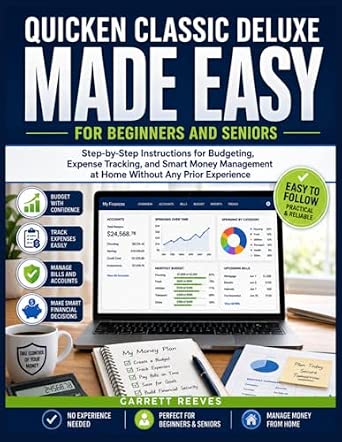
Quicken Classic Deluxe Made Easy for Beginners and Seniors: Step-by-Step Instructions for Budgeting, Expense Tracking, and Smart Money Management
This guide is tailored for users with no prior experience, especially seniors, offering straightforward, step-by-step instructions. Compared with the comprehensive All-in-One bundle, this manual simplifies core tasks like budgeting and expense tracking, making it accessible for novices. Its focus on Quicken Classic Deluxe makes it less suitable for users seeking broader financial planning features or newer software versions. The limited scope and lack of digital interactivity mean it’s best for absolute beginners who want to learn the basics without complexity.
Pros:- Designed specifically for newcomers and seniors
- Clear, step-by-step instructions simplify learning
- Focuses on practical money management topics
Cons:- Limited to Quicken Classic Deluxe, may not cover newer versions
- No digital features or interactive tools
Best for: Seniors and first-time users needing a gentle introduction to digital budgeting and money management
Not ideal for: Experienced users or those seeking advanced features or newer Quicken versions
- Target Audience:Beginners, Seniors
- Topics Covered:Budgeting, Expense Tracking, Money Management
- Format:Guide/Manual
Our verdict“This guide makes the most sense for complete beginners, especially seniors, who want a straightforward introduction to digital finance tools.”
Quicken WillMaker & Trust 2025 – Estate Planning Software for Windows
This estate planning software excels at guiding users through creating legal documents such as wills and trusts, making it ideal for those prioritizing legal organization. Compared with the more general financial management tools like Dave Ramsey’s software, WillMaker & Trust focuses on legal protection and estate planning. Its guided process simplifies complex legal concepts, but the software may be challenging for users unfamiliar with estate law. Limited to Windows and requiring some legal understanding, it’s best suited for individuals with specific estate planning needs rather than casual users.
Pros:- Guided process simplifies complex estate planning tasks
- Includes key legal documents like wills and trusts
- Available as download or online access for convenience
Cons:- Requires some familiarity with legal estate concepts
- Limited platform support (Windows only)
- May be complex for complete beginners
Best for: Individuals seeking a straightforward, guided approach to estate planning and legal document creation
Not ideal for: Users wanting comprehensive financial management or those unfamiliar with legal estate planning concepts
- Platform:Windows
- Includes:Will, Trust, Health Care Directive, Power of Attorney
- Version:2025
Our verdict“This software is best for those who want an accessible, guided solution to estate planning rather than a general financial management tool.”
Dave Ramsey’s Personal Finance Software Version 5.3
This software emphasizes ease of use, making it ideal for those who want rapid control over their finances without fuss. Compared to the more detailed Quicken Classic Deluxe, this version prioritizes simplicity and quick entry, appealing to users who want to improve their financial health in a straightforward way. However, its limited specifications and lack of integration with advanced tools may restrict its usefulness for more complex financial situations. It’s best suited for users seeking basic budgeting and financial oversight, but not for those needing in-depth reporting or investment tracking.
Pros:- Very user-friendly interface for quick management
- Helps users take control of their money easily
- Latest version includes some updated features
Cons:- Limited detailed features and specifications
- Lacks advanced tools or integrations for complex needs
Best for: Individuals wanting a simple, quick way to manage personal finances without complexity
Not ideal for: Advanced users requiring detailed reports, investment tracking, or extensive customization
- Version:5.3
- Focus:Quick financial control
- Platform:Not specified
Our verdict“This software makes the most sense for users who want a straightforward, no-fuss approach to personal finance management.”
SavePoint Personal Finance Software – Budgeting, FIRE Planning, Monte Carlo Simulations, Balance Sheets, Cash Flow – 100% Offline, No Subscriptions, + 8GB USB Drive (Runs on PC & Mac)
SavePoint stands out for its commitment to offline privacy, making it ideal for users wary of cloud storage and data tracking. Unlike Quicken WillMaker & Trust, which focus solely on estate planning, SavePoint offers comprehensive financial management combined with advanced FIRE planning tools, including Monte Carlo simulations that project your path to financial independence. A key advantage is its one-time purchase model, saving users thousands over subscription-based software like Quicken Classic Deluxe. However, this approach means you won’t benefit from cloud backups or ongoing feature updates, which could be a concern for those seeking seamless software evolution. Compared to Financial Peace, which simplifies budgeting, SavePoint offers a broader set of professional-grade tools suited for detailed analysis. It’s perfect for users who prioritize data ownership and long-term strategic planning over convenience.
Pros:- Complete offline operation guarantees data privacy
- LIFETIME license with no subscription costs
- Advanced FIRE planning with Monte Carlo simulations
- Supports multiple languages and currencies
Cons:- Requires manual data backups, risking data loss if not managed properly
- Steep learning curve for users unfamiliar with complex financial tools
Best for: Individuals seeking a privacy-focused, offline financial planning tool with advanced FIRE projections.
Not ideal for: Casual users or those who prefer cloud-based access and automatic updates for ease of use.
- Platform:PC & Mac
- License:Lifetime
- Data Storage:Offline only
- Languages:8
- Currencies:150+
- Simulation Type:Monte Carlo
- Transaction Tracking:Unlimited
- Report Types:10+
Our verdict“SavePoint is best suited for privacy-minded users who want a comprehensive, one-time purchase financial planning solution with advanced projection features.”
Quicken WillMaker & Trust 2026 – Estate Planning Software – Includes Will, Living Trust, Health Care Directive, Financial, Power of Attorney – Legally Binding – PC, Download, Online [PC Online code]
” image=”https://m.media-amazon.com/images/I/71qgXFpI0aL._AC_SY445_SX342_QL70_ML2_.jpg” link=”0″]Best for Estate Planning Simplicity and Legally Binding Documents
View on AmazonQuicken WillMaker & Trust excels at making estate planning accessible, especially for users who want straightforward legal documents without the complexity of professional legal fees. Compared to Retirement Planning Toolkit Deluxe, which covers broad retirement calculations, WillMaker focuses entirely on creating legally binding estate documents, including wills, trusts, and directives, with clear step-by-step guidance. This software is ideal for those with uncomplicated estate needs or first-timers, but it may fall short for more complex estate scenarios requiring legal advice. The online component offers flexibility, yet some users might find the downloadable version more secure. Its affordability and ease of use make it a compelling choice over hiring estate attorneys, though it lacks the detailed financial planning features found in broader software like SavePoint.
Pros:- Legally binding, customizable estate documents
- Step-by-step interview format simplifies estate planning
- Flexible online or downloadable versions
- Affordable alternative to legal services
Cons:- Limited to estate planning, lacking broader financial tools
- Not suitable for complex estate or business planning
- Dependent on user input accuracy for legal validity
Best for: Individuals seeking a simple, reliable way to create legally binding estate documents without professional legal costs.
Not ideal for: Users needing detailed financial planning or complex estate structures that require legal counsel.
- Platform:PC, Online
- Legal Documents Included:Will, Trust, Power of Attorney, Healthcare Directive
- Updates:Regular
- Accessibility:Download or online
- Legal Validation:Yes
- Ease of Use:Step-by-step
Our verdict“This is a solid choice for those who want straightforward estate planning with legally binding documents at an affordable price.”
Financial Peace Personal Finance Software
Financial Peace Personal Finance Software makes a compelling case for users seeking straightforward budgeting and debt reduction tools. Unlike SavePoint, which offers advanced projections and detailed analysis, Financial Peace emphasizes ease of use with simplified interfaces designed for quick setup and management. Its core strength lies in helping users establish and stick to budgets while tracking debt repayment progress. However, it lacks the sophisticated forecasting and investment tracking found in Quicken Classic Deluxe, limiting its utility for those with complex financial portfolios. This software is ideal for beginners or those who want a no-fuss approach to everyday money management, but less suited for users needing in-depth financial planning or retirement analysis.
Pros:- Simple, intuitive interface
- Effective debt tracking and payoff tools
- Quick setup for budgeting
- Affordable pricing
Cons:- Limited in-depth financial analysis features
- No advanced projections or Monte Carlo simulations
- Basic reporting options
Best for: Budget-conscious individuals or beginners focused on debt payoff and expense tracking.
Not ideal for: Experienced investors or users requiring comprehensive retirement and investment planning.
- Platform:PC
- Focus:Budgeting and debt tracking
- Reports:Basic
- User Interface:Simplified
- Price:Affordable
- Data Backup:Yes
Our verdict“Financial Peace is best for newcomers wanting an easy, effective way to manage budgets and reduce debt without complexity.”
Quicken Classic Deluxe for New Subscribers| 1 Year [PC/Mac Online Code]
” image=”https://m.media-amazon.com/images/I/61ypcFpjCuL._AC_SY445_SX342_QL70_FMwebp_.jpg” link=”0″]Best for Comprehensive Financial Management and Investment Tracking
View on AmazonQuicken Classic Deluxe offers a well-rounded approach to managing bank accounts, credit cards, investments, and property, making it suitable for users who want to oversee their entire financial picture. Compared with SavePoint, which emphasizes planning and projections, Quicken focuses more on day-to-day tracking and customized budgets, providing real-time updates and transaction management. It is a better fit for users comfortable with online access and looking for detailed investment tracking, but it may be overwhelming for absolute beginners. Its ability to connect with financial institutions streamlines data entry, yet subscription costs add ongoing expenses that SavePoint’s one-time license avoids. For those seeking a balance between usability and depth, Quicken delivers strong value over simpler tools.
Pros:- Connects with multiple financial institutions
- Detailed investment and property tracking
- Customizable budgets and spending alerts
- Real-time transaction updates
Cons:- Requires ongoing subscription payments
- Complex interface may challenge beginners
- Less focused on long-term projections
Best for: Users who want detailed, ongoing management of accounts, investments, and budgets in one platform.
Not ideal for: Individuals preferring offline privacy or those who dislike subscription fees and online connectivity.
- Platform:PC, Mac
- Subscription:1 year included
- Account Types:Bank, credit, investments, property
- Online Access:Yes
- Budgeting:Yes
- Investment Tracking:Yes
Our verdict“This software is ideal for financially active users who want detailed daily management paired with investment oversight, despite ongoing costs.”
Retirement Planning Toolkit Deluxe 2.0 [PC Download]
” image=”https://m.media-amazon.com/images/I/61RfTzIpaTL._AC_SY445_SX342_QL70_FMwebp_.jpg” link=”0″]Best for Detailed Retirement Analysis and Planning Worksheets
View on AmazonThe Retirement Planning Toolkit Deluxe 2.0 provides a highly detailed set of tools, making it well-suited for users who prefer manual calculations and worksheets over automated projections. Unlike SavePoint’s advanced Monte Carlo simulations, this toolkit offers 19 calculators and multiple checklists to help users analyze investment strategies, estimate expenses, and prepare for retirement step-by-step. It’s particularly helpful for those who want a hands-on approach to retirement planning, but the complexity can be overwhelming for beginners. The AES-256 encryption adds reassurance about data security, although the standalone digital format limits portability. Overall, this toolkit makes sense for disciplined users who appreciate detailed worksheets and want to avoid cloud reliance, but less so for those seeking quick, automated results.
Pros:- Extensive set of calculators and worksheets
- Includes checklists for comprehensive planning
- Secure with AES-256 encryption
- Good for disciplined, detail-oriented planners
Cons:- Requires PC download, not mobile-friendly
- Can be complex for inexperienced users
- Limited automation for projections
Best for: Retirement-focused individuals who prefer detailed worksheets and manual analysis over automated projections.
Not ideal for: Beginners or users needing quick, automated retirement forecasts without a steep learning curve.
- Number of Calculators:19
- Includes Worksheets:Yes
- Includes Checklists:Yes
- Backup and Restore:Yes
- Encryption:AES-256
- Platform:PC
Our verdict“This toolkit is best for meticulous planners who want detailed worksheets and control over their retirement analysis without relying on automated tools.”
How We Picked
Our evaluation focused on performance, ease of use, feature set, and value. We prioritized tools that offer comprehensive financial planning capabilities, including budgeting, retirement, estate planning, and investment tracking. Usability was key, especially for those new to financial software, so intuitive interfaces and guided workflows influenced rankings. We also considered build quality, platform compatibility, and the availability of customer support. The final list reflects a balance between feature depth and accessibility, with higher-ranked options excelling across multiple criteria.| financial planning software | Platform |
|---|---|
| All-in-One Full Finance Bundle | Not specified |
| The Financial Planning Workboo | — |
| Quicken Classic Deluxe Made Ea | — |
| Quicken WillMaker & Trust 2025 | Windows |
| Dave Ramsey’s Personal Finance | Not specified |
| SavePoint Personal Finance Sof | PC & Mac |
| Quicken WillMaker & Trust 2026 | PC, Online |
| Financial Peace Personal Finan | PC |
| Quicken Classic Deluxe for New | PC, Mac |
| Retirement Planning Toolkit De | PC |
Factors to Consider When Choosing 13 Best Financial Planning Software
Choosing the right financial planning software involves understanding your specific needs and weighing several important factors. A well-chosen tool should simplify your financial management without overwhelming you with unnecessary complexity. Consider not only the features but also how you prefer to access your data—online or offline—and whether automation or customization is more important. This guide will help clarify key considerations and common pitfalls so you can select the best software for your financial journey.Feature Depth vs. Ease of Use
Some software offers extensive features like investment analysis, estate planning, and tax optimization, but these can come with a steep learning curve. Conversely, simpler tools prioritize ease of use and are ideal for beginners or those with straightforward needs. Evaluate your comfort level with financial concepts and choose a tool that balances functionality with usability to avoid frustration or underutilization.
Platform Compatibility and Accessibility
Decide whether you prefer desktop software, which often offers offline privacy and stability, or cloud-based solutions that synchronize seamlessly across devices and provide real-time updates. Some users value offline security, especially when handling sensitive data, while others prioritize convenience. Confirm that your chosen software supports your devices and operating systems to prevent compatibility issues.
Automation and Data Integration
Automation features like bank account syncing, automatic expense categorization, and investment tracking can save time but may also require premium plans or subscriptions. Consider whether these features are worth the extra cost or if manual input suits your style. Integration with other financial tools or apps can streamline your workflow, but beware of potential security risks or data privacy concerns.
Pricing and Long-term Value
Budget-friendly options often provide core budgeting and tracking features, but advanced planning tools tend to come with higher price tags or subscription fees. Think about your long-term needs—if you plan to grow your financial complexity, investing in a more capable software might save you time and frustration later. Be wary of hidden costs, such as add-on modules or renewal fees, when evaluating options.
Customer Support and Community
Reliable customer support can make a big difference, especially when dealing with complex financial scenarios or troubleshooting issues. Look for software providers that offer tutorials, live support, or active user communities. This support can help you maximize the tool’s potential and avoid common pitfalls, especially if you’re new to financial planning software.
Frequently Asked Questions
Is it better to choose cloud-based or offline financial software?
Choosing between cloud-based and offline software depends on your priorities. Cloud solutions offer the convenience of automatic updates, real-time data sync across devices, and easier collaboration. Offline software, however, provides greater control over your data, which is appealing for privacy-conscious users. Consider your comfort with internet security, your need for access flexibility, and whether you prefer automatic backups or manual control when making your choice.
Can I use financial planning software if I’m not good with technology?
Yes, many options are designed with simplicity and guided workflows to accommodate users with limited tech experience. Tools like Quicken Classic Deluxe are known for user-friendly interfaces and step-by-step instructions. However, more advanced platforms might require a steeper learning curve. It’s worthwhile to look for software that offers tutorials, customer support, and intuitive design to ensure you can make the most of its features without frustration.
Do I need specialized estate planning software or can I use general tools?
While general financial planning tools often include basic estate planning features, specialized estate planning software provides more detailed customization options for wills, trusts, and legal documents. If estate planning is a priority, investing in dedicated software like WillMaker offers more comprehensive templates and legal guidance. For simpler needs or if you already use a broader financial planner, a general tool might suffice, but it’s important to evaluate the complexity of your estate and legal requirements.
Is it worth paying for premium financial planning software?
Premium software typically offers advanced features like detailed investment analysis, scenario modeling, and comprehensive estate planning. If your financial situation is complex or if you want in-depth control and customization, paying for a premium option can be a worthwhile investment. For basic budgeting or simple financial tracking, free or lower-cost tools may be enough. Always consider whether the additional features will genuinely add value to your financial management.
How important is customer support when choosing financial software?
Customer support can be a critical factor, especially if you encounter technical issues or need help customizing your plans. Reliable support options—such as live chat, phone assistance, or extensive online resources—can save you time and frustration. If you’re new to financial software or managing complex finances, prioritizing providers with strong support can help you maximize your investment and avoid mistakes.
Conclusion
For those seeking the all-around best experience, All-in-One Full Finance Bundle offers the most comprehensive set of features. Budget-conscious users or beginners will appreciate the simplicity of Quicken Classic Deluxe, while those focused on retirement planning should consider the Retirement Planning Toolkit Deluxe for detailed projections. If privacy and offline access are paramount, SavePoint Personal Finance Software is a solid choice. Ultimately, your selection should reflect your specific financial goals, comfort level, and preferred features, ensuring you get the most value from your investment.
Halloween Picks
halloween
As an affiliate, we earn on qualifying purchases.