

If you’re new to investing, the hardest part isn’t picking stocks — it’s keeping track of what you own, what you paid, and whether you’re actually making money. For beginners, my top overall pick is My Stocks Portfolio, which strikes the best balance between simplicity and real tracking power, with live portfolio values and dividend logging that won’t overwhelm a first-time investor. Two standouts worth noting: the Stocks Investing for Beginners Mobile Web App pairs guidance with tracking in a single package, and the Minimalist Investment Tracker log book is the best analog option for people who learn better by writing things down. The main tradeoff in this category is automation versus understanding — apps update prices for you but can hide how the math works, while paper trackers force you to engage with every number but require discipline. Several entries in this space are actually books or journals rather than apps, so knowing which format suits your learning style matters before you buy. Keep reading for the full breakdown of all 13 options and which one fits your situation.

Get smart everyday buys delivered free with Prime
- Fast, free delivery on millions of items
- Prime Video, Amazon Music and more included
- Member-only deals all year
Key Takeaways
- My Stocks Portfolio won best overall because it’s the only true app-style option that combines live price tracking, dividend records, and profit/loss history without a steep learning curve.
- A surprising number of products in this category are physical log books, not apps — the Minimalist Investment Tracker and Asset Management Record Notebook outperform several digital tools for beginners who want to build habits, not just glance at charts.
- Several entries are educational courses or guides (Smart Investing, REIT Investing for Beginners, the Day Trade Course) that teach investing but barely track anything — beginners should not buy these expecting portfolio management.
- Free or near-free options like the paper trackers beat paid courses on value for absolute beginners, while paid courses only justify their price if you want strategy instruction alongside tracking.
- The biggest differentiator across all 13 products was whether they help you calculate net worth and asset allocation over time — only the Asset Management Record Notebook and My Stocks Portfolio do this well.
| Mastering Quicken Made Easy: A Beginner-to-Expert Guide on Budgeting, Expense Tracking, Finance & Investment Management |  | Best for Software-Based Tracking | Format: Printed guide book | Skill Level Covered: Beginner through expert | Topics Covered: Budgeting, expense tracking, finance management, investments | VIEW LATEST PRICE | See Our Full Breakdown |
| Beginners Guide to Investing |  | Best Foundations Primer | Format: Digital guide | Skill Level: Absolute beginner | Focus: Investing fundamentals and core concepts | VIEW LATEST PRICE | See Our Full Breakdown |
| My Stocks Portfolio |  | Best Digital Portfolio Tracker | Type: Stock portfolio tracking app | Core Function: Monitoring portfolio performance and stock data | Interface: User-friendly, beginner-oriented | VIEW LATEST PRICE | See Our Full Breakdown |
| Smart Investing: A Beginner’s Guide |  | Best Confidence Builder | Format: Beginner guide book | Skill Level: Absolute beginner | Tone: Confidence-building, simplified | VIEW LATEST PRICE | See Our Full Breakdown |
| Minimalist Investment Tracker: Portfolio and Investment Log Book for Tracking Stocks, ETFs, Dividends, Profit and Loss, Wealth Growth and Financial Planning | 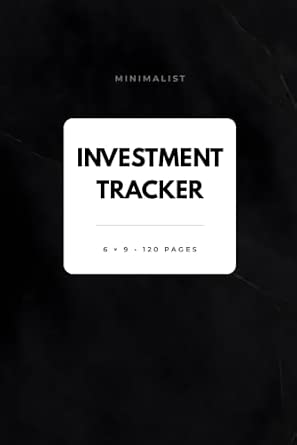 | Best Offline Tracking Habit-Builder | Format: Physical log book | Tracks: Stocks, ETFs, dividends, profit and loss, wealth growth | Connectivity: Fully offline, no digital integration | VIEW LATEST PRICE | See Our Full Breakdown |
| Investing For Beginners: Quickstart Guide on Stock Market, Forex Trading, Futures, ETFs, and Cryptocurrency |  | Best for Building Vocabulary Before Tracking | Format: Book (digital) | Topics Covered: Stocks, Forex, Futures, ETFs, Cryptocurrency | Experience Level: Beginner | VIEW LATEST PRICE | See Our Full Breakdown |
| Stock Market Trading Journal: Track Profit/Loss, Avoid Mistakes, Investment Tracker for Stocks, Futures, Options, Forex, and Commodities |  | Best for Building Trading Discipline | Format: Paperback journal | Asset Classes Tracked: Stocks, Futures, Options, Forex, Commodities | Core Function: Trade logging with profit/loss and mistake review | VIEW LATEST PRICE | See Our Full Breakdown |
| My Investment Logbook: Investment and Financial Record Keeper |  | Best Simple Record Keeper | Format: Paperback logbook | Records Tracked: Investments and general financial records | Structure: Open-format entry pages | VIEW LATEST PRICE | See Our Full Breakdown |
| Asset Management Record Notebook: Log Book for Tracking Assets, Liabilities, Investments, Income, and Net Worth |  | Best for Big-Picture Net Worth Tracking | Format: Paperback notebook | Categories Tracked: Assets, Liabilities, Investments, Income, Net Worth | Core Function: Whole-finances record keeping | VIEW LATEST PRICE | See Our Full Breakdown |
| Stocks Investing for Beginners Mobile Web App |  | Best Digital Learning Option | Format: Mobile web app | Platform: Mobile browser | Core Features: Educational content, investment simulations | VIEW LATEST PRICE | See Our Full Breakdown |
| REIT Investing for Beginners: How to Get Rich in Real Estate Without Owning a Single Physical Property |  | Best for Dividend-Focused Beginners | Format: Book (Kindble/print) | Topic: REIT investing | Experience Level: Beginner | VIEW LATEST PRICE | See Our Full Breakdown |
| Stock Market Day Trade Course – Investment Course for Beginners and Experienced Investors |  | Best Skill-Building Course | Format: Web app course | Topic: Stock market day trading | Experience Level: Beginner to experienced | VIEW LATEST PRICE | See Our Full Breakdown |
| Stock Ledger: Must-Have for Stock Trading Beginners and Novices to Track Trades |  | Best Hands-On Tracking Habit Builder | Format: Physical paper ledger | Topic: Stock trade tracking | Experience Level: Beginners and novices | VIEW LATEST PRICE | See Our Full Breakdown |
| investment tracking apps for beginner | Format | Experience Level |
|---|---|---|
| Mastering Quicken Made Easy: A | Printed guide book | — |
| Beginners Guide to Investing | Digital guide | — |
| My Stocks Portfolio | — | — |
| Smart Investing: A Beginner’s | Beginner guide book | — |
| Minimalist Investment Tracker: | Physical log book | — |
| Investing For Beginners: Quick | Book (digital) | Beginner |
| Stock Market Trading Journal: | Paperback journal | Beginner to intermediate traders |
| My Investment Logbook: Investm | Paperback logbook | Beginner and up |
| Asset Management Record Notebo | Paperback notebook | Beginner to intermediate |
| Stocks Investing for Beginners | Mobile web app | Beginner only |
| REIT Investing for Beginners: | Book (Kindble/print) | Beginner |
| Stock Market Day Trade Course | Web app course | Beginner to experienced |
| Stock Ledger: Must-Have for St | Physical paper ledger | Beginners and novices |
More Details on Our Top Picks
Mastering Quicken Made Easy: A Beginner-to-Expert Guide on Budgeting, Expense Tracking, Finance & Investment Management
Most beginner resources ask you to pick a philosophy before you have a system, but this guide flips that order. It teaches Quicken from the ground up, which matters because Quicken is one of the few tools that handles budgeting and investment tracking in one place. Compared with Beginners Guide to Investing, which explains concepts but leaves you without a tool to act on them, this book gives you a concrete workflow: connect accounts, categorize spending, and watch your portfolio alongside your everyday cash flow. The tradeoff is commitment — Quicken is paid software with a learning curve, and this book is only as useful as your willingness to actually adopt the platform. If you already track finances elsewhere, the early chapters will feel redundant.
Pros:- Covers the full journey from basic budgeting to investment management
- Teaches a real software workflow rather than abstract theory
- Step-by-step structure suits readers with zero finance background
- Scales with you as skills grow from beginner to advanced
Cons:- Requires purchasing and committing to Quicken software to get value
- No user reviews yet, so quality is unverified by other readers
Best for: Beginners who want one connected system for budgeting and investments rather than separate apps and notebooks
Not ideal for: Readers who don’t want to pay for or learn Quicken software — the book’s value collapses without it
- Format:Printed guide book
- Skill Level Covered:Beginner through expert
- Topics Covered:Budgeting, expense tracking, finance management, investments
- Software Focus:Quicken
- Best Use:Learning a connected personal finance platform
- Audience:New Quicken users and self-managing investors
Our verdict“Buy this if you’ve decided Quicken is your tracking tool and want a manual that grows with you.”
Beginners Guide to Investing
Where this roundup leans heavily toward tools and trackers, this title earns its spot by doing the opposite: it builds the mental framework every tracker assumes you already have. Compared with Smart Investing: A Beginner’s Guide, which covers similar ground, this one goes slightly deeper on core concepts like risk, diversification, and compounding, making it the better pure-education pick. The honest limitation is that you’ll finish it knowing why to invest but still needing something like My Stocks Portfolio or the Minimalist Investment Tracker to actually record what you own. It’s also light on specific vehicles — ETFs, bonds, and REITs get surface treatment. Treat it as semester one of your investing education, not the whole degree.
Pros:- Plain-language explanations of otherwise intimidating concepts
- Broad overview gives context for every other product in this list
- Low-commitment entry point before spending on software
- Builds confidence to make a first investment decision
Cons:- No advanced strategies once you’ve grasped the basics
- Little detail on specific investment products like ETFs or funds
- Doesn’t include any tracking component
Best for: Complete novices who want to understand investing vocabulary and principles before touching any app or tracker
Not ideal for: Readers past the basics who need asset-specific strategies or an actual tracking tool
- Format:Digital guide
- Skill Level:Absolute beginner
- Focus:Investing fundamentals and core concepts
- Strategies Covered:Foundational, wealth-building basics
- Tracking Component:None
- Reading Commitment:Short introductory guide
Our verdict“Start here if you can’t yet explain what a dividend or index fund does — then graduate to a tracker.”
My Stocks Portfolio
This is the only true app-style tracker in this batch, and that distinction matters for beginners who dread manual data entry. Unlike the Minimalist Investment Tracker log book, which requires you to write every trade by hand, My Stocks Portfolio lets you monitor positions and performance digitally, which means faster updates and automatic math — the two things beginners most often get wrong on paper. The tradeoff is depth: analytical features are thin, so anyone wanting dividend breakdowns or asset-allocation views will outgrow it quickly. It also sits awkwardly against the Stocks Investing for Beginners Mobile Web App in this roundup, which bundles education alongside tracking. Still, for someone who wants a simple screen answering ‘how are my stocks doing?’, this is the most direct route.
Pros:- Digital tracking eliminates manual calculation errors
- Clean, beginner-friendly interface with a short learning curve
- Faster to update than paper alternatives like log books
- Good fit as a first tracker before upgrading to heavier tools
Cons:- Shallow analysis features limit long-term usefulness
- No visible pricing or ratings to evaluate value before committing
Best for: Hands-off beginners who want a simple digital view of their stock performance without spreadsheets
Not ideal for: Data-hungry investors who want detailed analytics, dividend tracking, or multi-account aggregation
- Type:Stock portfolio tracking app
- Core Function:Monitoring portfolio performance and stock data
- Interface:User-friendly, beginner-oriented
- Analysis Depth:Basic monitoring, limited detailed analysis
- Manual Entry Required:Lower than paper trackers
- Best Pairing:A foundations book like Beginners Guide to Investing
Our verdict“Pick this as your first digital tracker if simplicity matters more than analytics.”
Smart Investing: A Beginner’s Guide
Of the two intro-investing books in this batch, this one is the gentler on-ramp. Where Beginners Guide to Investing leans slightly more conceptual, Smart Investing prioritizes confidence over coverage — shorter explanations, friendlier framing, and a clear path from ‘curious’ to ‘first trade placed’. That makes it the better gift-style pick for someone intimidated by finance, but it also means the ceiling is low: readers will hit its limits within weeks and need something like the Mastering Quicken Made Easy guide to actually build a tracking habit. It also shares a weakness with the other beginner books here — no tracking tools, no worksheets, no app. If your goal is a low-friction first read that won’t scare you off, this delivers exactly that, and nothing more.
Pros:- Exceptionally approachable tone for finance-averse readers
- Quick read that gets you to a first decision fast
- Covers the essential starter concepts without overwhelming detail
- Cheaper-feeling commitment than thicker manuals
Cons:- Content overlaps heavily with other beginner guides in this roundup
- Skips several investment types entirely
- No practical tracking or action component
Best for: Hesitant first-timers who want a short, unintimidating read before committing to any tool
Not ideal for: Readers who already know the basics or want asset-specific depth — they’ll finish it in an afternoon wanting more
- Format:Beginner guide book
- Skill Level:Absolute beginner
- Tone:Confidence-building, simplified
- Coverage:Core investing concepts and starter strategies
- Advanced Content:Minimal
- Tracking Component:None
Our verdict“Choose this over denser primers if your biggest obstacle is simply getting started.”
Minimalist Investment Tracker: Portfolio and Investment Log Book for Tracking Stocks, ETFs, Dividends, Profit and Loss, Wealth Growth and Financial Planning
In a lineup full of apps and ebooks, this log book makes a counterargument: that writing things down by hand builds awareness no app can replicate. Compared with My Stocks Portfolio, it trades automation for intentionality — you log stocks, ETFs, dividends, and profit/loss yourself, which forces you to actually look at every position. That’s a genuine strength for beginners still learning what the numbers mean, and a real chore once your holdings grow past a handful. It also out-flexes the Stock Market Trading Journal in this roundup, which targets active traders, by covering long-term wealth tracking and financial planning instead of trade-by-trade review. The obvious ceiling: no digital integration, no automatic valuation, and plenty of manual arithmetic you must get right.
Pros:- Hand-writing entries deepens engagement with your own portfolio
- Works entirely offline with no accounts, subscriptions, or apps
- Covers stocks, ETFs, dividends, and overall wealth growth in one place
- Structured pages keep financial planning organized
Cons:- No digital integration means no automatic prices or calculations
- Manual math invites errors as your portfolio grows
- Physical format can’t scale with a large or active portfolio
Best for: Buy-and-hold beginners with a small number of positions who want a screen-free tracking ritual
Not ideal for: Anyone with many holdings or frequent trades — manual logging becomes tedious and error-prone fast
- Format:Physical log book
- Tracks:Stocks, ETFs, dividends, profit and loss, wealth growth
- Connectivity:Fully offline, no digital integration
- Entry Method:Manual handwritten logging
- Investor Style:Long-term, low-frequency portfolios
- Best Use:Building a consistent tracking and planning habit
Our verdict“Buy this if you believe the habit of tracking matters more than the technology doing it for you.”
Investing For Beginners: Quickstart Guide on Stock Market, Forex Trading, Futures, ETFs, and Cryptocurrency
Before any tracking tool makes sense, a beginner needs to understand what they’re actually tracking, and this guide fills that gap. It covers stocks, forex, futures, ETFs, and crypto in one place, which is broader than the Beginners Guide to Investing or the narrower focus of REIT Investing for Beginners. This option stands out for readers who want a single overview of every asset class rather than five separate books.
The tradeoff is depth. Compared with the Stock Market Day Trade Course, the strategies here stay surface-level, and unlike the Stock Market Trading Journal, it doesn’t help you record or review your own activity. It’s a starting point, not a system.
Pros:- Covers five asset classes in a single volume, so you can compare them before choosing
- Framed around early retirement, which gives beginners a concrete goal
- Cheaper than buying separate books on stocks, forex, and crypto
- Accessible language that assumes zero prior knowledge
Cons:- No depth on any single asset class — advanced investors will find little value
- Purely educational; no tracking templates, tools, or exercises to apply the concepts
Best for: Complete newcomers who want a broad survey of every major asset class before committing money to any one of them
Not ideal for: Readers who already know the basics and want actionable strategy — the content stops well short of advanced tactics
- Format:Book (digital)
- Topics Covered:Stocks, Forex, Futures, ETFs, Cryptocurrency
- Experience Level:Beginner
- Primary Goal:Investment education, early retirement planning
- Tracking Tools:None
- Strategy Depth:Introductory overview only
Our verdict“Buy this first if you don’t yet know the difference between an ETF and a futures contract, then move to a tracker once you’re actually investing.”
Stock Market Trading Journal: Track Profit/Loss, Avoid Mistakes, Investment Tracker for Stocks, Futures, Options, Forex, and Commodities
Where the Investing For Beginners guide teaches concepts, this journal makes you accountable for your own decisions. Its core value is the mistake-review loop: logging each trade’s profit/loss forces you to confront patterns you’d otherwise ignore. That behavioral angle sets it apart from the simpler My Investment Logbook, which records positions but doesn’t prompt reflection on why a trade went wrong.
It also covers five asset classes, matching the breadth of the Asset Management Record Notebook, though the latter focuses on net worth rather than individual trades. The obvious limitation: it’s paper. There’s no automatic price sync or portfolio math, so every entry is manual.
Pros:- Structured prompts for recording profit/loss and the reasoning behind each trade
- Supports stocks, futures, options, forex, and commodities in one book
- Encourages discipline and self-review, which most beginner tools ignore
- Works regardless of which broker or platform you use
Cons:- Entirely manual — no digital sync, no automatic calculations
- Requires consistent effort; an unused journal delivers zero value
Best for: Active beginners who trade across multiple markets and want to build a habit of reviewing their mistakes
Not ideal for: Passive buy-and-hold investors with a handful of index funds — trade-by-trade logging is overkill for them
- Format:Paperback journal
- Asset Classes Tracked:Stocks, Futures, Options, Forex, Commodities
- Core Function:Trade logging with profit/loss and mistake review
- Digital Features:None
- Experience Level:Beginner to intermediate traders
- Best Use:Discipline building and trade reflection
Our verdict“This pick makes the most sense for new traders who need to break reactive habits and want a physical record to review each week.”
My Investment Logbook: Investment and Financial Record Keeper
If the Stock Market Trading Journal feels like too much process, this logbook strips things down to the essentials: one organized place for every investment record you own. There are no trade-psychology prompts or reflection sections — just clean pages for logging positions, dates, and amounts. That simplicity makes it friendlier for a true beginner than the Asset Management Record Notebook, which adds liabilities and net-worth worksheets that may overwhelm someone who just wants to track a few stock purchases.
Compared with the Minimalist Investment Tracker, the two occupy similar ground, though this one leans more toward general financial records than dividend and wealth-growth tracking. The cost of simplicity is guidance — nothing explains how to use the pages, so you’re on your own.
Pros:- Dead-simple format with essentially no learning curve
- Flexible enough for any investment type you choose to record
- Cheap, portable, and broker-agnostic
- Suits both first-time investors and experienced record-keepers
Cons:- No instructions or guidance on what to track or why
- No digital backup, calculations, or automation of any kind
Best for: Hands-off beginners with a small number of holdings who want a low-friction paper record
Not ideal for: Anyone expecting structure or education — there’s no instruction, and heavy traders will outgrow it quickly
- Format:Paperback logbook
- Records Tracked:Investments and general financial records
- Structure:Open-format entry pages
- Guidance Included:None
- Digital Features:None
- Experience Level:Beginner and up
Our verdict“Choose this if you want the simplest possible paper trail of your investments and don’t need hand-holding.”
Asset Management Record Notebook: Log Book for Tracking Assets, Liabilities, Investments, Income, and Net Worth
This notebook takes a wider lens than anything else in the lineup. Instead of tracking individual trades like the Stock Market Trading Journal or holdings like My Investment Logbook, it captures your entire financial picture: assets, liabilities, income, investments, and a running net-worth figure. For a beginner whose real question is “am I getting wealthier?” rather than “how did this trade go?”, this framing is more useful.
It pairs well with an educational title like Smart Investing: A Beginner’s Guide — one explains what to buy, this one measures whether it’s working. The drawbacks mirror the other paper options: no automation, no instructions, and a bare-bones design that anyone expecting charts or analytical layouts will find underwhelming.
Pros:- Covers the full balance sheet, not just investments
- Net-worth tracking gives a motivating single number to watch
- Simple layout that doubles as a general personal-finance hub
- No subscriptions or software dependencies
Cons:- No instructions, so beginners must already understand assets vs. liabilities
- Manual updates required; the design is too basic for advanced users
Best for: Beginners who want to watch their overall net worth grow and see how investments fit into their full budget
Not ideal for: Data-driven users who want charts, historical analysis, or automatic account syncing — this is static paper only
- Format:Paperback notebook
- Categories Tracked:Assets, Liabilities, Investments, Income, Net Worth
- Core Function:Whole-finances record keeping
- Guidance Included:None
- Digital Features:None
- Design Complexity:Basic
- Experience Level:Beginner to intermediate
Our verdict“This is the right pick if your goal is tracking total financial progress rather than analyzing individual investments.”
Stocks Investing for Beginners Mobile Web App
This is the only product in the batch that actually lives on your phone, and that changes the experience. Unlike the paper journals and logbooks, it offers educational content plus investment simulations, so a beginner can practice stock decisions without risking money — something no physical tracker in this roundup can do. Compared with the Investing For Beginners guide, it trades breadth for interactivity: fewer asset classes, but you get to learn by doing rather than reading.
The ceiling is low, though. Once the lessons click, there’s little to grow into — no technical analysis, no advanced screening, nothing for the second year of investing. Pair it with the Stock Market Trading Journal if you want a way to record what the simulations teach you.
Pros:- Simulations let beginners practice without financial risk
- Mobile access means lessons fit into small pockets of time
- Friendlier onboarding than reading a full book
- Combines education and light tracking in one place
Cons:- Limited depth — few tools for experienced or fast-learning investors
- As a web app, it depends on connectivity and may feel less polished than native apps
Best for: Smartphone-first beginners who want to practice investing with simulations before committing real money
Not ideal for: Anyone past the basics — the app lacks technical analysis tools and advanced features, so growth investors will outpace it
- Format:Mobile web app
- Platform:Mobile browser
- Core Features:Educational content, investment simulations
- Asset Focus:Stocks
- Advanced Tools:None — no technical analysis
- Experience Level:Beginner only
Our verdict“Start here if you learn better by tapping through simulations than by reading, then graduate to a dedicated tracker once you’re investing for real.”
REIT Investing for Beginners: How to Get Rich in Real Estate Without Owning a Single Physical Property
This book stands out in the lineup because it doesn’t try to cover everything — unlike Investing For Beginners: Quickstart Guide, which spreads itself across stocks, forex, futures, and crypto, this one goes deep on a single asset class. That focus pays off for readers who want passive income through dividends rather than chasing capital gains. Compared with the Minimalist Investment Tracker, which helps you log what you already own, this book answers the earlier question: what to buy in the first place. The tradeoff is real, though — the promised 9% dividend yields set expectations that markets don’t always deliver, and there’s little here on risk management or valuation. Still, for a beginner curious about real estate exposure without the headaches of property ownership, this pick makes sense as a focused starting point.
Pros:- Focused entirely on REITs, giving more depth than general investing guides
- Frames investing around passive income and beating inflation, a concrete beginner goal
- Explains real estate investing without the capital or effort of owning property
- Pairs well with a tracking logbook once you start buying
Cons:- The 9% dividend claim overpromises and may set unrealistic expectations
- Thin coverage of risk, valuation, and downturn scenarios
- No advanced strategies for readers who progress past the basics
Best for: Income-focused beginners who want real estate exposure and consistent dividends without buying physical property
Not ideal for: Readers wanting a broad market education — the narrow REIT focus skips stocks, ETFs, and portfolio basics
- Format:Book (Kindble/print)
- Topic:REIT investing
- Experience Level:Beginner
- Focus:Dividend income and inflation hedging
- Covers Physical Real Estate:No — REITs only
- Digital Tracking Included:No
Our verdict“A sensible single-topic pick for beginners whose main goal is dividend income, provided they temper the yield promises with realistic expectations.”
Stock Market Day Trade Course – Investment Course for Beginners and Experienced Investors
Where most entries in this roundup are books or paper logbooks, this option is actual structured training delivered via web app, which changes what you get: lessons and strategy instruction rather than reference material. Compared with Stocks Investing for Beginners Mobile Web App, which leans toward tools and tracking, this course puts the emphasis on day trading technique — entry timing, strategy, and execution discipline. The dual-track design for beginners and experienced traders is a double-edged sword: novices get a runway to grow into, but the pacing assumes a tolerance for risk that most first-time investors shouldn’t have. Day trading itself is a demanding, high-loss activity for beginners, so this pick is better suited to someone who has already exhausted gentler guides like Beginners Guide to Investing and wants active trading skills. The absence of user reviews and detailed specs makes the quality hard to verify before buying.
Pros:- Actual instructional course rather than a static reference book
- Serves both beginners and experienced traders, so it doesn’t get outgrown quickly
- Web app delivery means access from any browser without downloads
- Covers strategy and technique, not just market terminology
Cons:- No user reviews or ratings to verify course quality
- Day trading is high-risk and poorly matched to most true beginners
- Lacks published specs on course length, structure, or instructor credentials
Best for: Motivated beginners and intermediate traders who want active day trading skills taught through structured lessons
Not ideal for: Passive, long-term investors — day trading strategies run counter to buy-and-hold goals and carry high loss risk
- Format:Web app course
- Topic:Stock market day trading
- Experience Level:Beginner to experienced
- Delivery:Browser-based, no download required
- Focus:Trading strategies and techniques
- Reviews Available:No
Our verdict“Choose this only if active trading is genuinely your goal and you’ve already built a foundation with a general investing guide.”
Stock Ledger: Must-Have for Stock Trading Beginners and Novices to Track Trades
This is the most beginner-forgiving tracking option in the roundup precisely because it’s analog. Compared with Stock Market Trading Journal, which spans stocks, futures, options, forex, and commodities, this ledger keeps its scope tight to plain stock trades — fewer columns, less overwhelm, faster habit formation. Against My Investment Logbook, it trades flexibility for simplicity: you won’t be logging net worth or multiple asset types, but a novice can start using it in minutes without a tutorial. The physical format is itself the point for many buyers — writing trades down by hand builds discipline that autofilling apps quietly remove. The obvious tradeoff is that nothing syncs, calculates, or charts; every profit-and-loss figure is manual arithmetic. For a first-year trader building record-keeping habits before graduating to digital tools, that friction is a feature, not a bug.
Pros:- Simplest tracking format in the roundup — usable within minutes of opening it
- Manual entry actively builds trading discipline and review habits
- No accounts, subscriptions, or apps required
- Narrow stock-only scope keeps beginners from being overwhelmed
Cons:- No digital integration — no auto-calculations, syncing, or portfolio charts
- Limited columns and fields for advanced traders or multi-asset portfolios
- Paper format can be lost or damaged with no backup
Best for: First-year stock traders who want a simple, low-pressure way to build daily record-keeping discipline
Not ideal for: Anyone managing multiple asset classes or wanting automatic calculations, charts, or digital backups
- Format:Physical paper ledger
- Topic:Stock trade tracking
- Experience Level:Beginners and novices
- Asset Coverage:Stocks only
- Digital Features:None — fully analog
- Primary Benefit:Organization and trading discipline
Our verdict“The right training-wheels tracker for a novice stock trader who values habit-building over automation.”

How We Picked
My ranking logic came down to one question: how quickly can a complete beginner go from owning their first share to understanding their own portfolio? I weighted four factors heavily. First, ease of adoption — a beginner tool that takes weeks to learn has failed at its job, so options with clean interfaces or guided structures ranked higher than feature-heavy alternatives. Second, tracking depth: does the product capture cost basis, dividends, profit and loss, and ideally progress toward goals, or does it only show a snapshot? Third, educational value — some products teach while they track, which matters when the user doesn’t yet know what a dividend yield is. Fourth, price relative to what you get, since beginners shouldn’t pay premium prices before knowing their own habits.
I also flagged products honestly when they weren’t really tracking tools at all. This category is crowded with investing guides and courses that use the word “tracker” loosely, and mixing them together without distinction would mislead buyers. Pure educational products were ranked on teaching quality but capped below genuine tracking tools unless they included a meaningful tracking component. Finally, I favored options that grow with the user — a tracker that becomes useless after six months of learning scores worse than one that stays relevant as portfolios get more complex.
Factors to Consider When Choosing Investment Tracking Apps For Beginners
Before choosing from the options above, it helps to understand what actually separates a useful beginner tracking tool from one that collects dust. These are the factors that shaped my rankings and the ones I’d weigh most heavily as a first-time investor.Decide Between Digital and Paper Before Anything Else
The single biggest mistake beginners make is buying the format someone recommended rather than the format they’ll actually use. Digital tools win on convenience — they calculate gains automatically, update prices, and catch arithmetic errors that quietly sabotage paper tracking. But paper log books win on retention and habit-building: research on learning consistently shows that writing numbers by hand deepens understanding of what those numbers mean. If you’ve abandoned budgeting apps three times already, a paper tracker is probably the smarter buy, even if it feels old-fashioned. If you check your phone constantly anyway, a log book will sit in a drawer by week two. Be honest about your behavior patterns, not your aspirations.
Watch for Products That Teach but Don’t Track
This category has a labeling problem. Many top-selling products marketed toward beginner investors are educational guides or courses with minimal tracking functionality — fine products, but the wrong purchase if your goal is monitoring a portfolio. Before buying anything, read the description specifically looking for words like “record,” “log,” or “portfolio view” rather than just “investing” or “strategy.” A common trap is buying a course thinking it includes software, then discovering you still need a separate tracker. The reverse trap exists too: buying a bare-bones tracker when you genuinely don’t yet understand what a P/E ratio is. Some buyers genuinely need both, and knowing that upfront prevents a disappointing second purchase.
Cost Basis Tracking Matters More Than Live Prices
Beginners tend to be dazzled by real-time price updates, but live quotes are free everywhere — any finance website shows them. The feature that actually requires a dedicated tool is cost basis tracking: recording what you paid for each position so you can calculate true profit or loss. This becomes even more important once you buy the same stock at different prices or reinvest dividends, which creates multiple purchase lots that simple mental math can’t handle. When comparing options, ignore the flashy charts and ask whether the tool records purchase price, date, fees, and quantity per transaction. A tracker that only shows current values without purchase history is a stock ticker, not a tracker.
Think About Net Worth, Not Just Stocks
A pattern I noticed across this roundup: the tools that tracked total net worth — assets, liabilities, cash, and investments together — gave beginners a fundamentally better picture than stock-only trackers. Many new investors overweight their brokerage account while ignoring emergency savings, retirement accounts, or debt, which leads to poor allocation decisions. Even a simple paper notebook that lists all assets monthly builds awareness that a slick stock-only app never will. If you own anything beyond a single brokerage account — a 401(k), crypto, savings — prioritize options with broader asset categories. You can always narrow focus later, but tools that start narrow can’t expand.
Beware of Overpaying Before You Know Your Habits
Premium courses and premium apps both suffer from the same problem for beginners: you don’t yet know whether you’ll stick with investing long enough to justify the price. Roughly a third of new investors become inactive within a year, and expensive tools bought in an initial burst of enthusiasm often go unused. My advice for true beginners is to start with a free or under-$20 option for the first three months. If you’re consistently logging trades by month three, upgrade to something paid with confidence that the money will be put to work. The one exception is structured education — if you genuinely lack foundational knowledge, a modestly priced beginner guide can prevent far more expensive mistakes in the market itself.
Plan for the Six-Month Growth Problem
The tools beginners outgrow fastest are the ones that only handle simple stock purchases. Within months, many new investors add ETFs, dividends, or even options — and a tracker with no category for dividend reinvestment becomes a source of frustration. Look for options that accommodate multiple asset types from day one, even if you only own one stock now. Trade journals with structured fields for different instruments tend to scale better than open-format notebooks. This doesn’t mean buying the most complex tool available — it means avoiding formats that lock you into a single layout you’ll have to abandon. Migration is the hidden cost nobody advertises: moving six months of records into a new system is tedious enough that many beginners just stop tracking altogether.
Frequently Asked Questions
Should a beginner start with an app or a paper tracker?
It depends less on the tools and more on your habits. Apps suit people who want automatic calculations and price updates and who already live on their phones — the reduced friction means you’re more likely to keep tracking through busy weeks. Paper trackers suit people who learn by doing and want to genuinely understand how profit, loss, and dividends interact, since writing each transaction forces engagement with the math. There’s also a hybrid path many beginners take well: start with paper for the first two months to build understanding, then move to an app once the concepts click. The wrong answer is choosing based on what sounds more sophisticated — sophistication doesn’t matter if you abandon the system by week three.
Do I need to pay for a course, or is a tracker enough?
Separate the two jobs in your head: tracking tells you what you own, while education tells you why you own it. If you already understand basic concepts like index funds, diversification, and dividend yield, a tracker alone is enough and a course would mostly repeat what you know. If terms like cost basis or asset allocation feel foreign, a short beginner guide is money well spent — poorly informed tracking can lull you into confidence while making avoidable mistakes. What I’d avoid is buying an expensive multi-week course as your first purchase; the dropout rate on those is high, and a $15 guide plus a simple tracker teaches most of what a beginner actually needs in year one. You can always add structured education once you know which investing style you’re pursuing.
Can a spreadsheet replace a dedicated tracking app?
For many beginners, yes — a well-built spreadsheet handles cost basis, dividend logs, and profit calculations without any purchase at all. The catch is that spreadsheets fail on maintenance discipline: you have to manually update prices, remember formulas, and resist tinkering with the structure until it breaks. Dedicated tools earn their keep by removing those failure points and by presenting data in ways that reveal patterns a raw grid hides, like dividend growth over time or portfolio concentration. If you’re comfortable with formulas and enjoy the tinkering, a spreadsheet is genuinely the best value option in this space. If formulas intimidate you or you know you’ll stop updating prices manually, a dedicated tracker or app pays for itself in consistency.
How much should a beginner spend on investment tracking?
For your first year, I’d cap spending at around $20–30 total, which comfortably covers a paper tracker, a basic app subscription tier, or a beginner guide. The reasoning is behavioral, not financial: a large share of new investors lose interest within a year, and expensive tools bought during initial enthusiasm often go unused, which builds guilt that makes returning to investing harder. Live price data, which drives most premium pricing, is freely available elsewhere, so beginners are usually paying for convenience rather than necessity. The better moment to spend more is three to six months in, once you’ve proven you’ll actually maintain records and know which features you’re missing. Premium prices make sense for active traders and multi-account portfolios — not for someone tracking two ETF purchases.
What’s the minimum a good beginner tracker must record?
At absolute minimum: purchase date, ticker or asset name, quantity, price paid, and any fees — these five data points let you calculate true cost basis, which everything else depends on. Without fees included, your profit calculations will be quietly wrong, and beginners are often surprised how much commissions and spreads eat into small positions. Strong trackers add dividend records (with dates and amounts), sale records, and a running profit/loss column, and the best ones add monthly net worth snapshots so you can see trajectory rather than snapshots. Asset type categories matter too — once you add an ETF or a REIT to a stock-only tracker, mixed records become confusing fast. If a product can’t capture those basics cleanly, no amount of extra features compensates.
Conclusion
After comparing all 13 options, the right choice comes down to what kind of beginner you are. For the best overall pick, My Stocks Portfolio delivers the strongest combination of live tracking, dividend logging, and beginner-friendly design — it’s the option I’d point most first-time investors toward. For the best value, the Minimalist Investment Tracker log book costs less than lunch and builds better tracking habits than tools ten times its price. For the best educational option, Smart Investing: A Beginner’s Guide teaches the fundamentals that make tracking meaningful in the first place. For absolute beginners who want guidance and structure, the Stocks Investing for Beginners Mobile Web App combines instruction with tracking so you’re never guessing what to log next. And for specific needs: the Asset Management Record Notebook is the pick for net-worth-focused trackers, the Stock Market Trading Journal suits active traders reviewing their decisions, and REIT Investing for Beginners serves readers targeting real estate income specifically. Whatever you choose, the tool you actually use every week beats the perfect tool you abandon — start simple, track consistently, and upgrade only when you feel the limits.
Halloween Picks
halloween
As an affiliate, we earn on qualifying purchases.