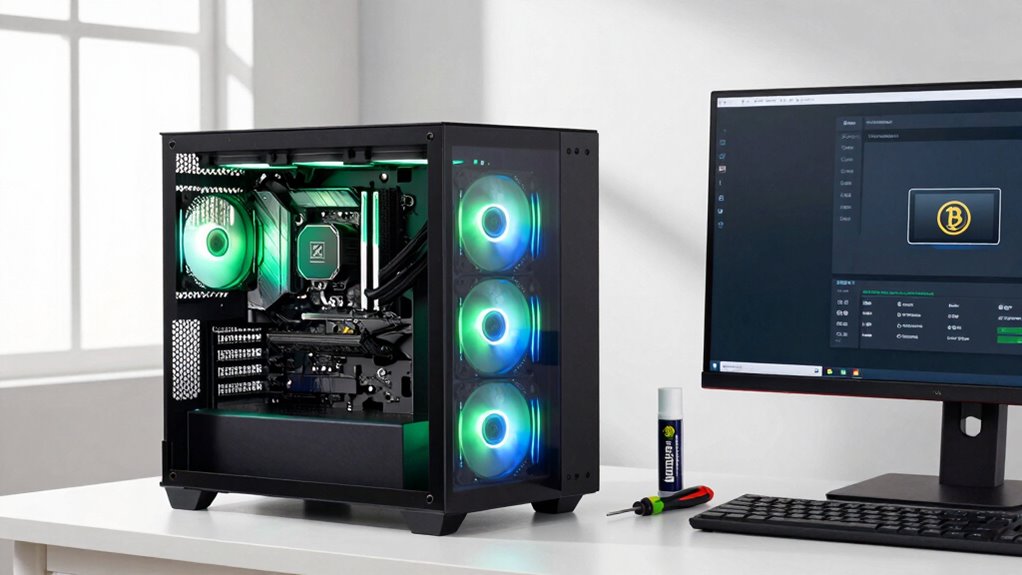

To build a dedicated crypto computer without overspending, pick mid-range hardware that balances cost and performance. Focus on efficient GPUs with good hash rates and low power use, and choose a reliable motherboard and processor that handle mining tasks well. Use ample RAM and an SSD for quick response. Prioritize security with hardware wallets and keep your software updated. Proper cooling and airflow are essential. Stick to these tips, and you’ll optimize your setup for less expense and increased security.
Key Takeaways
- Select mid-range, energy-efficient GPUs with good hash rates to balance performance and cost.
- Use a reliable motherboard supporting multiple USB ports and a mid-range processor for stable operation.
- Incorporate 8GB or 16GB RAM and SSD storage for responsiveness without overspending.
- Choose a reputable, appropriately rated power supply and ensure proper airflow for cooling.
- Opt for hardware wallets and keep software updated to enhance security without excessive expenditure.
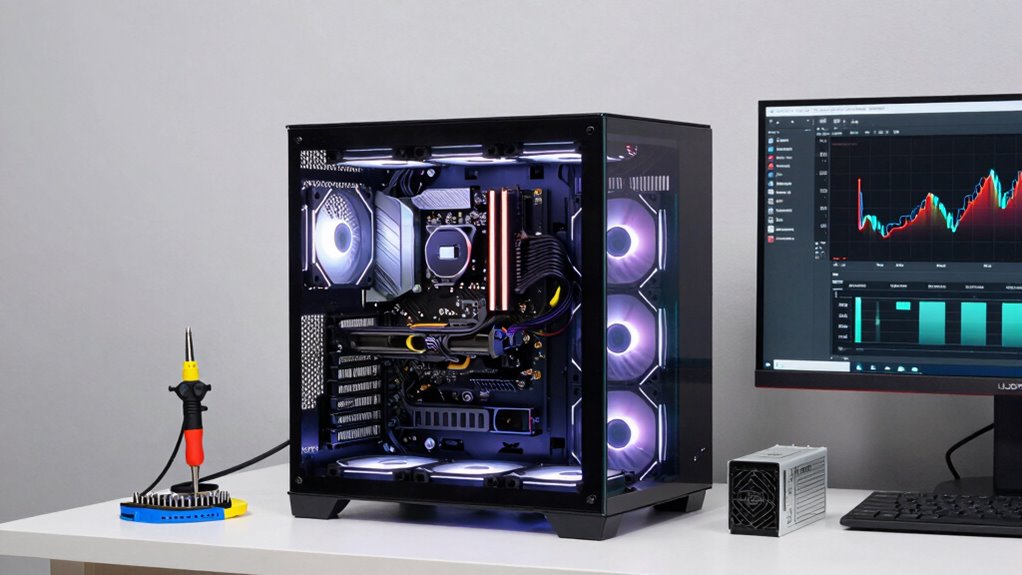
Have you ever wondered how to create a computer designed specifically for cryptocurrency tasks? If you’re diving into the world of crypto, building a dedicated machine can boost your efficiency and security. The first step is understanding what components you’ll need without overspending. Instead of buying the latest high-end hardware, focus on balancing cost and performance, especially when it comes to mining hardware and cryptocurrency wallets. Mining hardware is vital if you’re planning to mine coins directly, as it determines how efficiently you can process transactions and earn rewards. Graphics cards (GPUs) are popular for mining, but you don’t need the most expensive ones—mid-range GPUs often provide a solid balance between performance and price. Look for models with good hash rates but lower power consumption to save on electricity costs, which can eat into your profits if you aren’t careful.
Build a budget-friendly crypto computer with mid-range GPUs for efficient mining and lower electricity costs.
When it comes to setting up your crypto computer, you also need to think about security. Cryptocurrency wallets are essential for storing your digital assets safely. Hardware wallets are a wise investment because they keep your private keys offline, minimizing the risk of hacking. You can connect these wallets to your dedicated computer easily, and they won’t require much processing power. Avoid storing large amounts of crypto on online wallets or exchanges, especially if your machine isn’t equipped with top-tier security features. Additionally, understanding the importance of hardware security measures can help you better protect your investments. Ensuring your operating system and software are regularly updated is another key security practice to prevent vulnerabilities. Keeping your software up-to-date also helps defend against malware and other cyber threats that could compromise your crypto holdings. Investing in hardware security can further strengthen your defenses against potential breaches.
Building your crypto computer doesn’t mean you should splurge on unnecessary parts. Stick to a reliable motherboard that supports your chosen GPU and has enough USB ports for any peripherals or hardware wallets. A decent processor can handle your everyday tasks and run mining software smoothly, but you don’t need the latest, most expensive CPUs. Aim for a balance: a mid-range processor paired with sufficient RAM, around 8GB or 16GB, will handle most crypto activities without costing a fortune. Storage isn’t a big concern for mining, but a solid-state drive (SSD) will improve overall responsiveness and boot times.
Power supply is another vital piece. Select a reputable, efficient PSU that can handle your hardware’s power needs comfortably. This prevents system crashes and prolongs your hardware’s lifespan. Finally, make sure your case provides good airflow—adequate cooling keeps your components running at their best, especially during intensive mining sessions. By thoughtfully selecting each part and avoiding unnecessary upgrades, you can build a dedicated crypto computer that’s both capable and budget-friendly.
As an affiliate, we earn on qualifying purchases.
Frequently Asked Questions
Can I Use a Used Computer for Crypto Mining?
Yes, you can use a used computer for crypto mining, but you’ll need to take into account hardware customization and cooling solutions. Make sure the system’s hardware is powerful enough, especially the GPU and CPU, and check for any damages. Upgrading components can boost performance. Also, invest in effective cooling to prevent overheating during intensive mining sessions. Proper maintenance and upgrades will help your used computer run efficiently for crypto mining.
What Are the Best Security Measures for a Dedicated Crypto PC?
To secure your dedicated crypto PC, prioritize hardware security by using a hardware wallet or secure physical components. Enable firmware protection by regularly updating BIOS and firmware, and consider disabling unnecessary features like USB ports or network interfaces for added safety. You should also implement strong passwords, enable two-factor authentication, and keep your system offline when not in use. These steps help protect your assets from theft and cyber threats effectively.
How Much Power Does a Crypto Computer Typically Consume?
A crypto computer typically consumes between 50 to 150 watts, depending on its components and workload. To optimize energy efficiency, you should focus on power management by choosing efficient hardware like low-power CPUs and SSDs. Regularly monitoring your system’s energy use helps prevent overspending on electricity. By balancing performance with energy efficiency, you guarantee your crypto setup runs smoothly without unnecessary power consumption, saving you money in the long run.
Is Overclocking Advisable for Crypto Mining Setups?
Overclocking isn’t advisable for crypto mining setups because it can cause overheating and reduce hardware lifespan. Instead, focus on hardware optimization by selecting efficient components and improving cooling solutions. Proper cooling helps maintain stable performance and prevents overheating during intense mining sessions. Prioritize balanced hardware and cooling to maximize your crypto computer’s efficiency and longevity without risking damage from overclocking.
What Operating System Is Best for Crypto Transactions?
When it comes to crypto transactions, the best operating system is one that’s secure and user-friendly, like Linux or Windows, depending on your comfort. Don’t put all your eggs in one basket; use reliable cryptocurrency wallets and blockchain software compatible with your OS. Linux often offers enhanced security, but Windows might be easier for beginners. Choose what feels right for you, and stay vigilant to protect your investments.
hardware wallet for cryptocurrency
As an affiliate, we earn on qualifying purchases.
As an affiliate, we earn on qualifying purchases.
Conclusion
Building a dedicated crypto computer doesn’t have to break the bank—careful component selection and DIY assembly keep costs down. While some might worry about security or future upgrades, choosing quality parts now and planning for scalability guarantees your setup remains safe and adaptable. With a bit of research and patience, you’ll have a reliable crypto machine that balances affordability with performance, empowering you to navigate the crypto world confidently without overspending.
As an affiliate, we earn on qualifying purchases.
As an affiliate, we earn on qualifying purchases.